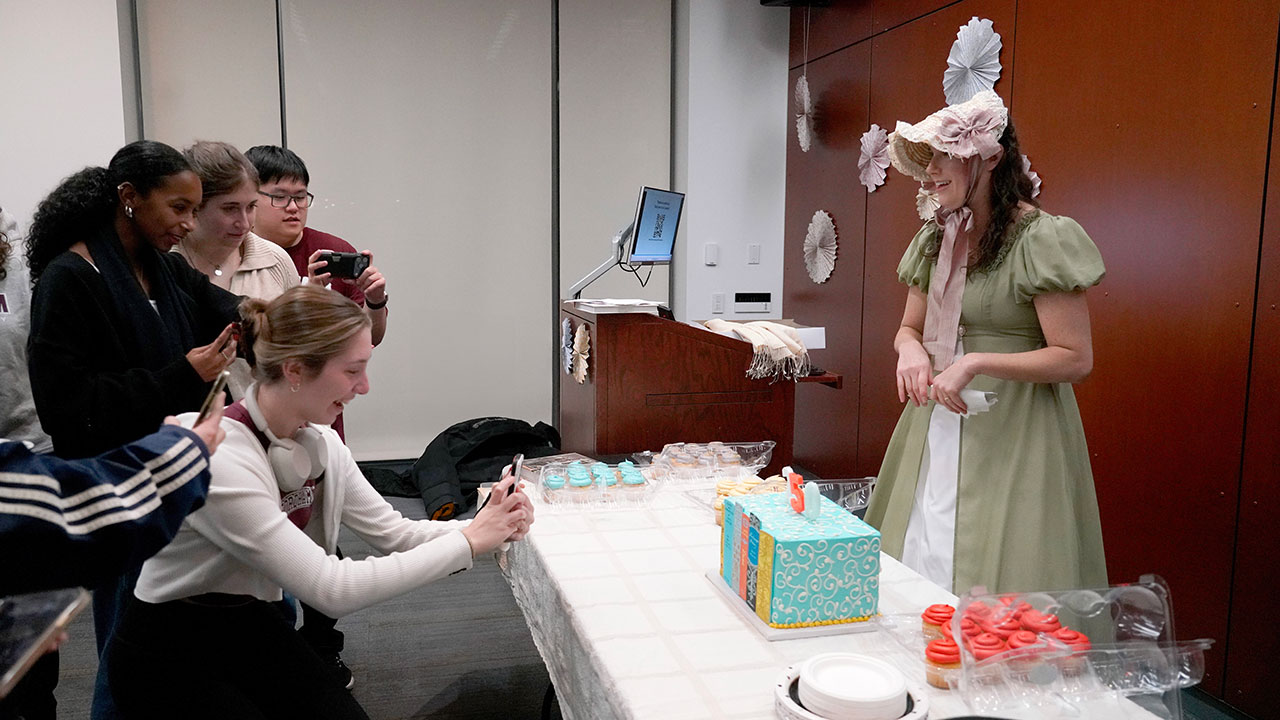
It is a truth universally acknowledged that a beloved author turning 250 must be in want of a proper birthday party.
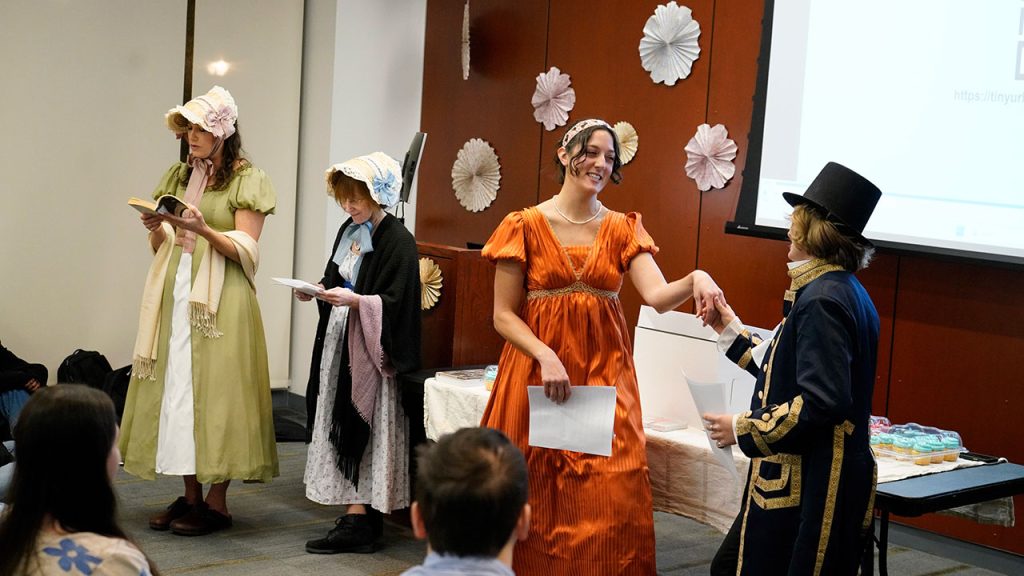
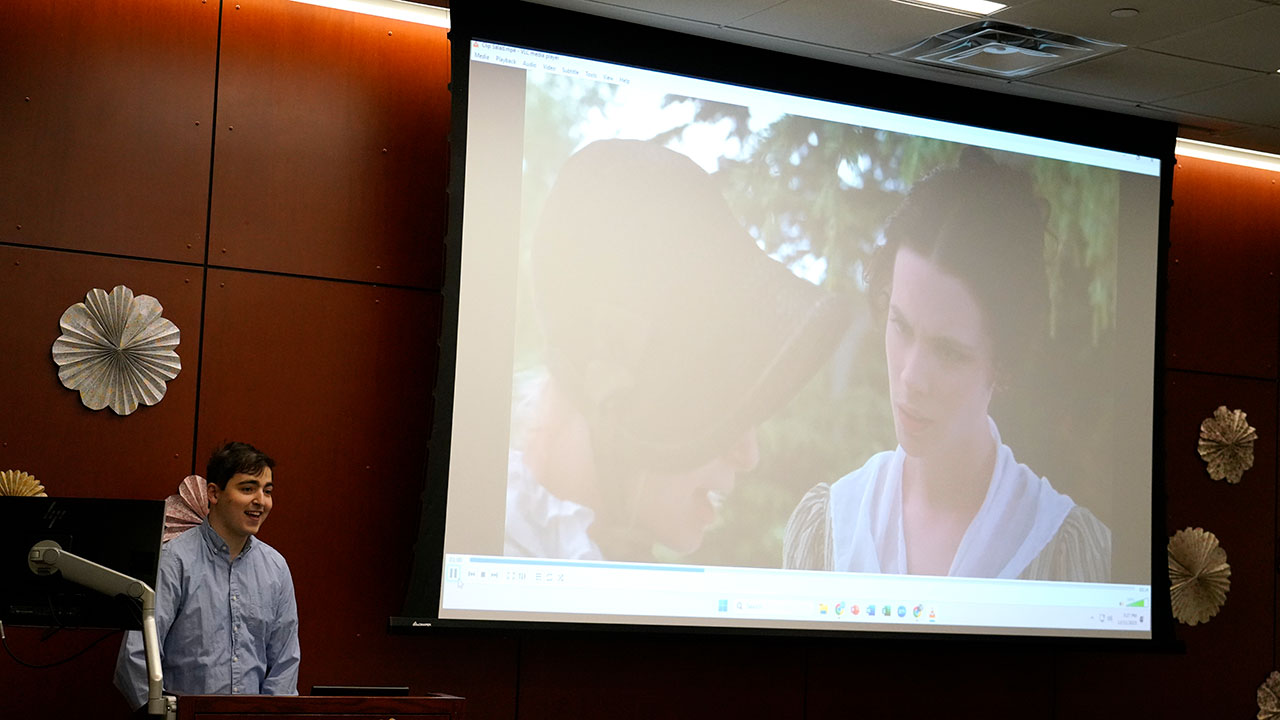
And so Fordham threw a birthday bash for Jane Austen, a novelist whose work continues to permeate modern culture—from the oft-quoted first line of her cherished Pride and Prejudice to the many film adaptations that bring her tales of romance and social norms in Regency-era England to new audiences. It was one of many celebrations across the country where “Janeites” donned period dress and reveled in their love for Austen’s enduring characters and stories.
English professor Susan Greenfield, PhD, who organized the Dec. 11 party at Rose Hill with philosophy professor Lauren Kopajtic, PhD, said few writers are more deserving of such hoopla.
“She is probably the most beloved author in the world at the moment,” Greenfield said, “and we both agreed we should make this as big and splashy an event as we could.”
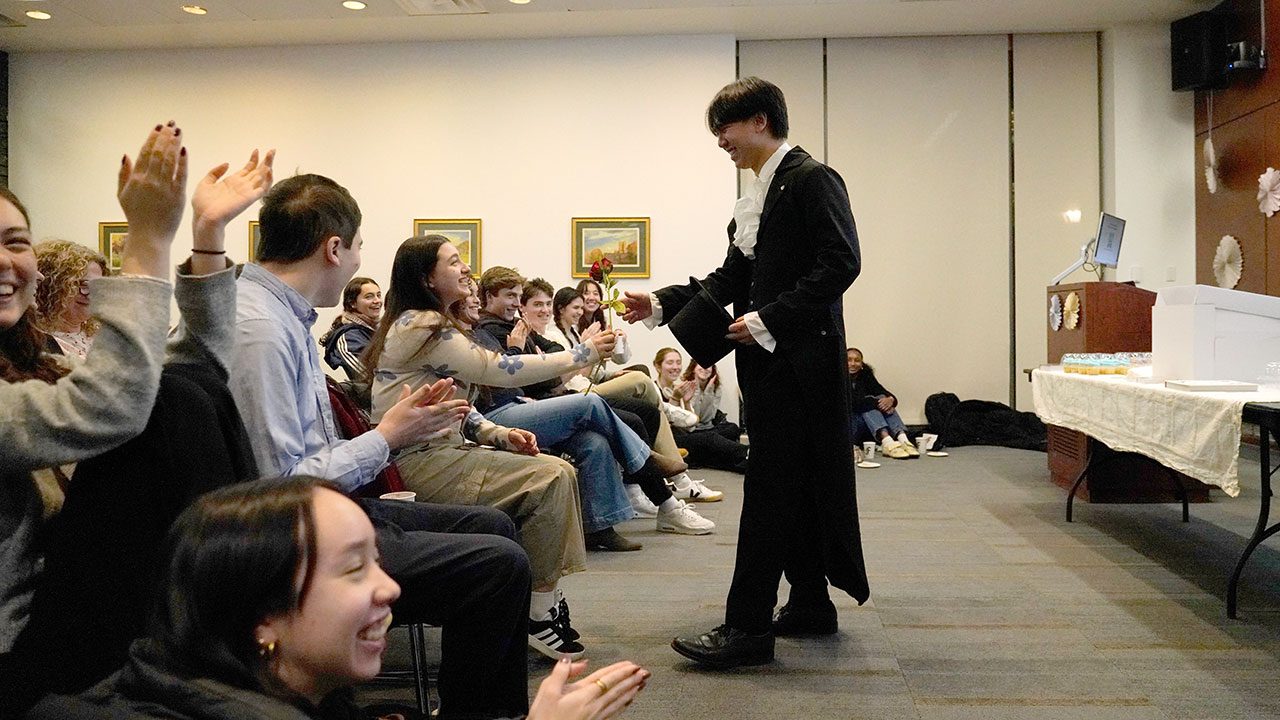
Fordham Now sat down with Greenfield and Kopajtic ahead of Austen’s birthday on Dec. 16 to learn why she’s as popular as ever today.
Fordham offers several classes devoted to Austen that regularly fill up immediately. Why do you think they’re so popular?
Susan: A lot of students are initially drawn in by the romance, but they know that there’s more than just that. Our classes show that she’s also addressing the big, hard, painful questions about life. How you get a male character and a female character together is a very normative formula. But what is the problem with forcing people into these small structures? What about the characters who don’t want to get married? Students are attracted by the escapism, the pleasure, but also the brilliance. Austen is very funny, and she’s very smart, and so are our students.
Lauren: One of the things I hear from my students is that they read these big, doorstopper fantasy books. They’re a little embarrassed about it—but they’re reading 700-page novels! They also think it’s good for them to read the classics, and they think of Austen novels as classics. Many of them will come into the class saying, ‘I’ve only seen some movies, but I really like this, and I’ve always felt like I should.’ The class gives them the reason and the motivation to do it.
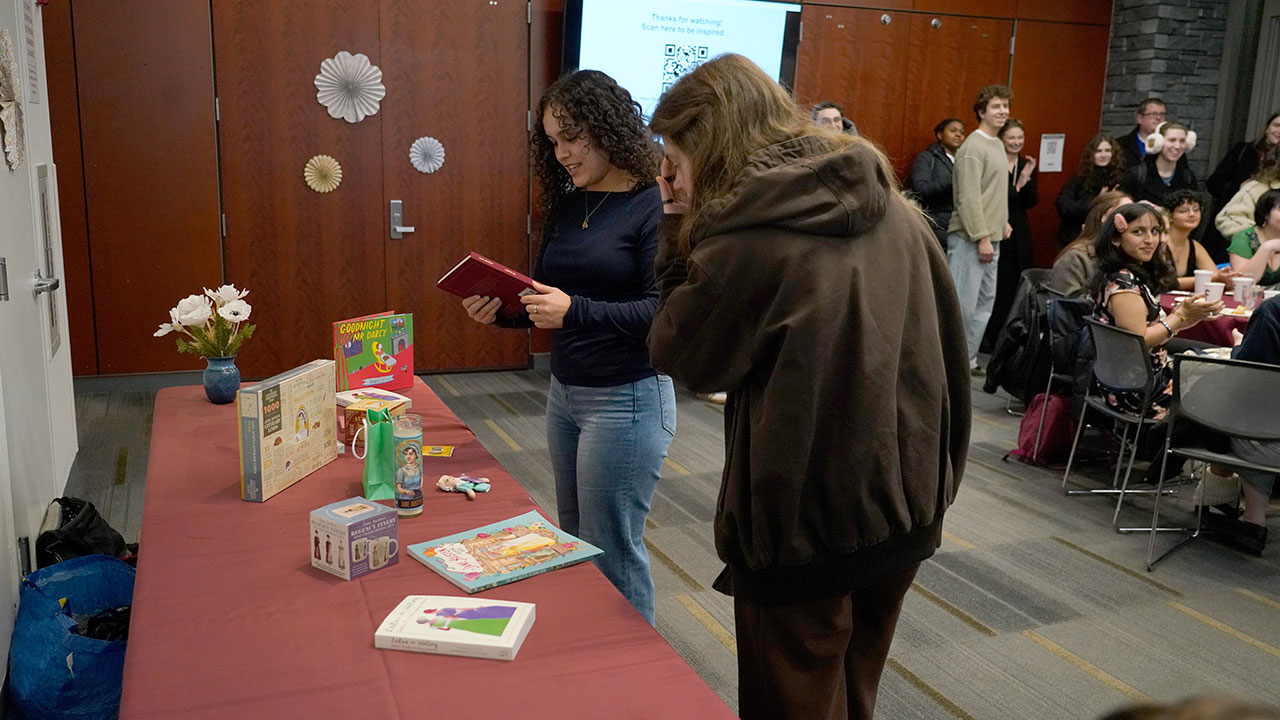
Lauren, how do you incorporate Austen’s work into your interdisciplinary philosophy course, Jane Austen and Moral Philosophy?
We’re reading Austen with her contemporaries and her predecessors, like philosophers David Hume and Adam Smith. If you know Pride and Prejudice, Mr. Collins, who is one of the characters in it, reads from one of these moral texts in the novel. The idea is to recreate the moral world of Austen’s moment. Students confront the material and think about it from a new direction. It’s not just ‘How would you stage a grand love scene?’ But, ‘How are we seeing human relationships depicted?’ ‘How are we seeing ethical conundrums depicted?’ I’m trying to open up the ethical world of the novels.
What is it about Austen’s writing that has made her appeal so enduring?
Susan: Austen perfected a technique called free indirect discourse. It’s really important because everyone does it all the time now in all kinds of writing. It’s a narrative technique where she renders characters’ thoughts in the third person, so that you get this multidimensional perspective of being inside a character’s head and outside a character’s head simultaneously.
Also, there are so many dimensions to her writing. For Austen scholars, there’s a lot of debate about her own politics. In Mansfield Park, to give an example, the manor is being supported by enslaved labor, and there’s a big school of Austen scholars who would say this novel is all about enslavement. The Hollywood angle, celebrating so much of romance, is really not the only way she’s been experienced over the years.