

Even beyond the Ramily, people often talk about reasons to love Fordham. This fall, for example, higher-ed expert Jeffrey Selingo put the Jesuit University of New York on a list of “large leaders” in his new book, Dream School: Finding the College That’s Right for You. He was drawn to the mentoring program, Fordham’s “strong global perspective,“ and grads’ career outcomes.
We agree, and we know there’s plenty more to love.
So, taking a cue from New York magazine, which publishes a “Reasons to Love New York” issue every December, we connected with students, alumni, professors, and other Rams to compile 19 reasons to love Fordham right now, as we approach the midpoint of the University’s 19th decade.
Since 1841, Fordham has been an institution in constant evolution—and yet unmistakably Fordham from one generation to the next, always embracing academic and societal challenges, energizing the city we call home, and making lives better through education and service.
Our 19 reasons offer a snapshot of what makes Fordham distinctive today, illustrating the enduring spirit of Rams who pursue what matters most.
1. Because we’re the No. 1 ‘Best for Vets’ college in New York
Military Times ranked Fordham No. 1 in New York state and No. 23 nationwide when it comes to meeting the full spectrum of student veterans’ needs, from help with the transition to college life to health and wellness to career development.
“The veteran community at Fordham has been a bastion of camaraderie and assistance,” says Adam Tiffany, a former Army combat engineer who began pursuing a graduate degree in social work while teaching in the University’s ROTC program. “It’s a feeling of not being lonely.”
2. Because our community is truly global
Fordham students come from across the country and around the world to get a global education in New York City.
The undergraduate Class of 2029 includes members from almost every state and 60-plus countries—with the most first-year international students coming from Vietnam, China, India, Canada, and Brazil.
And Fordham is ranked No. 25 in the U.S. for undergraduate participation in study abroad programs. More than 50% of Fordham undergrads choose to study abroad, including at our own London campus. In 2025–2026 alone, 1,000-plus undergrads will study in 34 countries.
3. Because our alumni mentors boost student success

Why is the Fordham community so strong?
For more than two decades, the Fordham Mentoring Program has been a powerful part of the answer.
Each fall, several hundred grads volunteer to connect with students looking for career guidance and advice. The program draws alumni across generations, at all stages of their careers.
Retired physician Tony Mandour ’70 got involved because he was looking for a way to give back a little. His mentee, medical student Sara Hammad ’22, expected only a career-focused connection, but it grew into a “truly holistic mentorship,” she says. By sharing his life’s experiences, Mandour says he found a new sense of “gratification” and purpose.
4. Because our Internship Promise sets students apart

Internships have always been at the heart of the Fordham experience. Now, with the Fordham Internship Promise announced last year, every undergrad has the opportunity to land at least one, including research and other experiential learning.
Take Stephanie Lane ’25, for example. She interned with iHeartMedia before earning a full-time position there as a video producer upon graduation.
“The Fordham name helped make my resume stand out at these bigger companies where I never thought I would have a chance,” she says. “Being able to do an internship in this city, the greatest city in the world for my industry, it really helped.”
5. Because Fordham Theatre thrives on the world’s biggest stage
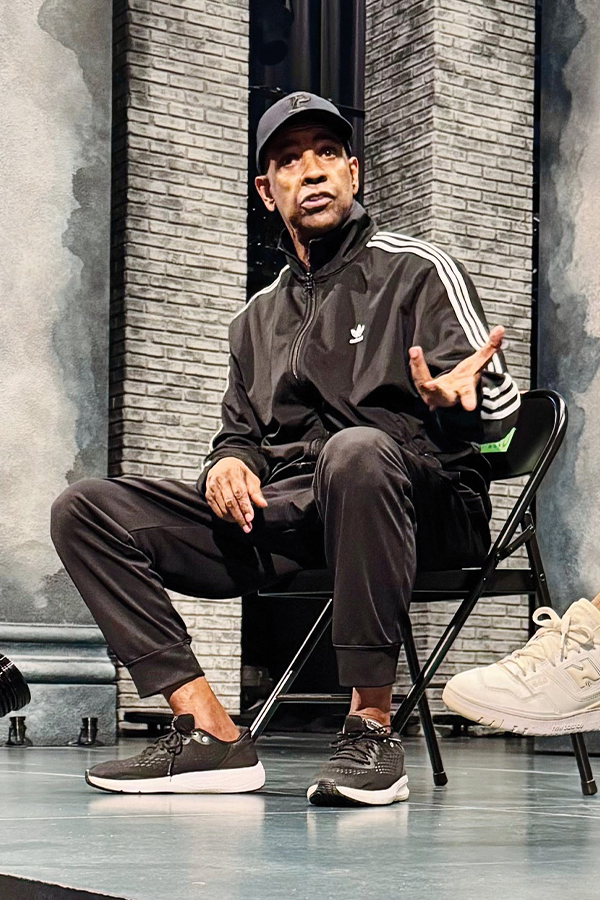
Fordham Theatre has long been an incubator for new talent in the performing arts capital of the world. Led by veteran director May Adrales, the program remains committed to hands-on mentorship and direct access to industry leaders, many of whom are Fordham grads.
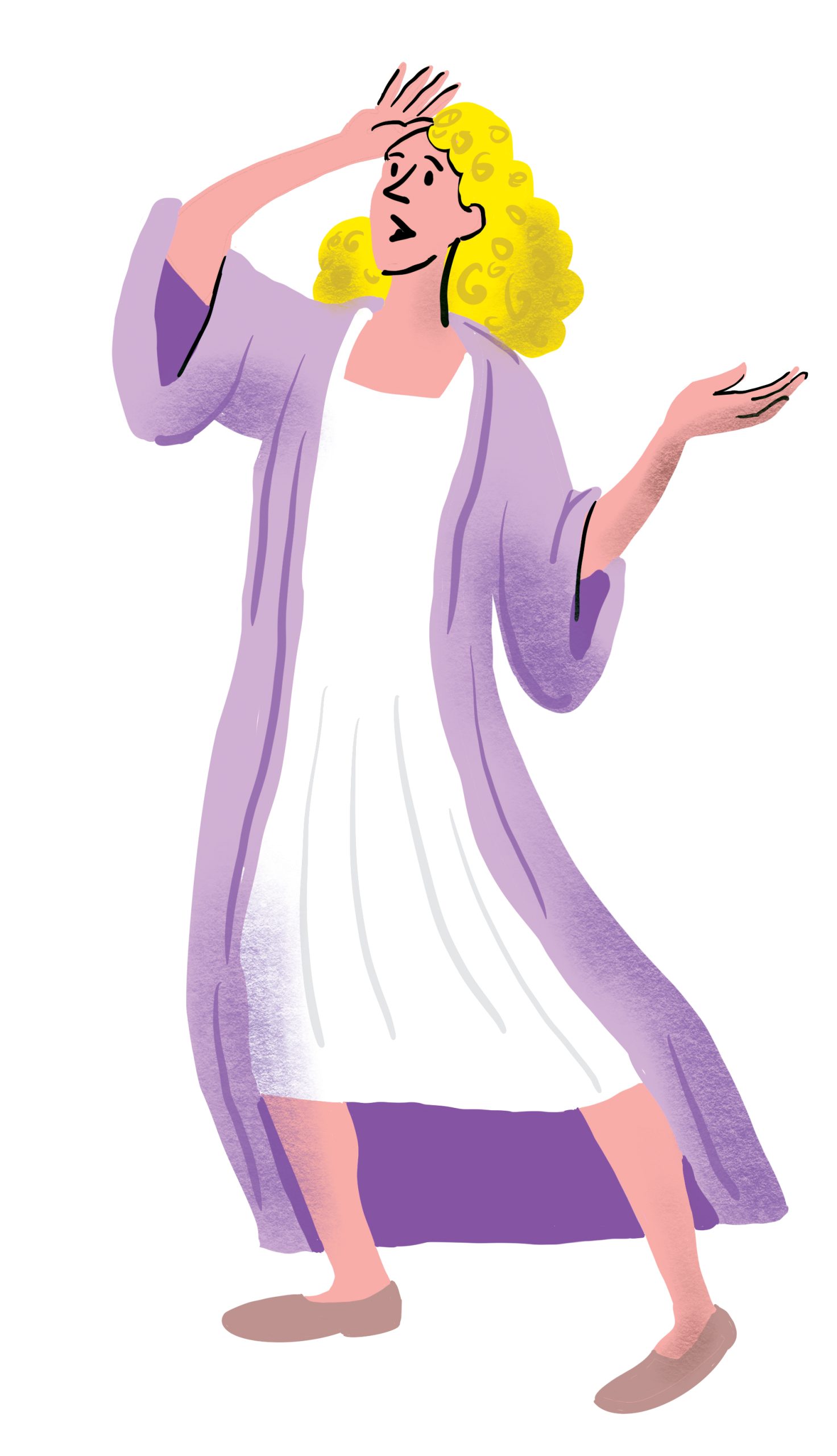
John Johnson ’02 is a nine-time Tony-winning producer who teaches a course on his craft. Last spring, he invited Fordham students to the premiere of his latest Broadway hit, John Proctor Is the Villain. A few weeks later, Denzel Washington ’77 treated students to an exclusive talkback following his star turn in Othello at the Barrymore Theatre.
“It’s amazing how much stuff Fordham people are producing and acting in and writing,” says Tony Macht ’17, one of the stars of the hit comedy Oh, Mary! “It makes me very proud.”
6. Because Ramses is a star (and our mascots turn pro)
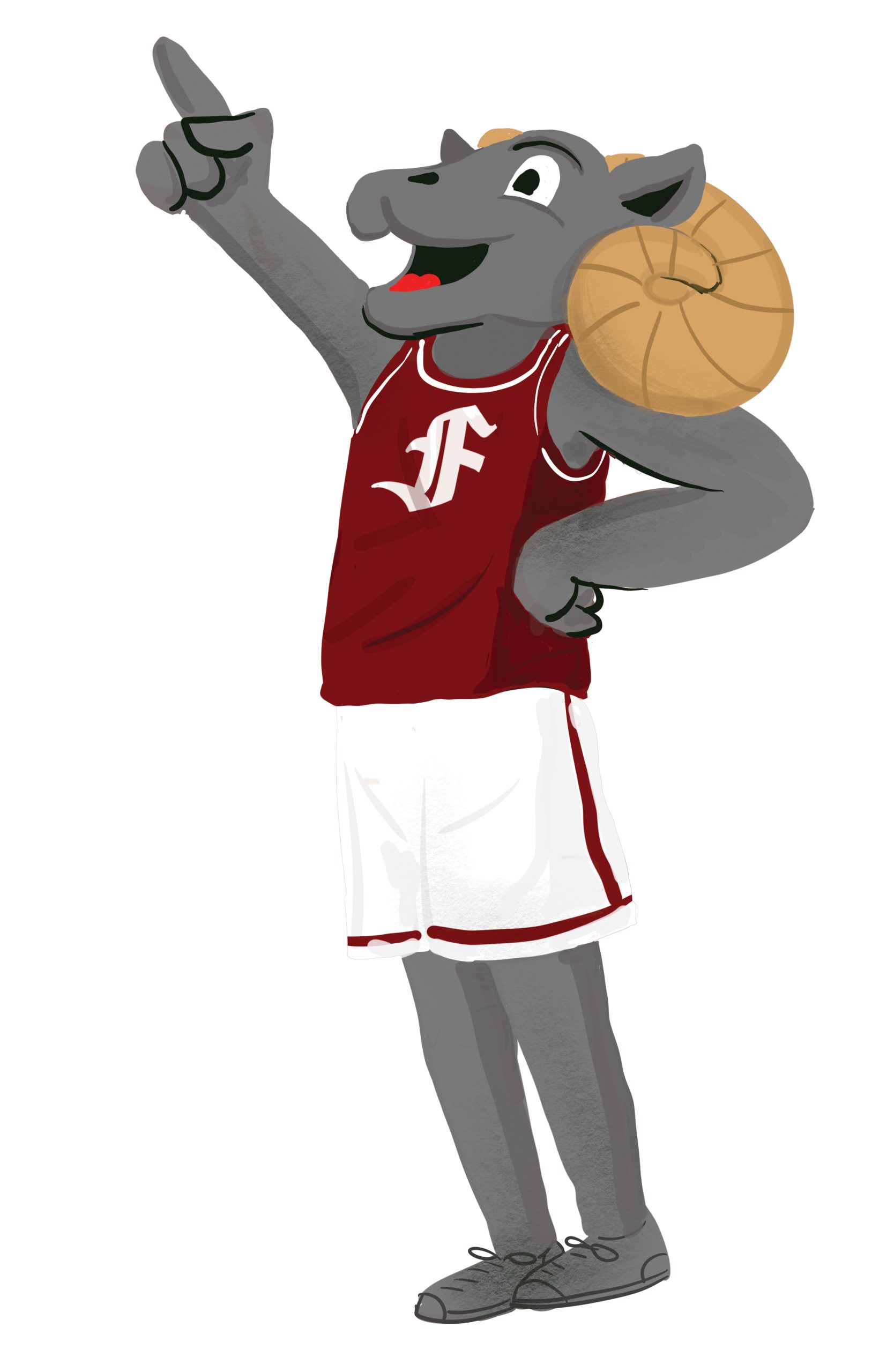
Fordham’s beloved mascot has emerged as a social media star in the past year—reenacting scenes from the holiday movie classic Elf, touring the Empire State Building, and dancing with Jimmy Fallon and the Weeknd on national TV just days before the 2025 commencement.
For Abigael Hartlieb ’25, who earned a degree in international studies in May, commencement also marked the end of her tenure as Ramses. Aside from having to keep her role a secret, the job came with other challenges. “It’s as hot and sweaty as you would think in the suit,” she says. But she loved embodying Ramses’ positivity and “being able to make [people]smile.”
She hasn’t left that behind. Since graduating, she’s been working as a mascot for a pro team (she can’t reveal which one) while pursuing a master’s degree in public health.
View this post on Instagram
Fun fact: Former Ram mascot Abigael Hartlieb ’25 has gone pro, but she’s not the first grad to make that leap. Joseph Franquinha ’04 once played the New York Liberty’s mascot.
7. Because the Fordham Foundry helps bring business ideas to life
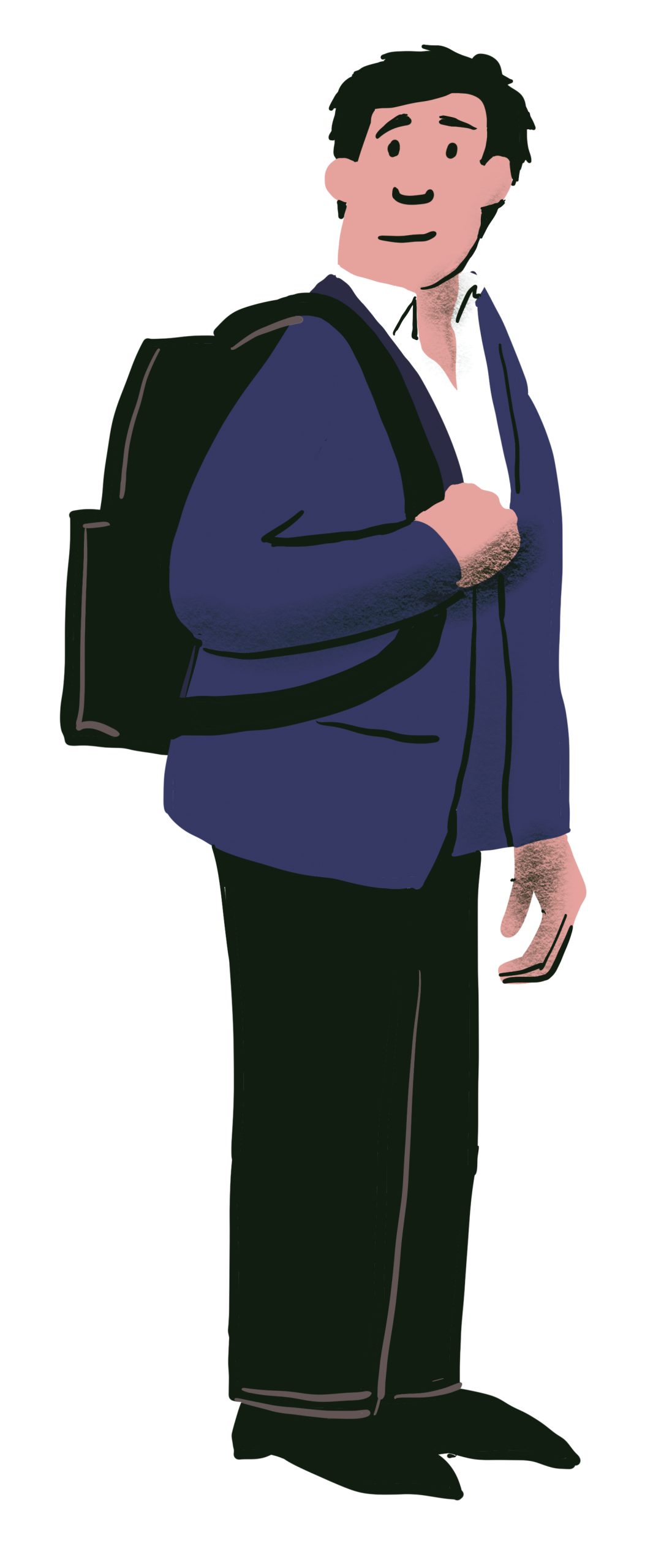
Brandon Kim ’15 came to Fordham to study philosophy and art, but when he found out about the Fordham Foundry, the University’s incubator for entrepreneurs, he “went all in on it,” he says.
Today, he and his brothers are co-founders of Brevitē, a Brooklyn-based direct-to-consumer backpack company. Kim is grateful to the Foundry for helping him “turn an idea into a thriving business. … My mentors at Fordham helped me build an ethical, sustainable company that I can really be proud of,” he says.
8. Because our archives are home to revolutionary treasures
Why have so many scholars, historians, curators, and filmmakers requested a certain 18th-century image from Fordham’s archives?
For one thing, there’s an air of mystery to the drawing. Many scholars, including the late Fordham art history professor Irma Jaffe, believe it shows prisoners starving to death aboard a British ship. Others have suggested it depicts men in a mental hospital.
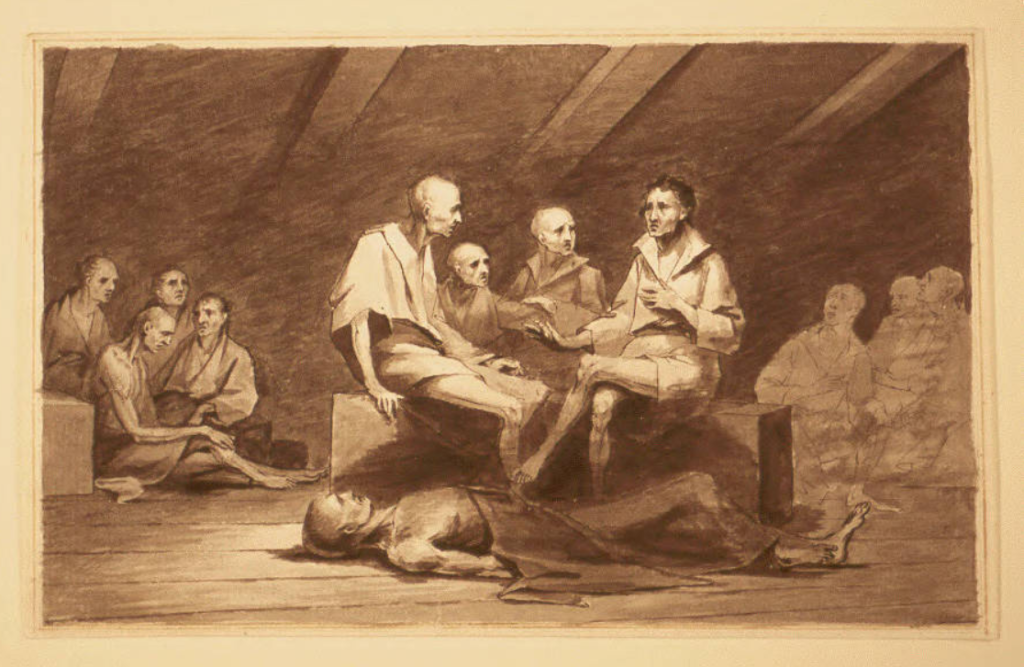
American Prisoners on Board a British
Prison Ship) by artist and Revolutionary
War veteran John Trumbull is part of
Fordham’s Munn Collection.
What’s not in doubt is that it’s the most-requested image in the Fordham archives, says Linda LoSchiavo ’72, director of the University libraries.
As the U.S. prepares to celebrate the 250th anniversary of the Declaration of Independence in July, keep an eye out for this Fordham treasure. One place you’ll spot it is in The American Revolution: An Intimate History (Knopf, 2025), the book that accompanies Ken Burns’ latest acclaimed PBS documentary.
9. Because we’re always up for an ‘Urban Plunge’
Since the 1990s, Fordham’s pre-orientation Urban Plunge program has given first-year students a chance to explore the city’s diverse neighborhoods through community engagement.
This fall, the program initiated monthly offerings for all students. To kick off U.N. Climate Week in September, Fordham partnered with the Bronx River Alliance for a kayak tour of the river. Students also participated in a litter cleanup in Concrete Plant Park and a conversation on environmental stewardship with a local historian.

“Being on the water made the river feel less like a distant environmental concept and more like a living neighborhood—one with a history of neglect, continuous restoration work, and people actively fighting for environmental justice,” says Fordham junior Michael Buana.
10. Because Rose Hill is one of the most beautiful urban campuses in America
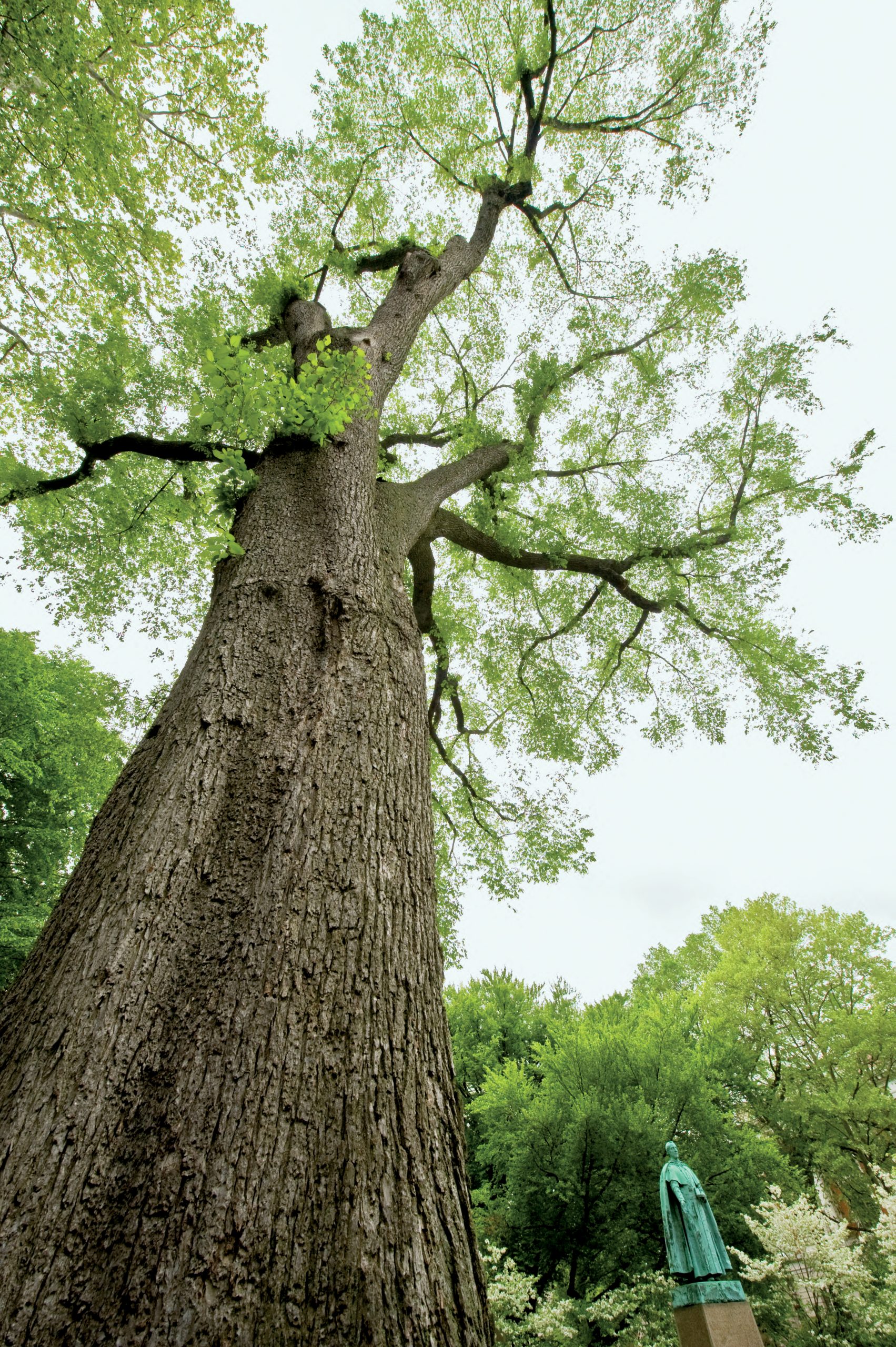
Fordham’s 85-acre campus in the Bronx is home to more than 1,000 trees across 40 species, including a magnificent American elm that predates the American Revolution. The tree has survived hurricanes and a 1940s outbreak of Dutch elm disease that decimated the species in the Northeast. Dating to the mid-1700s, it stands in front of Cunniffe House, next to the statue of Fordham’s founder, Archbishop John Hughes, and is far and away the oldest resident on campus.

“Rose Hill has the most unique collection of American elms that I’ve ever seen,” says Steve Farrelly, a master arborist who cares for the trees on campus. William Schneider ’06, ’19 MBA, associate director of grounds and transportation, says the trees’ “beauty and bloom” create a positive environment. “Many students sit under the trees in Adirondack chairs, studying, relaxing, or just enjoying the moment.”
11. Because our faculty share their expertise via the media
When it comes to undergraduate teaching, Fordham professors are exceptional—No. 25 in
the country, according to U.S. News & World Report. They’re also remarkably generous in sharing their expertise with the public. Here are just a few examples from the past year.
On Popes Francis and Leo: David Gibson, director of the Center on Religion and Culture, has been quoted more than 3,000 times this year. Known for his Vatican expertise, he was in particular demand during the papal transition in the spring. He appeared on most of the major TV and cable networks and has been quoted in The New York Times and elsewhere.
On politics and elections: Political science professor Christina Greer, PhD, has made 1,000-plus media appearances this year, speaking about the New York mayoral race and Trump administration policies. A frequent contributor to MS NOW and WNYC, she is quoted often in The New York Times and writes a column for the New York Amsterdam News.
On ticks and public health: Tom Daniels, PhD, director of Fordham’s Louis Calder Center Biological Field Station, was in especially high demand during peak tick season this summer. He was quoted nearly 1,000 times, often at the center, which publishes a weekly tick index indicating the risk of being bitten by the nymphal or adult deer ticks that carry Lyme disease. Publications from The Wall Street Journal to Scientific American consulted him.
12. Because we’re leading conversations on AI and ethics

The growth of AI presents opportunities for society—and significant concerns that must be addressed. “This is an important trade-off for us to think about,” Fordham economics professor Marc Conte, PhD, said at a two-day Symposium on Responsible AI in October. Fordham hosted the event, which was co-sponsored by IBM, New York University, and the AI Alliance, of which Fordham is a member.
The AI Alliance is devoted to open collaborations that create better AI systems—ones that protect privacy, avoid baked-in biases, and help with challenging projects like better climate models and drug development processes.
“In so many ways, AI is a world-changing tool for good,” Fordham President Tania Tetlow said in prerecorded remarks that kicked off the symposium. “But it is also a tool with unintended consequences,” and proposing and enforcing ethical boundaries for AI “has never been more crucial and more urgent.”
13. Because WFUV is as vital as ever

In the face of funding cuts and declining trust in commercial news, public media has never mattered more. At Fordham, WFUV, our nationally acclaimed NPR station and New York’s home for music discovery, continues to provide an essential service while helping students launch their careers.
Today, WFUV students are in the locker rooms covering New York’s pro teams; at City Hall digging into issues that matter; backstage at marquee concerts, like Phoebe Bridgers at Forest Hills Stadium; and behind the camera when bands perform live in the studio.
“WFUV is the place where I learned how to be a journalist,” says Lainey Nguyen, a junior and student news manager at WFUV.
14. Because we partner with our neighbors to solve the city’s most urgent challenges

In July, the University broke ground on the Bronx Green Jobs Center, a new workforce development hub on East Fordham Road. Set to open in fall 2026, this first-of-its-kind center will deliver job training, employment services, and support for aspiring entrepreneurs in sustainable industries.
In the meantime, local nonprofits seeking to address urgent matters have a new partner at Fordham: the Bronx Research Institute for Community Solutions (BRICS). Launched last year, BRICS operates on the belief that communities thrive when the focus is on their strengths and potential. That means asking local groups what issues they’d like to study and connecting them with Fordham experts to make it happen.
Current studies include air quality, financial literacy, and food security. BRICS is supported by a gift from Rose DiMartino ’77 MA. “I like the fact that it involves students, too, because … they start to think, ‘You know what? I can be an effector of change,’” she says. “This is what it’s all about.”
15. Because our student clubs launch careers
Created by students for students, Fordham’s 200-plus clubs are the heartbeat of the campus community. Beyond fostering lifelong friendships, many of them provide rare opportunities to gain practical experience in New York City, in fields ranging from the arts to finance to medicine.
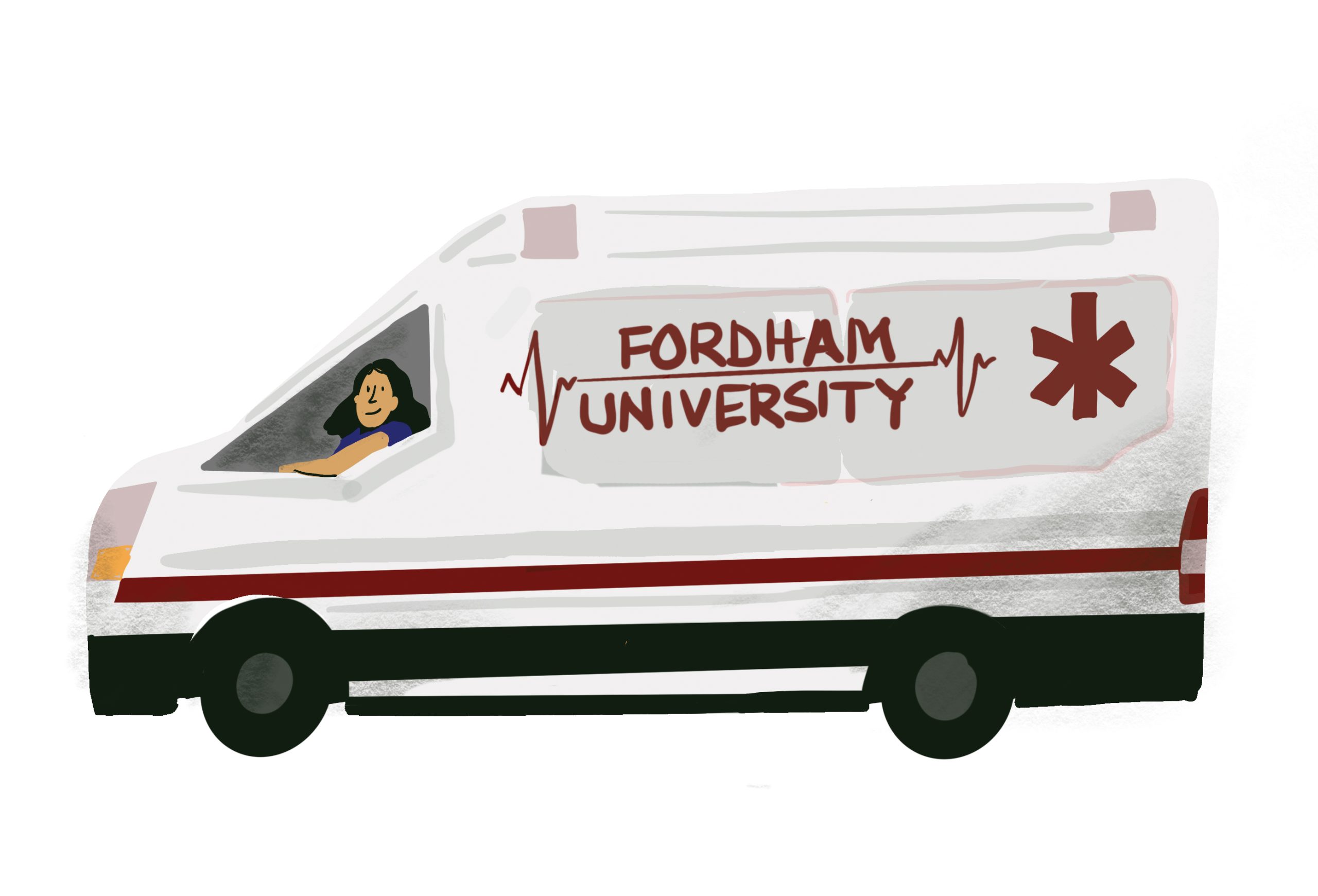
Take Fordham’s student-run Emergency Medical Services squad, for example. Known as FUEMS (it’s pronounced “fumes”), the group operates out of a Queen’s Court room with a stocked fridge, Nintendo Switch, and CPR dummy all within arm’s reach. The state-certified group has been active since the 1970s. In 2018, it was recognized as the top college EMS agency in the country.
“FUEMS taught me how to ask patients pertinent questions, treat them in a pre-hospital setting, and communicate with other providers,” says former crew chief Nicole Kilada ’24, now in medical school. “I put what I had learned in textbooks into practice in a way that not many other opportunities offered.”
16. Because we explore the culture of religion
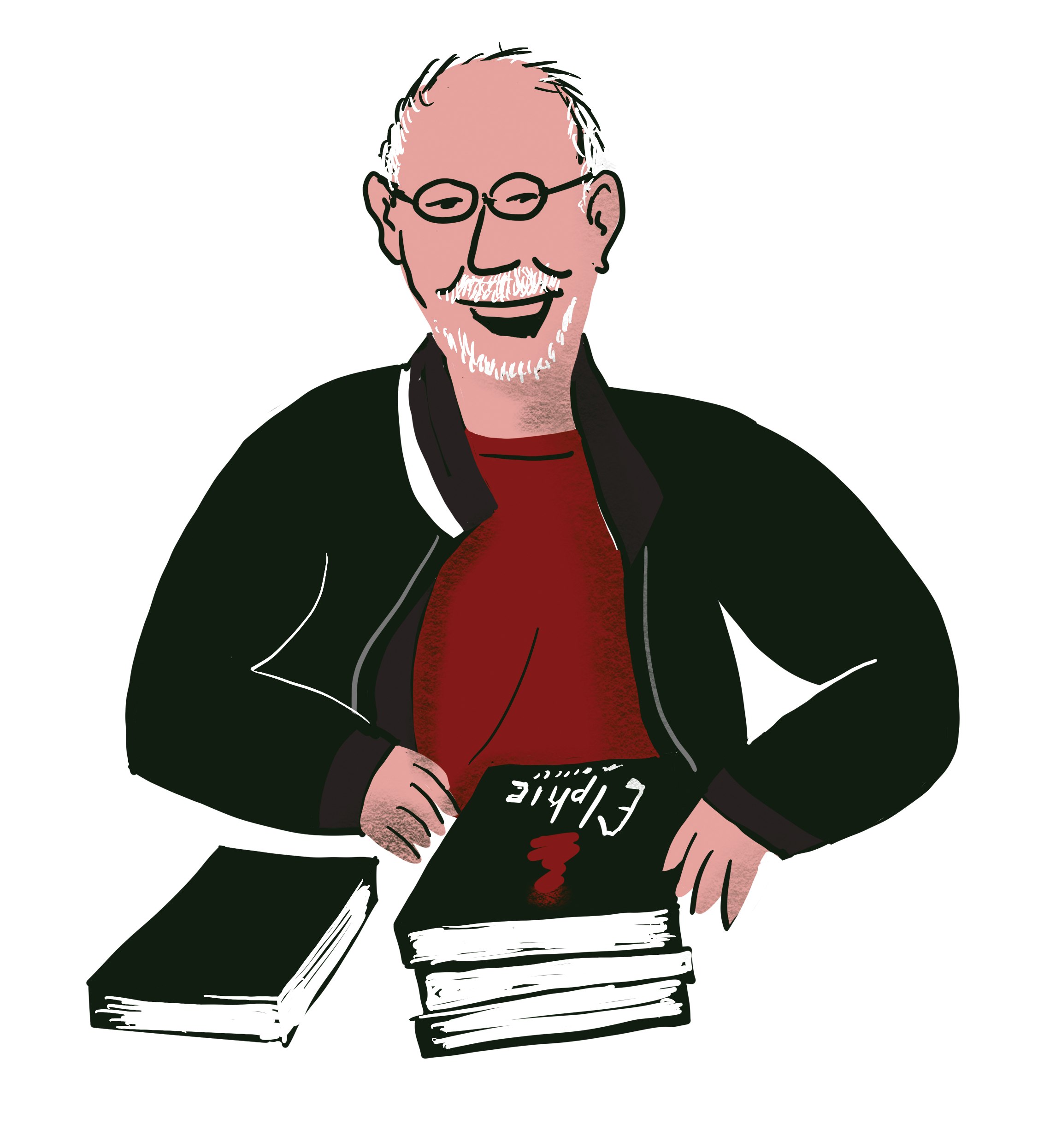
Ethan Hawke and Jessica Chastain are among the boldface names the Center on Religion and Culture has brought to Fordham in recent years.
The center’s fall lineup included Instagram-famous dogsledder Blair Braverman, who often writes about her Jewish identity; Dead Man Walking author Sister Helen Prejean; and Gregory Maguire, whose novel Wicked inspired the hit Broadway musical and two-part movie series. In a rare public appearance, he discussed the intersection of spirituality and art in his creative journey as a Catholic. He also discussed his latest book, Elphie, which explores the origins of the Wicked Witch of the West with the same compassion and complexity that has made Wicked a cultural touchstone.
“We lean into the culture side of religion and culture,” says David Gibson, director of the Center on Religion and Culture. “Interfaith, any faith, no faith—anything that gets you in the door in person to experience art or converse with an artist.”
17. Because we have a small-but-mighty university press

What’s 118 years old and still punching above its weight in the book business? Fordham University Press (FUP). With just 13 employees, the oldest Catholic university press in the country acquires, edits, publishes, and promotes 60 books a year. And while FUP has long-standing strengths in philosophy and theology, its recent titles reflect a dizzying array of topics, from African American memory of the Civil War to the queer, Gilded Age photographer Alice Austen. With the launch of Empire State Editions in 2010, the press cemented its local expertise. Today it’s seen as the “premier New York imprint,” says FUP Director Fredric Nachbaur, with a “rich, robust list in New York history and culture.” One of its recent books, Movement: New York’s Long Battle to Take Back Its Streets from the Car by Nicole Gelinas, won the 2025 Gotham Book Prize.
18. Because Fordham has upped its food game

Since it opened in 2022, the Joseph M. McShane, SJ Campus Center has been a kind of living room for the Fordham community. It’s also home to the Marketplace, the most visible example of the University’s expanded dining options. It features a chef’s table, halal station, vegetarian and vegan meals, and food for every palate. On the lower level, the lounge-like Dagger John’s offers options like pizza, buffalo cauliflower bites, sushi, and the much-talked-about boba.
“I like having a chance to see people [in the McShane Center]before class,” says Olivia Vricella, a grad student pursuing a degree in media management. “It’s really convenient, and there are a lot of places to eat.”
19. Because Java with the Jesuits serves up free coffee and conversation
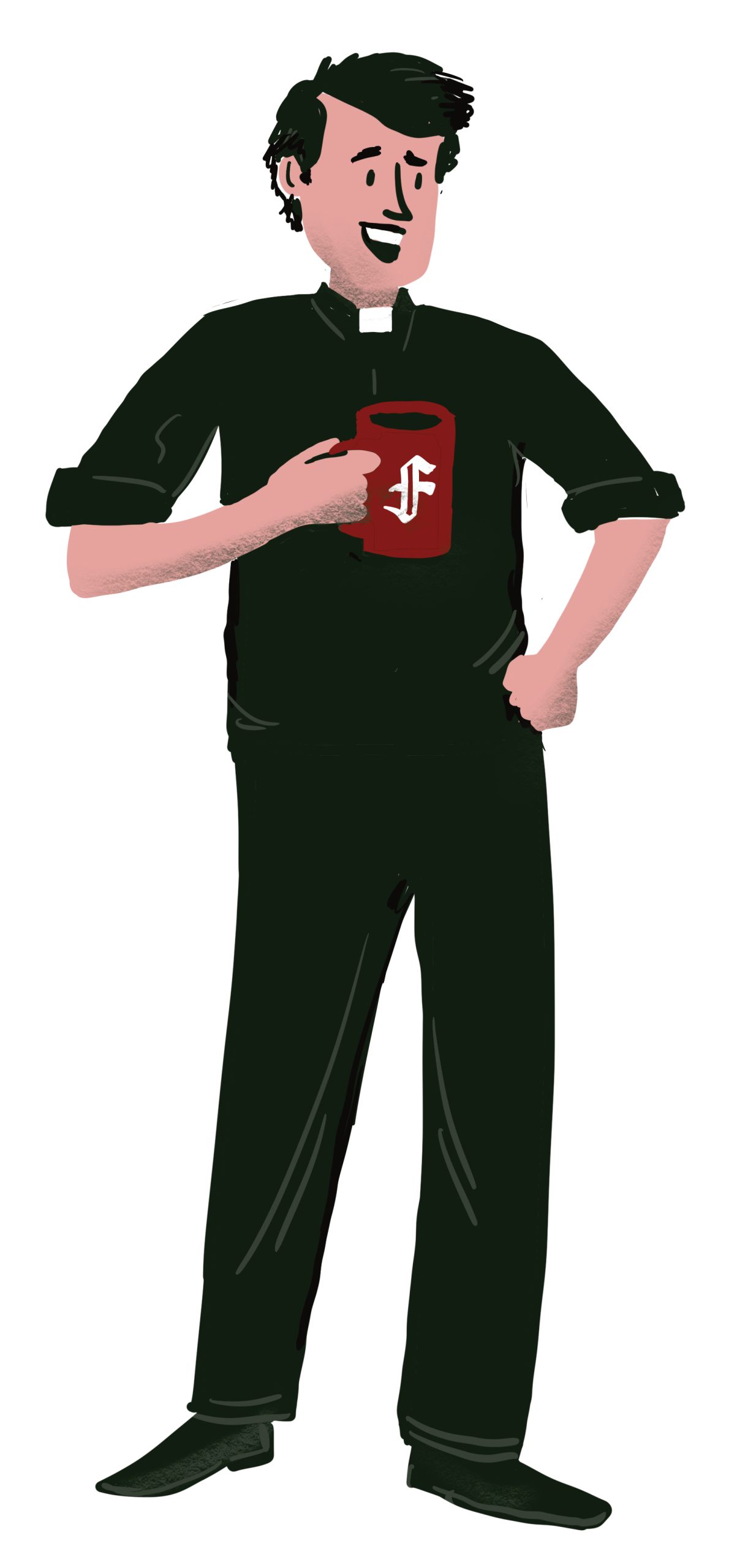
On Thursday mornings, the new place to be on campus is at a folding table with paper cups and a couple of Fordham grad students who are priests in training.
Java with the Jesuits is an informal opportunity for free coffee and conversation. Hosted by the campus ministry office at Rose Hill and Lincoln Center, the events have become increasingly popular among students, faculty, and staff. “Some people change their schedules for this so they can come,” says Erin Hoffman, director of campus ministry at the Lincoln Center campus.
The Jesuits’ warm and open dispositions mean they’re often on a first-name basis with regulars. One student, hustling from one midterm to another, still made sure to grab her cup and greet them as she jogged to the nearest elevator: “This is the highlight of my week!”
What’s on your list?
Why does Fordham hold a special place in your heart? Tell us your reasons at [email protected].
