


Grounded in neuroscience and trauma-informed care, the Change Triangle is a step-by-step guide to emotional health. It can help us manage upsetting moments, understand ourselves more deeply, feel more calm, and build our resilience.
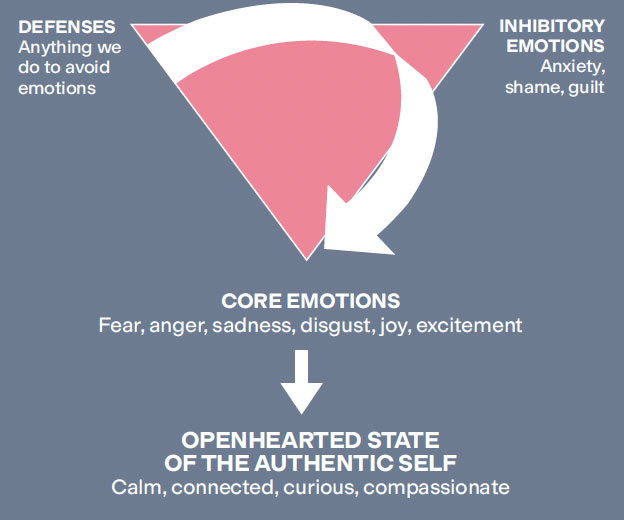
Here’s how to work the Change Triangle yourself.
1. Check in with Your Mind and Body
Take stock of your mental state. Are you worrying about the future? Ruminating on the past? Are you beating yourself up with negative thoughts? Are you curious and present? Just become aware.
2. Notice Your Breathing
Is it shallow or deep? Fast or slow? Experiment with slow, deep abdominal breathing. Keep your chest down, allow your stomach to pop out like a Buddha, and imagine sending air through your core to your feet. Hold your breath briefly to sense the internal pressure, then slowly exhale through pursed lips. Feel yourself relax.
3. Scan for Tension and Calm
As you breathe slowly and deeply, scan your body from head to toe. Without judging yourself or trying to fix anything, notice where you feel tension. Where do you feel most calm, solid, or still? Breathe and relax into that calm spot for 10 seconds or more. Allow yourself to slow way down and enjoy these moments.
4. Name Your Feelings
As you slowly scan your mind and body, do you feel anxiety? Sadness? Fear? Anger? Joy? Excitement? Shame? Guilt? Calm? Name and validate all the emotions you feel. If there are many, imagine expanding to accommodate them all.
5. Locate Yourself on the Change Triangle
Which corner best represents your state of mind? Defenses, inhibitory emotions, core emotions? The goal is to move toward the calm, connected, curious, compassionate state below the triangle.
For every step above, strive to approach yourself with curiosity and kindness, putting aside judgment. This is a lifelong practice, not something you’ll perfect right away.
—Hilary Jacobs Hendel, LCSW, earned an MSW from Fordham’s Graduate School of Social Service in 2004. She is a certified psychoanalyst and AEDP psychotherapist and supervisor, and the author of two books, It’s Not Always Depression (2018) and Parents Have Feelings, Too (2025).
RELATED STORY: How to Process Your Emotions and Connect with Your Kids
