

As an admirer of Menachem Daum’s documentary films, Magda Teter, PhD, has long wanted to mount a series of his work. “His films deal with the memory and the legacy of the Holocaust in different and complex ways,” said Teter, Fordham’s Shvidler Chair in Judaic Studies, professor of history, and co-director of the Center for Jewish Studies. Now, a year after Daum’s death, the center is presenting “Hidden Sparks—A Film Dialogue: A Retrospective of Menachem Daum’s Films.”
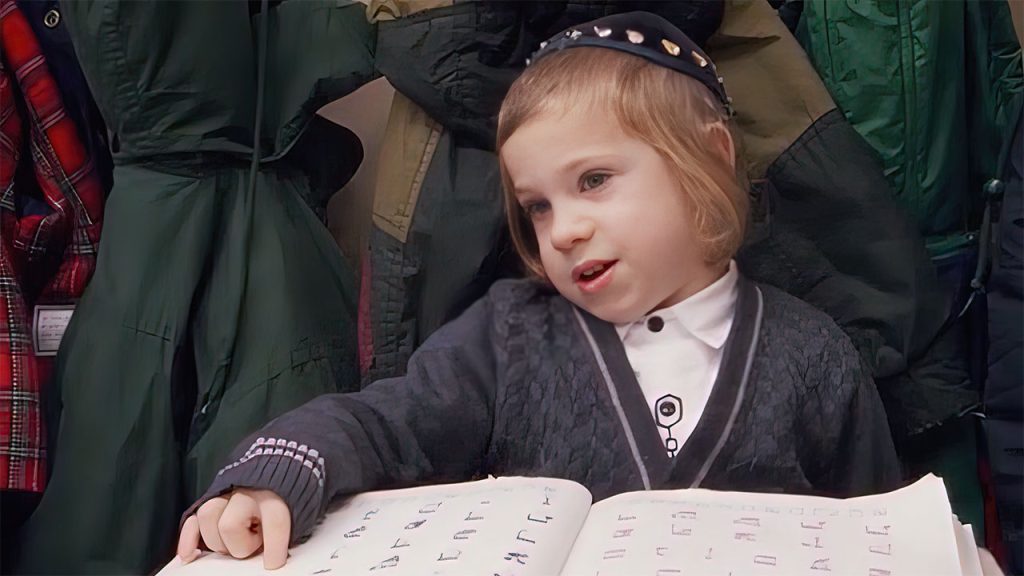
The retrospective began on International Holocaust Remembrance Day, Jan. 27, which aligned with the date that Daum’s co-director, Oren Rudavsky, could speak at Fordham for the screening of the first film, A Life Apart: Hasidism in America (watch the discussion here). Narrated by Leonard Nimoy and Sarah Jessica Parker, the documentary peels back the curtain of New York City’s socially secluded Hasidic Jewish community and provides a rare look into their daily lives.
Rudavsky will also be part of the panel discussions for the series’ subsequent films: Hiding and Seeking on Feb. 3, about Daum’s visit to the Polish family who hid his father-in-law from the Nazis; The Ruins of Lifta on Feb. 9, which explores the Arab-Israeli conflict through the lens of Jerusalem’s abandoned Arab village; and Memory Keepers, Daum’s unfinished film about Polish Catholics and Jews trying to bring Jewish life and culture back to Poland, on Feb. 17.
Finding Common Ground
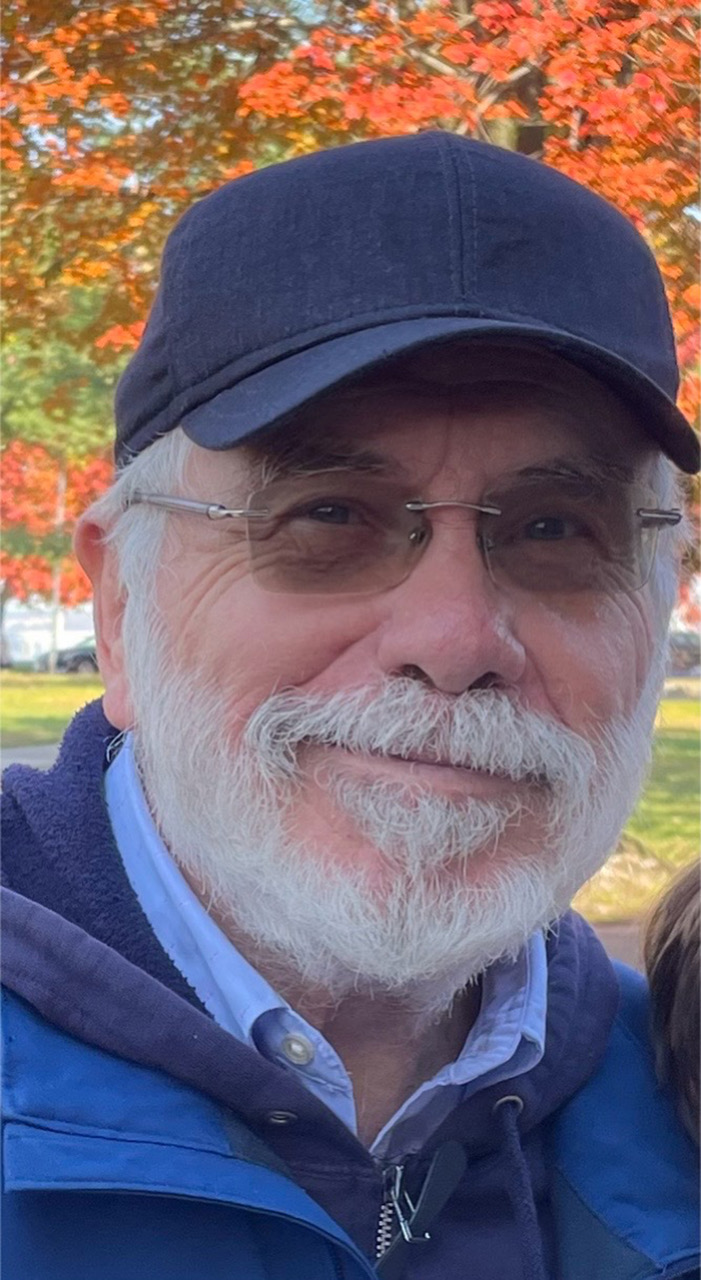
“Menachem always was optimistic,” Rudavsky said in a telephone interview. “And all the films that are playing in the series are part of that … optimism.”
Daum tries to find common ground between historically opposed groups in his films—Hasidic Jews versus secular Jews, Polish Jews versus Polish Catholics, Israelis versus Palestinians—all in an effort to open minds and foster tolerance for one another.
“You’ve got to show stories that you hope will convince people to think otherwise, even if you’re not sure they’re going to,” said Rudavsky of his work with Daum. “It’s incumbent on us to try to do that, even if we’re struggling in a world where there’s a great retrenchment towards narrowness and intolerance.”
It was through Rudavsky that Teter learned that Daum had a deep connection to Fordham: He received his PhD in educational psychology in 1978 from the University. “I’m really happy that there’s some logic—not just my enthusiasm—to have Fordham be the place for this retrospective,” she said.
The film series is part of the center’s year-long exploration of disagreement in Jewish history and culture. “One of the motivations is to show that Jews historically have disagreed with one another…and we should think about how to handle disagreement in a generative way,” said Teter.
Confronting Difficult Questions
A child of Holocaust survivors, Daum partnered with Rudavsky to make films that answer questions about faith, tolerance, and trauma following the Holocaust. Given Daum’s Hasidic upbringing (he later became Orthodox), Rudavsky believed this was “a harder lift” for Daum than it was for himself, the son of a Reform Jewish rabbi.
“Menachem was a remarkable man because he grew up in a very different kind of community, and yet he was able to maintain this spirit and question everything,” Rudavsky said by phone.
In Hiding and Seeking, Rudavsky is behind the camera as Daum journeys to Poland with his Orthodox Jewish sons to meet the farmers who hid his father-in-law, Chaim, and Chaim’s two brothers, for 28 months during World War II.
In the film, Daum says that his sons view Poland as a “land of total darkness.” But by taking them to meet the family that sacrificed their own lives to protect their grandfather, he hopes that “if they can witness decency among Poles, they will recognize that holiness can be found in all people.”
One of his sons is not so easily persuaded, choosing instead to see the farmers as the exception to the rule.
“The whole retrospective shows Daum confronting different questions of his life—his past and his community,” said Teter. “He was teaching us how to face issues that may be uncomfortable and to not embrace the attitudes and views that ultimately lead to some of those traumas.”
The Center for Jewish Studies nurtures a vibrant community of students and scholars at Fordham and beyond. This semester’s events include an ongoing lecture series with the New York Public Library and the first U.S. exhibit of historic Torah binders that survived the Holocaust.
