

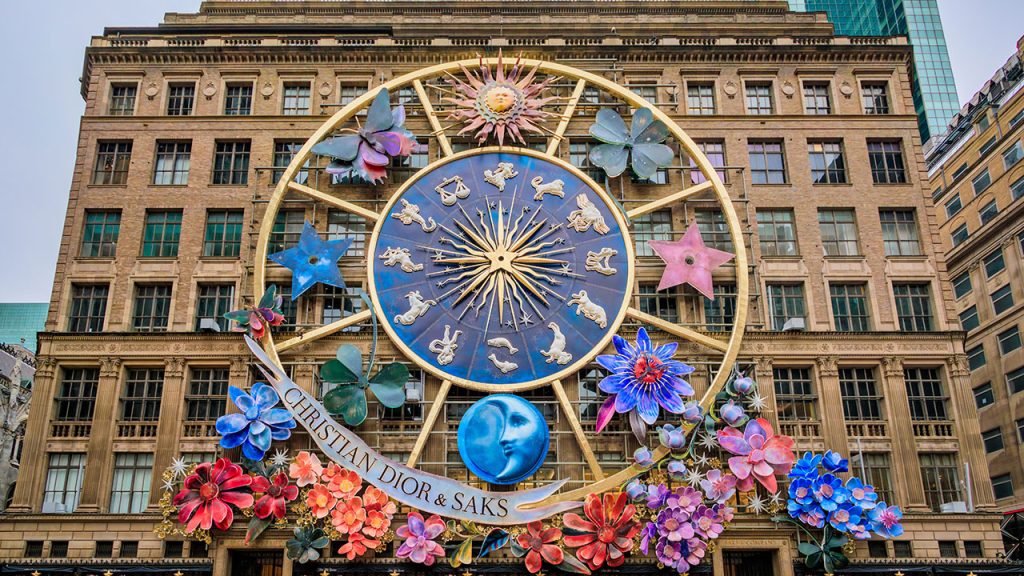
As models, designers, and tastemakers from around the world converge upon the Big Apple this week for New York Fashion Week, all eyes will be focused on runways in Manhattan.
But many in attendance will also be focused on a Houston courtroom 1,400 miles away.
That’s where U.S. Judge Alfredo R. Pérez is overseeing the Chapter 11 bankruptcy case filed last month by retail giant Saks Global, the parent company of Saks Fifth Avenue.
Bankruptcy Ripple Effects

Susan Scafidi, director of the Fashion Law Institute at Fordham, said the bankruptcy will be painful for smaller designers that are key to a healthy, diversified industry. Although Chapter 11 bankruptcy allows Saks to continue operating while it reorganizes itself, once that process is complete, the court may allow it to pay suppliers just pennies on the dollar for the inventory they provided to Saks. Industry experts are closely watching the fallout.
“We’re already seeing brands that are saying, ‘I just simply cannot continue,’ which is very sad,” she said.
Scafidi said the bankruptcy will have minimal impact on the events of Fashion Week, as they’d been organized and planned well before the filing. Some smaller, independent designers will skip it, she said, but that’s because many long ago decided it wasn’t cost-effective for them.
“It’s been a difficult year for other reasons—tariffs in particular—so if this Fashion Week is a bit quieter, the bankruptcy isn’t the only reason,” she said.
What Led Saks to Bankruptcy?
Scafidi said the reasons for Saks Global’s collapse are both strategic and structural. One reason the firm—best known for its flagship store across from Rockefeller Center in Manhattan—went bankrupt was a 2024 acquisition of the Neiman Marcus Group for $2.7 billion, which was financed with an unmanageable amount of debt.
But she said the firm also fell victim to the shift toward online retail, which has transformed even luxury shopping habits.
“Whether you’re buying socks or handbags that cost tens of thousands of dollars, it’s all online now, both in the secondary [pre-owned] and new markets,” she said, noting that the COVID pandemic probably sped up the move to online shopping by decades.
Helping Those Affected
Many fashion industry vendors turned to Fordham as a resource when it became clear that trouble was afoot. Last year, the Saks company sent an infamous memo to suppliers on Valentine’s Day, warning that they’d have to wait longer for payments. It set off alarm bells in the industry.
In response, the Fashion Law Institute worked with the Council of Fashion Designers of America to distribute tips to vendors in March.
“We told them, ‘Think about how much you’re willing to lend to Saks by sending them these goods. Consider sending it to them on consignment instead,’” Scafidi said.
“There are ways to file with the state to prove that those goods are yours on consignment if the company goes into bankruptcy.”
An Opportunity to Reinvent
Beyond immediate crisis management, Scafidi and her colleagues have been contemplating what this moment means for fashion’s future. In April, the Fashion Law Institute held its annual symposium, titled “Fashion Is Fire.” Organizers chose the phoenix, a bird rooted in ancient mythology, as the gathering’s symbol: it dies in a blaze of flames, only to be reborn from its own ashes.
Scafidi said that symbolism feels prescient now, as the bankruptcy and current economic trends force a reckoning with how fashion operates as both art and business.
“Fashion is a commodity, but it’s also an artistic form. So this is giving everyone an opportunity to reflect on what it means to share the creativity of that world in a way that is financially viable,” she said.
If the handful of behemoth retailers like Saks continues to shrink, Scafidi said, designers will find creative ways to reach consumers, from pop-up shops to new online portals. Large brands like Chanel will thrive with their own retail establishments.
She’s also optimistic that the demise of larger retailers will spur the adoption of a sustainable, on-demand model of clothing production rather than massive stocks of clothing lines that may or may not sell.
“The industry will rise because fish gotta swim, birds gotta fly, and designers gotta design. Human beings really love to express ourselves through fashion,” Scafidi said.
