

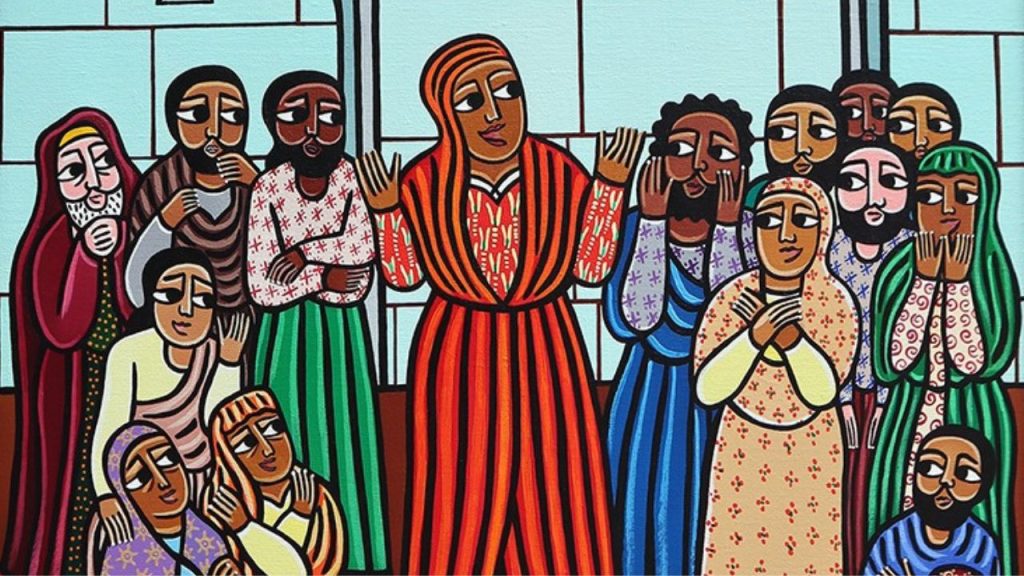
For centuries, Christian teachings and art have portrayed Mary Magdalene as a repentant sinner or a “fallen woman” redeemed. But a more recent body of scholarship suggests that depiction misrepresents an important biblical figure.
The true legacy of Mary Magdalene—and that of other women in early Christianity—is the subject at the heart of the Mary Magdalene Fellowship with Impact at Fordham’s Graduate School of Arts and Sciences. The fellowship, funded by philanthropist Rita L. Houlihan, culminated last month in a conference called “Mary Magdalene and Her Sisters: Recovering the Voices of Women in Christianity,” where student and graduate participants presented their research on Mary Magdalene and other Biblical women alongside leading religious scholars.
Revisiting Mary Magdalene
In the New Testament, Mary Magdalene was a devoted follower of Jesus and, crucially, the first witness to the Resurrection.
But despite her key role in Christianity’s defining event, her reputation was for centuries sullied by a case of mistaken identity that took place long after her lifetime, theology Professor Michael Peppard, PhD, explained.
“By far the most significant turning point in her post-biblical legacy was the identification of Mary Magdalene as the unnamed sinful woman,” Peppard said, referring to a connection drawn in a 591 homily by Pope Gregory I that conflated Mary Magdalene with a woman from the Gospel of Luke, as well as with a different figure named Mary of Bethany from the Gospel of John.

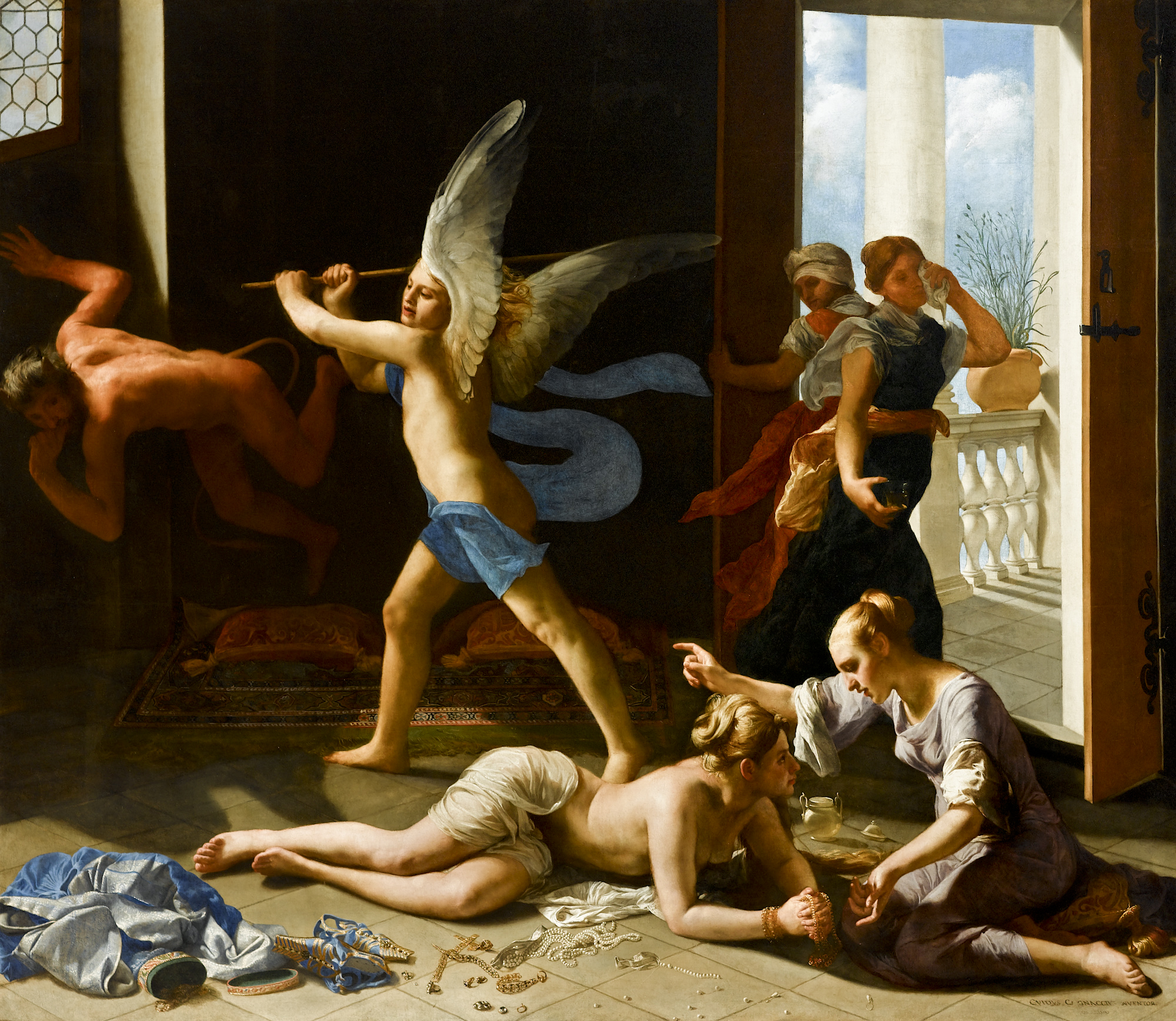
Mary Magdalene’s reputation for sinfulness may be rooted in New Testament passages that say Jesus cast out seven demons from her before she became his disciple. Pope Gregory I claimed the seven demons signified the “seven vices,” and pointed to the heavily perfumed unguent she possessed as evidence she was disguising “forbidden acts.” From there, the popular notion that Mary Magdalene was a prostitute took hold, although that claim is nowhere to be found in the biblical text.
This narrative helped cement Mary Magdalene’s image in Western Christianity as a lowly, penitent figure, often depicted in art kneeling, weeping, or cast low to the ground, Peppard said.
Reclaiming an Apostle
But that portrayal was never the only one.
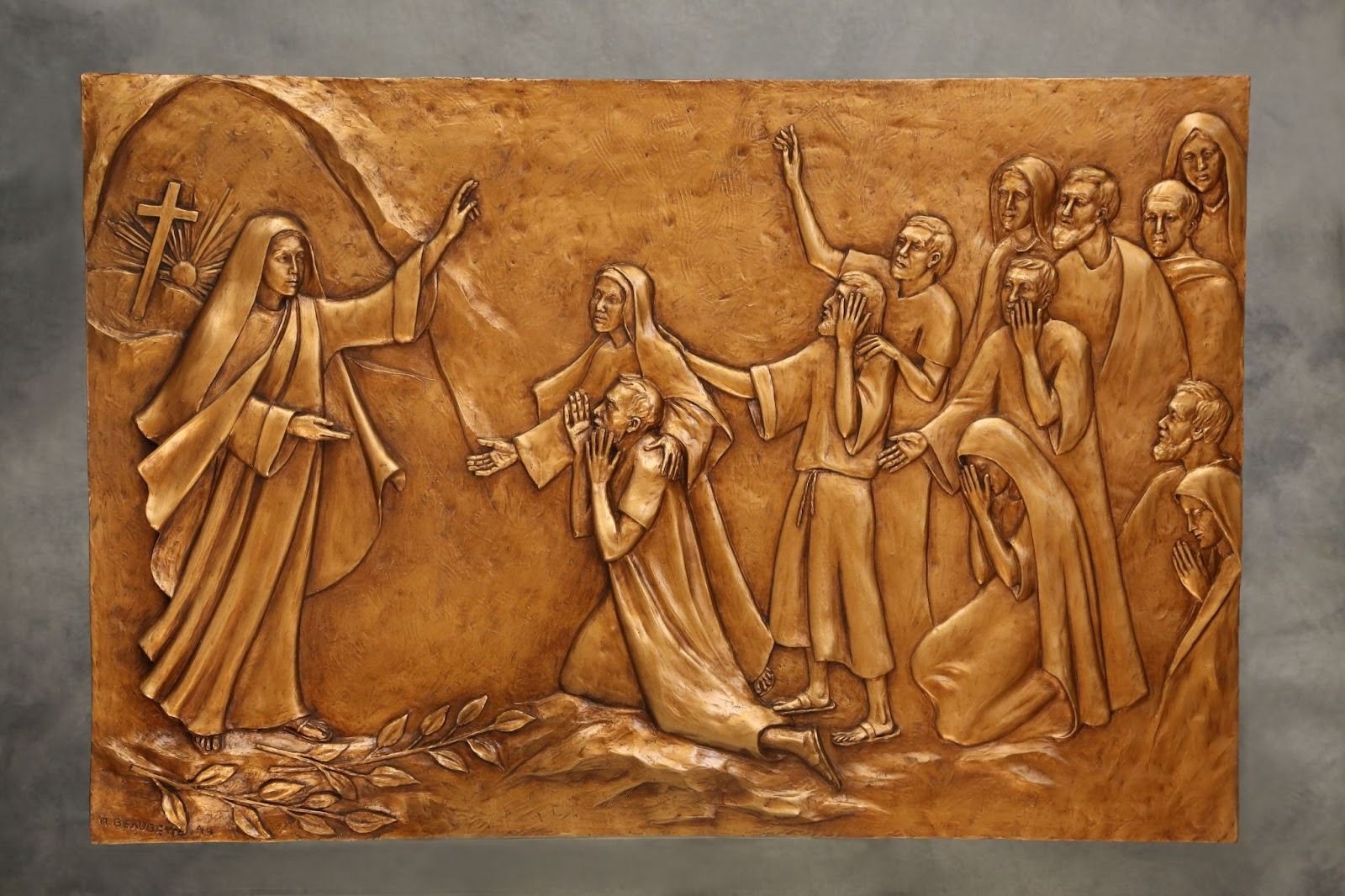
Drawing on early Christian and Eastern traditions, Peppard pointed to alternative artistic depictions, such as this 13th-century Syriac Gospel lectionary, that show Mary Magdalene upright, composed, and authoritative—a model of discipleship rather than of repentance.
“In the moments expressed by these artistic examples,” he said, “she was far from a fallen woman. She stood upright.”
In the gospels, Mary Magdalene was the first to share the news of the risen Christ with the disciples, a role that led St. Thomas Aquinas to call her “apostle to the apostles.” Keynote speaker Ashley Purpura, a scholar of Orthodox Christianity who earned her PhD at Fordham, said this apostolic dimension has survived continuously in some traditions, most notably in the Orthodox Church.
“Mary Magdalene in the Orthodox context is held equal to the apostles. She is praised as both apostle and disciple,” said Purpura, an associate professor of religious studies at Purdue University.
Traditions that emphasize her authority as a witness open the door to understanding women as central to the early Christian movement, Pupura said, entrusted with announcing its most important message.
More recently, the Roman Catholic Church has also revisited St. Mary Magdalene. In 2016, her annual July 22 liturgical celebration was elevated to a feast day. The Church stated the change was “situated in the current ecclesial context, which calls upon us to reflect more deeply on the dignity of women, the new evangelization, and the greatness of the mystery of divine mercy.”
Research Fellows Continue the Work
At the conference Feb. 27, the fellows presented their research at Fordham’s Lincoln Center campus. Their projects spanned theology, history, and art, exploring how women have been represented across Christian traditions.
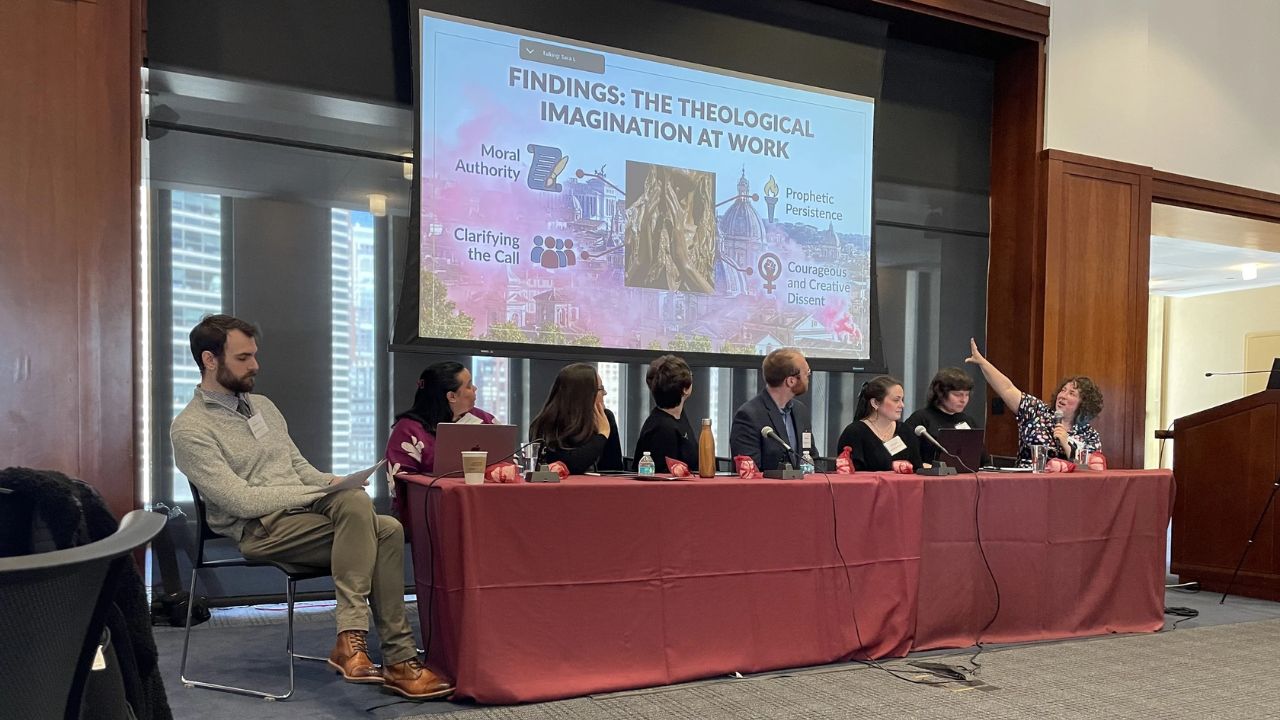
Fordham PhD candidate Hillary Bylund presented research reflecting on the power of Mary Magdalene’s story, noting that her example can “help cultivate courage” and inspire women to step into leadership roles in spaces where they have been marginalized.
Houlihan, a founding member of the “Catholic Women Preach” project who spent more than three decades of her career at IBM, has worked to elevate such stories. Through her support for the fellowship, she’s inviting a new generation to engage with Mary Magdalene’s legacy and those of other early Christian women.
