

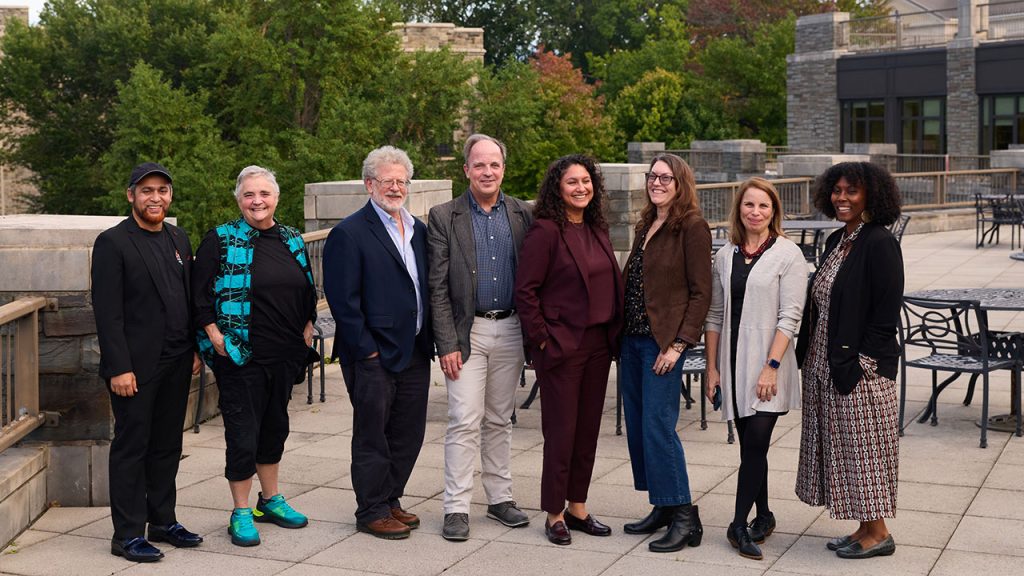
A candid discussion about what it means to learn and how best to share knowledge marked the fourth annual McGroddy Awards celebration, held on Sept. 30 at Rose Hill. The awards recognize Arts and Sciences faculty whose innovative pedagogy has greatly impacted the core curriculum, the development of student leaders, STEM instruction, and interdisciplinary learning at Fordham.
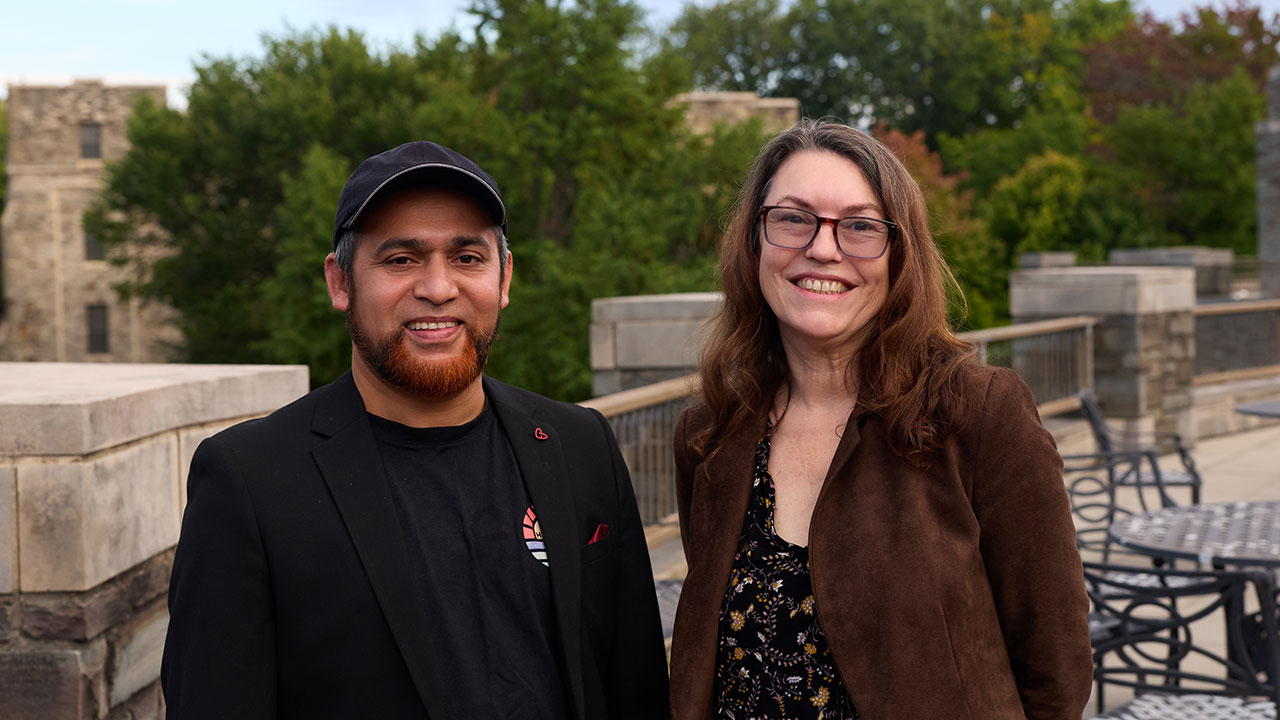
This year’s winners, Evon Hekkala, PhD, professor of biological sciences, and Zakirul Alam Bhuiyan, PhD, professor of computer science, were recognized in the O’Hare Special Collections Room in the William D. Walsh Family Library alongside other faculty who received honorable mentions: communication and media studies professor Michele Prettyman, PhD; psychology professor Dean McKay, PhD; English professor Leonard Cassuto, PhD; and anthropology professor Natali Valdez, PhD.
In the spirit of interdisciplinary learning, philosophy professor Jude Jones, PhD, led a discussion with the McGroddy honorees, drawing comparisons between their unique pedagogical approaches across disciplines.
Empowering Students
Hekkala, a conservation geneticist who uses DNA to study change over time in animal species, spoke of how easy it is for students to feel hopeless when learning about climate change and extinction. To combat that despair, she assigns her students a “Teachable Tidbit”—an eight-minute exercise in which they communicate about a topic of their choice from class. “My goal is to make students feel good at the end of the semester—that no matter how hard things sound and look, they will feel so empowered to have these conversations,” said Hekkala, who recently received a National Science Foundation grant to recover fossil deposits in Madagascar that could shed light on species extinction.
Bhuiyan, who helped design and connect Fordham’s undergraduate and graduate programs in cybersecurity, empowers students to learn with and without AI. After each project he assigns, he interviews each student to ensure that they grasp the mechanics themselves. “No matter if you use ChatGPT, I don’t mind,” Bhuiyan said. But “you have to make me understand what you have done.” Bhuiyan also ensures they are absorbing the material without the help of AI through in-class coursework and quizzes that they cannot do online.
Fostering Civil Discourse
Valdez, a medical anthropologist, studies how trauma from past generations may affect our health and how our bodies may hold on to it. This research informs her upcoming book, Families in the Body: Narratives of Generational Trauma and Healing, and her class Bodies, Trauma, and Healing, where she weaves in practices like somatic breath work and nervous system regulation exercises. “The challenge for them to speak out loud is often that they’ll be judged or that they judge themselves,” Valdez said of her students. When they affirm to each other that they want to hear what the other has to say, it creates a space for judgment-free discussion, she said.
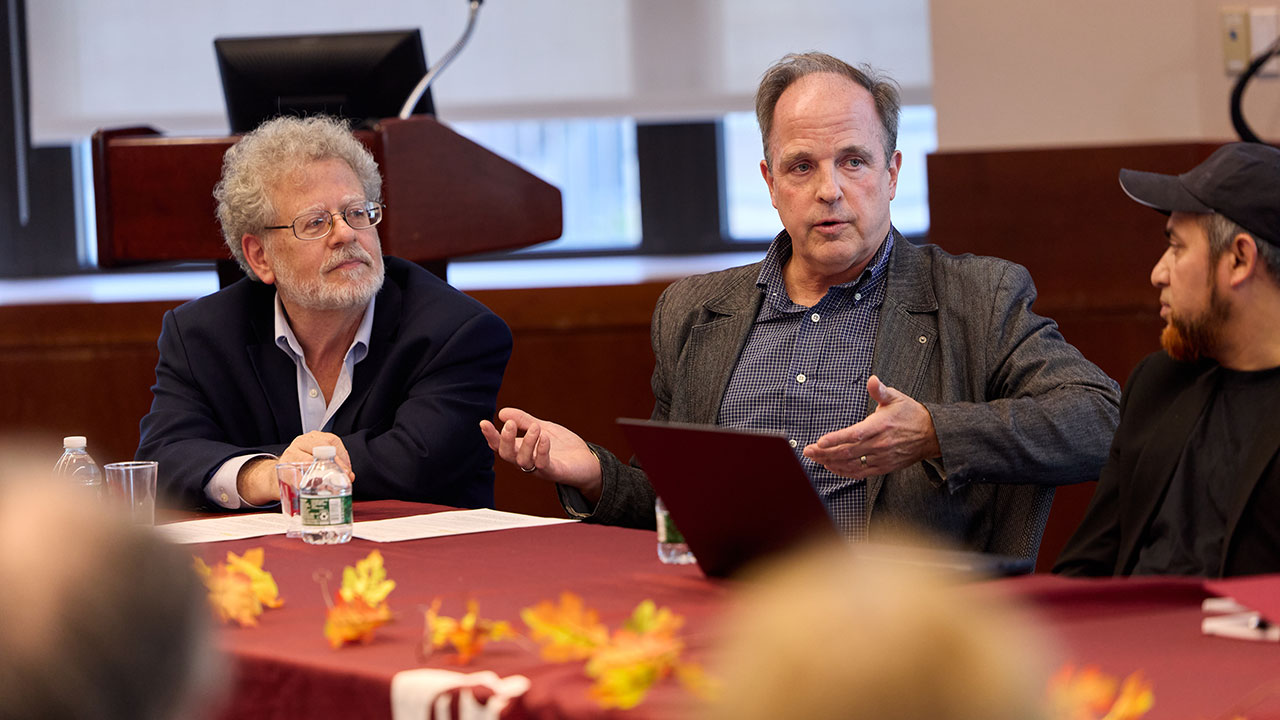
In a course on disgust they have co-taught for 14 years, Cassuto and McKay encourage open debate and discussion by modeling it. They begin with the topic of food and end on the subject of morality to show how disgust operates in the public sphere and influences how we experience relationships. Throughout, the two challenge one another as friends and colleagues.
“We’re trying to model civil discourse for citizens in a time of belief polarization,” Cassuto said. “The best way to learn something is to do it, and the second best way is to see it being done. And we’re trying to do both.”
Pedagogy as Spiritual Practice
Prettyman, a film scholar who invites students to present at her events, such as last spring’s two-day, cross-campus discussion of Sinners, tied the feeling of connection that faculty encourage in class to a spiritual practice. “Fundamentally we are doing a kind of spiritual work. We are encouraging affirmation and listening and empathy and all the values that we talk about and that we try to live,” she said.
