

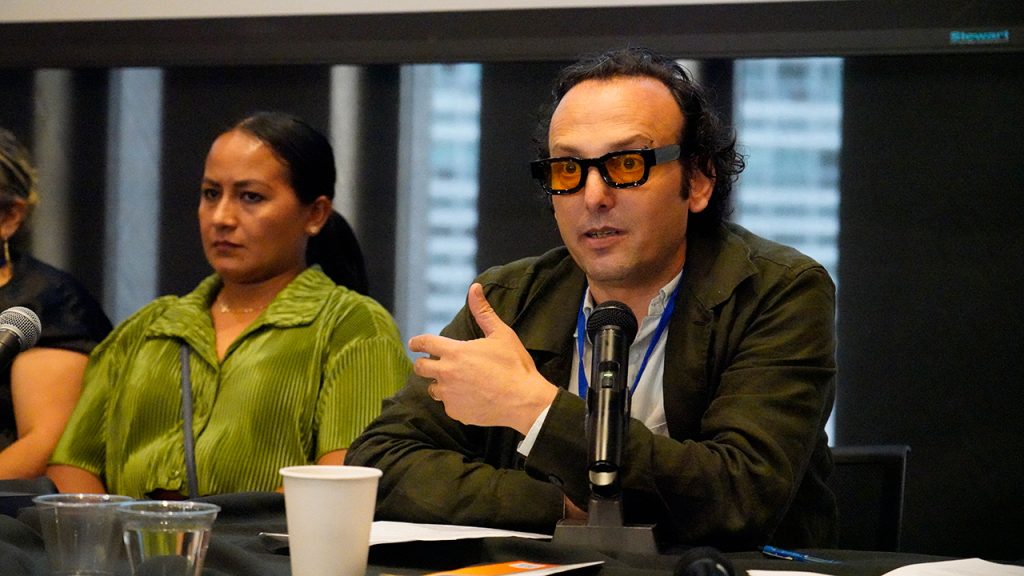
For Fadi Skeiker, Ph.D., theater is about more than stage productions. It’s about the power of acting techniques themselves—to soothe trauma, bring people closer together, advance justice, and change lives.
This approach—applied theater—requires no stage lighting or set design. It doesn’t need to lead to a performance. It could happen in hospitals, prisons, service agencies—any place where people would benefit from the empowerment that comes with personal storytelling.
“The magic of theater could happen anywhere if you are using the right theater game or theater exercise or theater technique,” said Skeiker, chair of Fordham’s Department of Theatre and Visual Arts.
‘Demystifying the Art of Theater’
When he came to Fordham two years ago, Skeiker brought a reputation as an innovator in applying theater to social justice. In addition to directing productions about migration and human rights, he had used applied theater techniques to help migrants themselves, including holding drama therapy workshops in Europe and the Middle East for refugees from Afghanistan, Ukraine, Syria, and Iraq.
“It’s kind of like demystifying the art of theater and making it accessible to everyone,” he said, “and taking [advantage of] the best attributes of theater, such as empathy and belonging, and making people think about something bigger than themselves.”
‘Magical Moments’
In August, Skeiker held a one-week workshop with Grupo de Mujeres Latinas, a support program run by the Belmont Catholic Community in the Bronx for immigrant Latina women dealing with childhood trauma, limited education, single motherhood, and other struggles. “I was very straightforward from the beginning: ‘We’re going to try to create your stories, and if you want to share them, we can share them one way or another,’” Skeiker said.
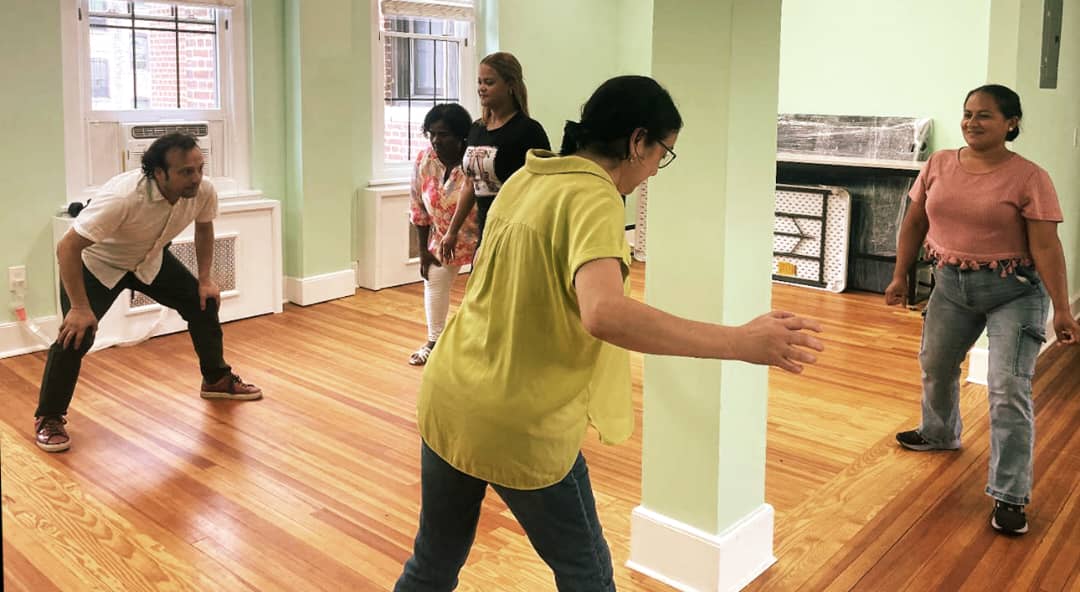
He led them through games designed to stir memories, emotions, and dreams. He encouraged them to develop monologues that they then practiced before the group. Members would ask questions, share their own experiences, or act out the story. Sometimes they would hum gently, creating a sort of soundtrack. Sometimes they would gather around the speaker in a hug.
The goal was to create “magical moments” that build safety and mutual trust, Skeiker said, “because it makes them feel they are not alone and that their story is magnified.”
Educating Citizen Artists
The women recorded videos of their monologues and crafted posters about them, all of which were displayed at a mid-September Fordham event, jointly hosted by Fordham’s Initiative on Migrants, Migration and Human Dignity and the Center for Migration Studies, that focused on the plight of migrants and refugees.
Seven of the women, speaking on a panel, talked about the feelings of kinship, trust, and belonging that came from knowing the other women better. “My cross is lighter,” said one, speaking through a translator.
Citizen Artists
Skeiker is driven by the idea of the “citizen artist”—he teaches undergraduate theater courses on performance, social justice, and human rights, and always asks students to consider how they would change their communities for the better as actors and directors.
A native of Syria, he’s developing a one-person show about how Syrians in the diaspora feel a sense of responsibility to their country, which they fled because of the Assad regime. He also wrote the libretto for an opera based on his own drama therapy work with refugees; titled 18 Months, it debuted in Lisbon, Portugal, in the spring.
Skeiker said applied theater is relatively new in the drama world, and with many practitioners still trying to figure out how best to teach it.
“It’s going through a phase of becoming,” he said. “And that’s exciting.”
