

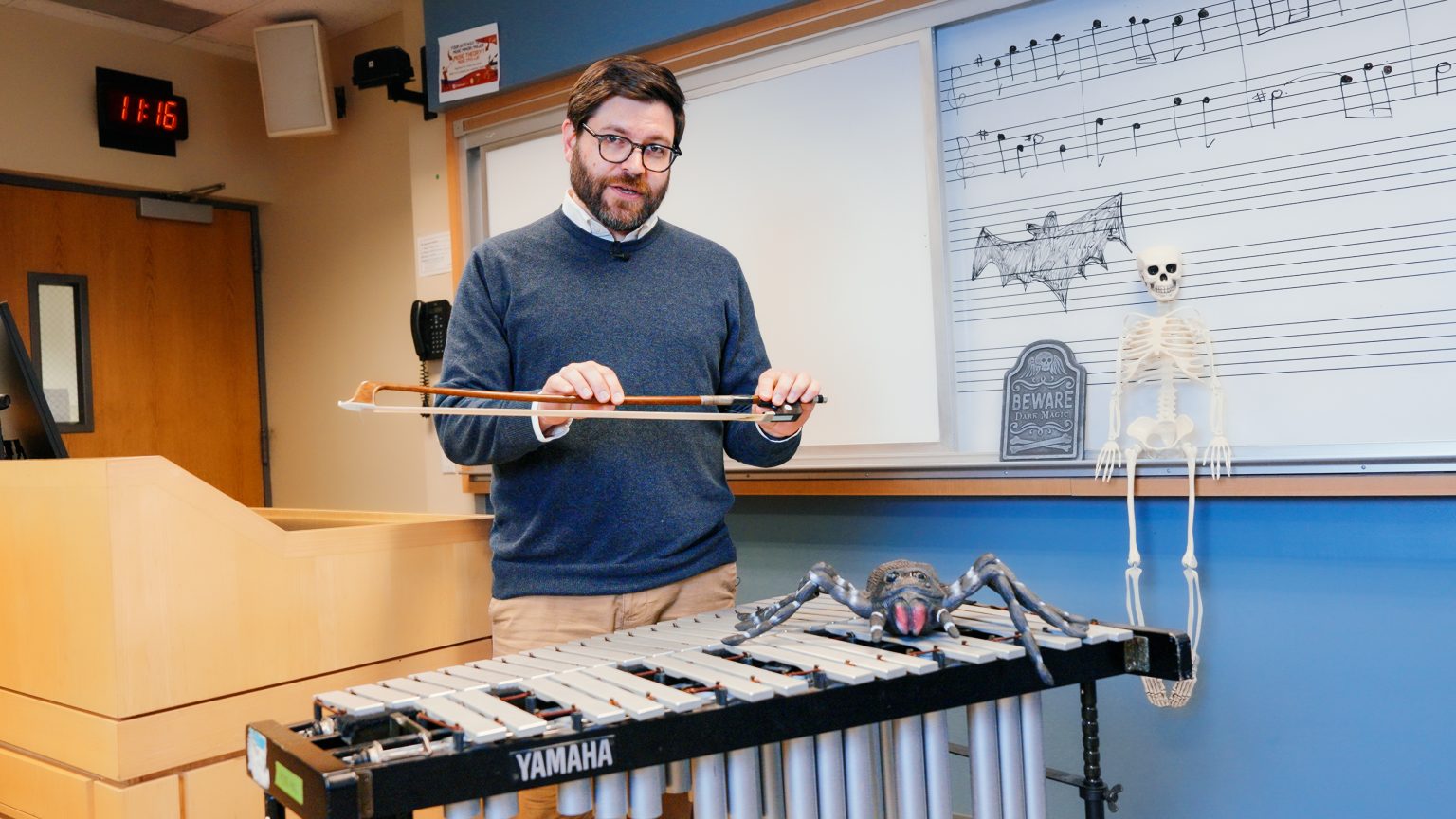
For as long as people have been making music, composers have used certain techniques to provoke suspense, unease, and outright terror.
But what is it about the medieval “Dies irae” chant or John Carpenter’s propulsive Halloween theme that induces dread, quickens your breath, and makes your hair stand on end? According to Daniel Ott, DMA, award-winning composer and professor of music who serves as senior associate dean of Fordham College at Lincoln Center, it’s a complex cocktail of theory, technique, and cultural associations.
Acoustic Extremes: How Piercing Highs and Deep Rumbles Trigger Fear
“The thing that registers the most spooky to our brains is when we hear extremes,” Ott said. “Very high or very low.”
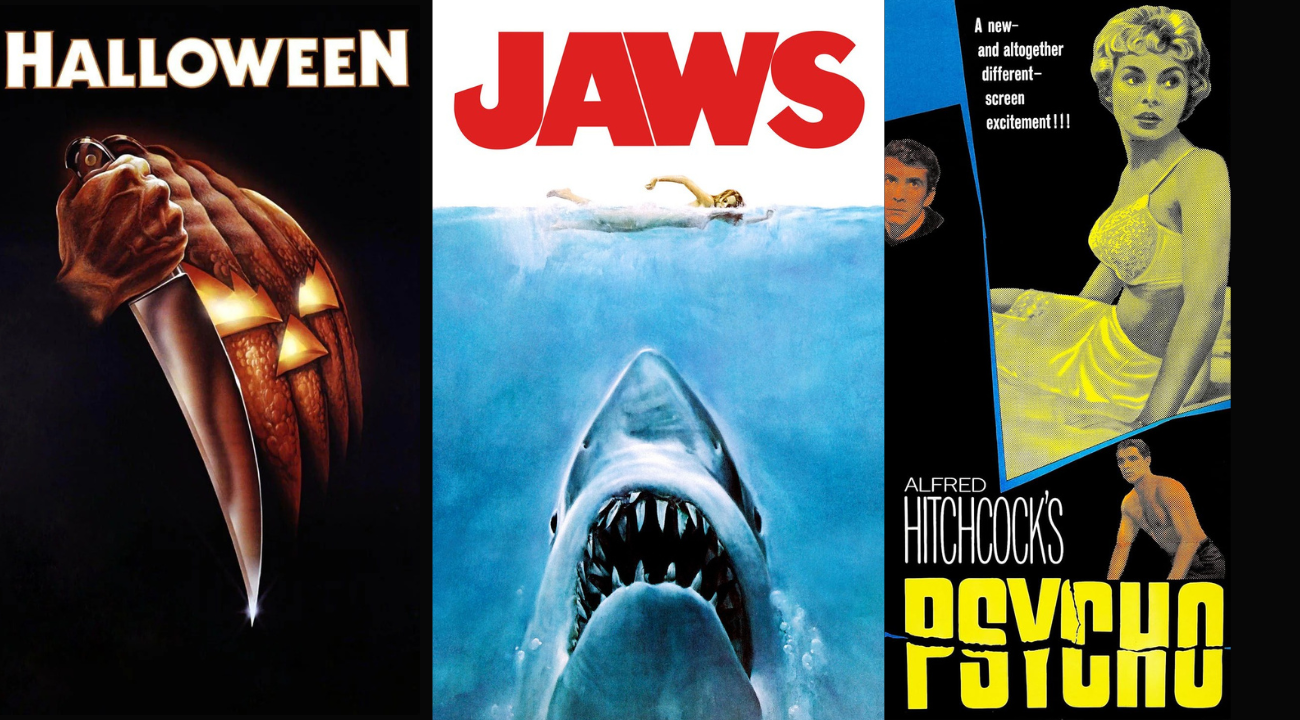
These extreme pitches don’t just sound odd to us—they can trigger evolutionary responses tied to our instinct for survival. Think of how the hulking double basses and low brass of John Williams’ Jaws theme mimic the rumblings of an approaching apex predator. Or how the staccato, screeching violins in Bernard Herrmann’s score for the famous shower scene in Alfred Hitchcock’s Psycho evoke primal human screams.
And don’t forget extremes of volume. A composer might make you lean in with an ominous, quiet tone, only to startle you with a sudden, explosive bang.
The Science of Dissonance: When Clashing Frequencies Unnerve the Brain
In music theory, dissonance describes certain groupings of notes that don’t blend, but instead create harmonic instability that feels unresolved to the listener. This tension isn’t just based on vibes. It’s rooted in science.
“Those frequencies actually clash with one another, which can be very hard for our ears to process,” Ott said.
The brain is constantly predicting sound patterns. When a dissonant clash violates those expectations, that unpredictability can trigger a small alarm in the amygdala—the part of the brain that processes threat and fear.
Mysterious Timbre: The Eerie Power of Uncanny Sounds
One of the most unsettling experiences we can have is hearing a sound we can’t identify.
“Musicians have experimented with different ways of producing sound effects on instruments,” Ott said, especially by combining things that don’t usually go together. “Composers love to explore different effects and timbres.”
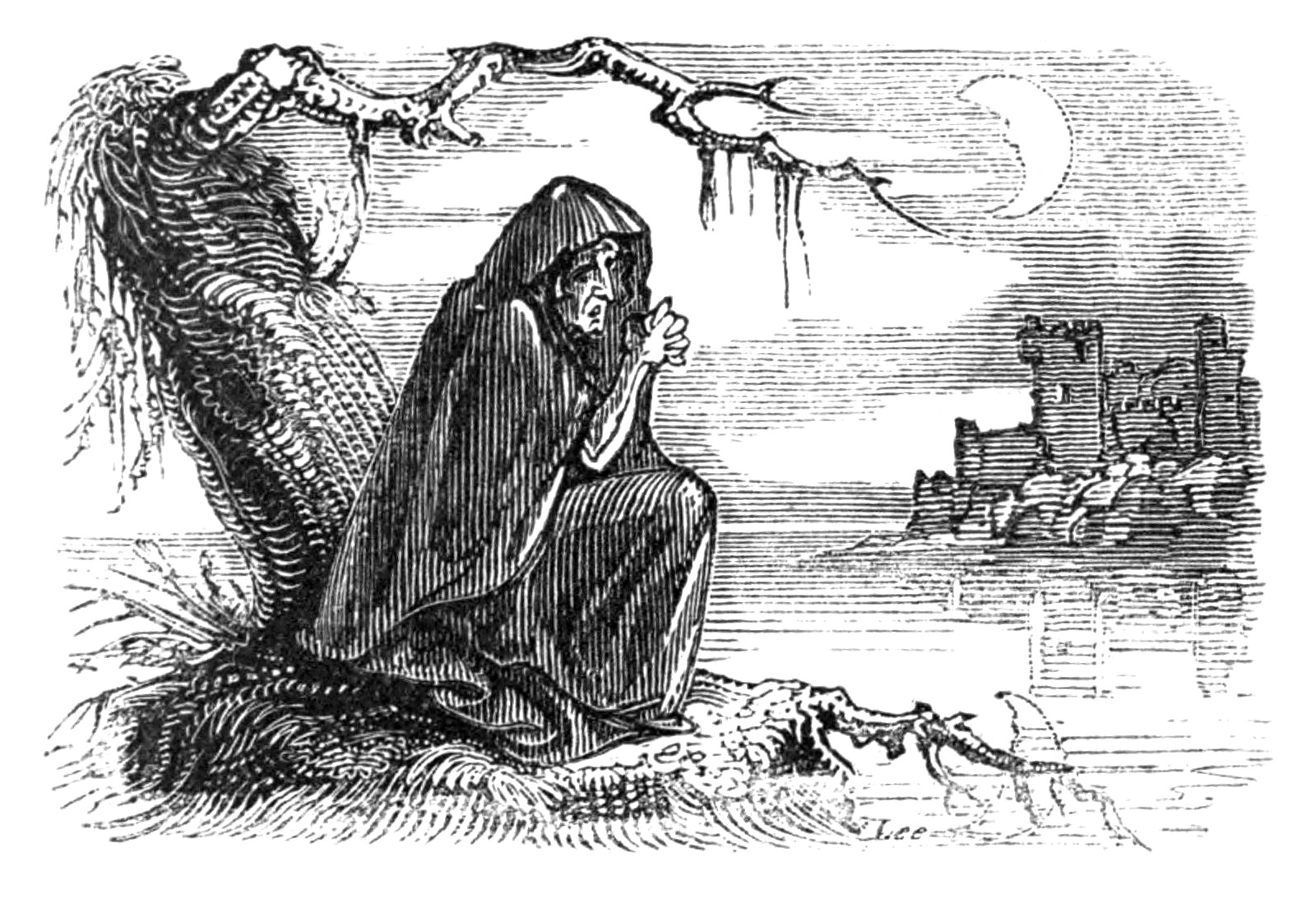
Henry Cowell’s 1925 piano piece “The Banshee” is a master class in this technique. To play it, the pianist doesn’t touch the keys at all. Instead, Cowell instructs the performer to reach inside the guts of a grand piano to scrape, sweep, and pluck the wire strings, evoking the wails of death from the mythical Celtic banshee.
Listen to Sonya Kumiko Lee’s performance of “The Banshee” if you dare. It’s not for the faint of heart.
Cultural Conditioning: How Sacred Chants and Pipe Organs Became Horror Movie Staples
Not all scary music was composed with malevolent intentions. Sometimes, an instrument or tune can just feel creepy “primarily because of the way it’s been depicted in popular media and culture,” Ott said.
The “Dies irae” is a 13th-century Gregorian chant sung during Roman Catholic funeral Masses. Thanks to its minor harmony and association with death, the solemn liturgical melody shows up in everything from dark classical symphonies to iconic films like The Shining, The Exorcist, and The Nightmare Before Christmas—firmly associating it with all things scary in modern culture.
A better-known example, Bach’s famous Toccata and Fugue in D Minor, is one of the most recognizably “scary” organ pieces of all time—but the composer probably never saw it that way. It was more likely written as a technical showpiece, and only became a horror cliché after it was used in the classic 1931 movie Dr. Jekyll and Mr. Hyde and dozens of other films since then.
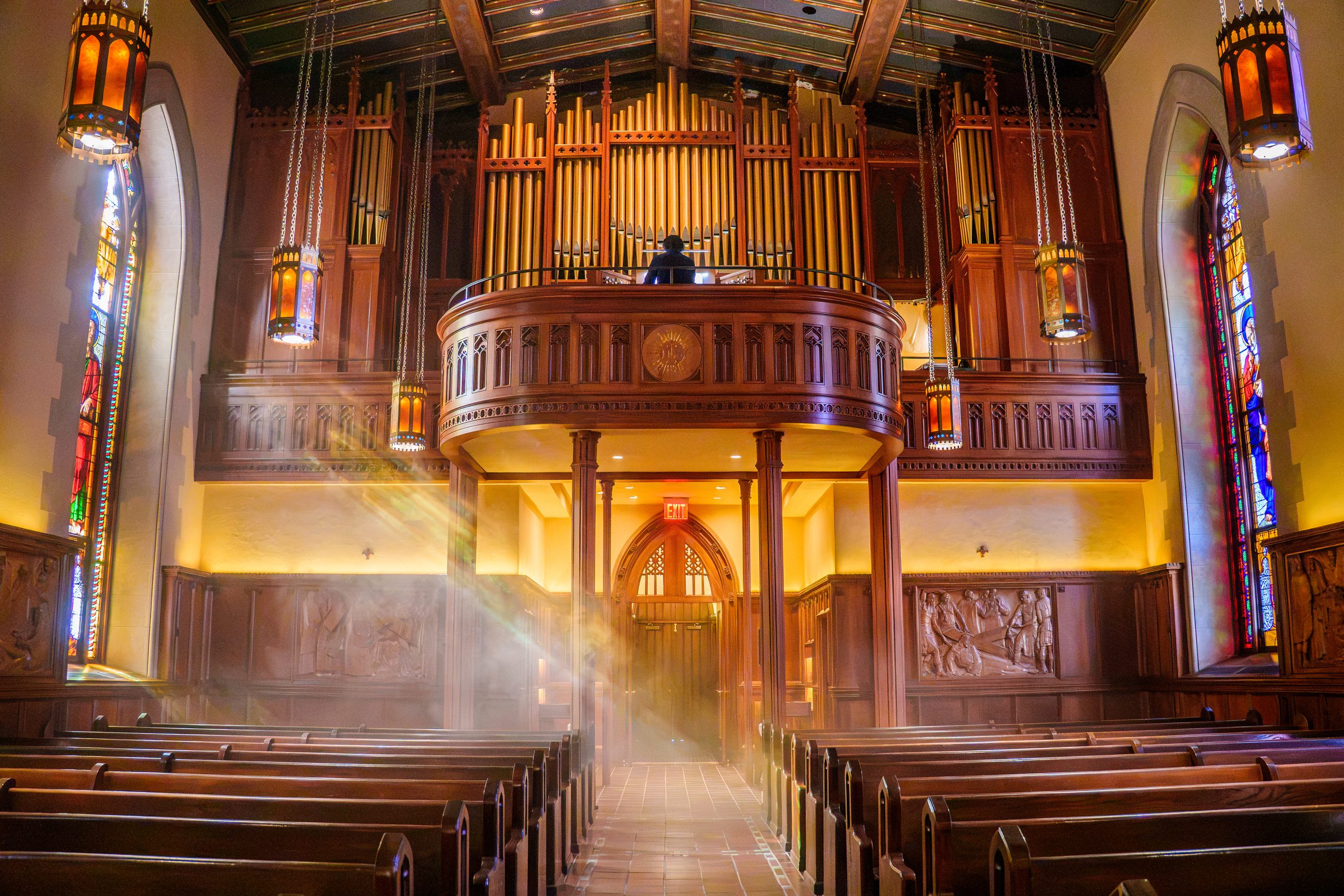
But one need only hear it played in a space like the University Church to understand the petrifying potential.
“It can be quite terrifying,” Ott said of being in the presence of the instrument at full power. “You can feel the vibrations in your body.”
