

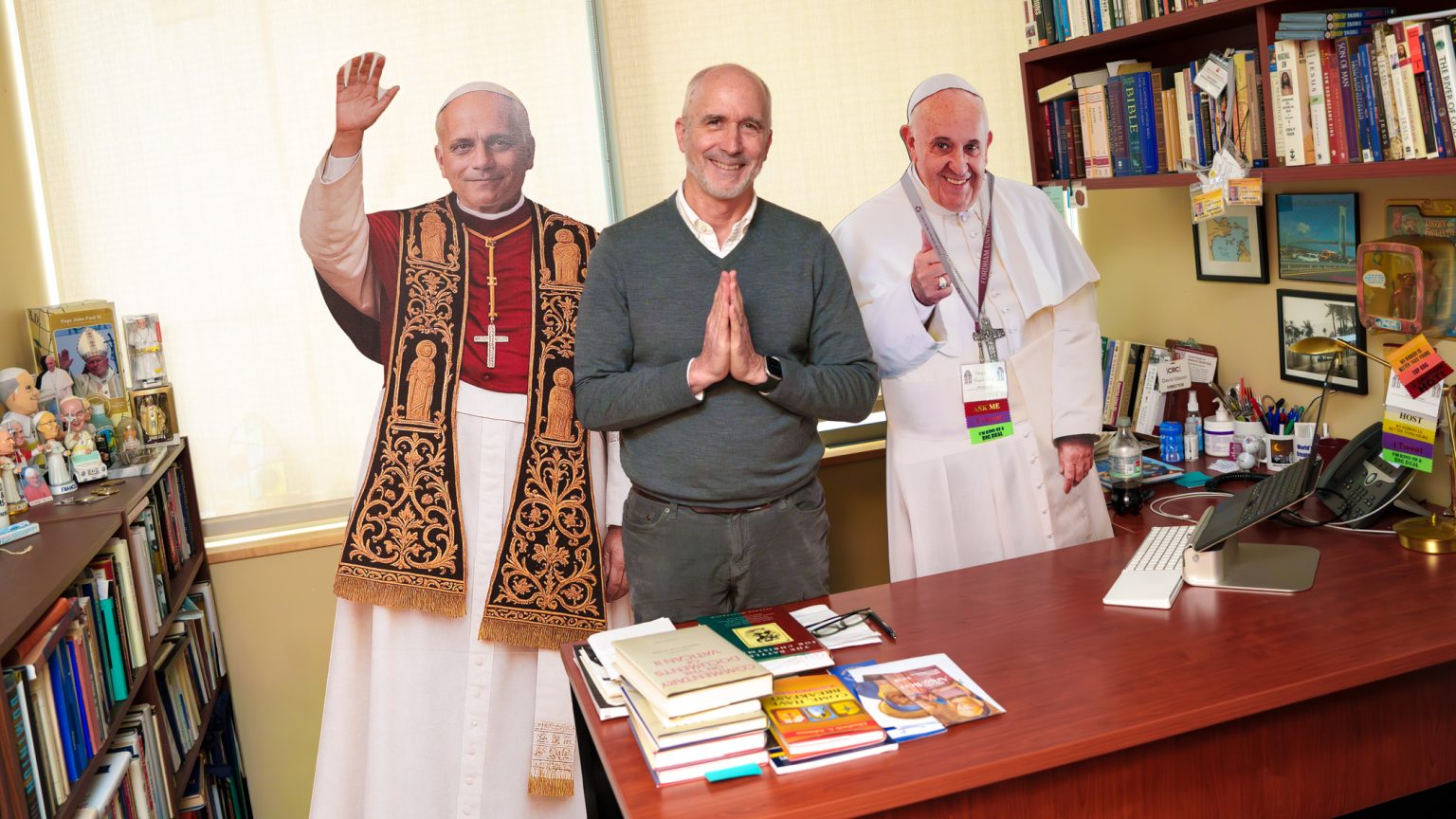
If you’re looking for Pope Leo, there’s no need to travel to Rome—he’s right at home in David Gibson’s office.
An award-winning journalist, Gibson covered the Vatican and the Catholic Church before becoming director of Fordham’s Center on Religion and Culture in 2017. In his office at the Lincoln Center campus, you’ll find a collection of religious kitsch, from Jesus bandages to “the Pope’s cologne.”
Jesus Is Watching You
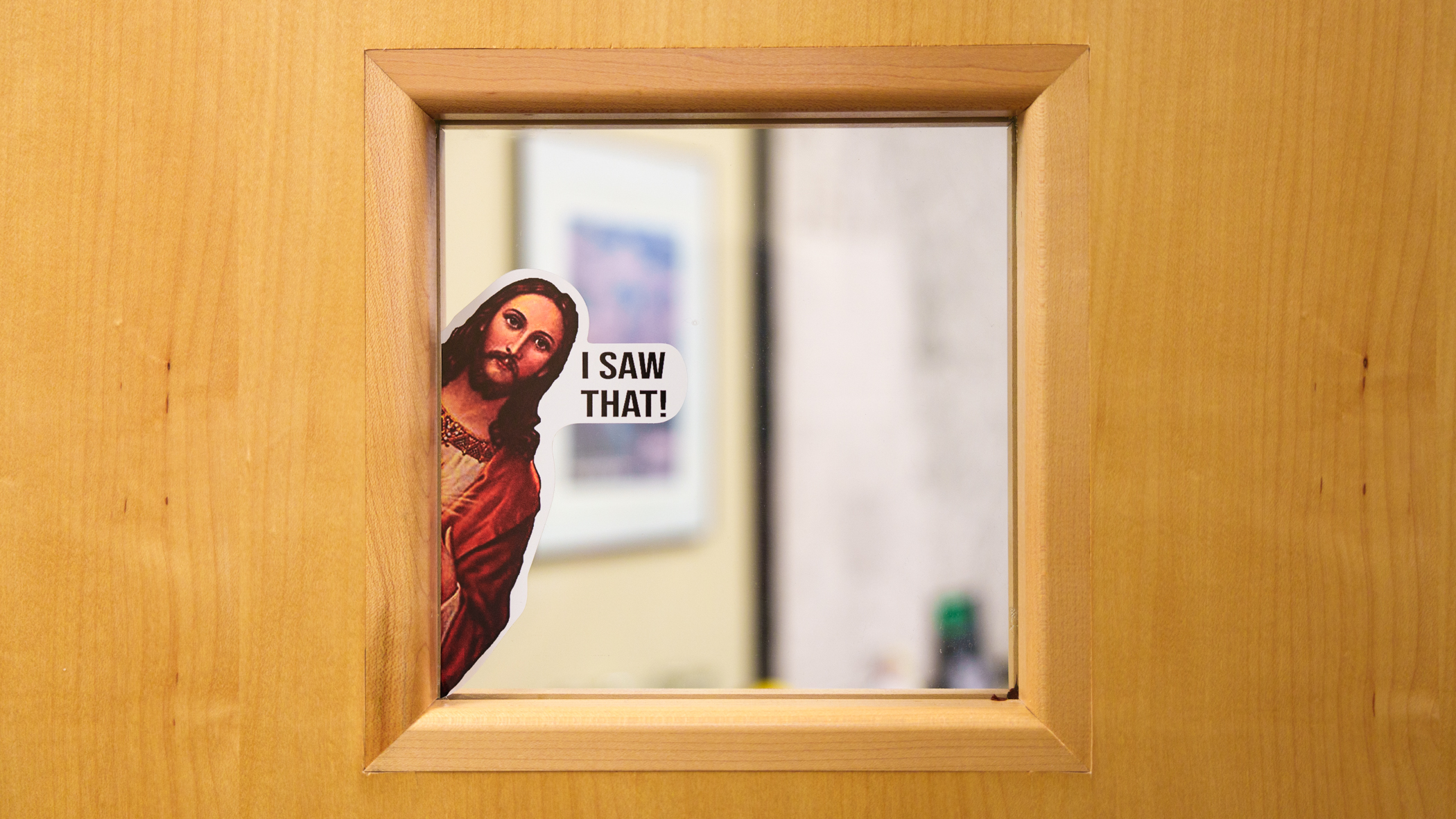
As you open the door to his office, you’ll notice the watchful eye of Jesus.
“This kind of stuff I love. Religion is serious, but the best religious people don’t take themselves too seriously,” said Gibson.
Roma
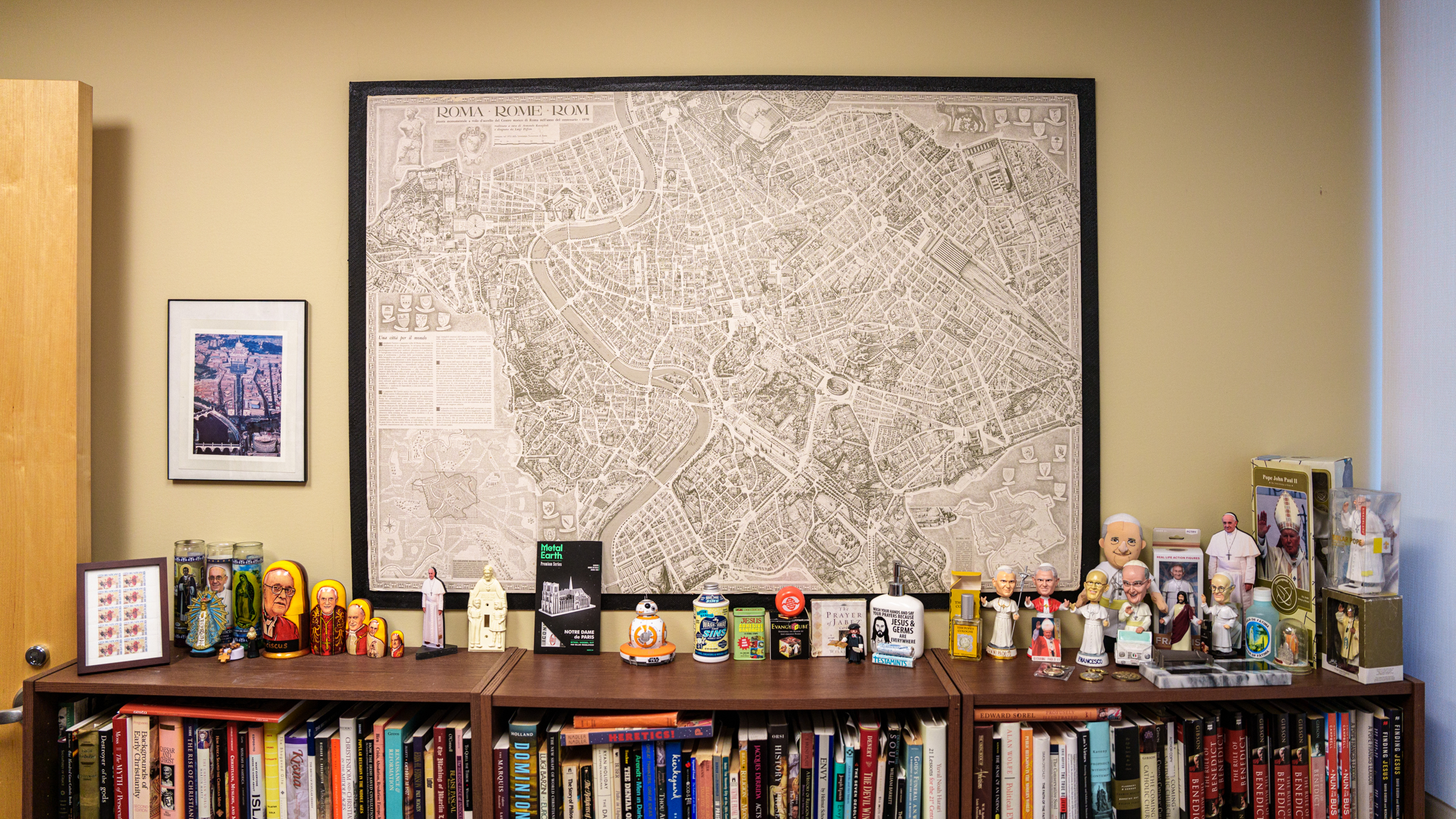
Covering a wall is a map of Rome, where Gibson lived for about five years. He worked at the Jesuit-run Vatican Radio—“the BBC for Catholics around the world,” Gibson explained.
At the time, he was a young man in his twenties who had traveled to Rome to teach English.
“Vatican Radio needed someone to work in their English program, but I had never done radio before. I’m also from New Jersey, and I sound like it. But they told me, ‘Don’t worry, just remember that bishops wear purple, and cardinals wear red,’” said Gibson, who went on to tell stories on air and travel around the world with Pope John Paul II in the late 1980s.
Symbols of a New Faith
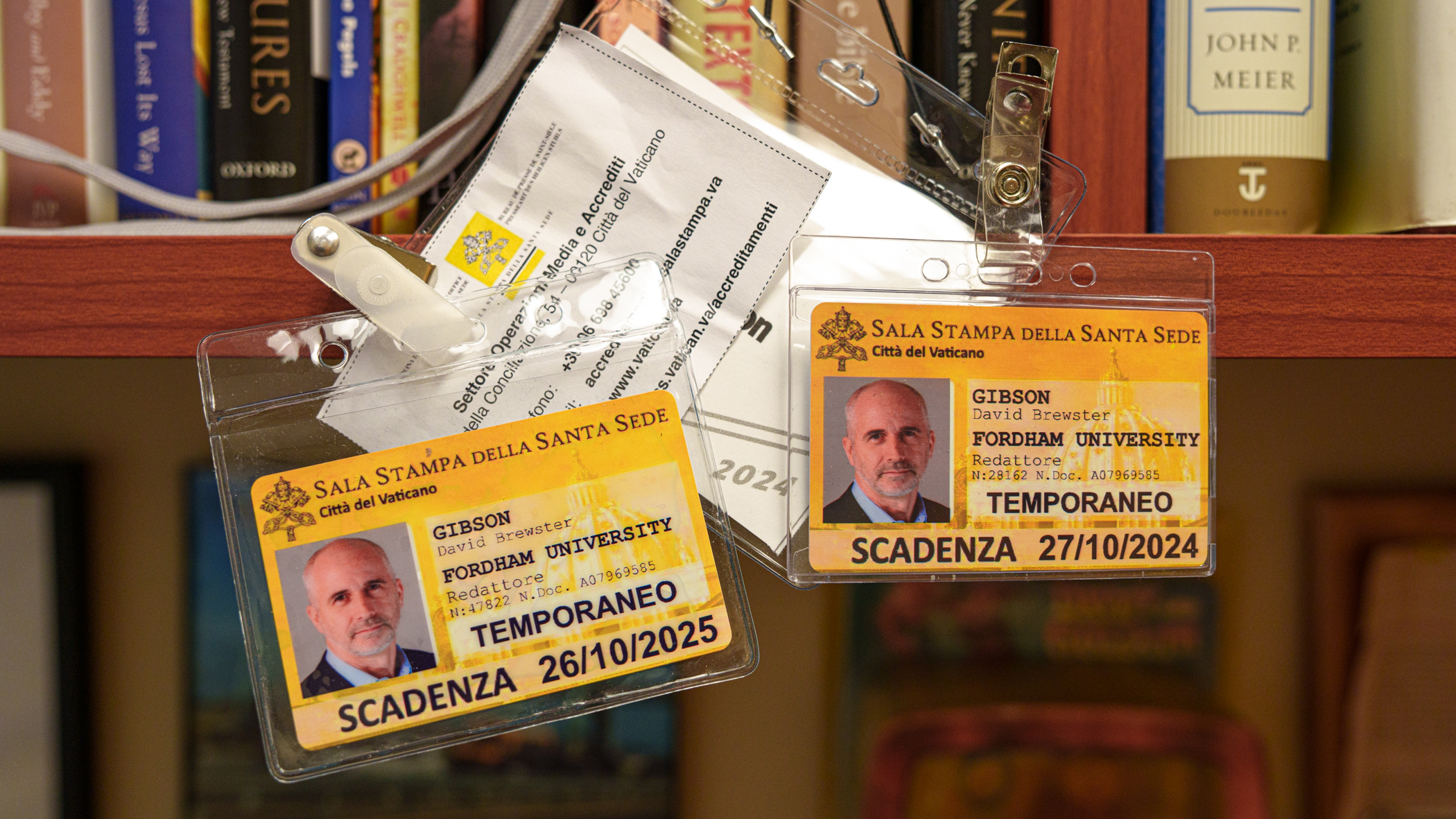
Gibson’s press passes are a reminder of his journalism career—and a shift in his identity.
“While reporting in Rome, I met incredible nuns, brothers, priests, and laypeople from around the world,” said Gibson, who interviewed people like Mother Teresa, the Dalai Lama, and former French celebrity Brigitte Bardot. He also attended and covered the past three conclaves.
For years, Gibson identified as Protestant. But the people he met in Rome convinced him to convert to Catholicism.
“It was their witness, more than the attraction of the pope or St. Peter’s Basilica, that really drew me to Catholicism,” he said.
The Papal Corner
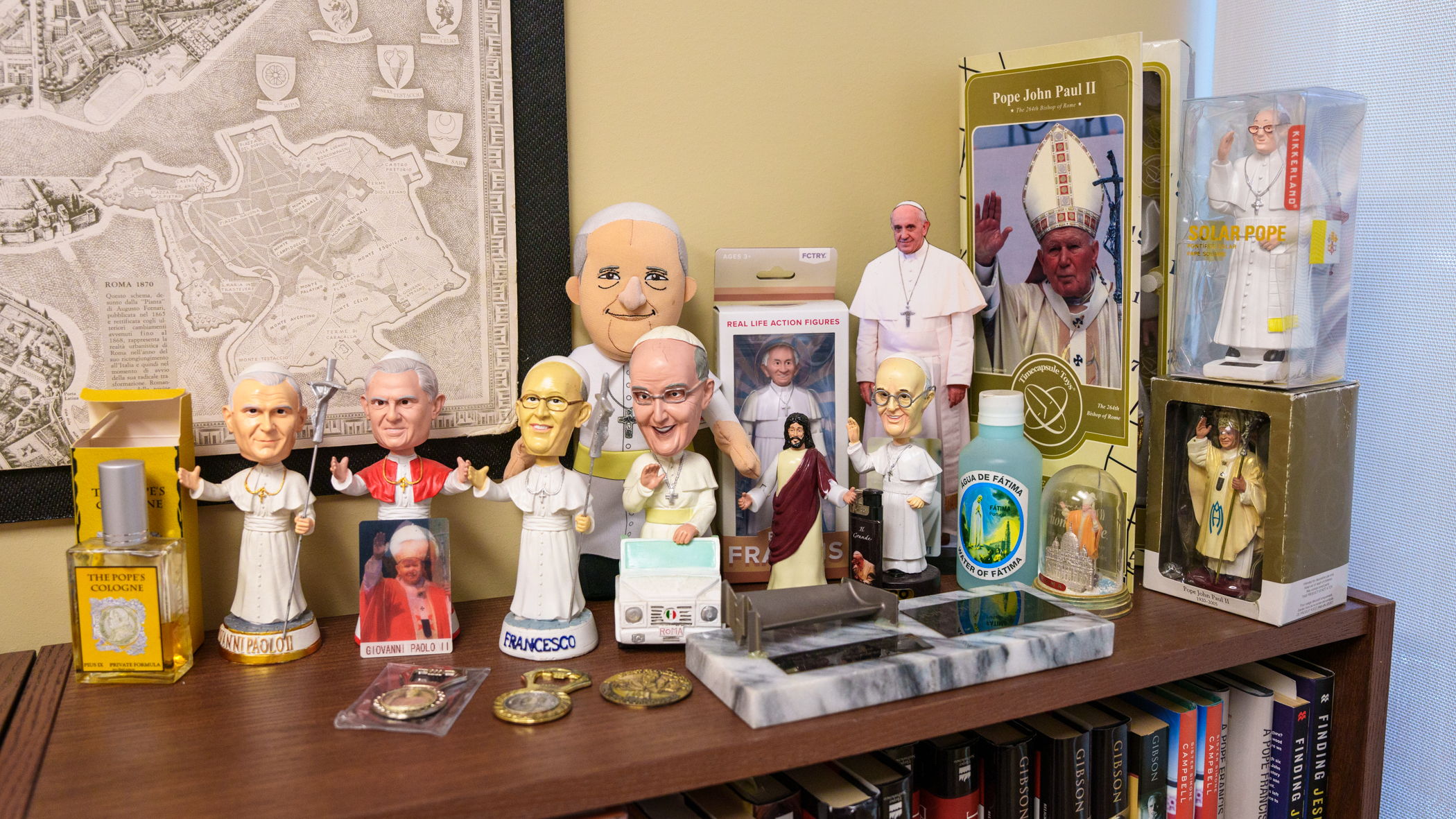
On a corner of his bookshelf is the “papal corner,” primarily representing John Paul II, Benedict XVI, and Francis.
One exception is “the pope’s cologne,” said to smell like Pius IX, a 19th-century pope.
“Pope Pius IX apparently had a very distinctive cologne, and some weird guy recreated it and sold it as ‘the Pope’s cologne.’ So naturally, I got some,” said Gibson. (It smells floral—and also a little expired.)
Gibson’s Favorite Pope
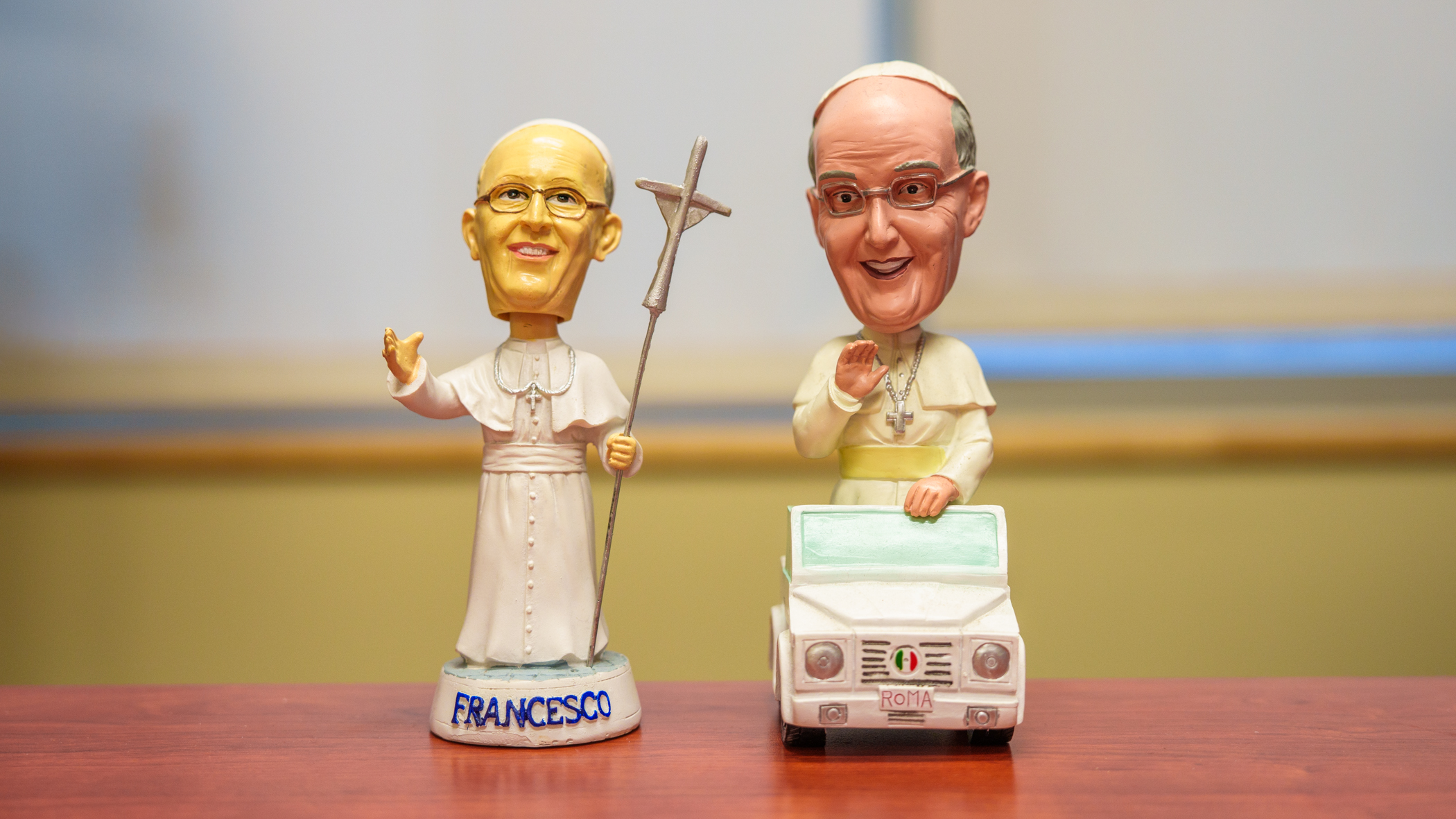
The pope that Gibson admires most is Pope Francis.
“He was like every good Jesuit priest I’ve known,” said Gibson. “When popes are elected, they tend to become very cautious. But Pope Francis said out loud what almost all church leaders say in private—that we have to change, be welcoming, and do things differently. He was so pastoral, open, and fearless. Priests like him are the reason I became Catholic.”
Finger Puppets From Another Faith

Most of Gibson’s tchotchkes are Catholic, but he has some representation from other religions, including finger puppets of Hindu gods—a souvenir from an event he covered as a religion reporter.
“I mainly covered Catholicism, but I also wrote about Buddhism, Hinduism, Islam, Judaism, and Scientology,” said Gibson. “Having one religion writer is like having one sports writer cover every single sport. But it’s really cool.”
‘Kitsch City’
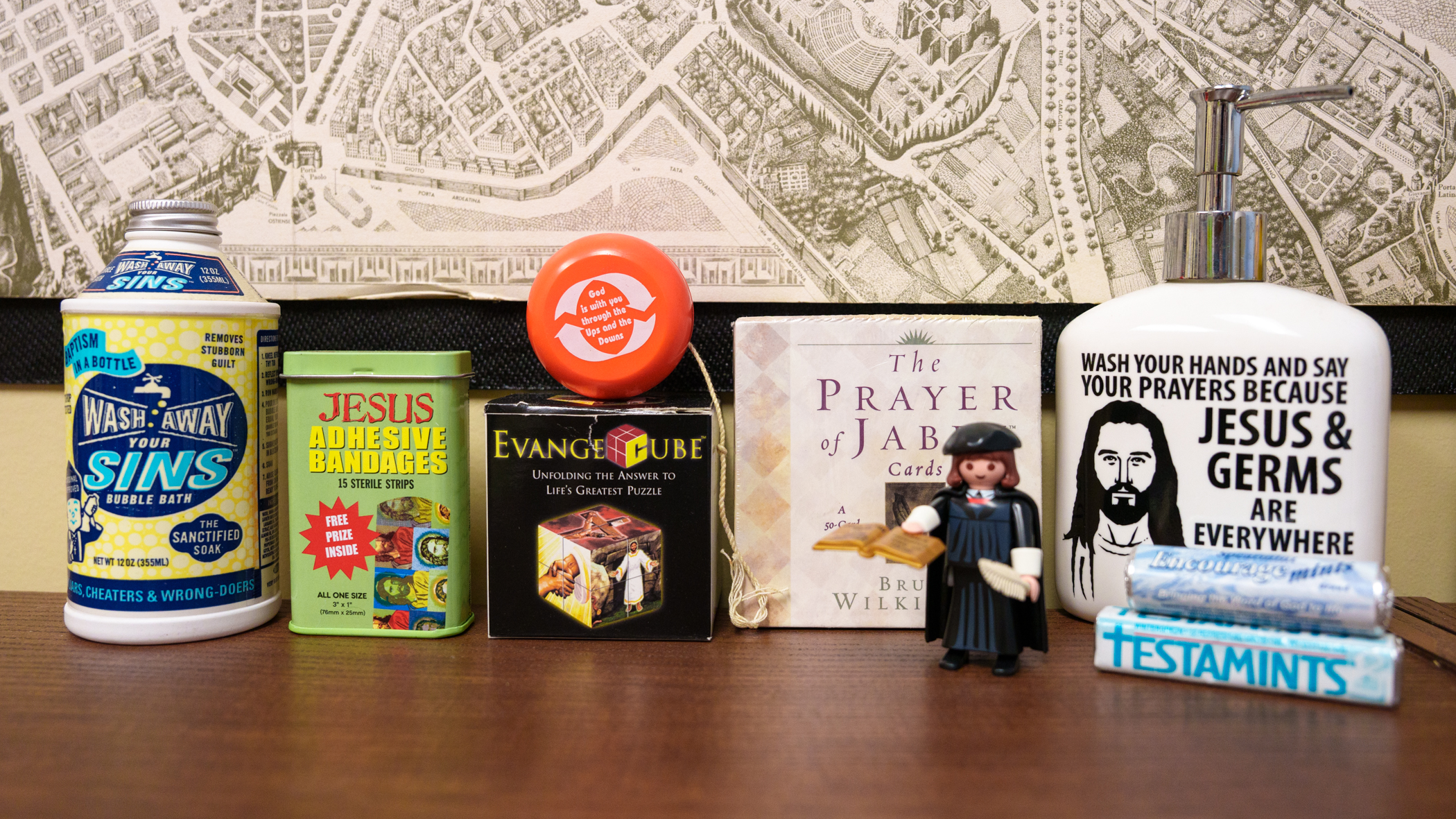
As former What’s on My Desk subject Beth Knobel once said, Gibson’s office is “kitsch city.”
“A lot of it is flotsam and jetsam from a long career,” said Gibson, pointing out several objects, including mints named “Testamints” and a punny Christian yo-yo that says, “God is with you through the ups and the downs.”
The Classic Mug Collection
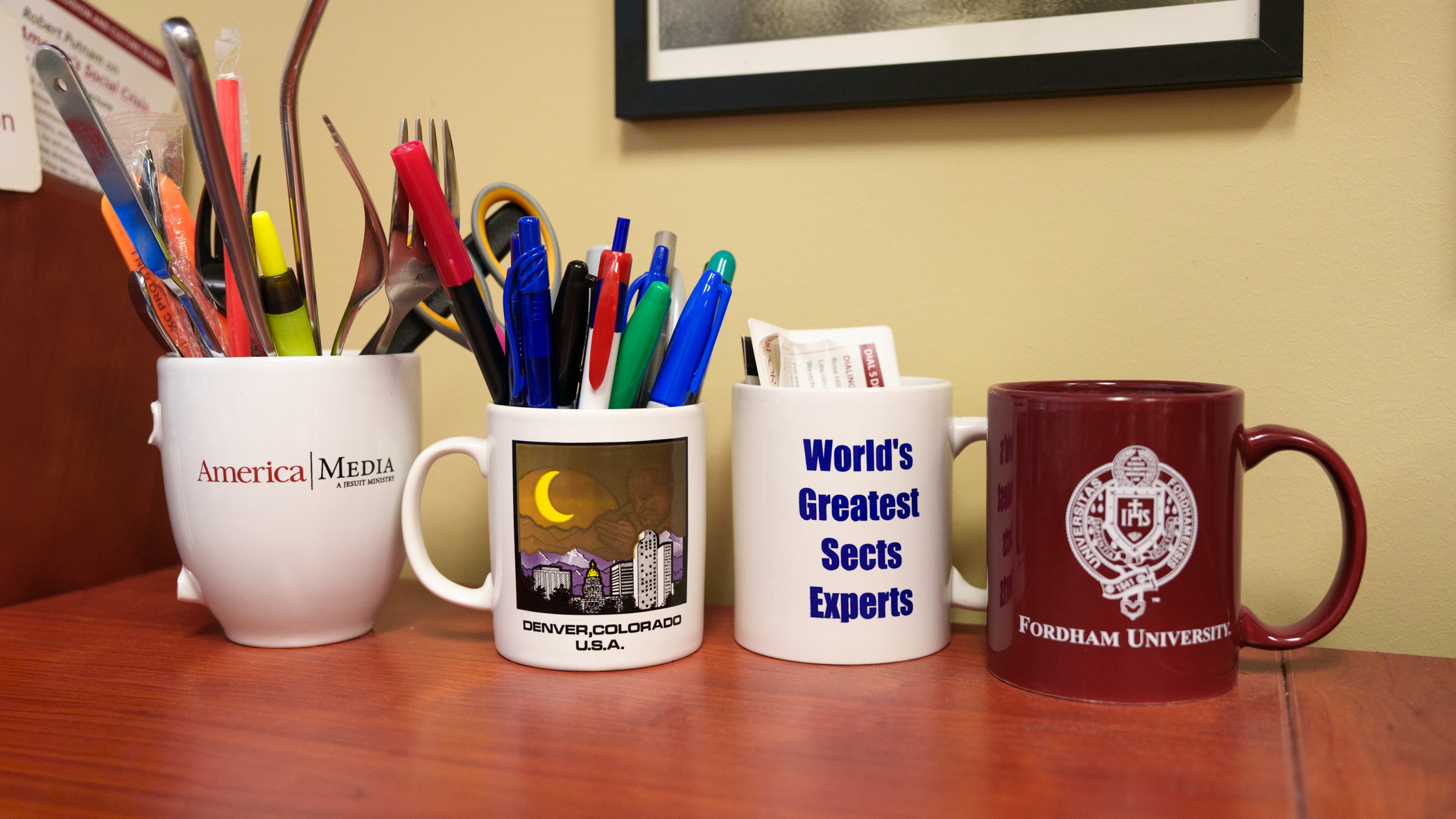
Like many professors, Gibson has a mug collection, including a color-changing one.
“In 1993, Pope John Paul II visited Denver. On the second mug from the left, you can see Denver at night. When you pour in hot water, it reveals the pope praying over the city,” Gibson explained.
‘You’re Lucky, Dave. You Have Talent.’
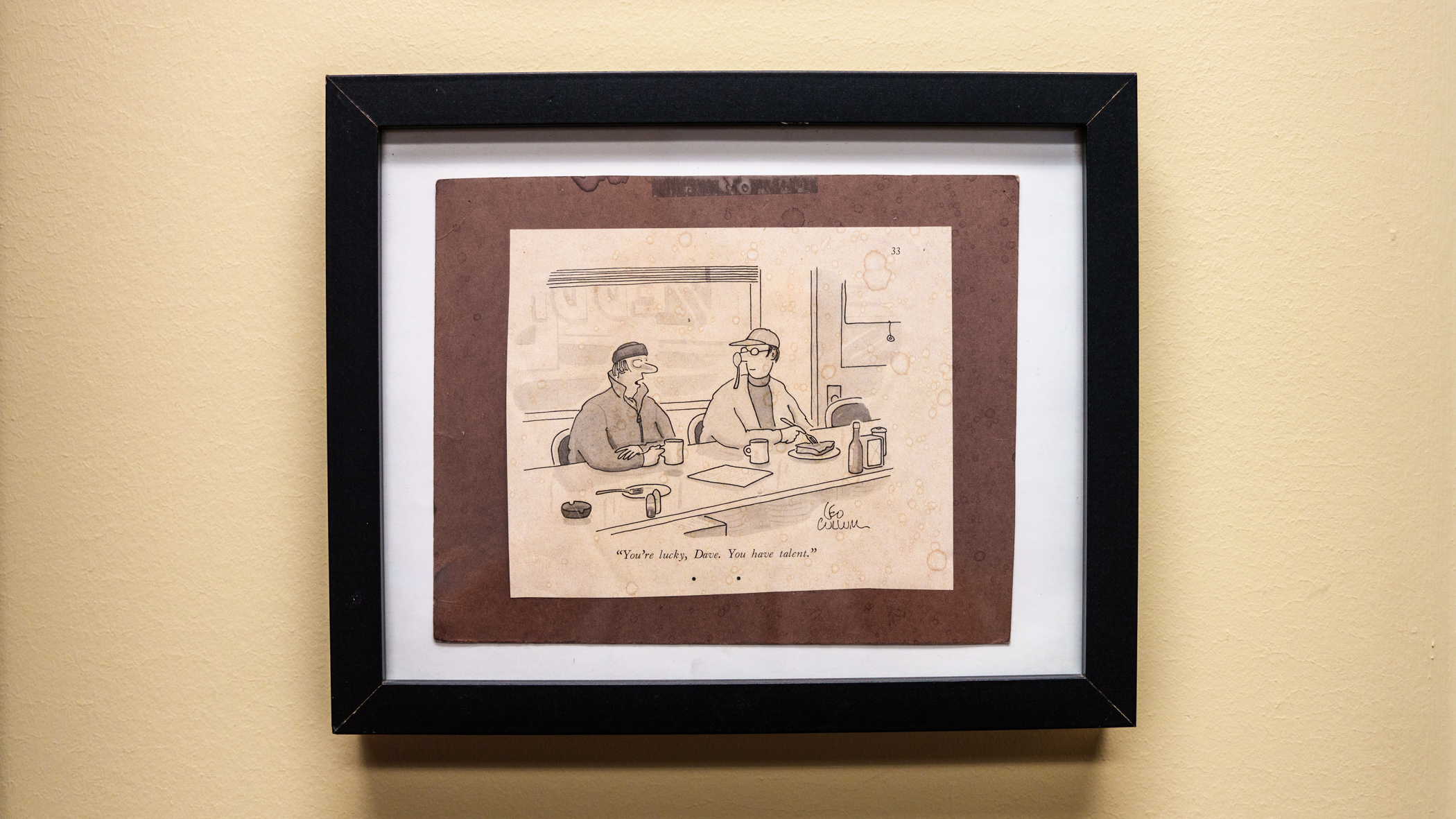
Framed on Gibson’s wall is a cartoon cut out from a New Yorker magazine.
“It means don’t take yourself too seriously. You cover serious things, but in the end, it’s not the most serious thing in the world,” said Gibson.
After four decades of reporting, Gibson has covered his fair share of serious things, most recently New York Times op-eds around the time of the last conclave.
“The more that you cover religions and their controversies, the more you tend to become cynical about them. But for me, it’s the opposite,” Gibson said. “The more that I reported on, the more I came to value both religion itself and its many manifestations in people. There are so many wonderful Methodists, Catholics, Seventh-day Adventists, Quakers, Shakers, Jews, Buddhists, Hindus, and Muslims of all different varieties. To me, it’s wondrous. ”
This interview has been edited and condensed for clarity.
