


Like many philosophy professors, Lauren Kopajtic, PhD, fills her office with objects that reflect her discipline—but she may be the only one with philosophy-themed Barbie dolls.
Step inside her Collins Hall office to discover the story behind the Barbies and the other meaningful items she keeps on her desk.
The Company of Two Kitties
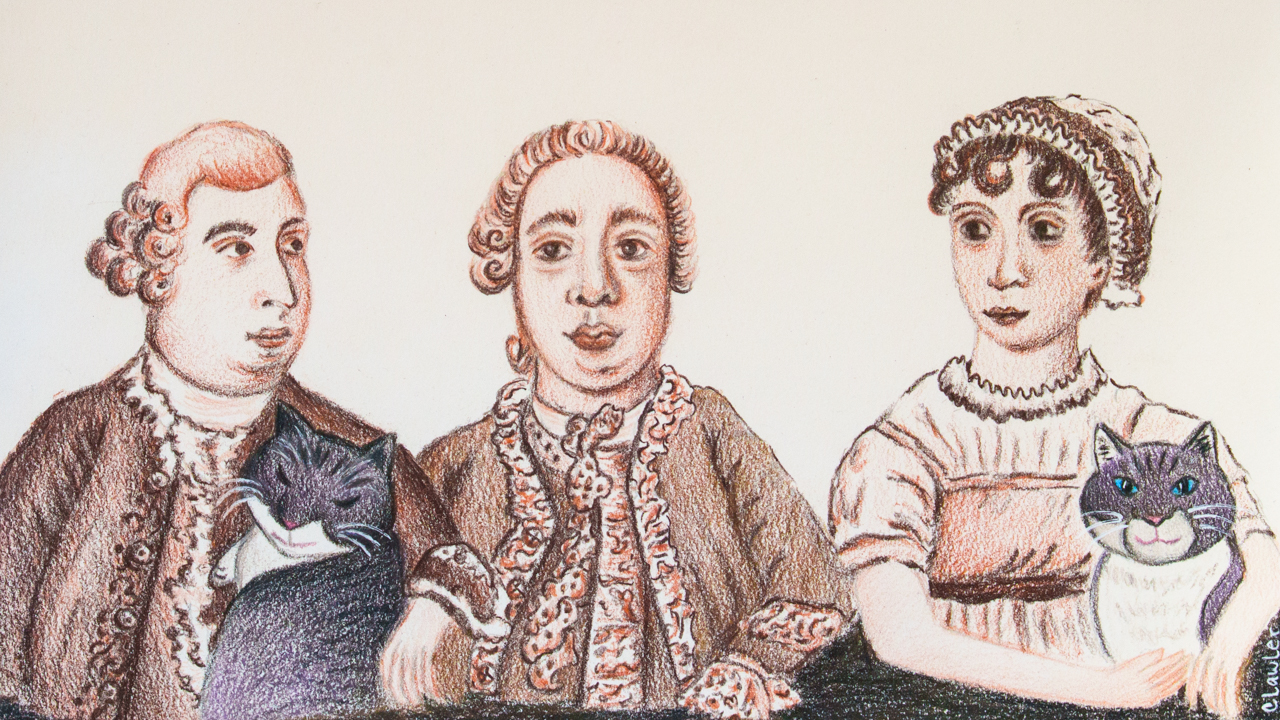
Hanging on the wall is a custom illustration of her two cats—Boris, 14, and Isabella, 13—a father-daughter duo adopted from an animal rescue. In the drawing, they’re cozied up with Kopajtic’s favorite philosophers and writers: David Hume, Adam Smith, and Jane Austen.
“Boris is a big snuggler, and Isabella is a classic cat who catches all the bugs in the house,” Kopajtic said.
She received the piece while working on her dissertation at Harvard University, a gift from a friend who specially commissioned the artwork.
“It represents my dissertation and the kitties who kept me company while I wrote it,” said Kopajtic, whose dissertation explores conceptions of self-control in the works of Hume, Smith, and Austen.
A Collection of Dolls
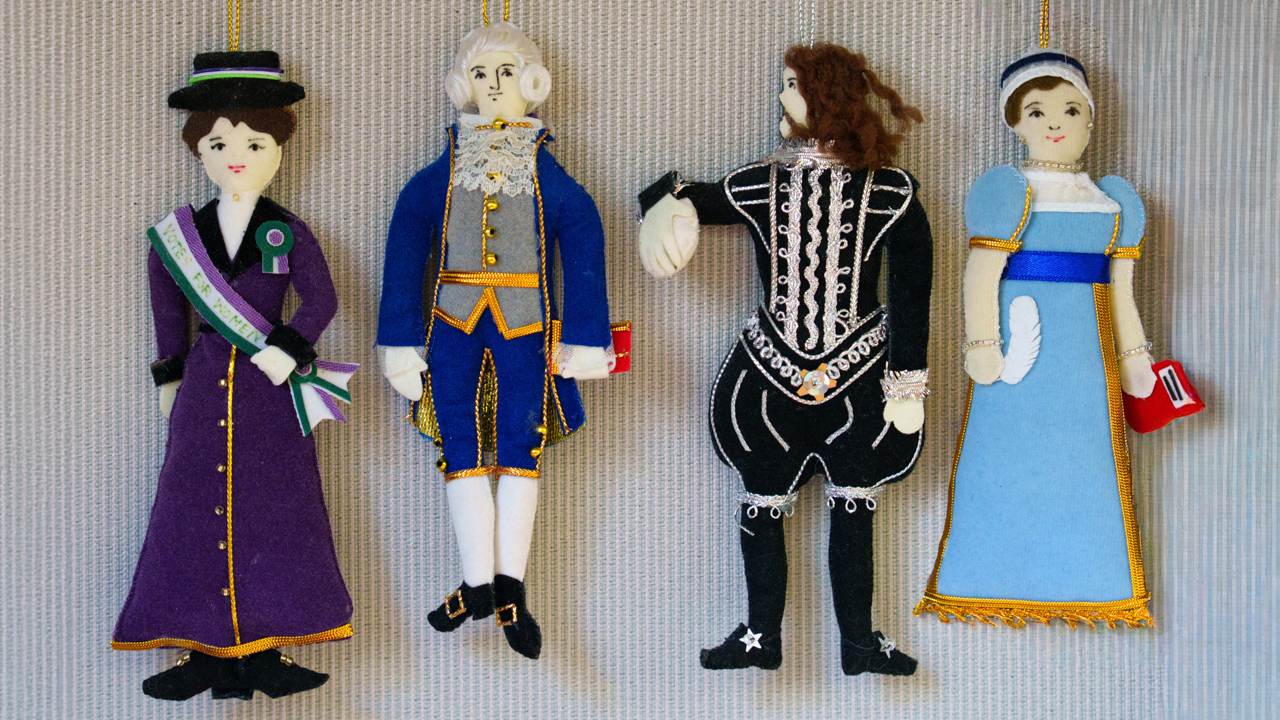
Next to the drawing is Kopajtic’s collection of dolls from British museums and heritage houses. From left to right: a suffragette gifted by her sister; moral philosopher Adam Smith, purchased during Kopajtic’s first visit to Glasgow; Prince Hamlet, a gift from a former student; and writer Jane Austen, bought as a souvenir while she taught a Jane Austen course at Fordham London this past summer. (Kopajtic also teaches a philosophy course focused on Jane Austen at Rose Hill, and she helped plan a birthday party for the beloved author last fall.)
Lauren the Slytherclaw

Inside a mug, Kopajtic keeps two quill pens from her colleague Judith
“Jude” Jones, PhD, who teaches a popular course that blends philosophy with Harry Potter.
“I’m a Slytherclaw, so I have a blue Ravenclaw feather and a green Slytherin feather,” Kopajtic explained.
Her favorite Harry Potter character is Hermione Granger, who belongs to neither house.
“I love her journey, especially her struggle to fit in. She’s constantly telling everyone they’re wrong and what the right answer is,” Kopajtic said. “That was the kind of kid I was, minus the magic.”
Contributions From a Junior Philosopher
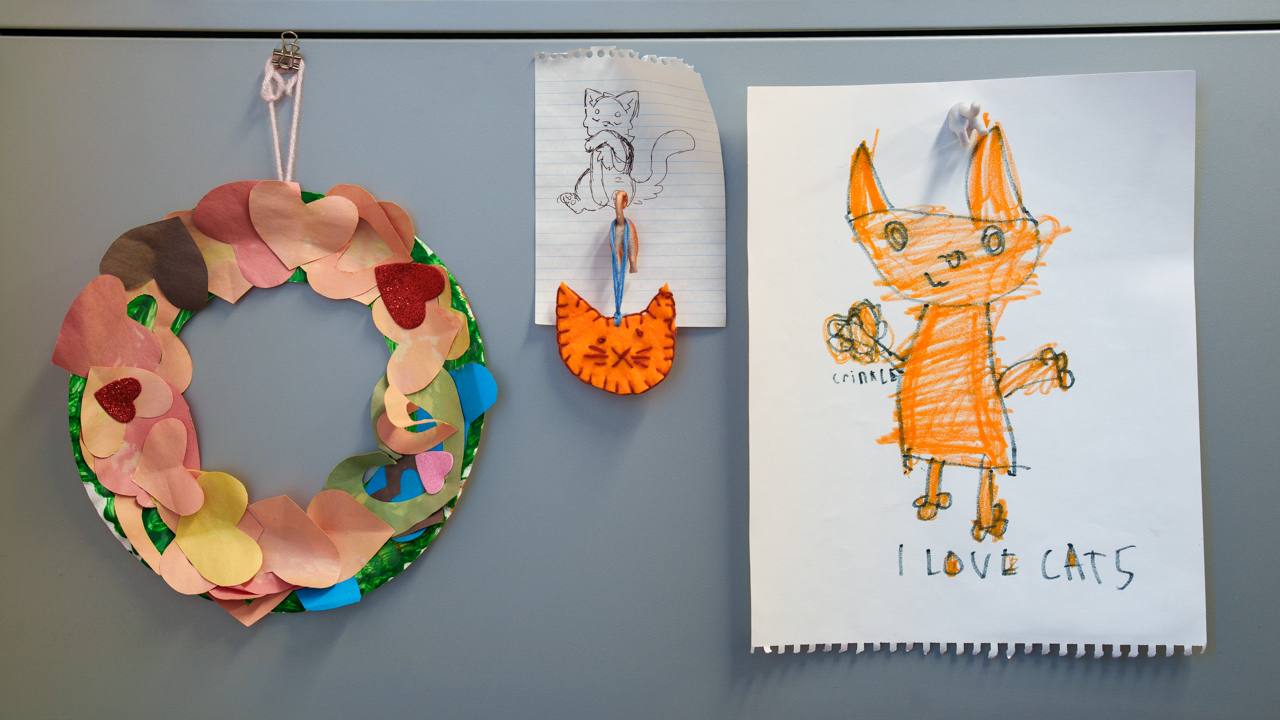
Kopajtic now has a child of her own: a 5-year-old son who loves making artwork for his mom, including the heart wreath and the drawing of an orange cat. He also enjoys asking what he calls “philosophical questions.”
“He asks me things like, ‘Mom, if all you can see is the direction your hand is pointing, how do you know whether it’s the right one or left?’” Kopajtic said with a smile.
A Philosopher and an Artist
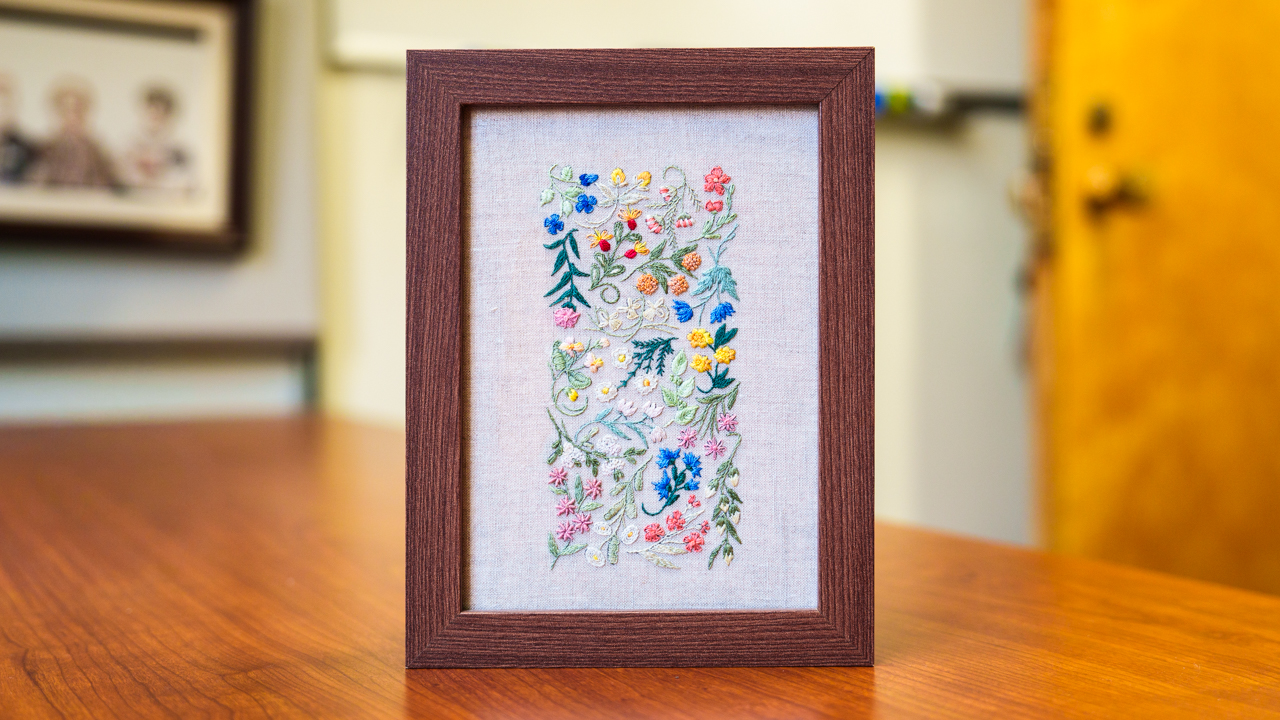
Kopajtic is also an artist. Her office displays several examples of her handiwork, including books with hand-stitched bindings, hand-sewn baskets, and framed embroidery like the piece shown above.
“A lot of it started when I was writing my dissertation. It felt like I was constantly working but not producing anything, because I was always editing and revising,” said Kopajtic. “Now it’s a way for me to keep my hands busy and let my mind wander while making something I enjoy.”
The Philosophy Barbies
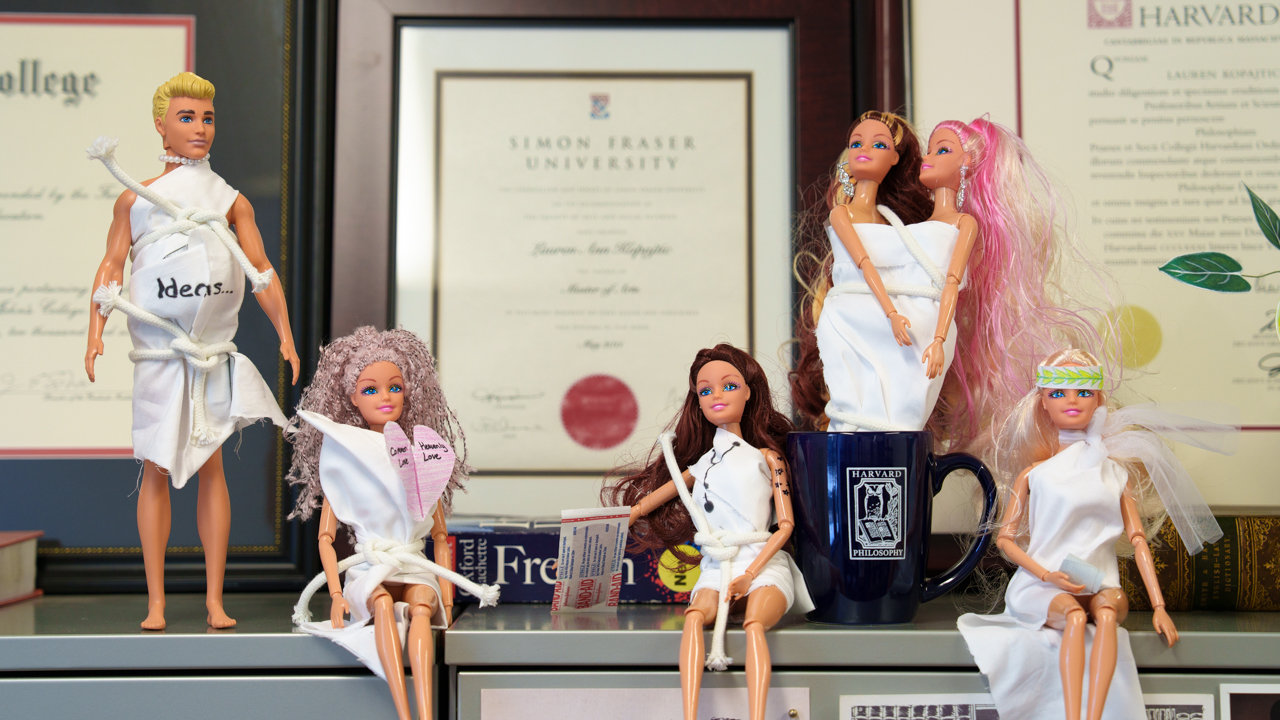
The most unusual items in Kopajtic’s office are her collection of Barbie dolls.
“When I taught in the honors program, we did a lot of work on Plato. For her final project, a student created a Barbie to represent each of the speeches in Plato’s Symposium,” Kopajtic said, referring to a famous dialogue that explores seven philosophical perspectives.
After earning an A on the project, the student gifted the dolls to Kopajtic.
“I love Aristophanes,” said Kopajtic, whose famous speech on love is depicted by the two Barbies tied together. “A lot of people say the idea of soulmates comes from that speech.”
‘Not Just a Mug’
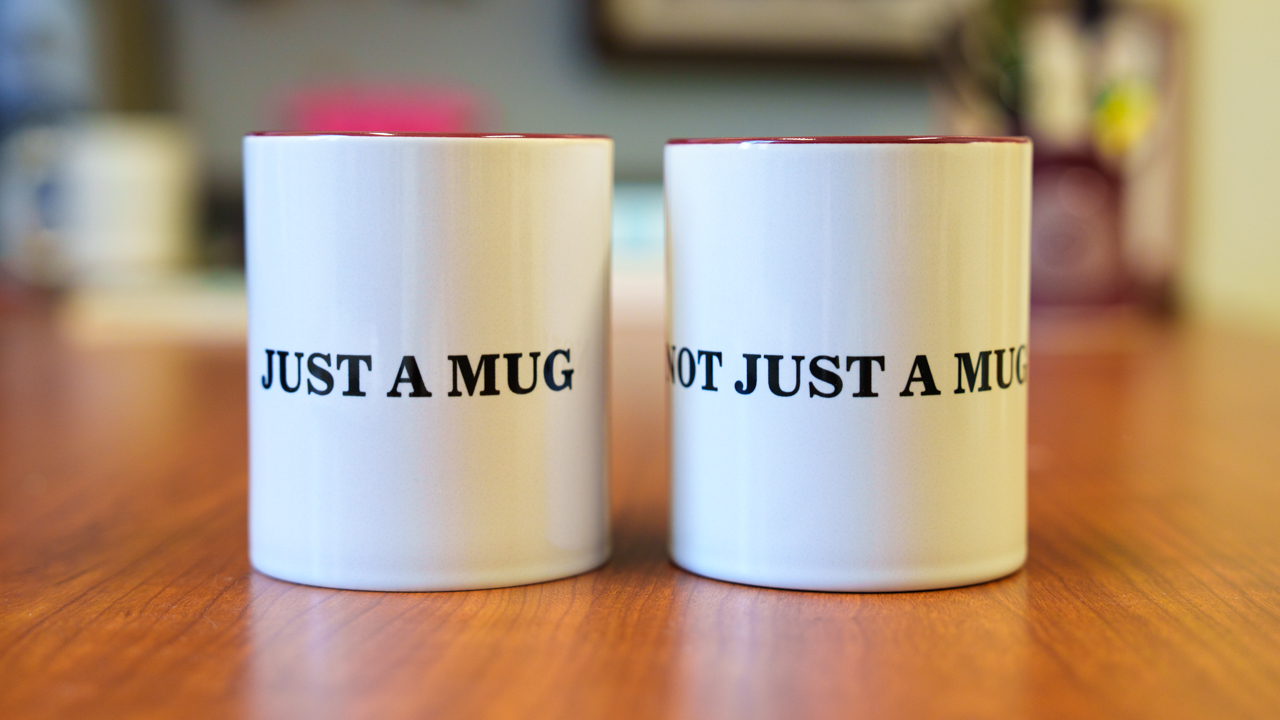
Kopajtic keeps a pair of philosophy-themed mugs on her desk.
“I once co-taught an ancient philosophy text with my husband, [Fordham professor] Nick Smyth. The philosopher Epictetus famously argues that you can preserve your freedom and happiness by not attaching yourself to external things outside your control,” Kopajtic said. “I told our students about a time Nick accidentally broke one of my mugs at home. He told me, ‘You shouldn’t be so attached to material things. Mugs get broken.’”
At the end of the seminar, the couple gave their students mugs and invited them to choose between Team “Not Just A Mug” and Team “Just A Mug.”
“Most picked ‘Not Just A Mug,’” Kopajtic recalled. “I agree that if I didn’t attach myself to external things, I might be happier—but it also makes me happy to invest things with meaning.”
This interview has been edited and condensed for clarity.
