

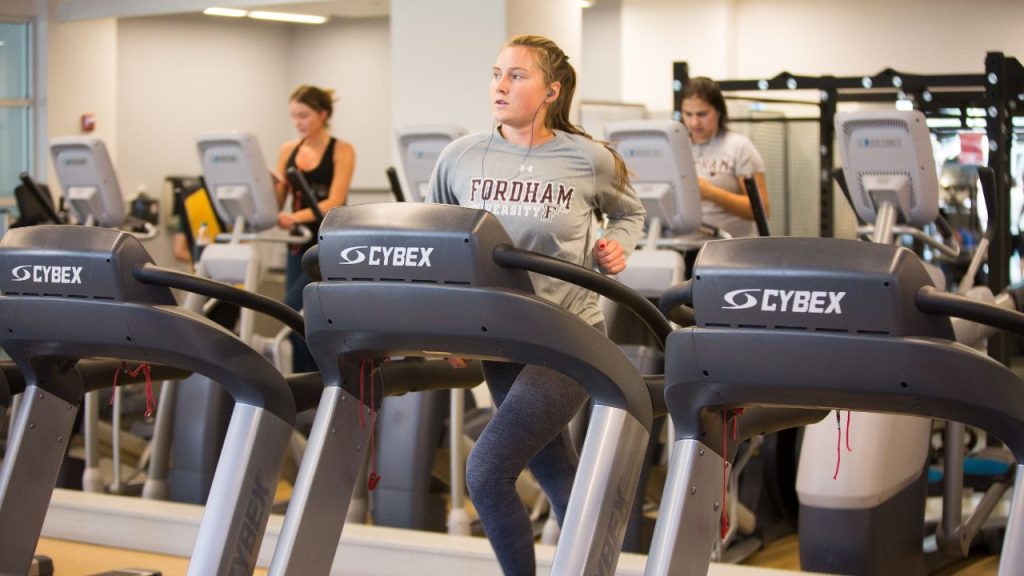
Every January, gyms fill up with people determined to get fit—and by February, many of those routines have already fizzled out.
To help you build a fitness habit that lasts, we spoke with two Fordham experts who live this work every day: Allison Julve, a senior on the cheerleading team and a strength-and-conditioning intern, and Stephen Georgio, a strength-and-conditioning coach who has worked with several athletic teams, including soccer, basketball, and track.
Here are their top tips for getting and staying in shape in 2026:
1. Start smaller than you think you should
If it’s been a while since you hit the gym, Georgio recommends easing in. Trying to do too much too soon is a common mistake that can lead to injury or burnout.
“Don’t start with a 90-minute workout. Just start with 15 or 20 minutes and build from there,” he said.
Georgio added that there’s no need to head straight for the barbells. First, master simple bodyweight movements, like squats and pushups. Once you can control your body weight—with excellent form and full range of motion—then you can gradually add weight, he said.
2. Use community for consistency
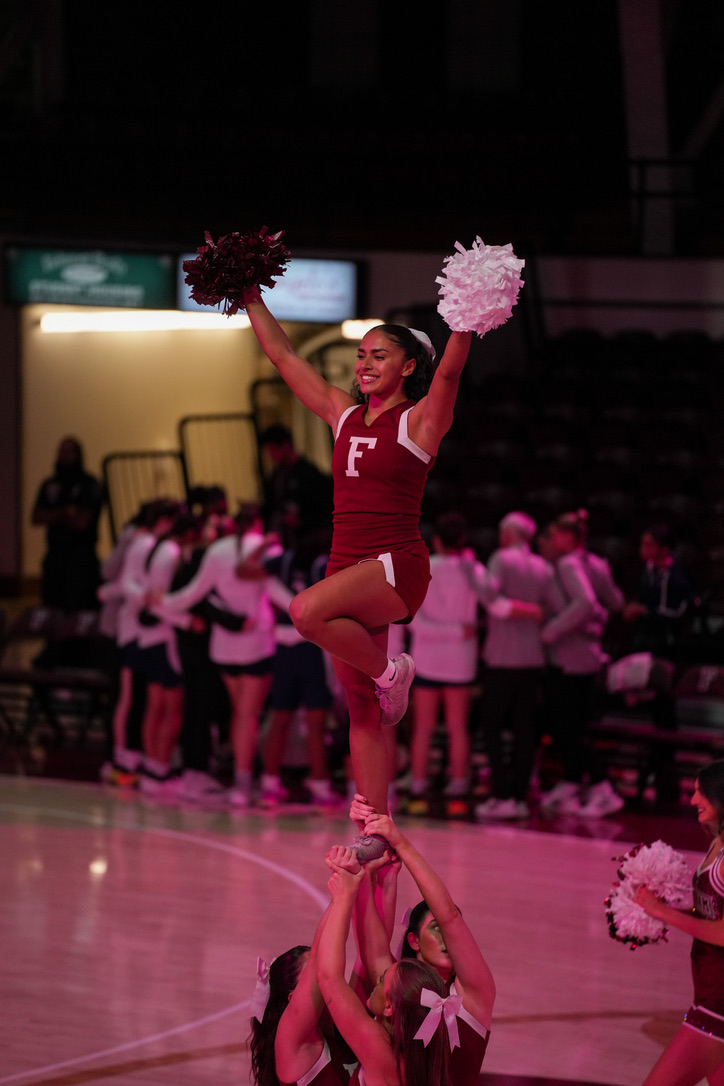
Julve says that having a workout buddy can keep you on track when motivation dips. Outside of practice, she loves hitting the weight room with her cheerleading teammates.
“ The whole team loves it,” Julve said. “Everyone’s challenging each other and rooting each other on.”
Training together helps build trust and connection, which is crucial in a sport that involves flying through the air and relying on your teammates to catch you, Julve said. Even for those of us who keep our feet on the ground, scheduling regular workouts with a friend can help with accountability and consistency.
3. Find movement you actually enjoy
Georgio likes to organize his fitness around supporting an activity he loves. He practices Brazilian Jiu-Jitsu several times a week, and says preparing for competitions keeps him motivated to train and to care for himself holistically, whether that means getting enough sleep, eating nutritious meals, or even taking a day off.

He recommends finding a sport or an activity you truly enjoy to center your training around. “It gives you something to strive for,” he said.
4. Train your mindset, not just your body
As a psychology major planning to pursue sports psychology, Julve pays close attention to how the mind affects performance. She highlighted the value of developing a “growth mindset,” a concept she learned about through Fordham’s Psychology of Personal Wellbeing: How to Live a Happy Life course.
A growth mindset says your abilities can be developed through effort, whereas a fixed mindset says they’re inherent and can’t be changed significantly. At the gym, a growth mindset can help you manage disappointment and push through setbacks.
“It’s the difference between thinking you are limited by your ability or seeing failure as an opportunity to get better,” Julve said.
Georgio added that athletes and non-athletes alike can hamper their performance with negative self-talk or overly rigid standards.
“A big part of my job is helping people notice the progress they’re already making,” said Georgio. “Just being nice to yourself is super important.”
