

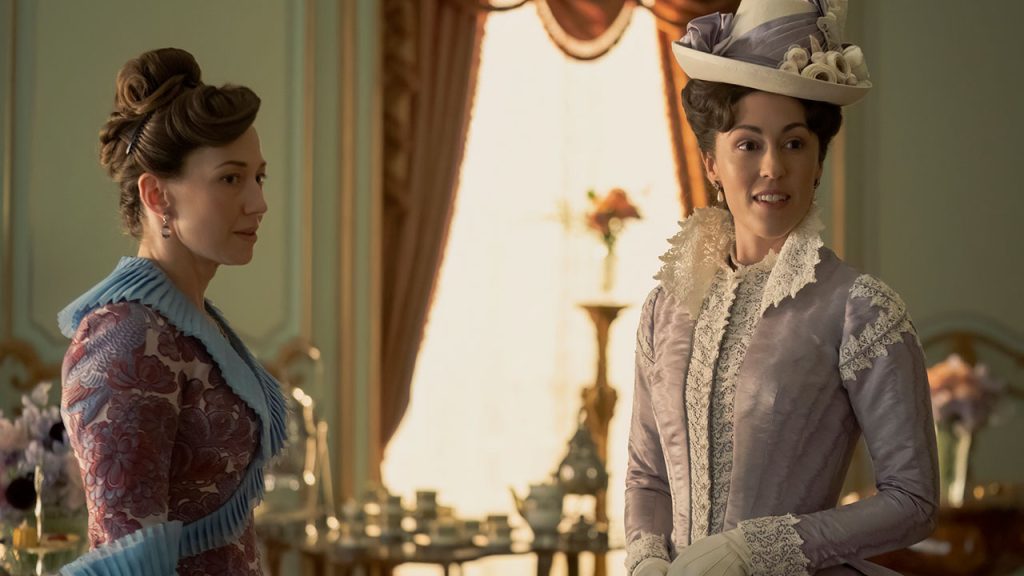
Actress Kelley Curran has captivated fans of HBO’s The Gilded Age in her role as Enid Turner, a “resentful, delicious” lady’s maid who schemes her way into high society in 1880s New York. Her marriage to the wealthy, elderly widower Joshua Winterton shocked fans in the second season. And this month’s season-three finale sparked speculation about what’s next for the now-widowed Mrs. Winterton.
Curran, a veteran of Broadway and off-Broadway stages, intended to major in English at Fordham. But after getting cast in several plays during her first year, she realized she had to be “brave enough to bet on” herself. The 2006 Fordham Theatre grad sat down with Fordham Magazine to reflect on her big break, the realities of being a working actor, and how the show’s “stunning” costumes help shape her role.
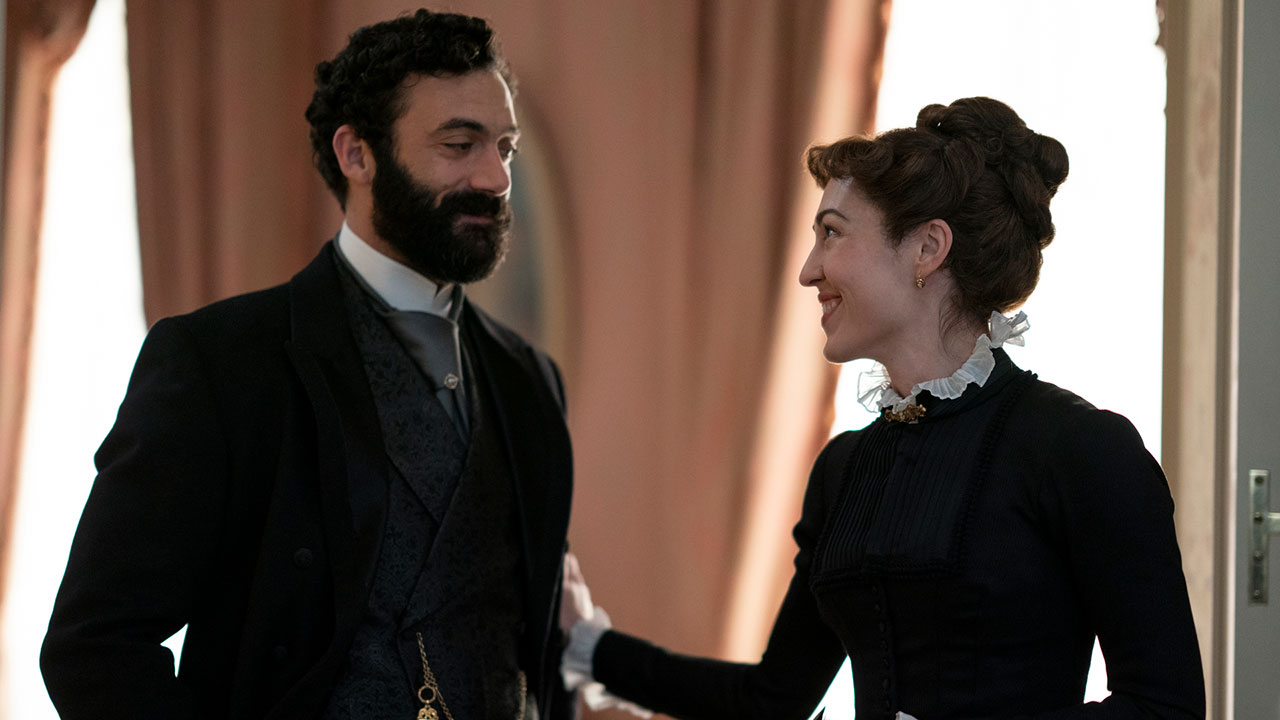
Mrs. Winterton has gone from being a maid to a society woman. What has it been like to portray such a dynamic character?
I loved her from the moment I read the audition slides. I remember reading them and being like, “Who is this messy, resentful, delicious woman?” She had the most status in the room, even if she had the least. And then to see her dreams kind of come true, it was really, really rich, and it continues to be rich to play this character. Even if she only has a few minutes of screen time, you just know something’s going to go down when she’s on camera.
How do you humanize Turner, now Mrs. Winterton—a character many people just see as an antagonist?
I did a lot of reading and research, both fiction and nonfiction, from the period to try to understand the socioeconomic stakes of the time—which of course aren’t that different from the period we’re living in now. It’s so easy to slip through the cracks in terms of the cost of health insurance, the cost of living, the cost of housing. I started to think about the character’s age and the larger cultural forces that would’ve shaped her life. That helped me feel compassion for her and find a way to love her in spite of her behavior. I think of her as very much alone in the world. She was doing whatever she could not just to survive but to try to live out dreams and be a person of agency and influence, which for so many women was just not possible at the time.
The Gilded Age is celebrated for its opulent, historically accurate costumes. What was your reaction to your character’s wardrobe, which changes drastically?
I was just blown away by all of the costumes from day one. Even the maid’s uniform was so sublimely constructed that I never got tired of wearing it. I remember our costume designer, Kasia [Walicka-Maimone], kept tightening the sleeves. She was like, “She’s like an arrow.” It certainly influenced my physicality, dealing with bustles and corsets, and that tension in the dress influenced the character and how she moved through the world.
In season two, it was so thrilling to have all those stunning dresses. They’re all very conservative, but they have tight, sleek, classic lines. And almost all of the costumes were pink or had a touch of pink because the character is trying to create a softer image than what she actually is. She’s tough, but she was trying to project a kind of softness and femininity and wifeliness.

Many people are discovering you as a result of your work on The Gilded Age. Do you consider it your “big break”?
I certainly think I will look back on it and think, “Oh, wow, that was a big break.” The number of people who view this show is astonishing to me. I feel very excited to be a part of something that is entertaining, kind of salacious and wonderful, and also calming people’s nervous systems, because there’s a lot that does the opposite in the world.
In 2019, you returned to Fordham Theatre to teach Acting Shakespeare. How did you approach that? And what lessons did you share about the reality of being a working actor?
Studying acting is very different than the practical application of becoming an actor. This lifestyle is a choice, and you have to choose to make it every day. I encourage students to focus not just on your career but on your vocation—how you want to move through the world. Try to keep a broad perspective on what’s possible. It might be different than you imagined, and that’s okay. It could be great.
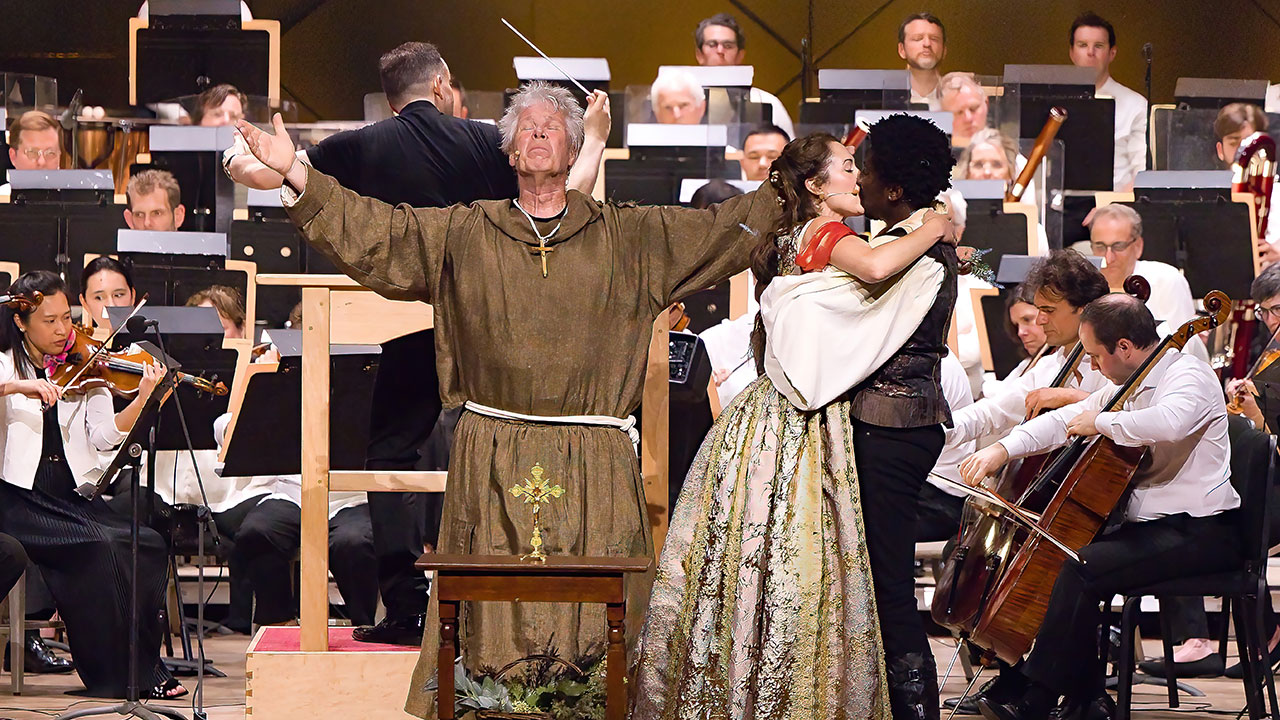
Beyond The Gilded Age, what other projects do you have on your plate?
This summer, I got to do something really unique. It was a 75-minute adaptation of Shakespeare’s Romeo and Juliet and Sergei Prokofiev’s ballet score, performed by six actors and the Boston Symphony Orchestra at Tanglewood. It was just a really thoughtful, brilliant adaptation by Bill Barclay, who was also our director, and a total dream. The experience made me want to continue working on the edge of what I know.
This interview has been edited and condensed.
