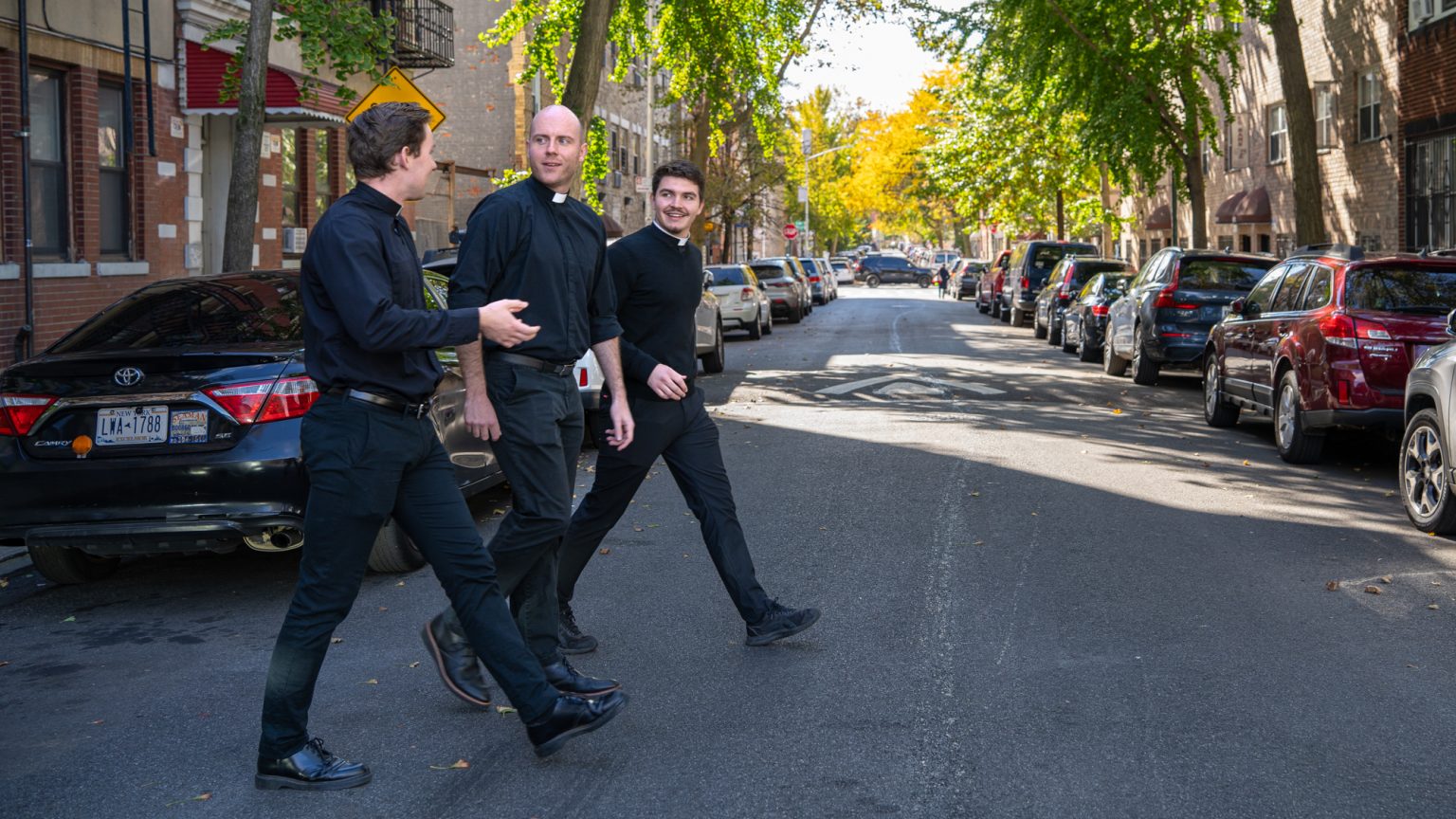
For nearly 500 years, the Jesuits have been forming Catholic priests and brothers for leadership in education and service. Since 2021, a new model for a key part of that process has taken shape in a modest brick building in the Bronx.
Ciszek Hall is home to 17 Jesuits in formation—seminarians and brothers who completed the two-year novitiate and are taking Fordham graduate courses in philosophy and other disciplines through the Jesuits’ First Studies program. Crucially, Ciszek’s doors aren’t located on campus but on Belmont Avenue.
That’s largely why the Jesuit Conference of Canada and the United States chose Fordham to pilot a revamped program. It emphasizes praxis education—working alongside nonprofit leaders engaging head-on with issues such as food security and affordable housing.

“People’s mentality is often that the Jesuits are here to save the day, but that’s not our approach,” says Kevin Yonkers-Talz, director of praxis learning. “It’s not to discount these guys. They have a lot of gifts. But the community leaders are really the educators of these men.”
Luke Olsen is a Jesuit scholastic who taught South Sudanese refugees in Uganda before coming to Ciszek and now works with day laborers in the South Bronx.
“These are tricky things, right? A danger of wanting to help is that you can be condescending or think you’re doing something good without knowing enough to understand what people need,” he says. “There’s something that can only happen as a result of the trust that builds over time.”
From the Classroom to the Streets
On Tuesday mornings, the Jesuits gather in a Duane Library seminar room for a core course on the complex factors affecting their work in the community. “The focus is on helping them develop the ability to interpret the historical, social, economic, and cultural context for the purposes of doing ministry,” says William Sheahan, SJ, the rector of Ciszek Hall.
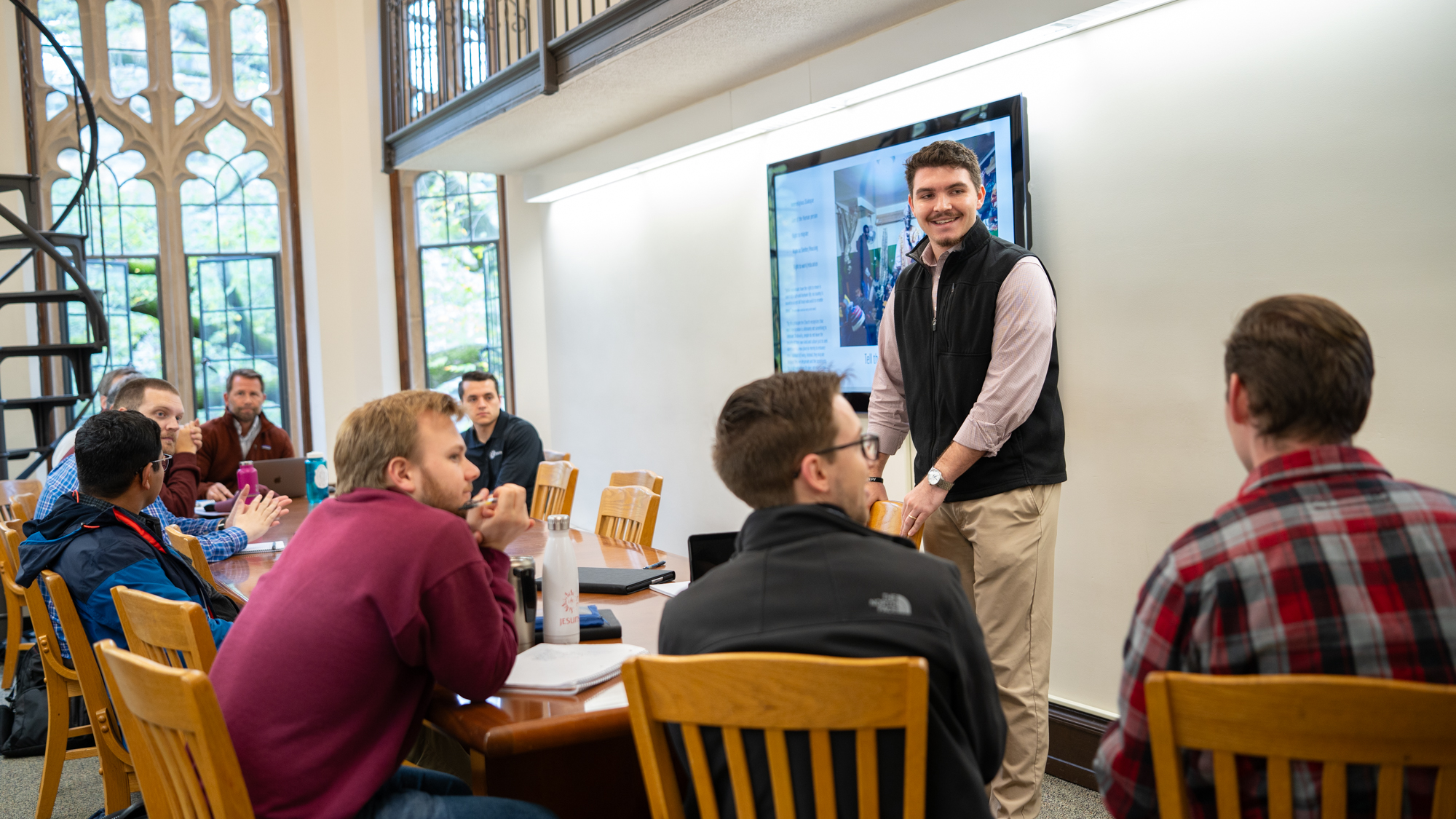
The connections between Fordham Jesuits and the Bronx run deep. In the 1970s, scholastics and brothers worked to organize and empower groups focused on housing and other issues. Now, the hands-on approach is part of the curriculum.
Each Jesuit is connected with a single nonprofit for their three years in the program. The length of their commitment helps them develop expertise and foster camaraderie. Alvaro Pacheco and Carlos Martinez-Vela lead a storytelling class at Belmont Catholic Community Center, for example, in collaboration with Grupo de Mujeres Latinas. The aim is to help build bridges of understanding.
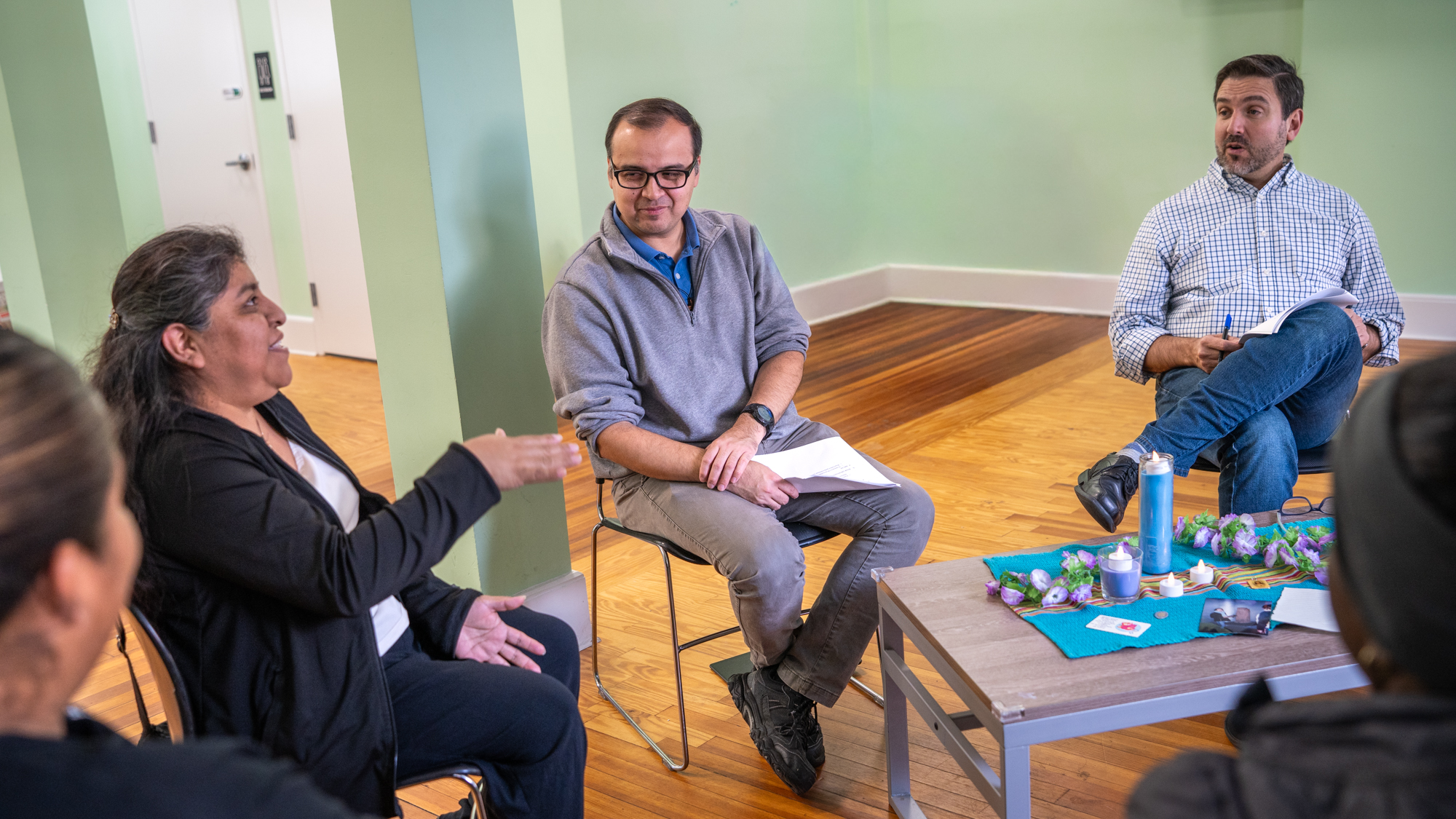
“We all carry stories that sometimes define who we are and what we do, butwe don’t know it because sometimes we haven’t told them,” Martinez-Vela says. “We make sense of our life and realities through stories. They make us human.”
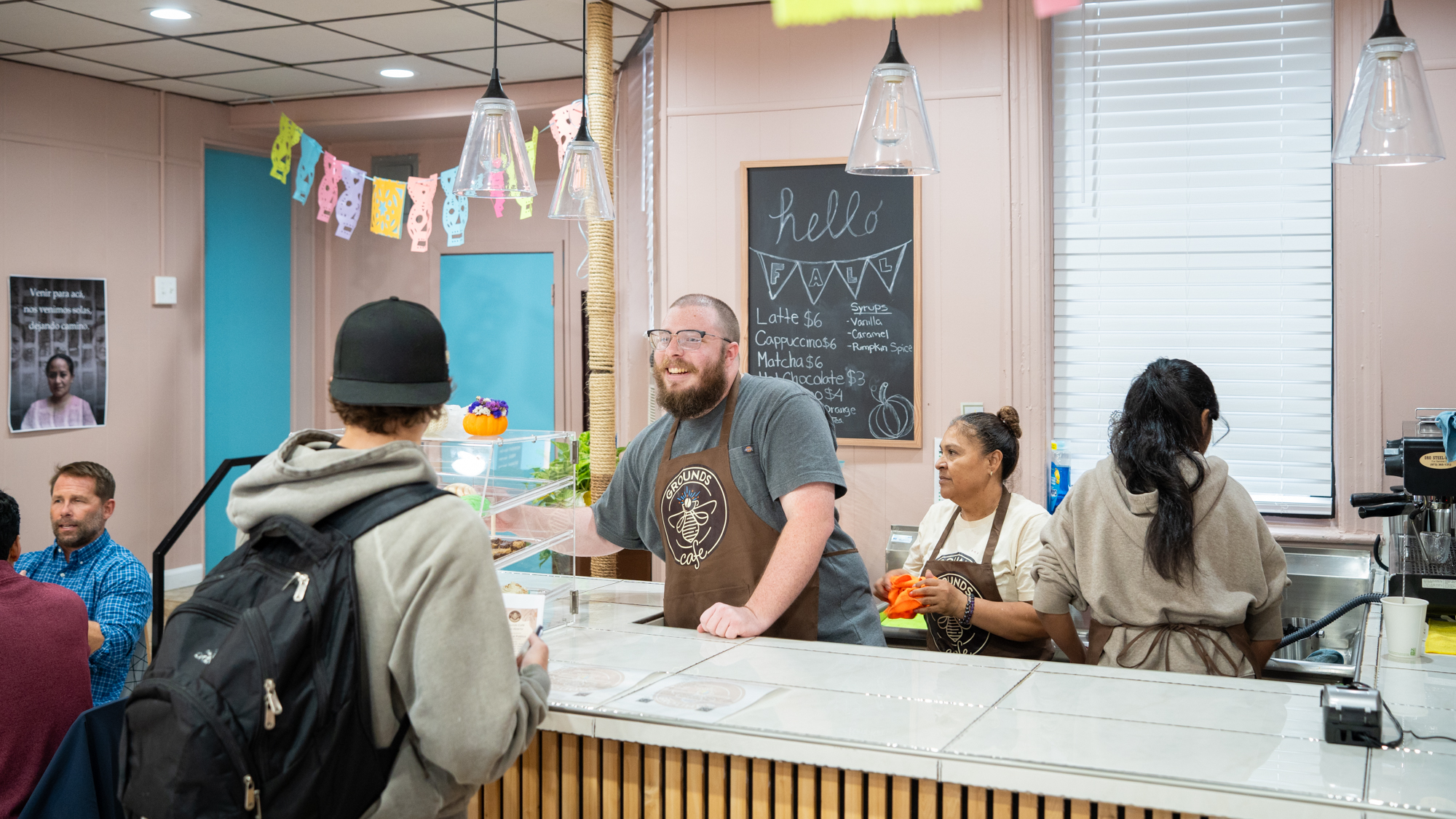
Sometimes that humanity is shared over coffee. Ryan Cruise works at Grounds Café, a coffee shop conceived as a community-building space, including job training for Bronx women. The concept was a social-impact finalist in the 2024 Fordham Foundry Pitch Challenge.
Living in Community
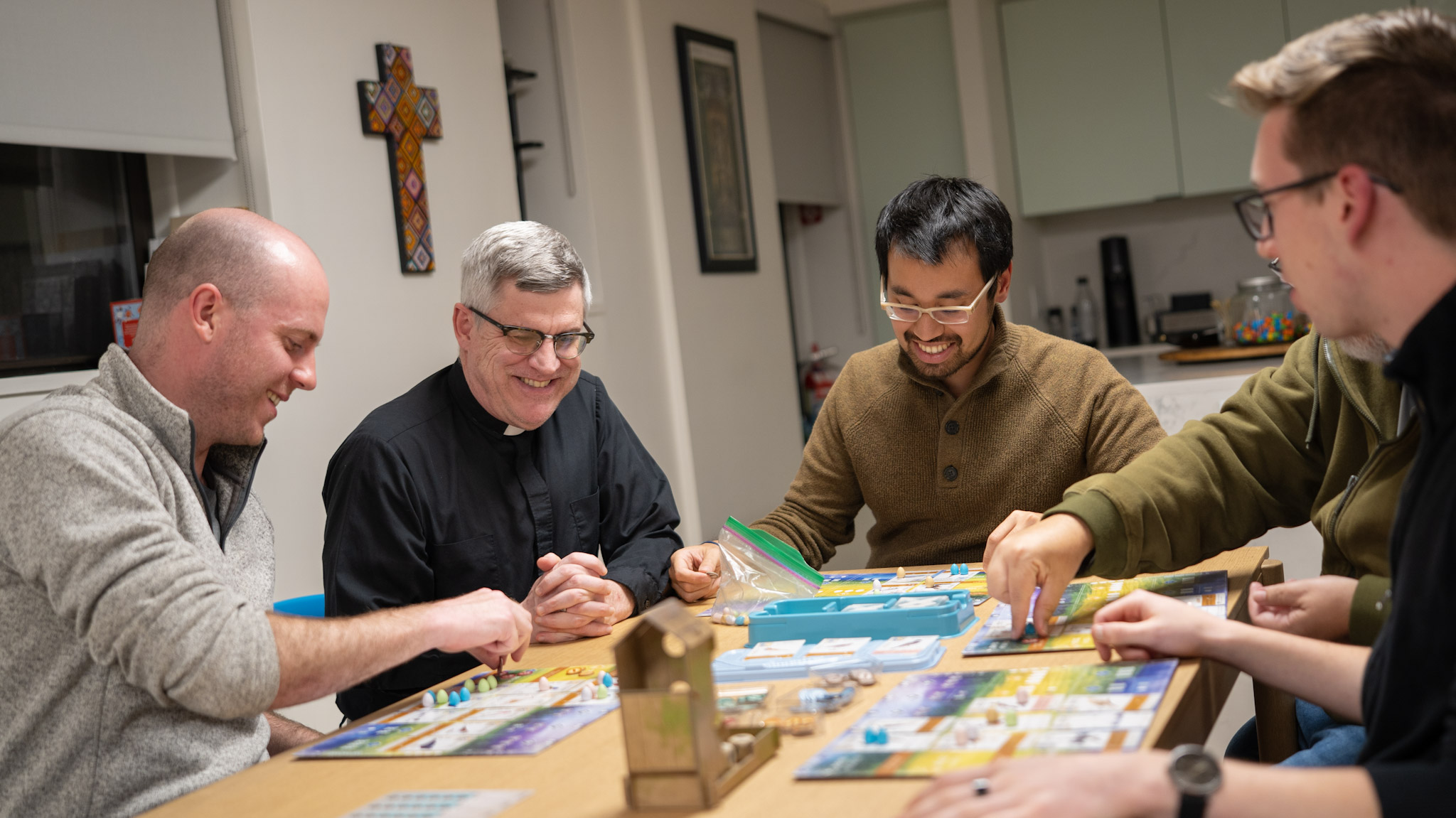
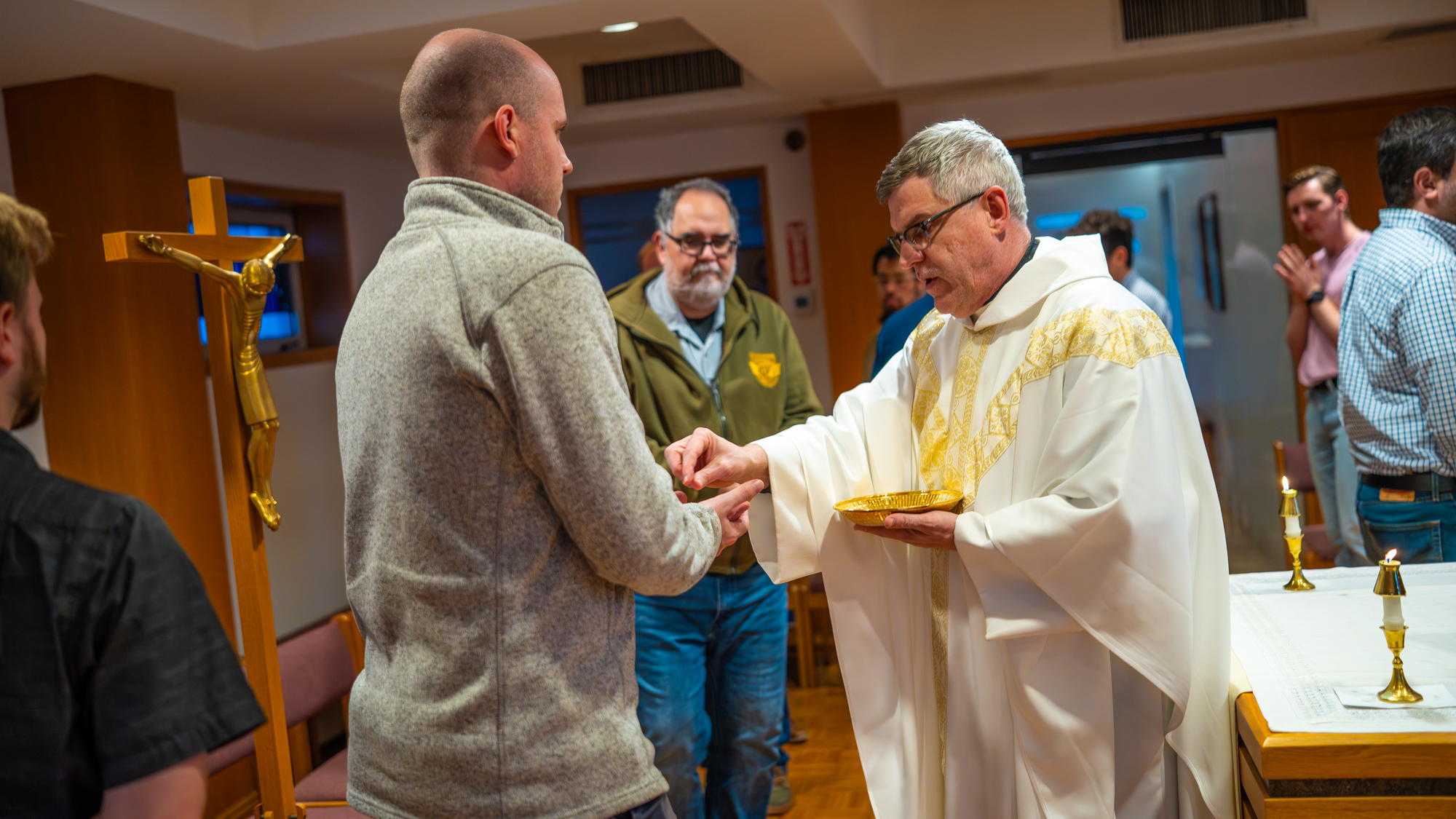
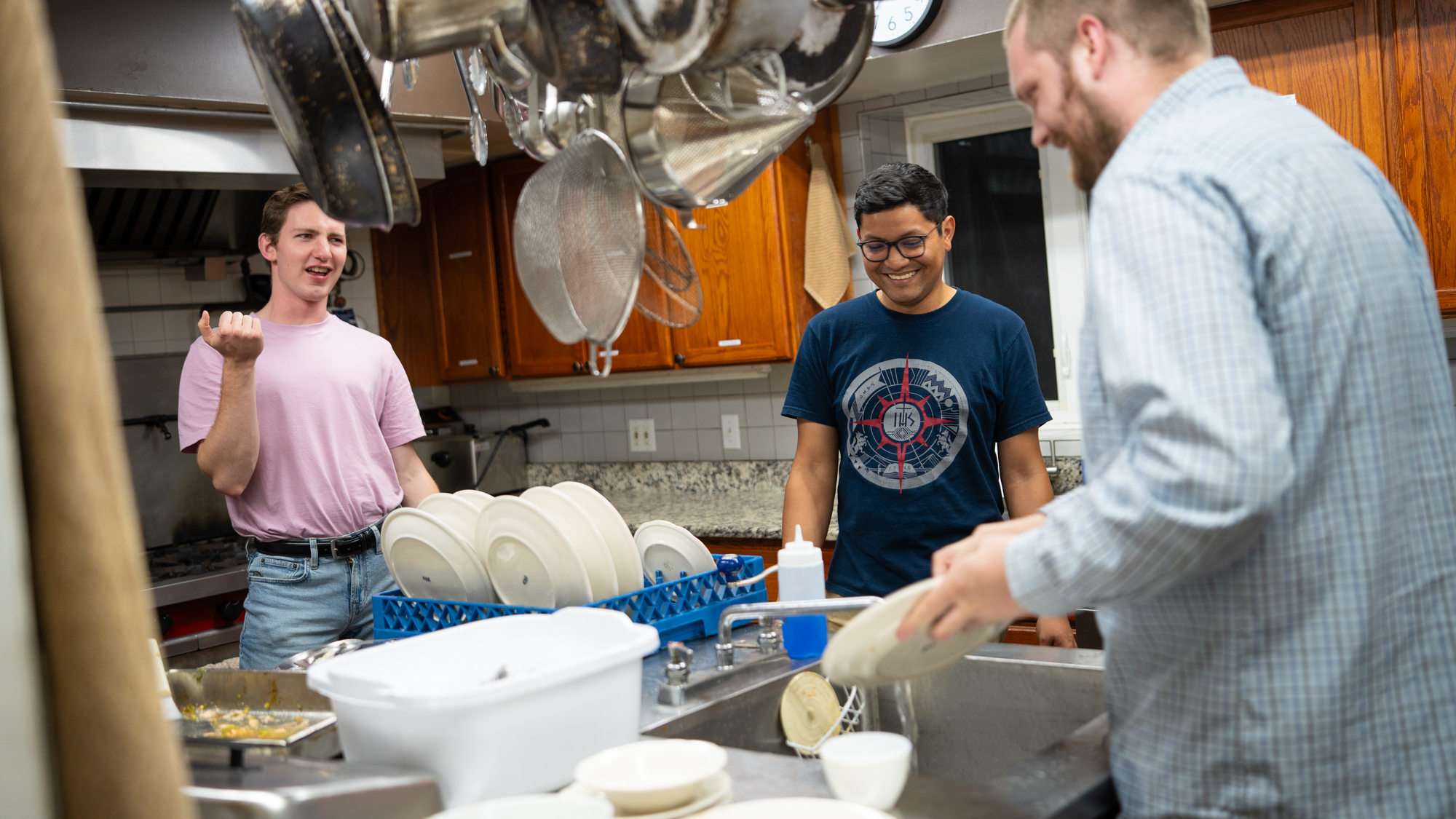
The rituals of daily living in Ciszek Hall keep the scholastics and brothers grounded. They celebrate Mass every evening before sharing a meal. Household duties are shared, too, as are games and movie nights to unwind. But most often, the men retreat to their rooms for private prayer and long stretches of studying the finer points of Aristotle and Aquinas.
The days are intense. Between their academic and community commitments, plus regular one-on-ones with their spiritual director, the Jesuits are pulled in several directions at once. And that’s the point, says Michael Zampelli, SJ, ’86 MA, director of the master’s degree program.
“The real central piece of this thing is integration,” he says. “Because it’s really about the formation of them as people. What is it that you now have in you, and how has all this changed you?”
Robert Buckland ’91 considers these questions as he shares a meal with his Ciszek housemates. He joined the Jesuits later in life, following a successful career in the airline industry. This fall, he made his perpetual vows of poverty, chastity, and obedience to become a Jesuit brother.
“You need the studies and the theory to know how to fix [societal]problems,” he says, “but the softening of the heart is something you can only learn immersed in actual life with people. What I really wanted was a changing of my heart.”