

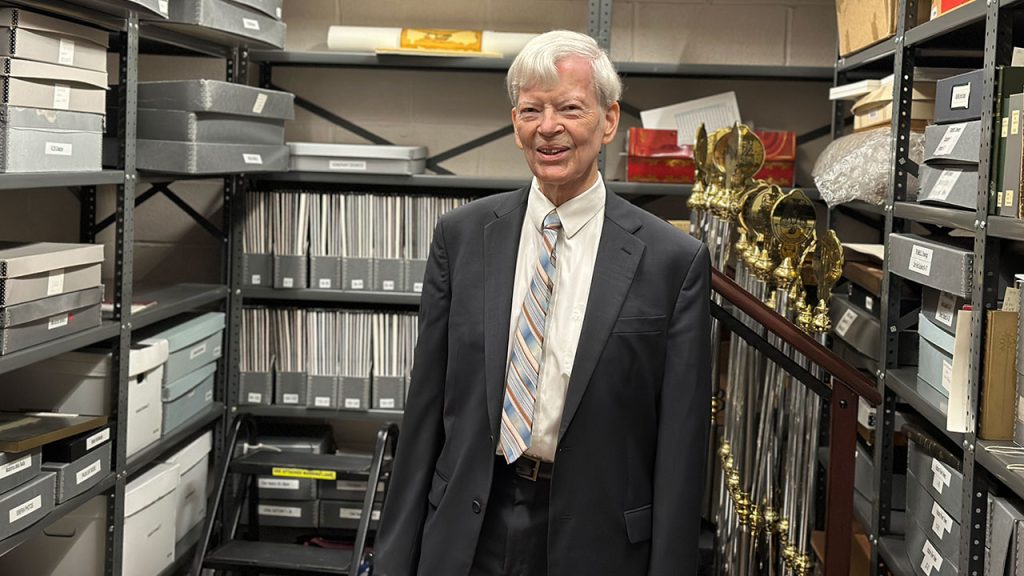
Michael Wares has seen reading habits completely change over the course of his 54 years at Fordham.
The assistant director of technical services at Walsh Library oversees all of our acquisitions, print and digital. “Physical book usage has fallen off a cliff,” he said. In its place, the library’s collection of electronic books and periodicals has mushroomed. In June of this year, Fordham added 55,000 e-books and 7,800 print books to its collection—70% fewer print books than the annual acquisition trends from roughly a decade ago.
But even as the printed word becomes a dying breed, Wares has relished his unfettered access to the rare books and artifacts in our special collections. On the eve of his retirement this September, we asked him to share a few of his favorite things in our archives.
George Washington’s Orderly Book
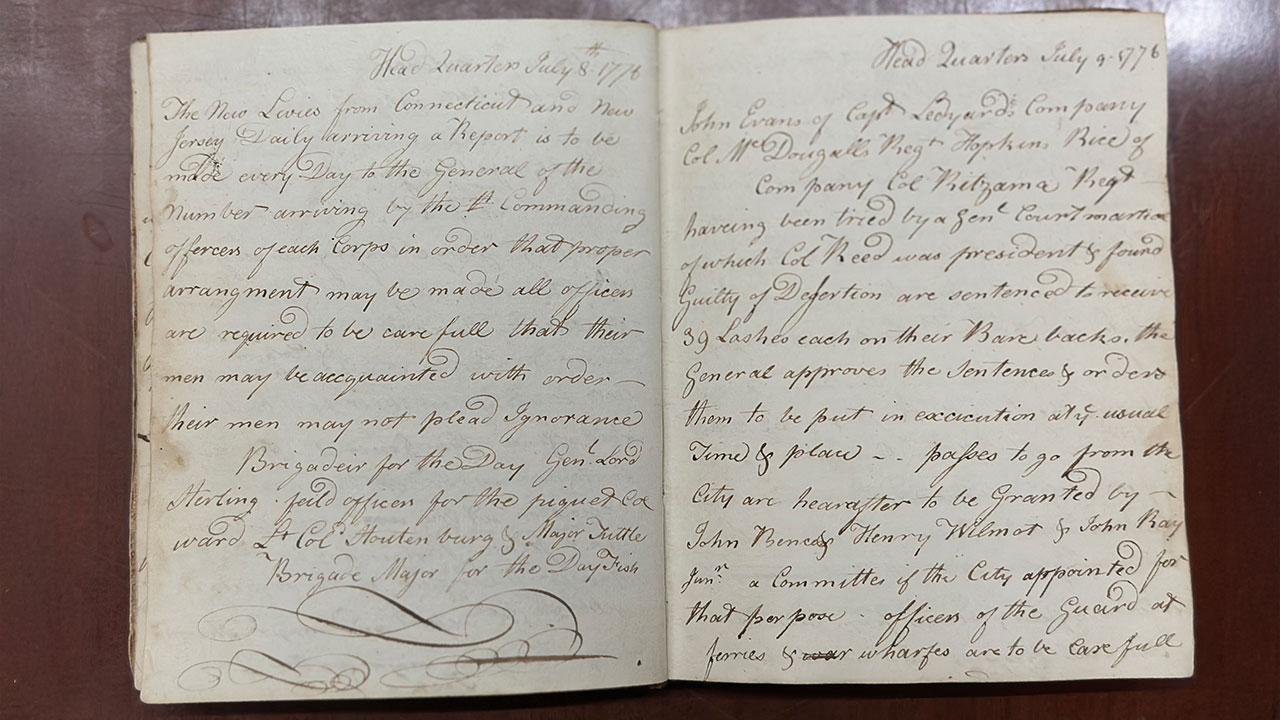
This military diary of George Washington comes from the Munn Collection of early American paintings and artifacts, which includes artworks from John Trumbull, the Revolutionary War painter responsible for the most-requested item in all of our collections.
The extraordinarily well-preserved diary with its beautiful penmanship is notable because it includes the July 9, 1776, entry, in which Washington casually documents that we had won our independence five days earlier. Members of the Continental Congress, he wrote, “have been pleased to dissolve the connection which subsisted between this country and Great Britain and to declare the united colonies of North America free and independent states.”
Washington was in New York—a long trek from Philadelphia at that time—and this proximity to Fordham is part of the appeal for Wares. “He was probably fairly close to the campus when he wrote this,” said Wares.
Ancient Egyptian Papyri
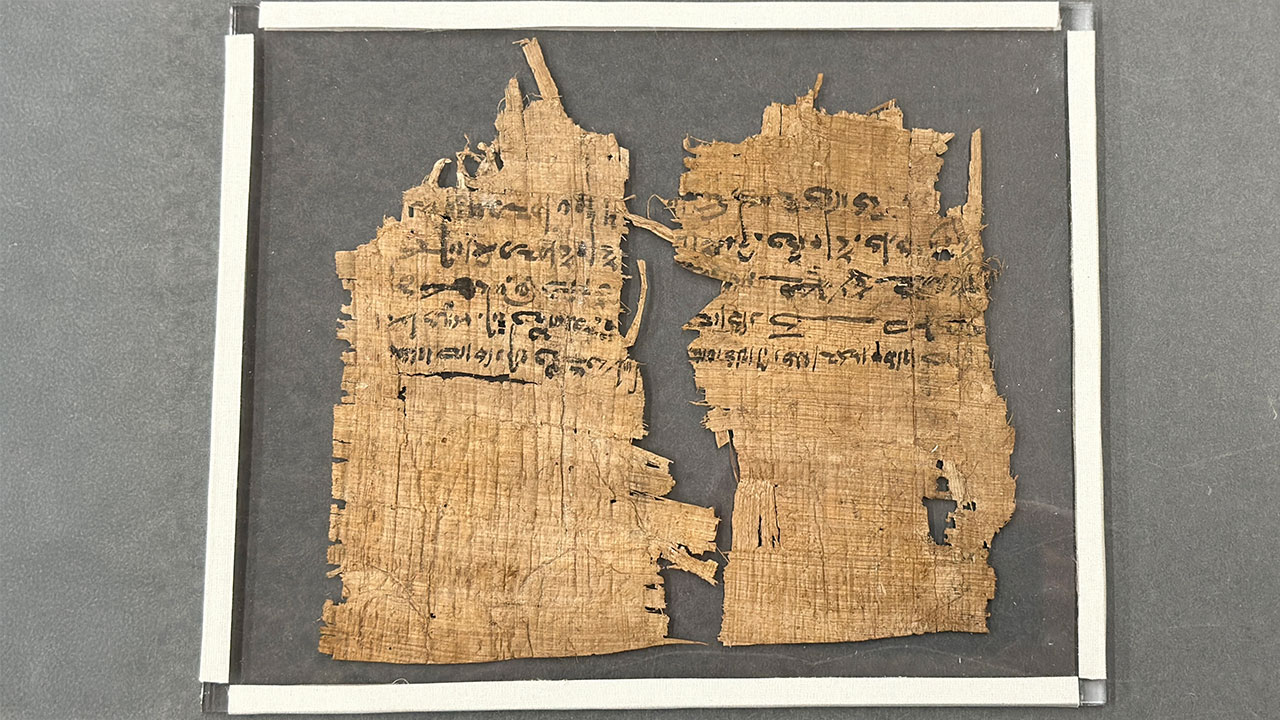
A former classics faculty member, Ann Hanson, Ph.D., acquired 50 pieces of ancient Egyptian papyrus—a.k.a. papyri—in 1983 together with a professor from Princeton, with whom we divided the collection. The Egyptian calligraphy on this piece refers to a marriage contract that dates back to 199 to 180 B.C., during the reign of Ptolemy V. Wares said he has always been interested in Egyptian antiquities—the Egyptian wing is always a highlight of his trips to the Met.
1841 Edition of The Iliad, Vols. I and II
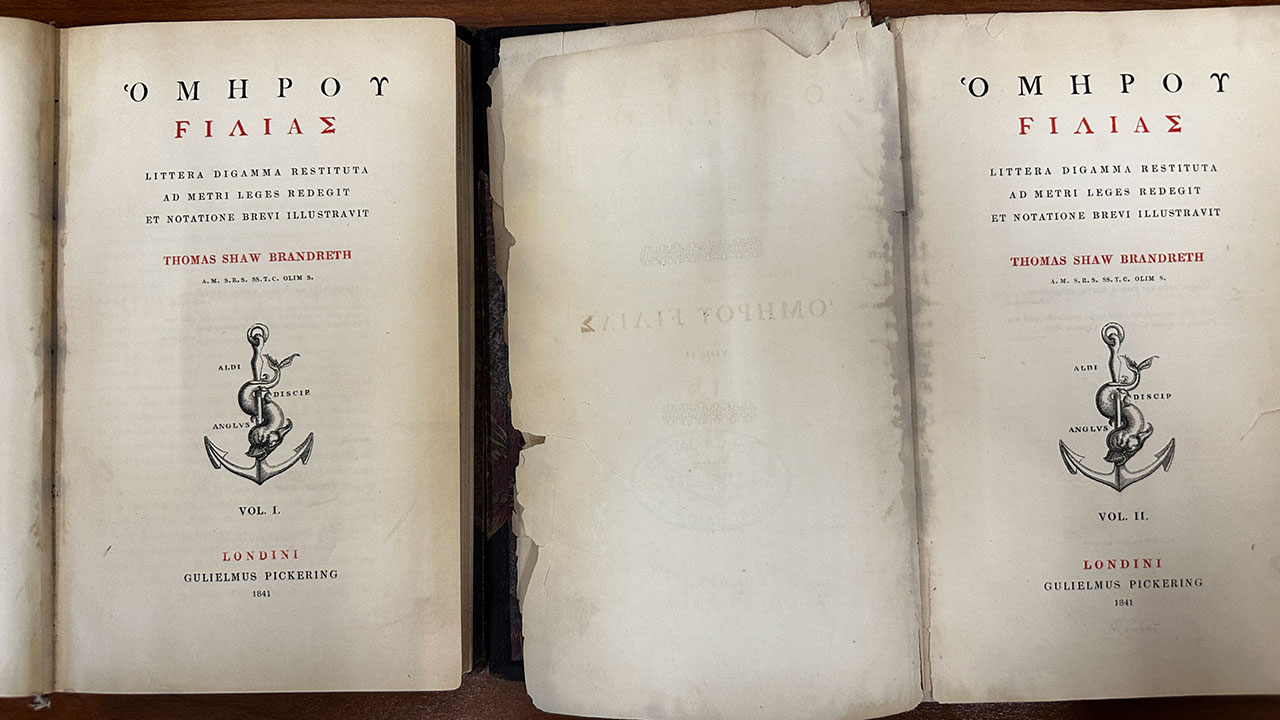
Just as Odysseus spent years adrift following the Trojan War, Fordham’s 1841 edition of The Iliad, Vol. II, journeyed for many years outside of the library’s collection, after someone checked it out in 1926 and neglected to return it. It wasn’t until 2019 or so—just before the pandemic—when someone found the missing copy in an attic and returned it to the library by mail, where it was reunited with Vol. I.
The text is in Greek, and another fascinating aspect of these books, said Wares, is that the digamma, or letter F, which was dropped from the Greek alphabet, reappears in the title (it makes a “w” sound). The word above spells Homer.
Wares says he plans to weave the story of the lost book and letter together in an article called “Things Lost and Restored.”
