

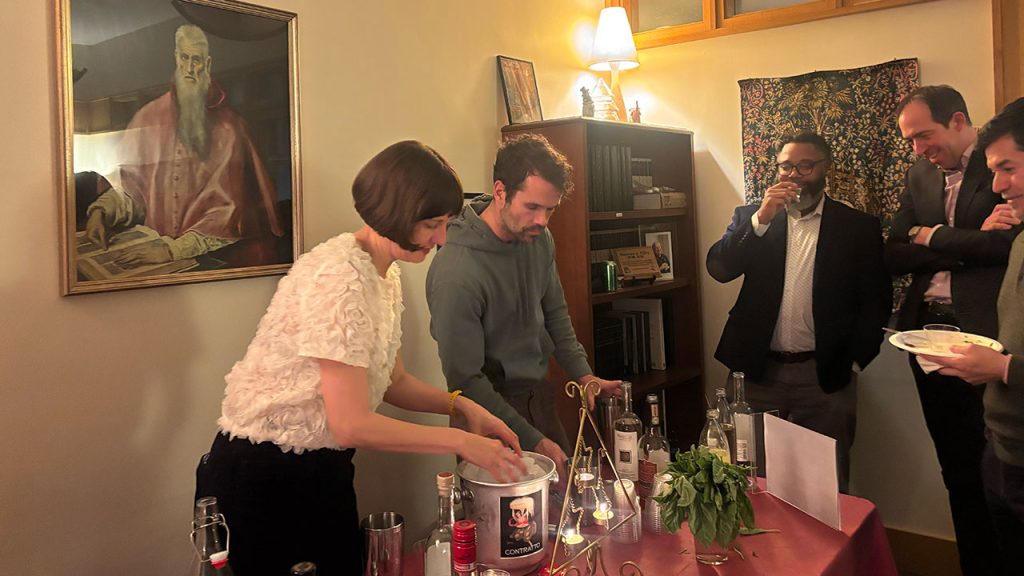
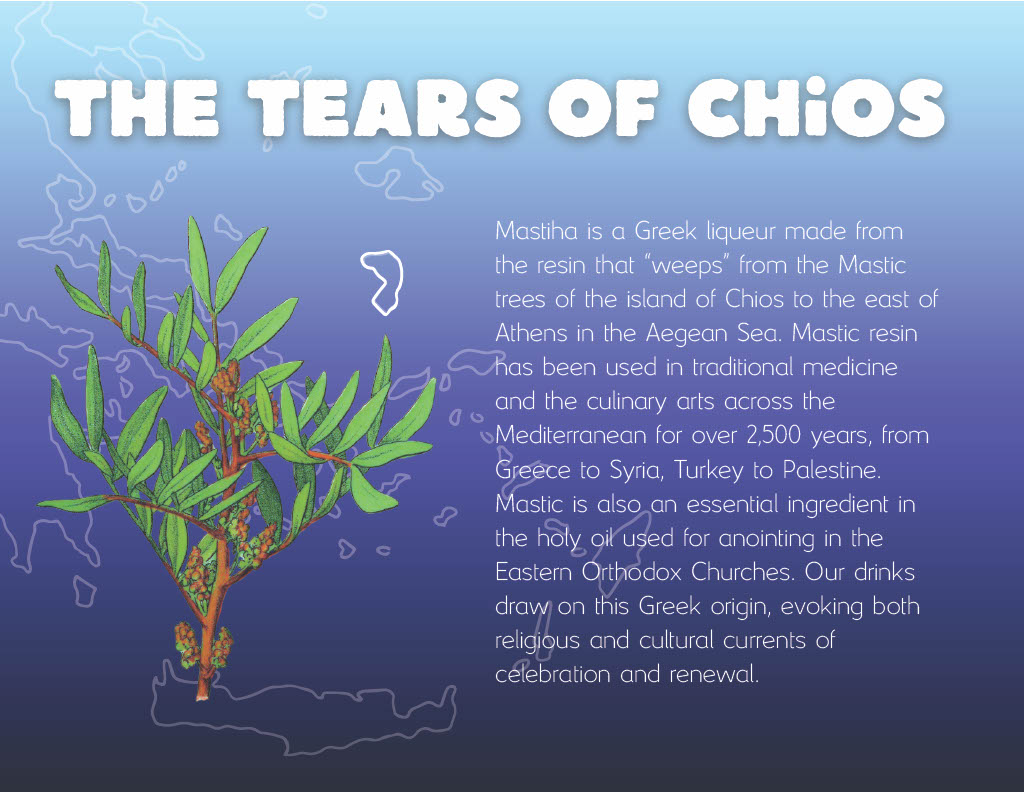
When theology professors Bob Davis, PhD, and Kathryn Reklis, PhD, tasted mastiha for the first time this summer, a lightbulb went off. The piney Greek liqueur was an ideal base for cocktails at the annual theology holiday party.
Each year, Davis and Reklis concoct themed drinks for their department’s year-end soiree. The tradition began in 2013, following the yearly department retreat where they revealed their cocktail-making skills. Then-department chair J. Patrick Hornbeck II, PhD, wanted to make their holiday gathering more inclusive and festive, and asked the two to create specialty drinks.
“We were very happy to be put on that assignment,” said Davis. The two share notes throughout the year on possible contenders for their drink menu and develop recipes that most could never recreate. Blue spirulina, Bolivian eau-de-vie, and “fat washing” are just a few of the ingredients and techniques in their wheelhouse. (Everyone in the department chips in to cover their costs.)
They are open to suggestions but receive very few, aside from a request for an espresso martini last year. Davis politely turned it down. “Any bar will make you one of those,” said Reklis.
‘Pouring’ Over the Details
Holiday traditions, religious figures, and the light and dark motifs of winter inspire the two new cocktails they dream up each year. One is often bright and boozy to symbolize the light and warmth of the season. The other cocktail reflects winter’s darker, more introspective aspect.
“We joke that we are switching sides every year,” said Reklis. “Like, who’s making the raucous punch and who’s making the crystalline winter introspection drink?”
They search far and wide for traditions to reference. Years past have featured cocktails named after the German Saint Nikolaus and his frightening, pre-Christian counterpart Krampus, as well as drinks inspired by the Sicilian martyr Lucy, who wore a wreath of candles to light her way as she delivered food to Christians hiding in the Roman catacombs. (Her eyes were later plucked out, then restored, legend goes.) A brown butter fat-washed bourbon drink, The Golden Age, represented the ancient Roman festival Saturnalia, where societal norms went out the window. And the mezcal cocktail La Posada was inspired by the Latin American tradition of Las Posadas, a nine-night reenactment of Mary and Joseph’s search for lodging as they traveled from Nazareth to Bethlehem.
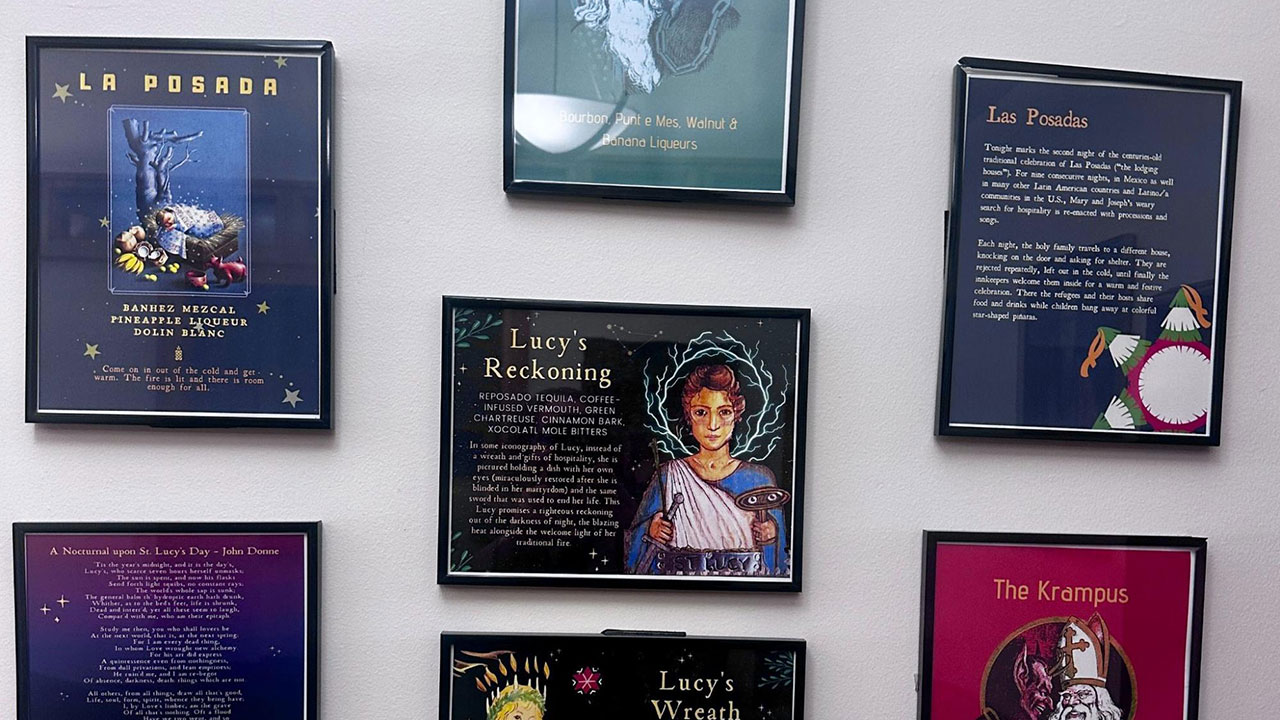
Once the menu is set, Davis designs the cocktail cards; a few from previous years are framed and hang in the theology department’s communal lounge in Duane Library.
This year’s drinks had a double shot of theology department influence—that bottle of mastiha came from John Penniman, a PhD graduate of the theology program who lived in Greece and now teaches at Bucknell. Davis crafted the introspective cocktail: the Blessing of the Waters, a rye and mastiha-based drink that references Greece’s purifying Epiphany day ritual of jumping into cold waters to retrieve a cross blessed by a local priest. For this year’s brighter, lighter drink, Reklis invented the Karaváki, made with gin, mastiha, and lime, in honor of the Greek tradition of decorating small wooden boats to welcome sailors returning home.
The two professors are proud of how seriously they have taken this now 12-year-old ritual. “As we [in the department] become more religiously diverse, with different methodologies and interests, these traditions, even the silly ones, give us a sense of identity and shared history,” said Davis.
Two Theology Cocktails to Try
Reklis and Davis’ drinks are typically complex. These two are relatively easy to recreate at home:
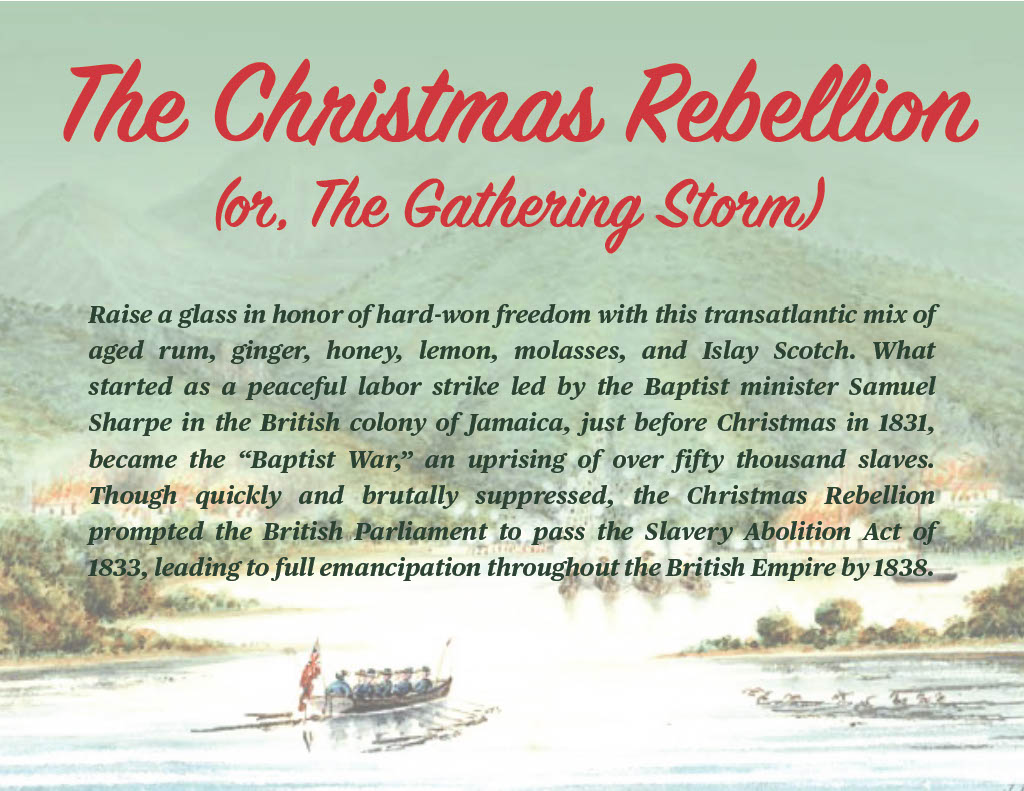
The Christmas Rebellion (2016)
2 oz. Planteray 5-year rum
3/4 oz. syrup made of honey, ginger, and a touch of molasses
3/4 oz. lemon juice
1/4 oz. Islay scotch
To make syrup: Heat equal parts honey and water until just simmering. Turn off heat and add an equal part of chopped fresh ginger and a dash of molasses.
To make cocktail: Shake and strain first three ingredients into a rocks glass over a large ice cube, with a float of scotch over the top.
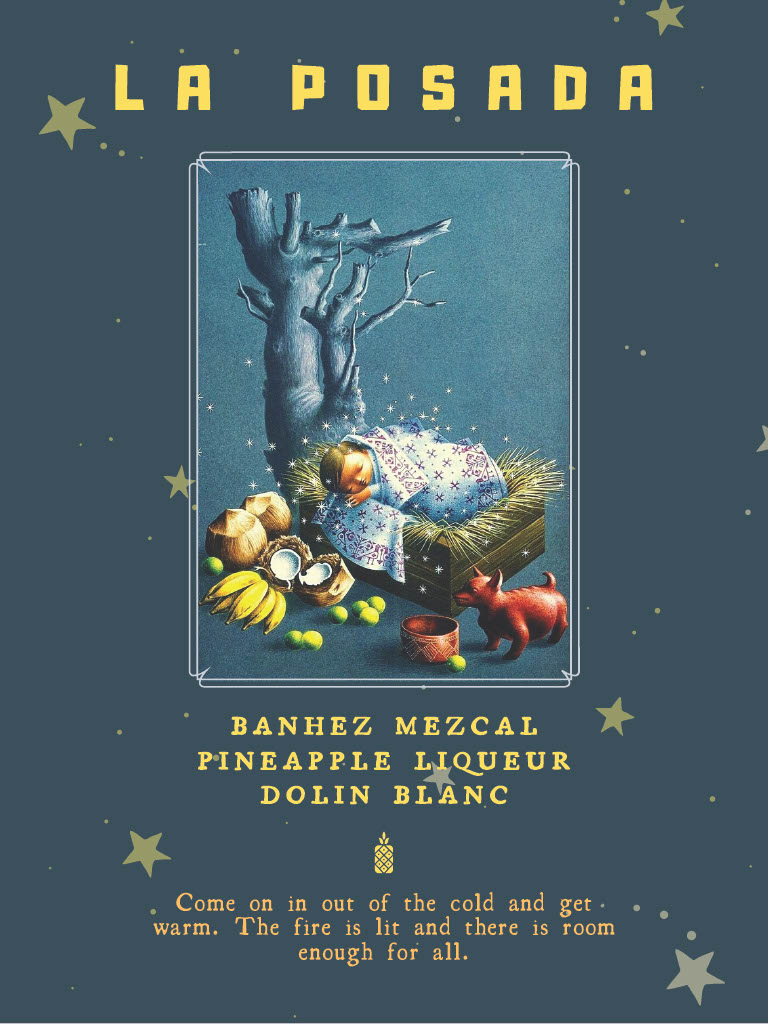
La Posada (2019)
1 oz. Banhez mezcal
1/2 oz. Giffard pineapple liqueur
1/2 oz. Dolin Blanc vermouth
Combine ingredients in a shaker or glass with lots of ice, shake or stir until very cold, then strain into a rocks glass over a large ice cube.
