

After several days of conversations exploring how Jesuit institutions should grapple with artificial intelligence, participants at Fordham’s Ignatian AI Conference ended with a centuries-old Jesuit practice for navigating uncertainty: discernment.
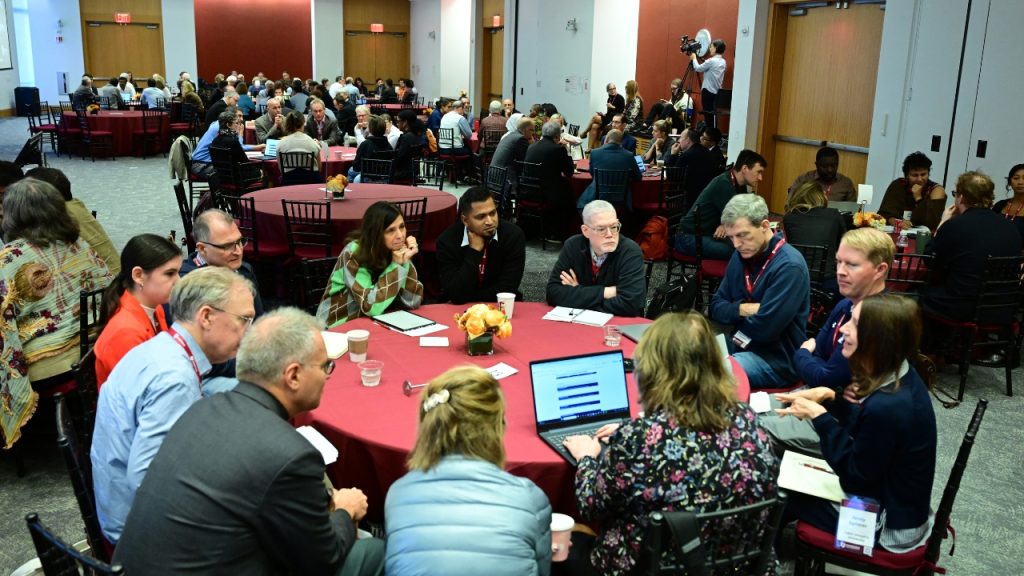
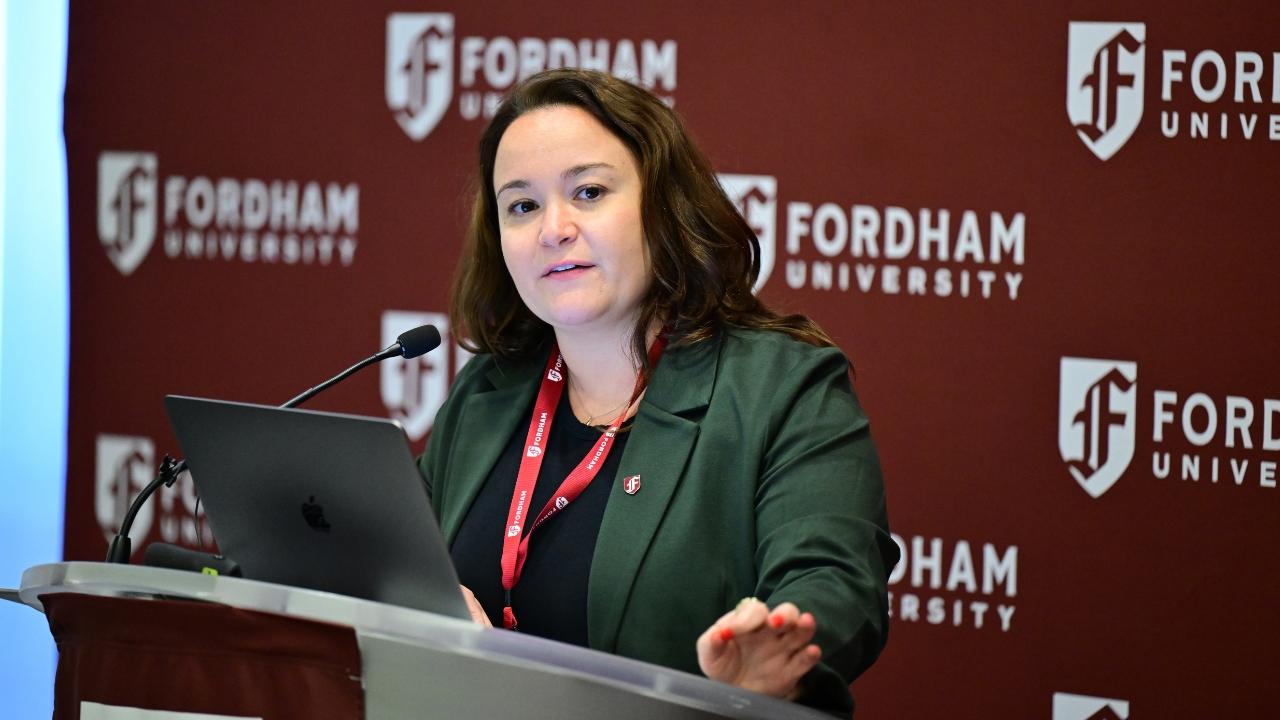
The conference concluded on Oct. 3 with “Conversations in the Spirit,” a communal discernment session led by Vanessa Rotondo, mission strategy officer at Fordham, on the Lincoln Center Campus. Around 150 participants gathered in small groups to reflect on the ideas, tensions, and questions that emerged for them throughout the conference—a three-day gathering that brought Jesuit education leaders from all over the nation and the world to Fordham to explore AI through a Jesuit lens. Through this session, participants considered how Jesuit institutions might put those insights into practice.
The communal discernment exercise reflected a central premise of the conference: As artificial intelligence poses new questions about education, work, human relationships, and ethics, the Ignatian tradition may offer tools not only for determining the way forward for humanity, but for thinking more deeply about how these important decisions are made.
What Is Ignatian Discernment?
According to Rotondo, “Discernment is the embodiment of Ignatian spirituality.”
At its heart is the practice of paying attention to experiences, emotions, relationships, and what Saint Ignatius Loyola described as “movements of consolation and desolation” within oneself.
Consolation, Rotondo explained, refers to moments when people feel closest to their understanding of God, purpose, or meaning. Desolation describes moments when they feel further away from that sense of fullness, she said. Discernment involves recognizing those inner movements and using them as a guide.
“Discernment invites us, one, to understand, where is God in my experience? And two, how to navigate complex choices and challenges,” said Rotondo.
That can include something as familiar as weighing pros and cons, but Rotondo said it also requires trying to understand another person’s perspective and approaching decisions with empathy.
The practice of discernment is not limited to major life decisions. One of the foundations of Ignatian spirituality is the Examen, a prayer that encourages regular reflection on experiences through gratitude, consolation, desolation, and anticipation of what comes next. Ignatius encouraged early Jesuits to practice it twice a day.
With practice, Rotondo said, the goal is for that intentional reflection to become a habitual way of noticing meaning and connection as people move through their everyday lives.
Is Discernment Only for the Faithful?
Although Ignatian discernment is rooted in Catholic spirituality, Rotondo said its practices can have broader applications. Jesuit contemplative practices like discernment ask people to place themselves within an experience and pay close attention to what they see, hear, and feel. The intention is to develop the habit of reflection.
“You don’t have to be a Catholic, you don’t have to be religious,” to benefit from discernment, she said.
Applying Discernment to AI
The conference’s final session took the individual practice of discernment and applied it to the group of scholars, educators, and AI experts confronting the shared challenge of AI.
The group session drew on the process used during Pope Francis’ Synod on Synodality, Rotondo said. Using that model, the participants broke into small groups. They first shared what struck them individually from the three-day conference, which included sessions on topics like “AI and Mental Health,” “Jesuit Schools, Universities, and Lessons from the Pope,” and “AI and Its Impact on Youth and Secondary Education.”
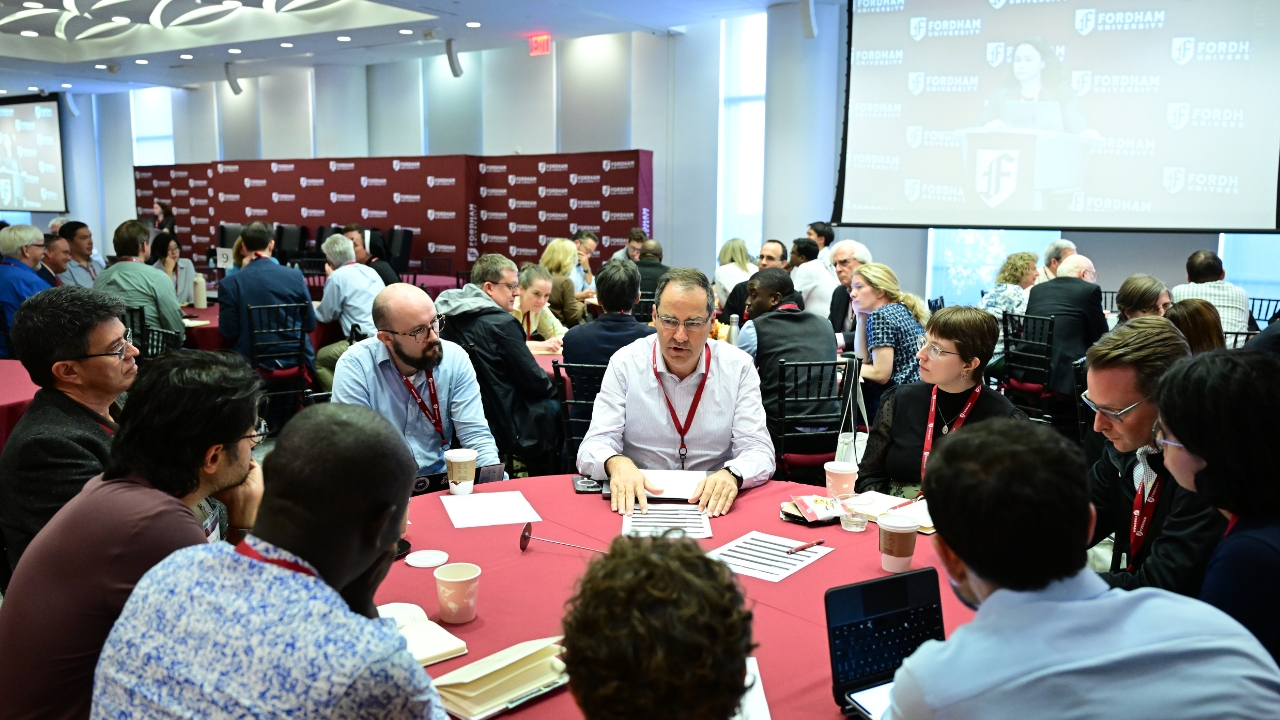
A teacher shared that she worries her students won’t read books in the future. Another educator discussed the challenges of getting his students to rely on their own critical thinking skills rather than outsourcing their cognitive labor to AI. A priest weighed the responsibility of preparing young people for an AI-driven future against the responsibility to help them develop their own capacities. Each group then listened for areas of convergence and divergence before considering, as a group, what those reflections might be calling them to do next.
Formation, Discernment, and Community: A Way Forward
After the participants went through that process, Rotondo synthesized the conversations and shared three themes that emerged from the small-group discussions: formation, discernment, and community.
Formation centered on the question, “What is education for?” Participants saw the rise of AI as an invitation to return to the deeper purpose of Jesuit education: forming people capable of critical thought, meaningful relationships, interior freedom, and social responsibility.
Discernment addressed the question of how to proceed. Participants emphasized remaining curious, naming both fears and hopes about AI, experimenting thoughtfully, and accompanying students through the uncertainty surrounding the technology rather than pretending to have all the answers.
Community focused on a commitment to doing that work together. Participants called for greater collaboration across institutions, disciplines, generations, and levels of education, with students themselves involved as partners.
Those conclusions were not intended to provide a definitive Jesuit answer to artificial intelligence. That, Rotondo said, is part of the point of communal discernment. The process is meant to identify where a group finds itself and what direction it might be called to explore next.
“AI is inviting us to remember what we are for, to trust our Ignatian way of proceeding, and to undertake this work together,” Rotondo said.
