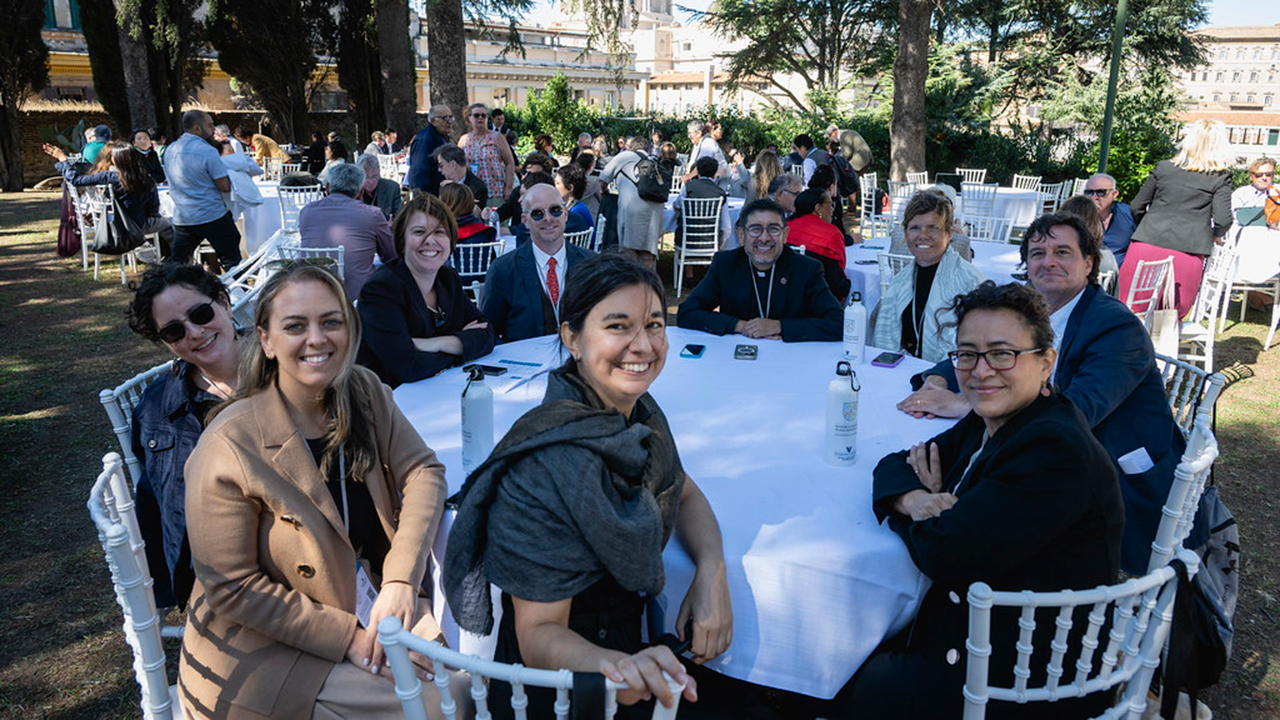
With a trip to the Vatican, Fordham faculty joined a global effort to mobilize universities and institutions worldwide in support of migrants and refugees—an effort that Pope Leo XIV encouraged in remarks at the effort’s formal kickoff.
“I pray that your efforts may bring about new ideas and approaches … seeking always to put the dignity of every human person at the center of any solution,” the pope said, speaking in English to more than 100 people gathered on Oct. 2 at the Refugees and Migrants in Our Common Home conference.
More than 123 million people were forcibly displaced as of last year because of persecution, conflict, and other problems, according to UNHCR, the U.N. refugee agency. “One of the obstacles that often arises when dealing with difficulties of such great magnitude is an attitude of indifference on the part of both institutions and individuals,” Pope Leo said, referencing remarks by his late predecessor, Pope Francis.
“This can lead to what I have previously referred to as a ‘globalization of powerlessness’” and a feeling that “nothing can be done,” he said.
Migrant Accompaniment at Fordham
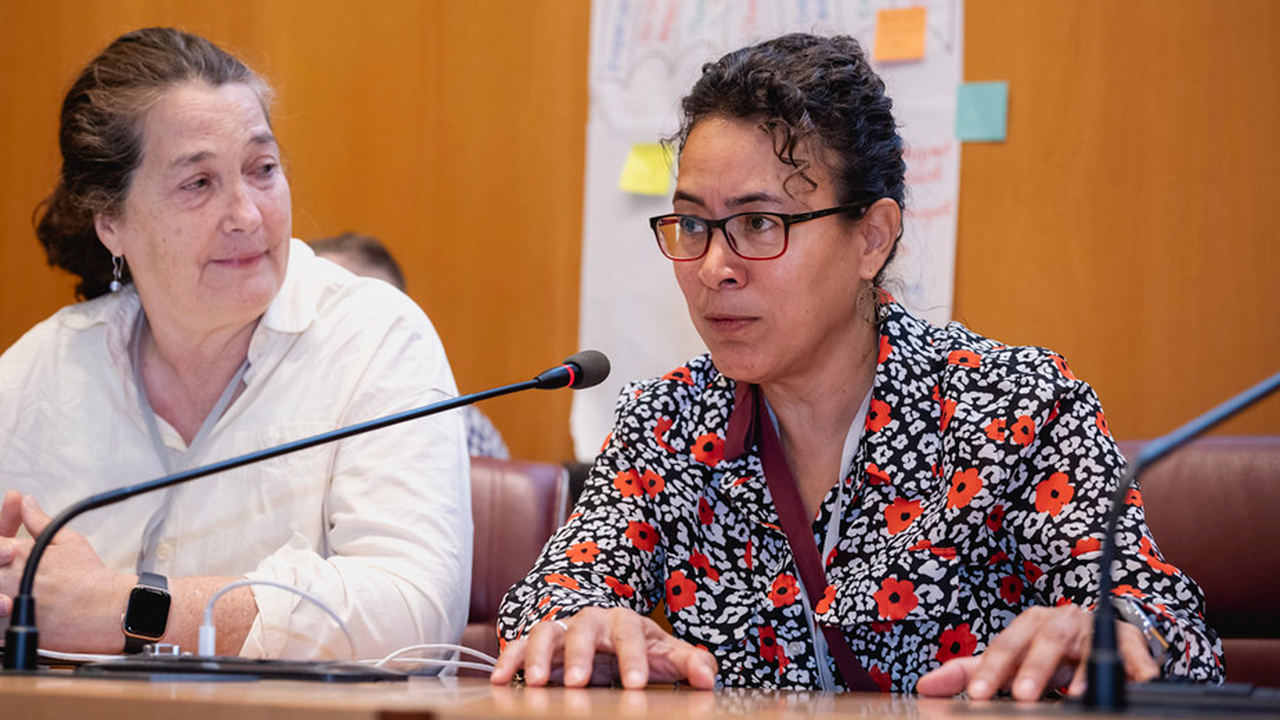
Both popes’ statements seem to dovetail with the work being done by Fordham and other institutions, said one attendee, Fordham Professor of Spanish Carey Kasten, Ph.D.
Their words “really speak to the work that we do in accompaniment and in migrant accompaniment, and really believing that people who migrate and refugees are people with agency, with cultures and beautiful lives,” which tend to be glossed over in prevailing narratives, she said.
Fordham’s contingent comprised the seven faculty members representing the University’s Initiative on Migrants, Migration and Human Dignity. They provided the pope with a letter outlining their efforts, such as advancing research that serves migrant communities and preparing students to be leaders in addressing migration-related challenges.
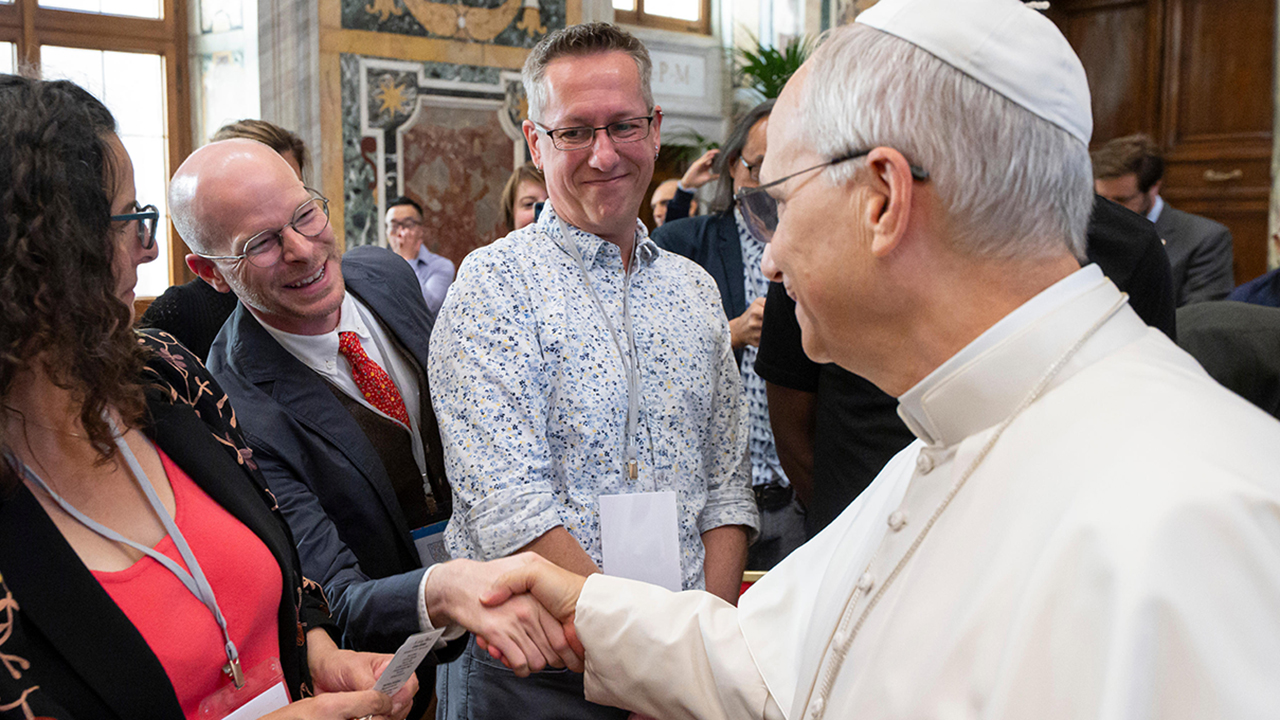
The letter notes that migration is intertwined with the issues of climate change, democracy, and artificial intelligence that are central to the University’s ambitions in its latest strategic plan.
A Three-Year Plan of Action
The conference was organized by Villanova University, the Center for Migration Studies, and other organizations to produce a three-year action plan for supporting migrants through teaching, research, service, and advocacy. Fordham and other 13 other Jesuit universities and ministries were represented at the conference, along with other universities and NGOs.
One thing to work out is how universities might cooperate to provide educational opportunities to students or scholars who are displaced, said another Fordham attendee, theology professor Leo Guardado, Ph.D.
“I think that’s the heart of the challenge as to why we were there: Gather people from different universities worldwide to think creatively beyond the national boundaries that structure educational access,” he said.
‘Migration Doesn’t Stop’
International cooperation is especially important for migration, Kasten said, “because migration doesn’t stop. People who leave here go somewhere else. And I think being able to look at the global reality in an interpersonal way with colleagues is really important.”
In his remarks, Pope Leo urged attendees to promote a spirit of reconciliation to heal longstanding conflicts around the world. He included the plight of migrants in his first apostolic exhortation, released two days later, on Oct. 4.
In addition to Kasten and Guardado, Fordham’s contingent included professors Jim McCartin, Ph.D., of theology; Gregory Donovan, Ph.D., of communication and media studies; Annika Hinze, Ph.D., and Sarah Lockart, Ph.D., of political science; and Alma Rodenas-Ruano, Ph.D., of neuroscience.