

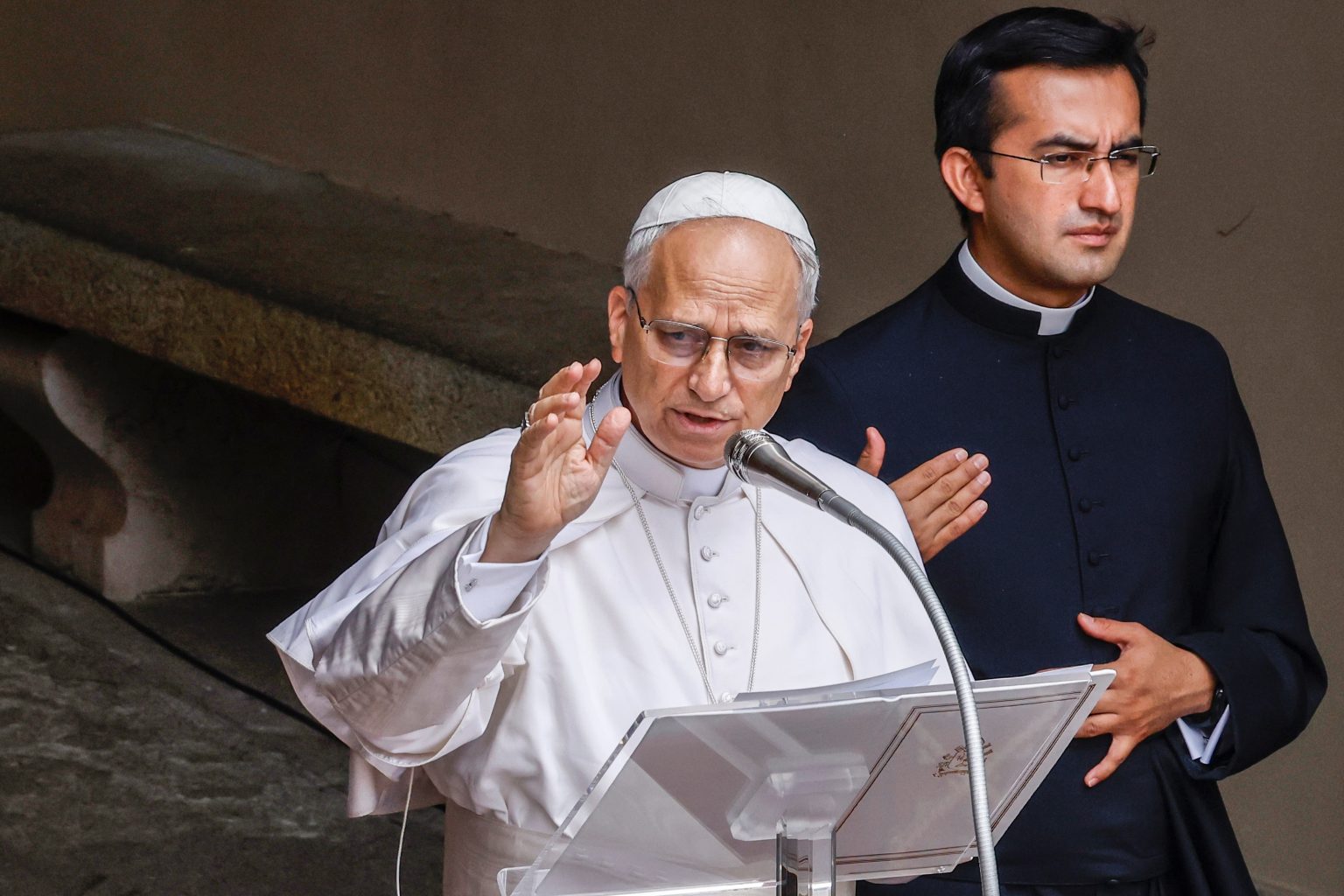
Pope Leo XIV’s first encyclical takes up one of the most urgent questions of our time: how artificial intelligence is reshaping our lives and how it can be wielded for the common good. Framing AI as both an opportunity and a potential threat, Magnifica humanitas: On Safeguarding the Human Person in the Time of Artificial Intelligence urges a renewed commitment to ethical reflection, social justice, and human dignity in applying the technology.
To better understand the significance of the document, Fordham Now spoke with David Gibson, director of Fordham’s Center on Religion and Culture and a leading commentator on the papacy.
The encyclical uses the word “dignity” 100 times. Why do you think that’s such an important theme for the church in the age of AI?
Since the reforms of the Second Vatican Council in the 1960s, the church has changed its stance toward the world, looking to engage, encourage, and grow in mutual understanding. That requires a shared vocabulary and concepts, and human dignity is a foundational term. It is also the foundational concept of this encyclical, because our humanity is what AI is threatening.
One striking thing about the encyclical is that it talks about AI as something that could reshape human relationships, meaning, and even consciousness. What are the spiritual concerns the pope has when it comes to AI?
The pope’s spiritual concerns are also his human concerns. He does not want to condemn AI but neither does he want to give it the kind of human or spiritual agency that some might want to. He insists that AI is not human, is not spiritual. Only human beings are spiritual beings, and we need to recognize that in our relationships with each other, and with God.
Do you read the encyclical as explicitly anti-tech?
The encyclical is not anti-tech, and there are some who see it as too accommodating to tech. Leo goes out of his way to point to examples where humanity has overcome evil, and he wants to say that it is our very humanity that can thwart the worst possibilities of the digital revolution, and mitigate the problems that are already existing.
If Pope Francis was the climate pope, will Pope Leo be the AI pope?
Yes, I think that is a good analogy. This encyclical is much along the same lines as that of Laudato si’, Francis’ encyclical on climate change and environmental destruction and stewardship. Both are social encyclicals that put Catholic social teaching at the center.
Why is Pope Leo’s focus on labor and social justice, rather than “pelvic theology,” significant in the trajectory of the church over the past few decades?
As I wrote in a recent New York Times column, I think we are seeing an effort to restore issues of justice and peace to their critical role in church teaching, rather than focusing on “sins of the flesh.” It’s not that the church is changing doctrines on sexual morality, it’s just that the fixation on those sins distorted church teaching and the practice and credibility of the faith. This rebalancing is a major shift.
Pope Leo wrote that “there is the right to self-defense, but it is impossible to justify a war.” How big of a break is that from previous church teachings?
Leo saying that “just war” teaching is “outdated” is another striking moment. He has made peace a cornerstone of his papacy since the moment he was elected and he has insistently called out those who are conducting war around the globe. He has noted that Catholics are no pacifists, and there is a “right to self-defense.” But this change is important, because he shows that Catholic teachings can evolve.
This interview has been edited and condensed.
