From beards to bagels, governments have taxed some truly strange things over the centuries. But as bizarre as certain taxes may sound, they were created to solve familiar problems.
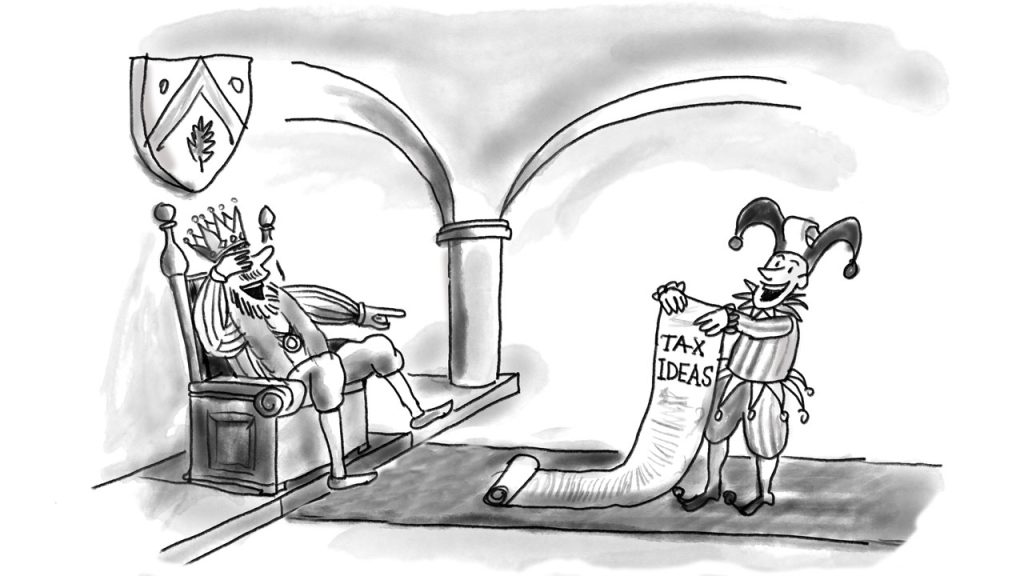
Some weird taxes—like England’s levies on candles, soap, or wallpaper—were established to target wealth in a way that couldn’t be sidestepped through accounting trickery, according to Giacomo Santangelo, PhD, senior lecturer of economics at Fordham. “There have always been ways for the wealthy to avoid paying taxes on income,” said Santangelo. “But they can’t avoid taxes on consumption.”
Other weird taxes have been imposed to discourage unwanted behaviors. Known as Pigouvian taxes, they put a price on things with negative social consequences—like smoking or pollution—and are cheaper to enact than outright bans, according to Santangelo.
“To outlaw smoking, you’d need to hire people to walk around and issue tickets. That’s expensive,” he said. “Or you could just tax cigarettes,” nudging some people to quit while generating revenue from others.
With Tax Day upon us, here’s a look at some of the weirdest taxes of all time, illustrated by Curtiss Calleo:
1. The hat tax
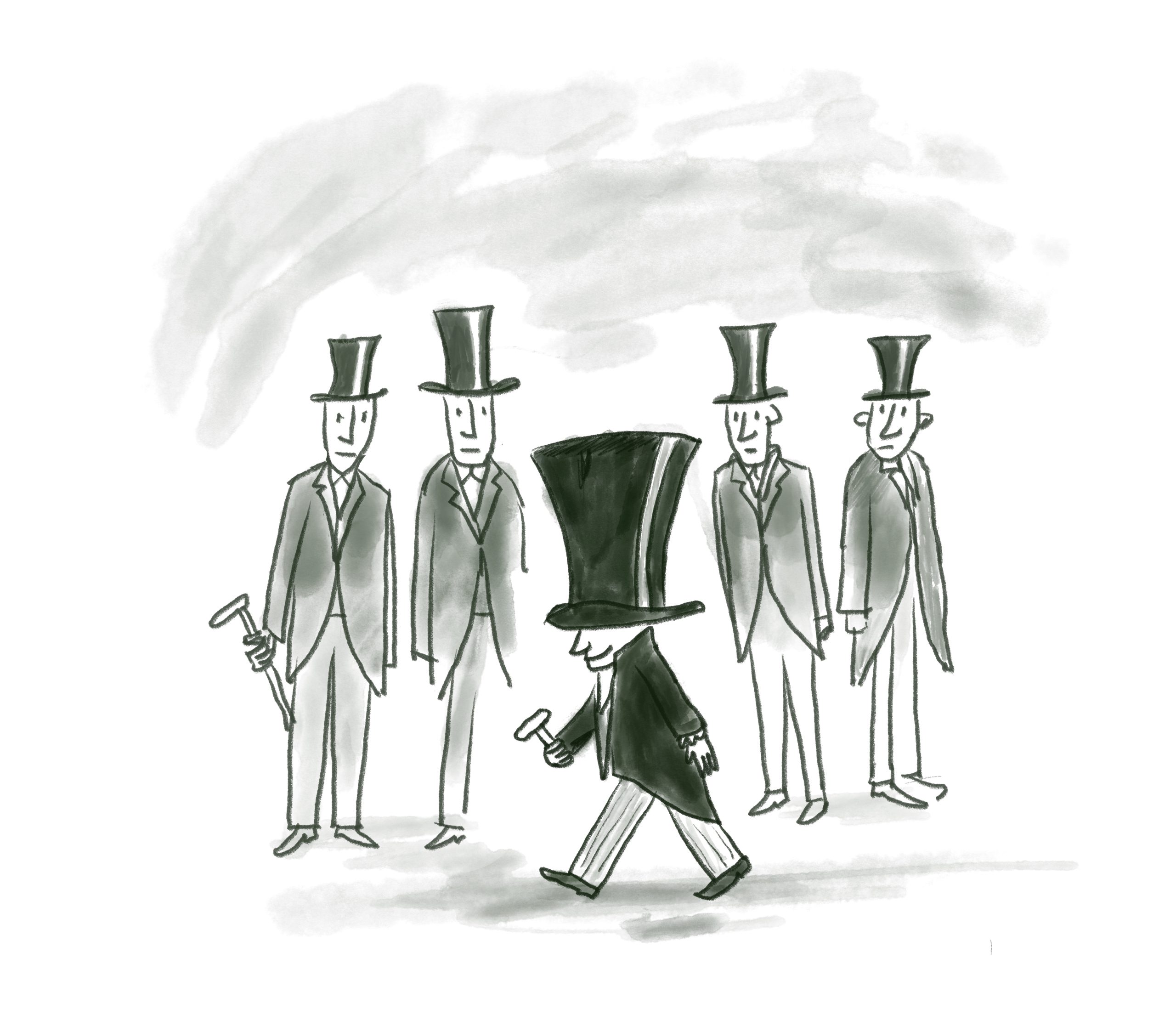
The hat tax (1784–1811) was Great Britain’s way of taxing men’s fashion choices (and, by proxy, their wealth), on the theory that rich men would have closets full of fancy hats while the poor had few or none. Thwarting the hat tax could even cost you your head—those charged with forging revenue stamps could face the death penalty.
2. The Russian beard tax
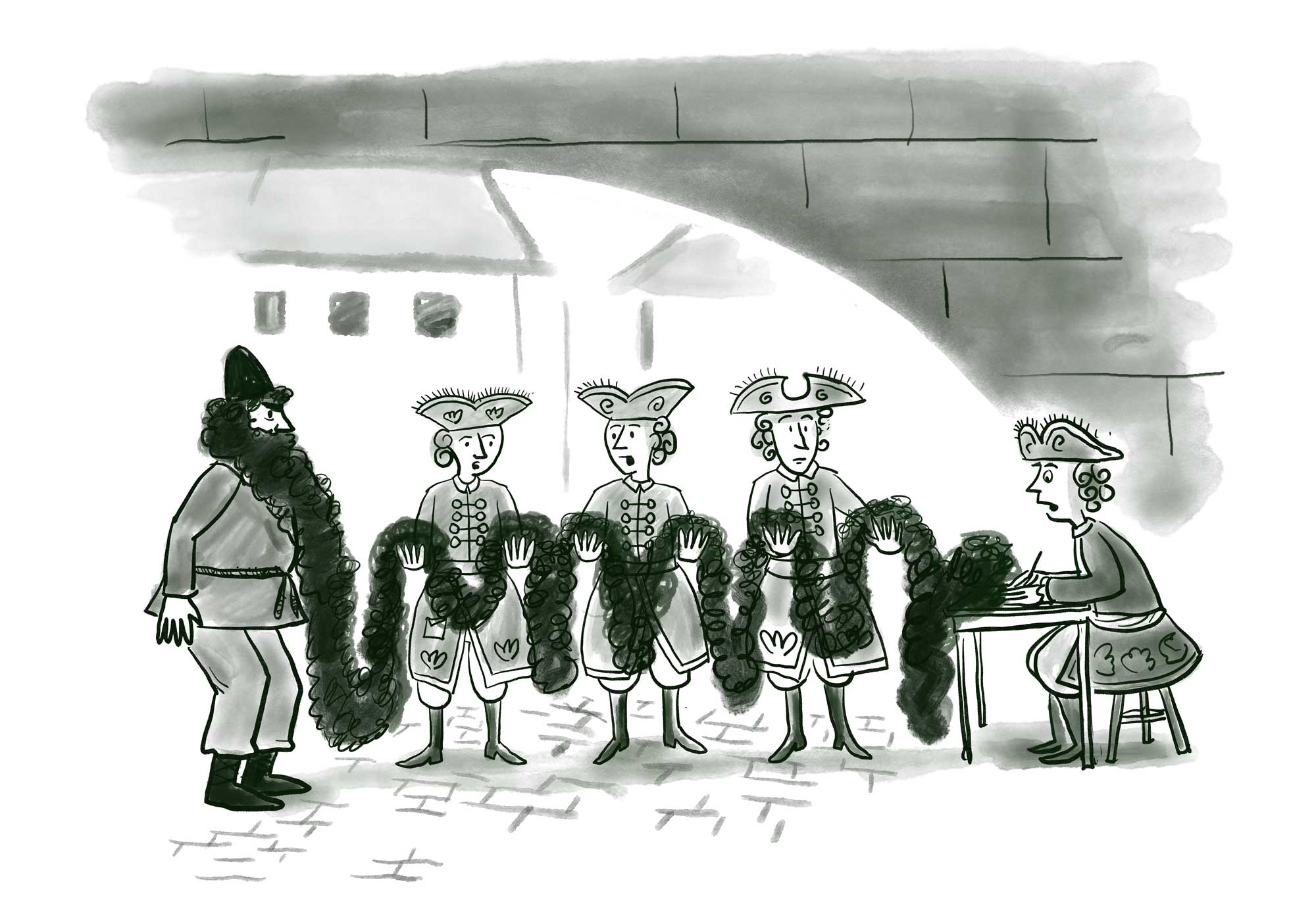
After a visit to Western Europe, Russia’s Peter the Great decided beards were so last century and introduced a beard tax in 1698. The tax forced furry-faced men to either shave or pay for the privilege of keeping their facial hair as part of a push to modernize the country. Those who paid the tax even got a little token, proving their beards were government-approved.
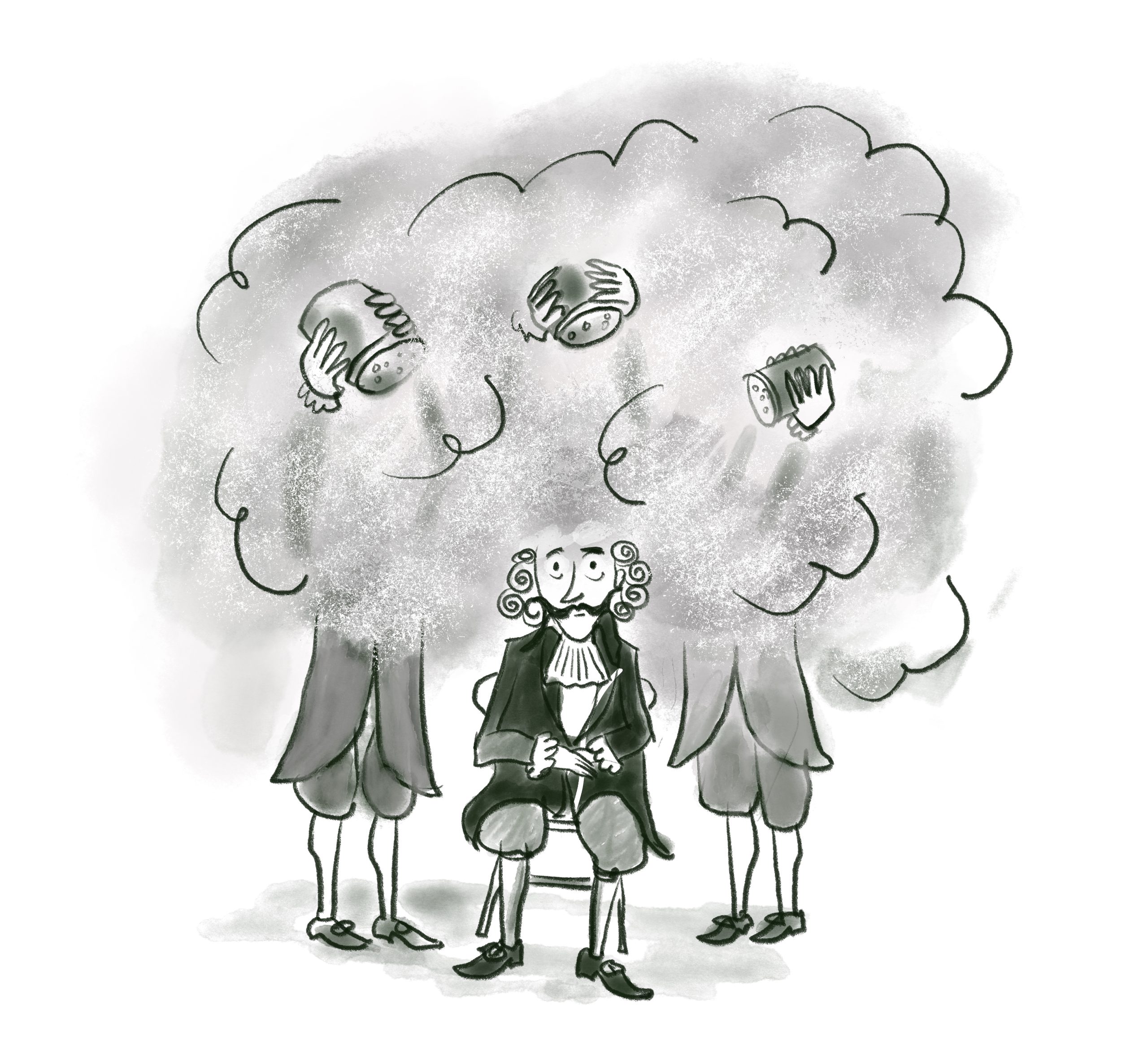
3. The powdered wig tax
In 1795, the British government was looking for a way to fund its war with France, and decided that the wearers of silly wigs would foot the bill. The Duty on Hair Powder Act targeted the high-status hairstyle, but faced with the fee, many simply ditched the powdered wig, speeding the trend’s demise.
4. The gassy livestock tax
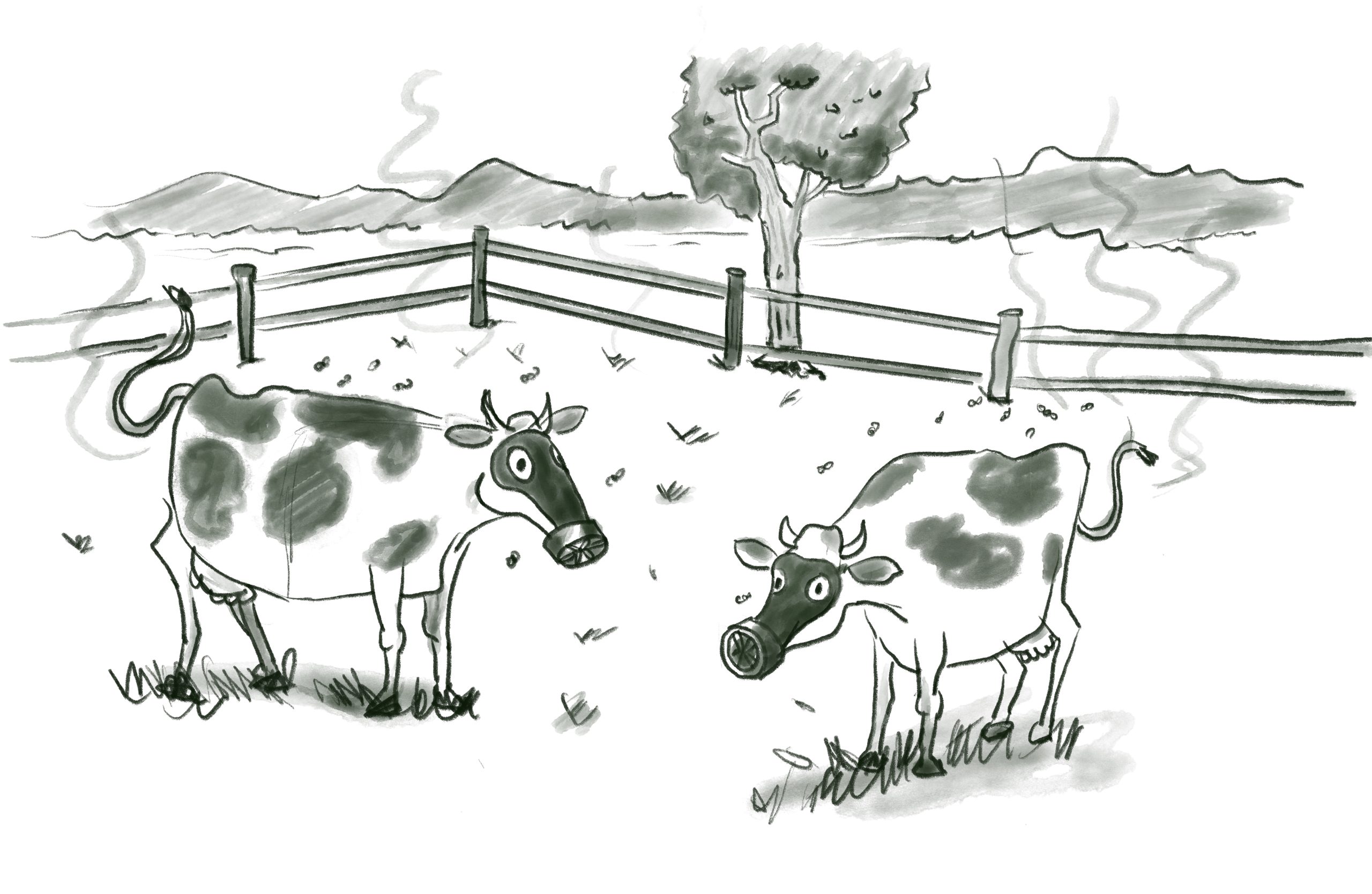
In the fight against climate change, all emissions count, and that’s why Denmark is putting a tax on gassy livestock. Beginning in 2030, the first-of-its-kind tax will charge farmers for cows, sheep, and pigs—flatulent animals that produce a lot of methane, a greenhouse gas that’s potent in more ways than one.