


Last week, New York City Mayor Zohran Mamdani joined Governor Kathy Hochul to announce plans to expand free early childhood education in the city and throughout the state. The news was framed as an affordability win for working families, but for Fordham history professor Kirsten Swinth, it also represents unfinished work from a strand of second-wave feminism: the fight to make caregiving a collective social responsibility rather than a private burden borne mostly by women.
Swinth has spent much of her career excavating that lost history. Her 2018 book, Feminism’s Forgotten Fight: The Unfinished Struggle for Work and Family, challenged the familiar story that feminist activists of the 1960s and 1970s—known as second-wave feminists—were exclusively concerned with workplace equity and reproductive rights. Instead, she shows how they demanded sweeping public investments in care work, especially universal childcare, to allow women to be full participants in civic, political, and economic life.
The vision extended well beyond supporting women’s careers, Swinth notes. Second-wave feminists fought for childcare so they could engage in politics, pursue education, and participate in their communities.
“These were women who understood that, without childcare, they would never have the time they needed to do any of the things they wanted to do,” said Swinth. “They saw childcare as the foundation allowing women to have full, independent lives.”
When America Nearly Got Universal Childcare
So why isn’t that how we remember second-wave feminism?
Swinth argues that a conservative backlash recast the movement as anti-family, while Reagan-era popular culture flattened its goals into a misleading “having it all” narrative—one that suggests feminists promised women they could simply balance work and family without societal support. In reality, feminists of the era were fighting for structural changes that included shared domestic labor, socialized childcare, and workplace protections.
This ambitious agenda came close to a major victory when Congress passed a universal childcare bill in 1971.
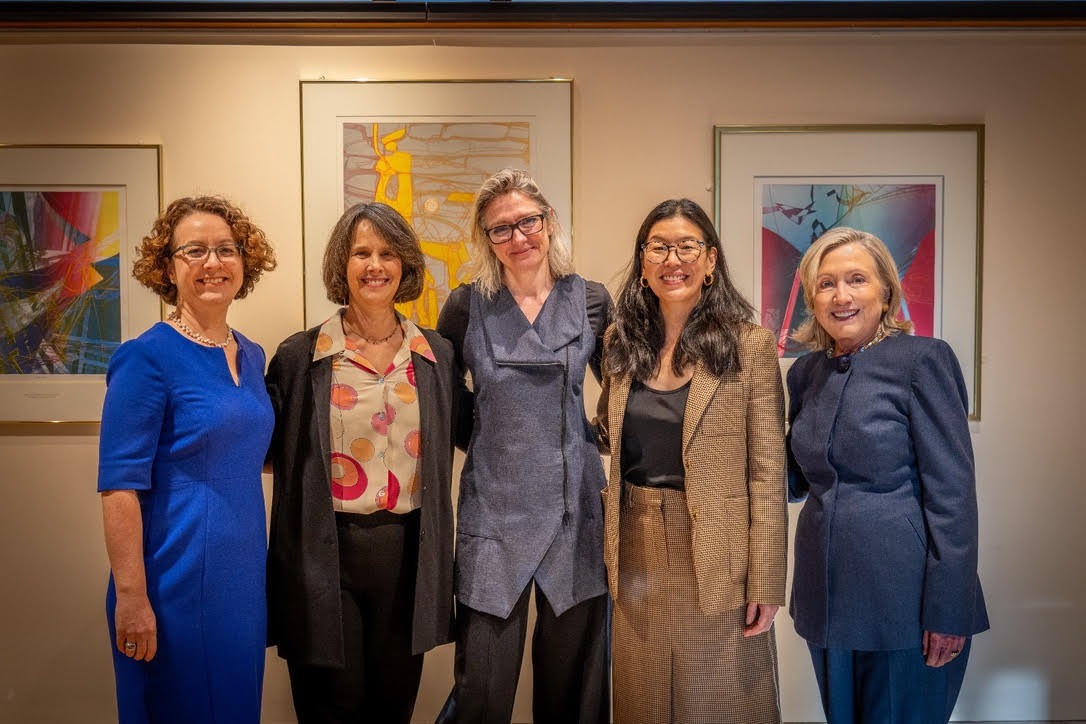
Swinth discussed that episode recently during a London panel event with former Secretary of State Hillary Clinton and labor organizer Ai-jen Poo, founder of the National Domestic Workers Alliance. Clinton recounted knocking on doors to support the 1971 bill, which was ultimately vetoed by President Richard Nixon after he was inundated with fearmongering letters claiming government daycares would “Sovietize” America’s children and harm their development.
Such attacks were “particularly successful in both blocking feminist gains and in bequeathing us a particular story about what feminists of this period wanted,” Swinth said.
The Campaign Continues
Outside of New York, other free childcare campaigns have gained traction in recent years at the state and local levels. In November, New Mexico became the first state to offer universal free childcare. Swinth sees strong continuity between these campaigns and the earlier feminist struggles, even if today’s rhetoric centers more on affordability.
Currently, Swinth is co-editing Care and Capitalism in the 20th Century with Oxford historian Sarah Knott, which examines how the work of providing care for children, the sick, or the elderly—though often treated as a private concern—underpins the economy itself.
“No society can thrive without a decent system of caregiving,” Swinth said. “How we decide to provide that care is a societal decision.”
Those decisions have profound implications for families and, in particular, women. In New York’s childcare expansion, Swinth sees glimmers of a feminist vision that has been waiting decades to be realized.
