

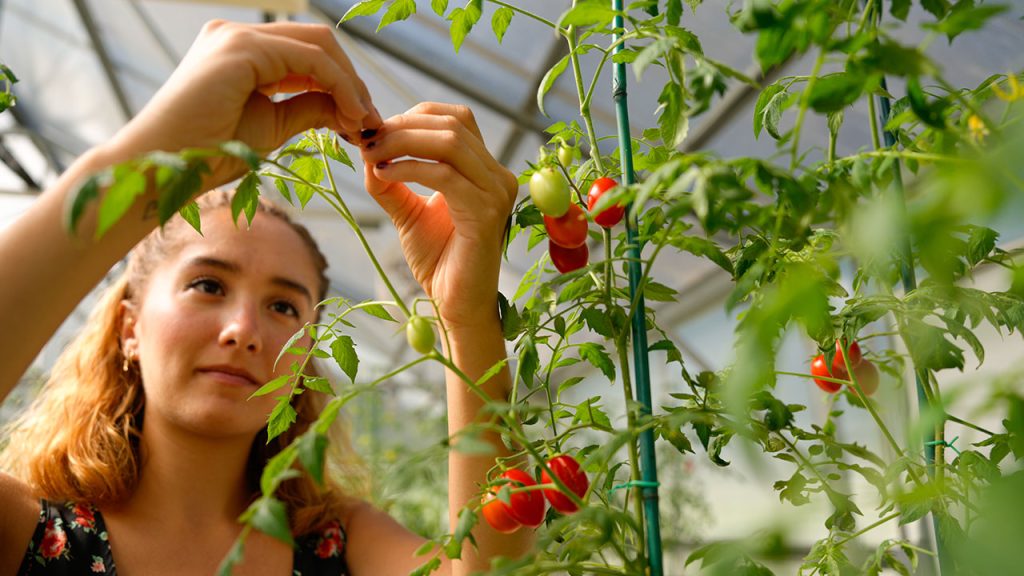
In the Northeast, the end of summer is when gardeners finally get to harvest fresh, juicy tomatoes.
But climate change is making summers hotter; it’s also creating longer droughts and heavier downpours. These conditions can make it trickier to coax the perfect beefsteak, plum, or cherry tomato to spring forth.
And it’s only going to get harder.
“A particularly warm summer from 20 years ago is our current norm, and a summer that’s considered very warm today will be the norm 20 years from now,” said J.D. Lewis, Ph.D., a professor of biology at Fordham.
Lewis, a specialist in plant reproductive ecology, said that changes in heat and precipitation that can affect tomato growth are already beginning to happen in the region.
For the casual and professional gardener alike, that means it’ll likely be harder to keep plants consistently hydrated during periods of drought. This past July was a good example of the challenges they’ll face, as Central Park received more than an inch of rain only once, on July 14, when nearly three inches fell.
Testing the Impact of Heat and Drought
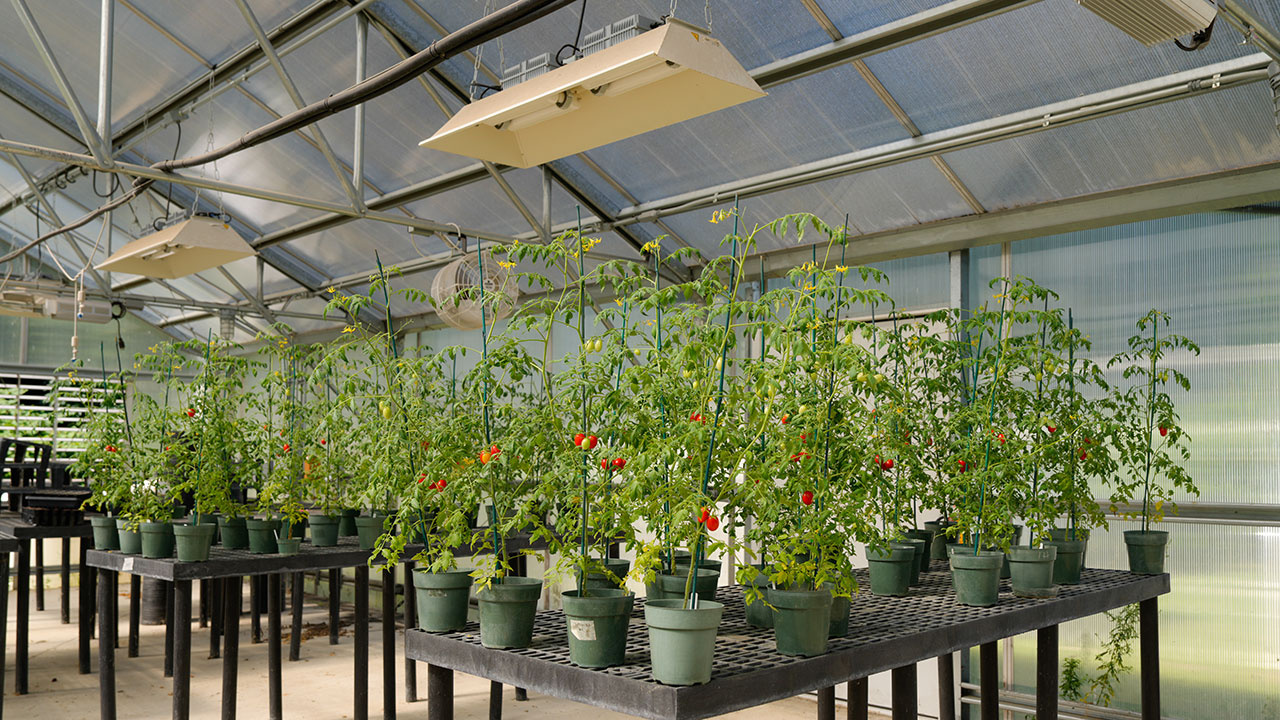
At the Louis Calder Center, Fordham’s biological research station in Armonk, New York, research is being conducted through Lewis’s lab to determine what this means for tomato plants.
The study, which is being overseen by biology doctoral student Montse Sousa-Sanchez, hinges on this question: How many excessive swings in temperature or precipitation can a plant be subjected to before it stops producing viable pollen, which is critical to tomato production?
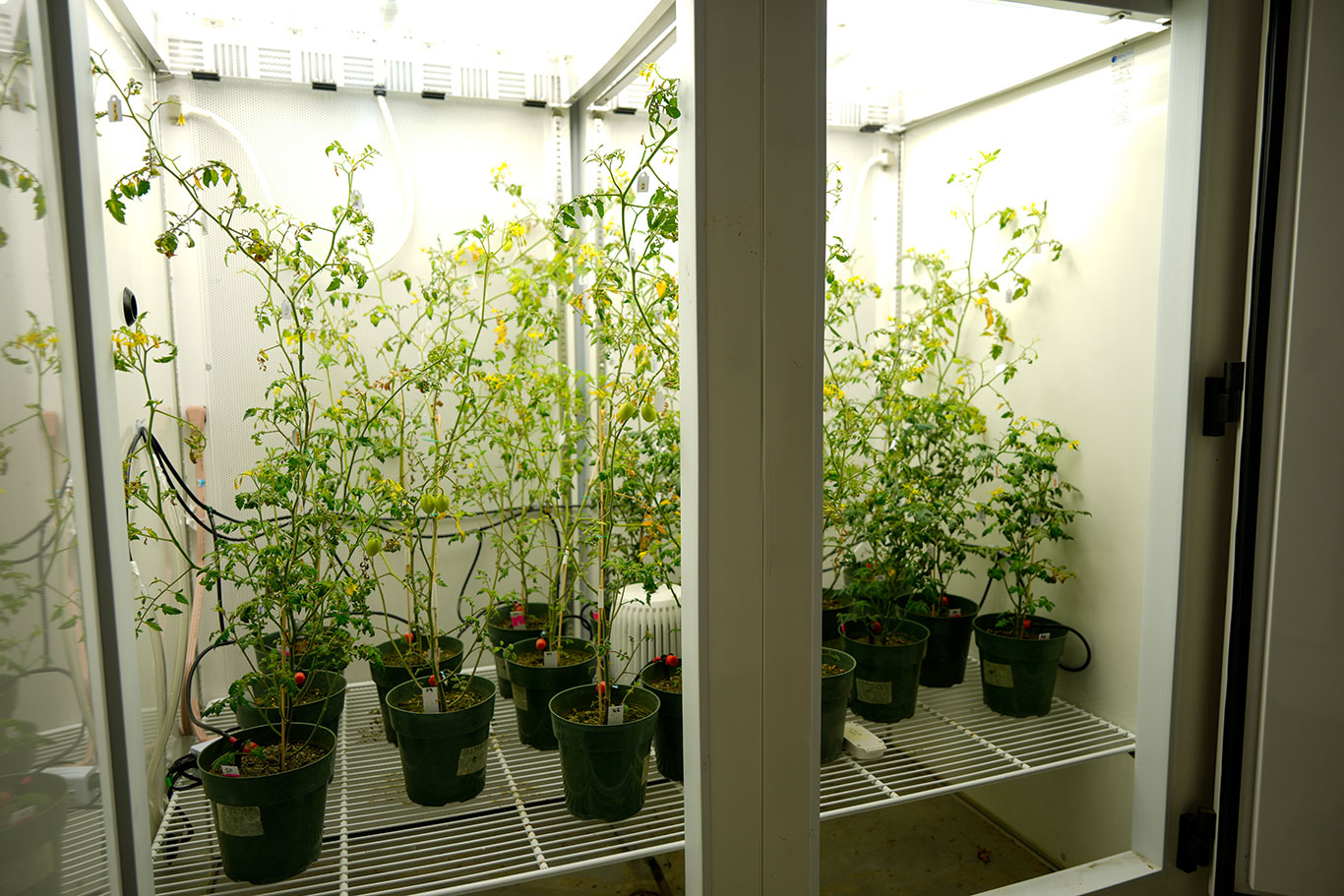
To answer this question, Sousa-Sanchez grew four sets of 18 plants at the Calder Center. Two sets were grown inside a chamber set to 84 degrees Fahrenheit, representing the average July temperature in the New York region 30 years ago. Currently, the region averages around 86 degrees Fahrenheit.
The other two sets were grown in a chamber set to 89 degrees Fahrenheit, which represents the predicted temperature 30 years from now. Half of each set was exposed to drought-like conditions, while the others were given adequate water, creating four distinct groups.
With the help of undergraduate students, Sousa-Sanchez then collected pollen from each plant and examined it under a microscope.
Dramatic Results
As expected, plants grown at 84 degrees Fahrenheit with adequate water produced a normal number of flowers, resulting in 67% viable pollen, which is a healthy amount. When plants in this temperature treatment were also subject to drought, they grew significantly fewer flowers, and even though those flowers still produced viable pollen, fewer flowers means less fruit.
In a potentially worrisome sign for future gardeners, plants that were grown at 89 degrees Fahrenheit with adequate water generated flowers and grew to be quite large, but created just 11% viable pollen. That was bad enough. But where Sousa-Sanchez found they really don’t do well is when they’re also denied water.
“If the plants are subjected to drought and 89 degrees Fahrenheit, there are very few flowers, and the ones that they do produce have almost no viable pollen,” she said.
Enter the Bees
The next step was placing the plants around the Calder Center property to see if bees picked up pollen from one plant and deposited it onto another. She predicts that the bees will avoid the flowers with less viable pollen, further confirming that heat and drought conditions impact the growing cycle.
Can Tomato Plants Adapt?
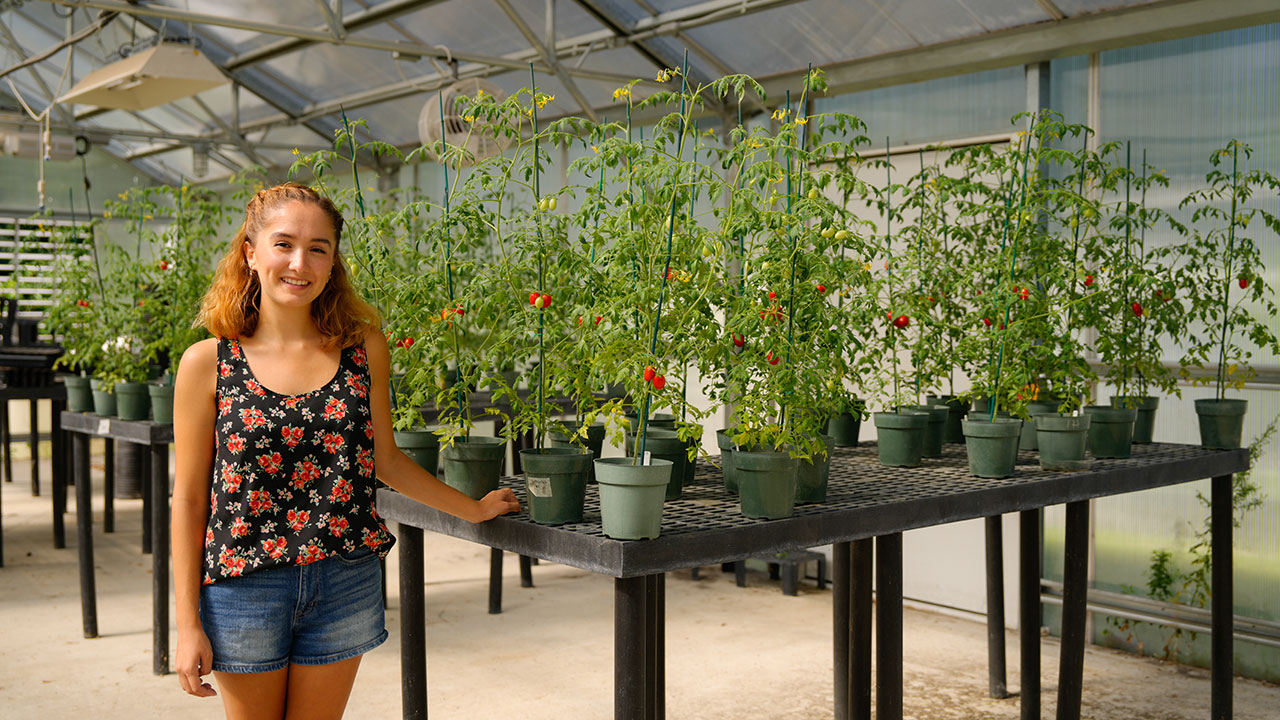
Sousa-Sanchez is hopeful that the research will yield insights into tomato plants’ ability to adapt. So far, she’s noted that even the ones in her study that were subjected to heat and drought bounced back relatively quickly once normal conditions resumed.
“Right now, we’re not in too bad shape because the plants seem to recover, so long as the stressors go away,” she said.
“But as we get further and further down the road, to a time when there is no break in the heat, our agriculture and ecosystems will definitely start to change.”
Impact on Farmers Worldwide
Lewis said that understanding how plants react to extreme weather changes is critical because many parts of the world that rely on subsistence farming are also the ones most heavily affected by climate change.
“Those are also the places that can least afford to make the changes that are necessary,” they said.
“But even in areas like the U.S., where we might have the financial resources to be able to manage these sorts of issues, we still need to know what to expect.”
This summer, Fordham junior Riva Zellars assisted Montse Sousa-Sanchez while taking part in the Calder Center’s Summer Undergraduate Research program. She shared what she learned about the effects of drought and heat on tomato plants.
