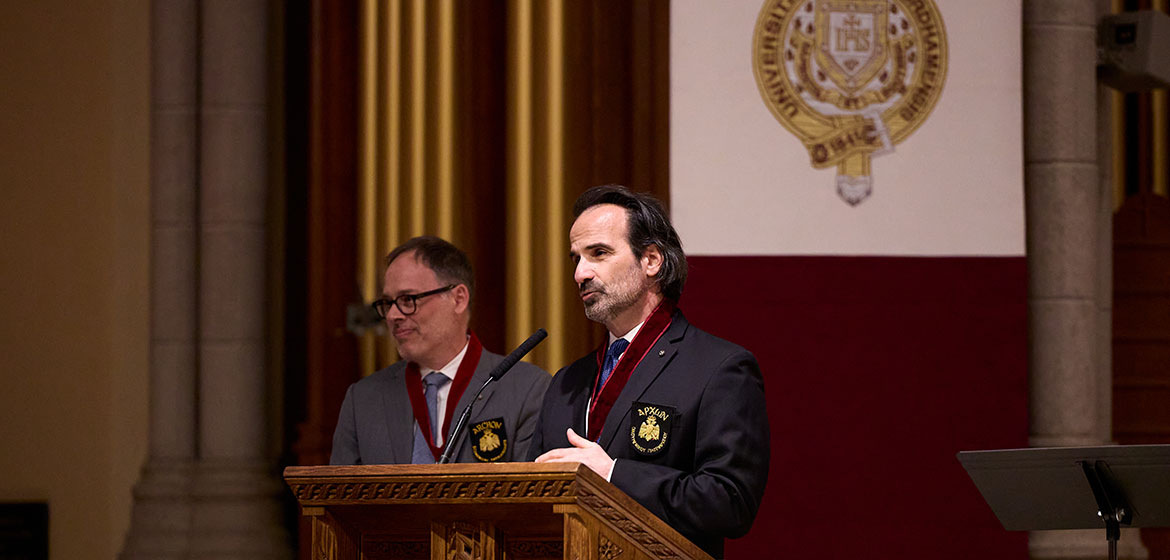
Photos in slideshow by Argenis Apolinario and Chris Taggart
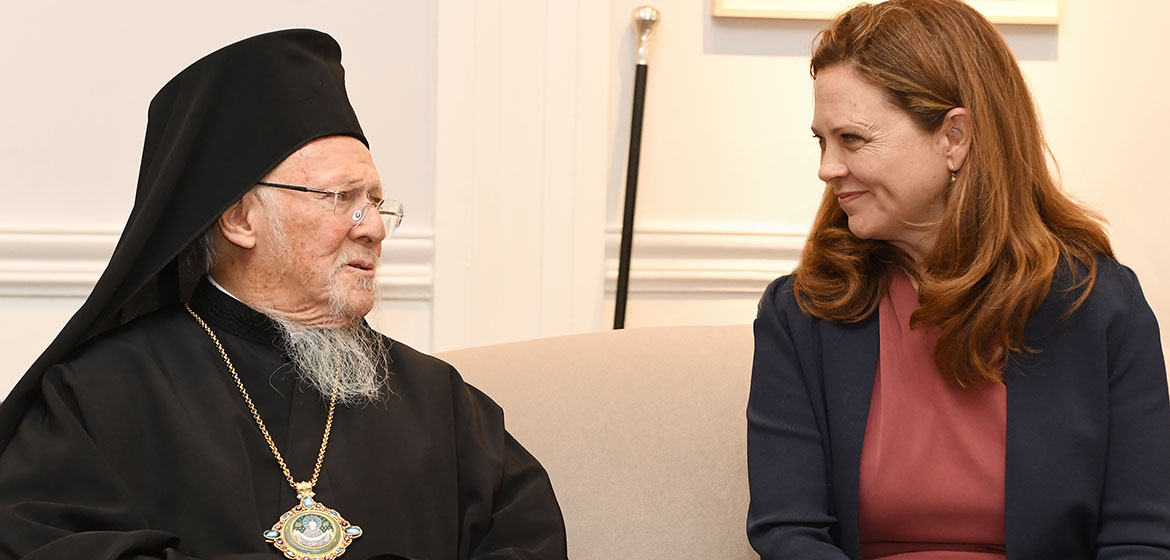
The spiritual leader of the world’s 300 million Orthodox Christians came to Fordham on Tuesday, bringing a message of unity between the Orthodox and Catholic churches and emphasizing themes of environmental protection and care for the human family.
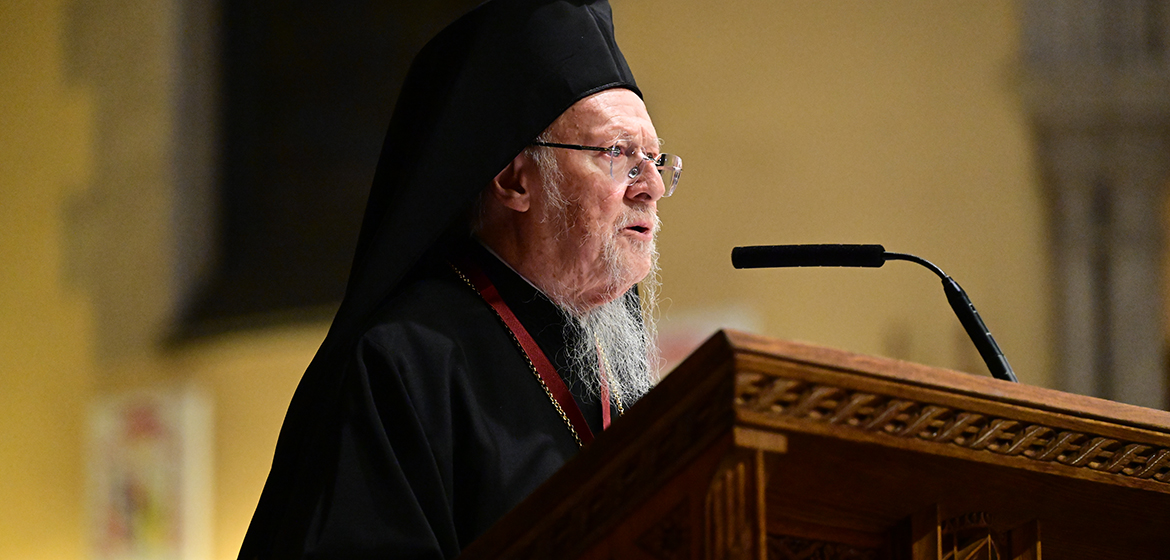
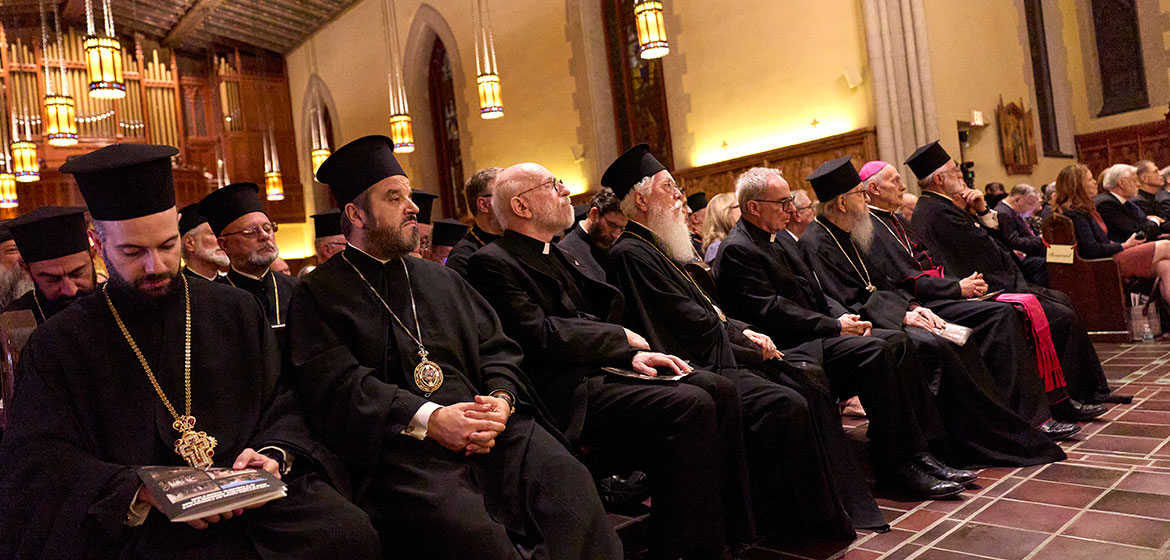
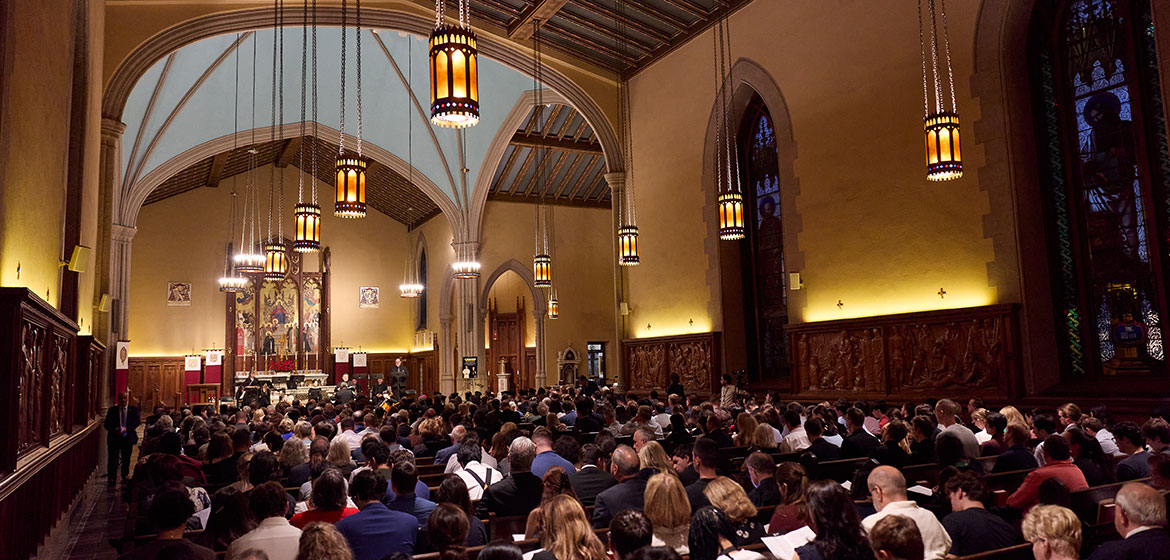
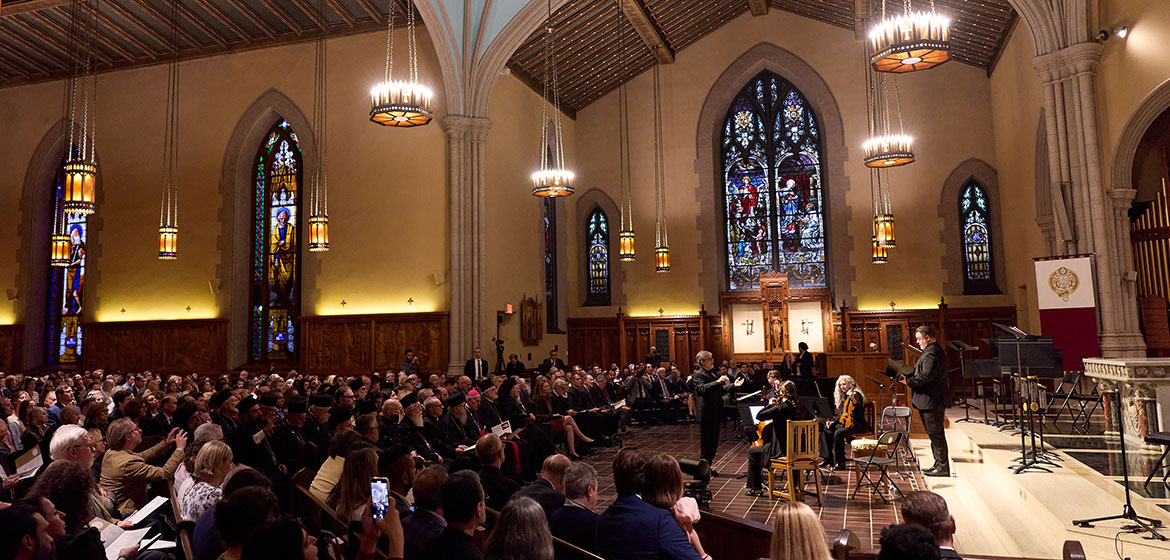
His All-Holiness Bartholomew, Archbishop of Constantinople-New Rome and Ecumenical Patriarch, began his visit at the University Church at the Rose Hill campus, where he spoke about “the universal aspirations of the human to be good stewards of the created cosmos.”
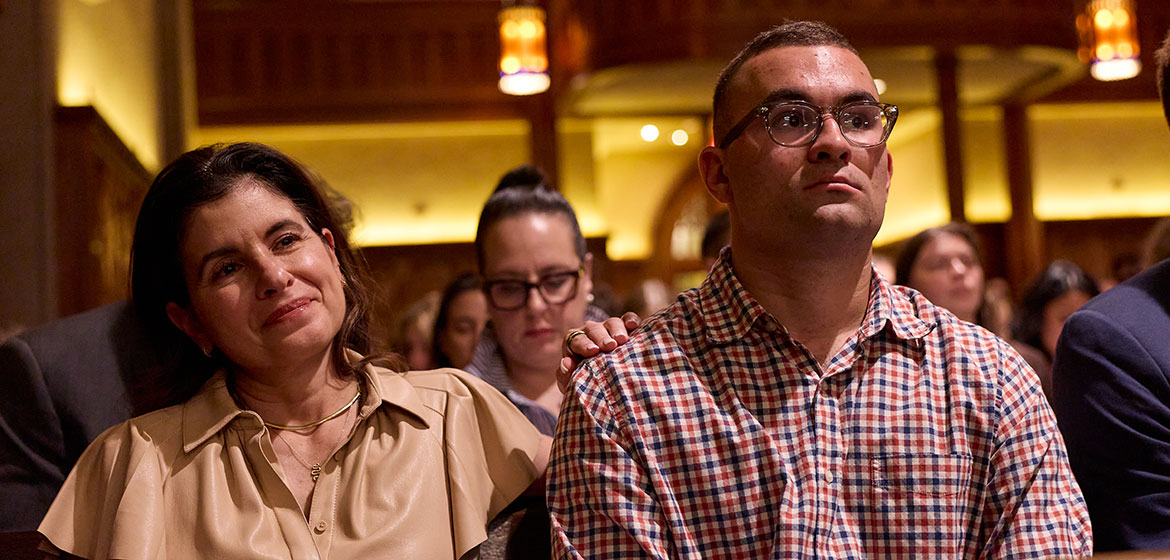
“The yearnings for connection to our planet, and indeed, to one another, are true and deeply felt, regardless of one’s culture, language, or religious tradition. They are hallmarks, signs of our basic interdependency with the world and everyone in it,” he said to the crowd that filled the church. “When we raise our awareness about the plight of our planet and the conditions of our fellow human beings, we are in direct imitation of God.
“Here at Fordham, where the Orthodox Christian Studies Center is thriving, this verdant campus, which borders the New York Botanical Garden, reminds us of how careful we must be with the gift of creation,” he said.
‘A Time for Life’
The patriarch came to Fordham as part of a U.S. visit that included stops in Washington, D.C., and at the United Nations. This was his second visit to Fordham; he visited in 2009 and received an honorary doctorate from the University.
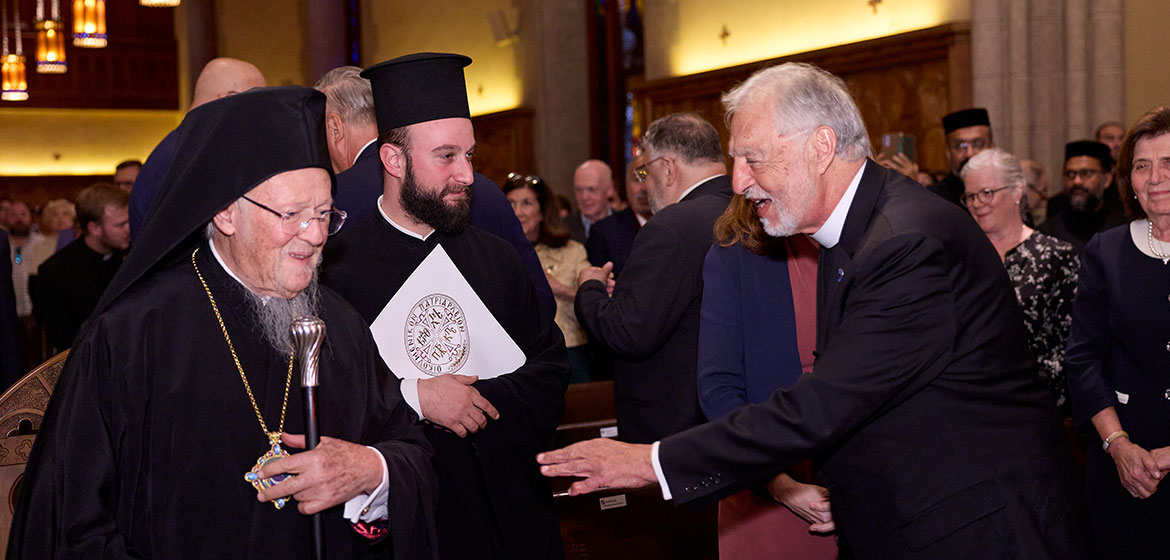
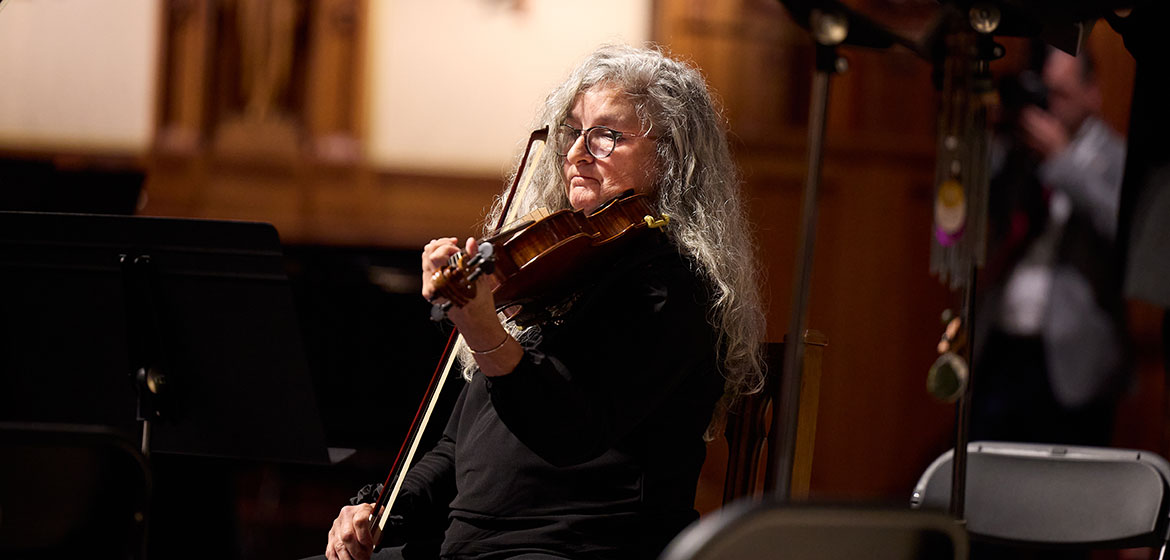
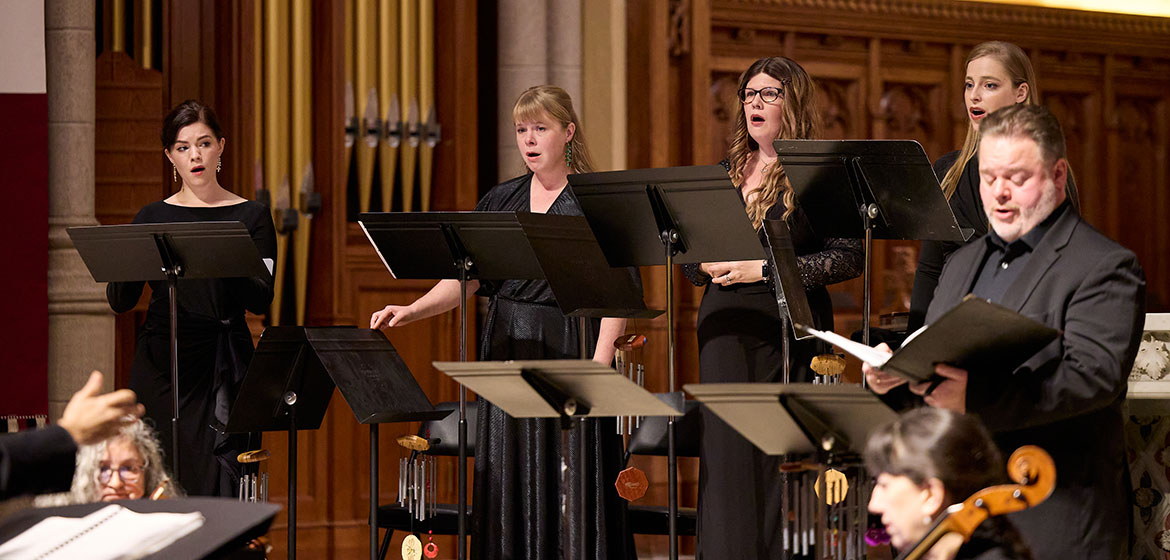
At the University Church on Tuesday, he was honored with a concert by Cappella Romana, a renowned Oregon-based vocal ensemble. The group brought the crowd to its feet with a performance of “A Time for Life: An Environmental Oratorio,” by Robert Kyr, a three-part composition drawn from diverse sources, including the Bible, a Sioux prayer, and an Alaska Native song.
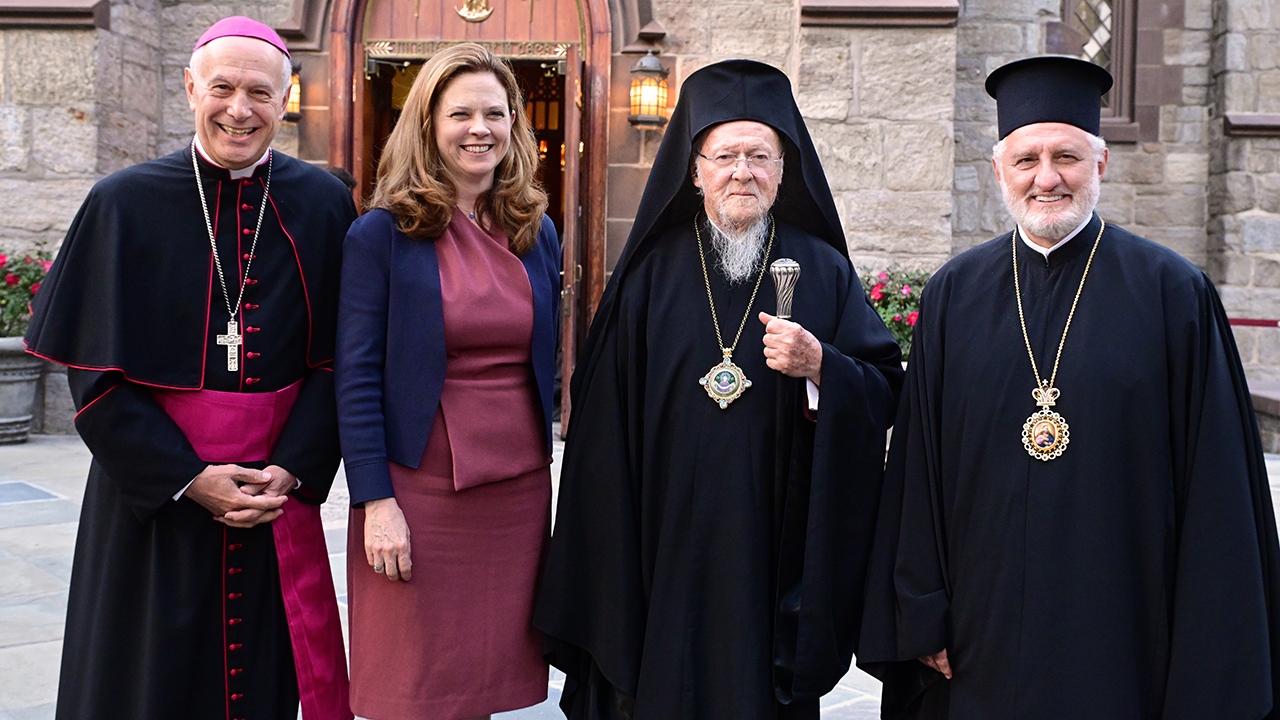
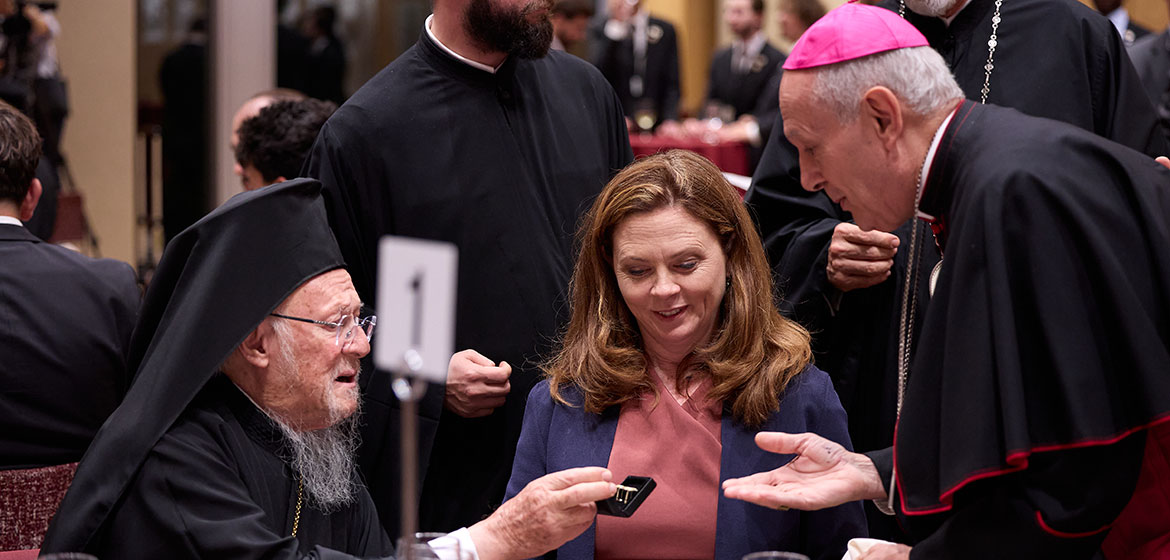
Before the Cappella Romana performance, Fordham President Tania Tetlow, a trained singer, sang “Ave Maria” as a gift to the patriarch. When the concert concluded, she presented him with the President’s Medal, the University’s highest honor.
‘What Really Matters’
In her remarks before the concert, Tetlow praised the patriarch’s leadership in standing up for democracy and environmental protection. “Your All-Holiness, you model for us faith in action as a theologian and an inspiring public figure,” she said. “Your message of profound faith cuts through the noise of political rationalization and of nationalism. You remind us of what really matters.”
She noted how Fordham, a Catholic and Jesuit university, strives to advance interreligious dialogue through its Orthodox Christian Studies Center—and thanked those who have donated to support the center’s new home, to be established on Belmont Avenue near the Rose Hill campus.
Engaging with Students
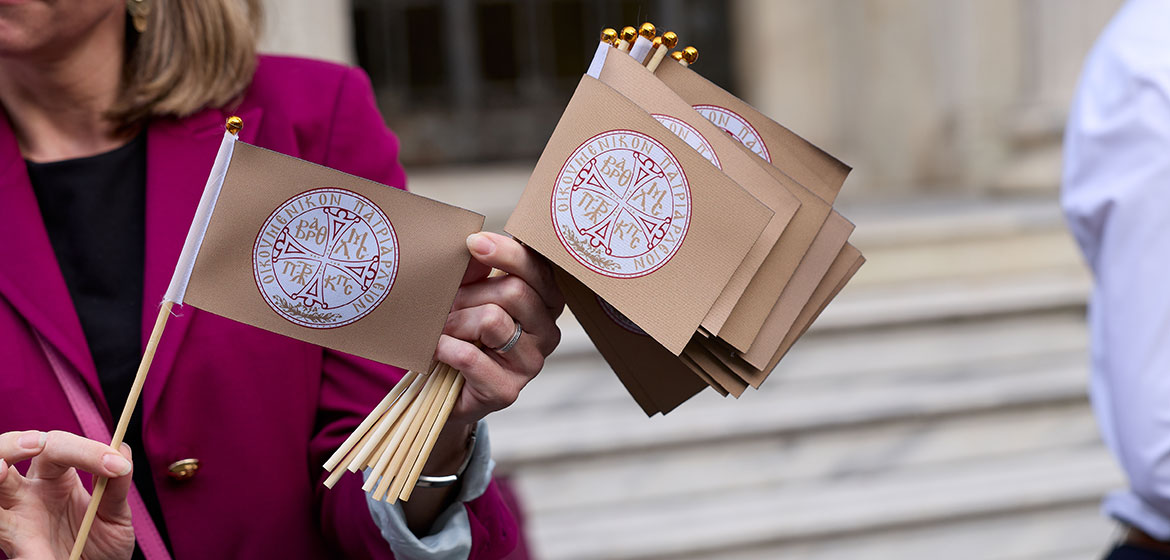
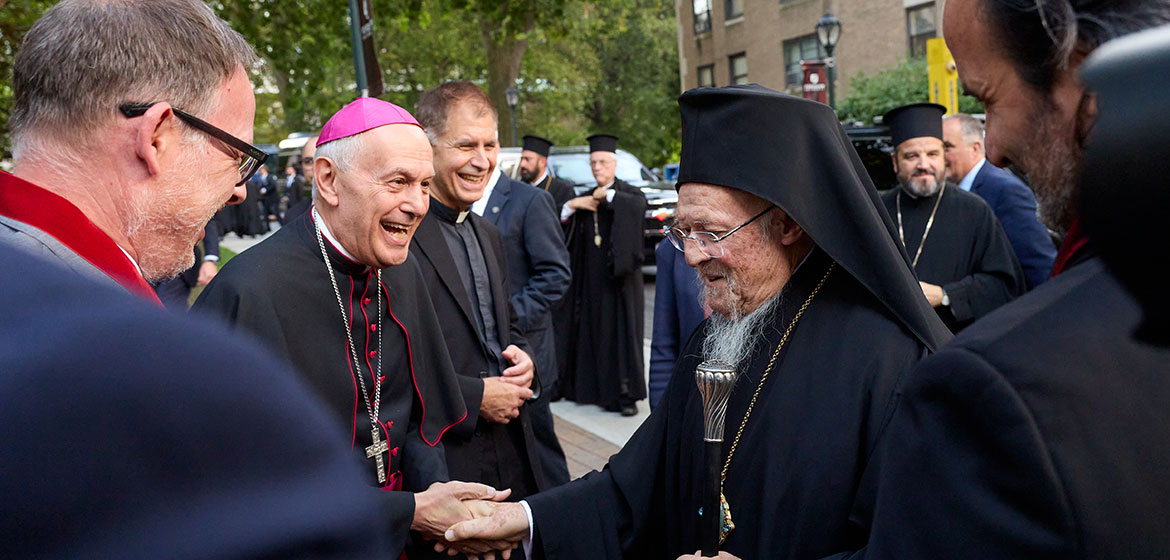
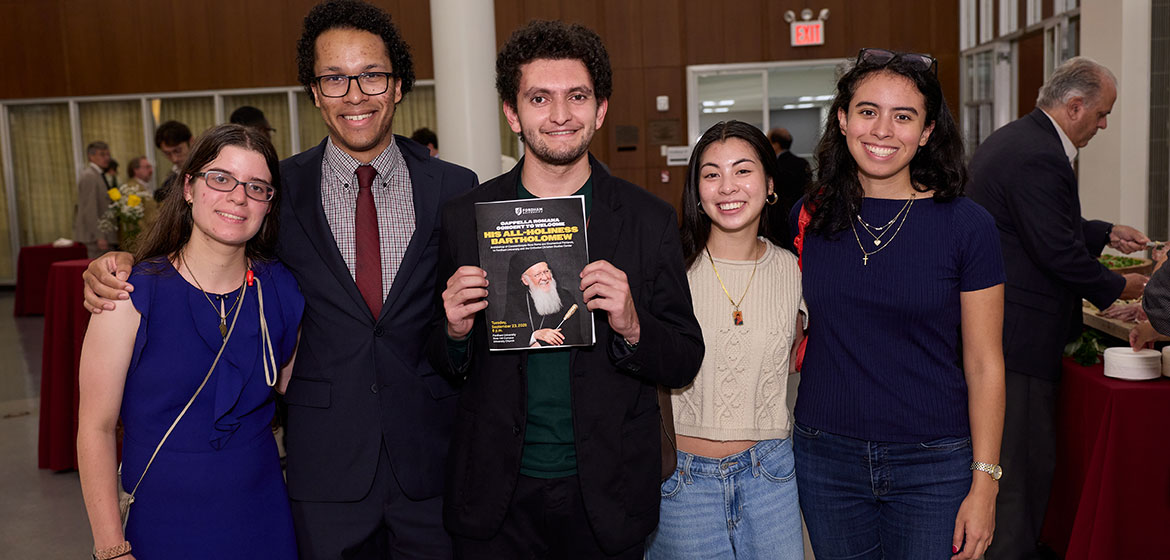
The patriarch engaged with students throughout his visit, starting with his arrival at the University Church, where students lined the sidewalk into the church, waving small flags showing the patriarch’s official seal. He stopped to chat with a few members of Fordham’s Hellenic Society, who greeted him in Greek.
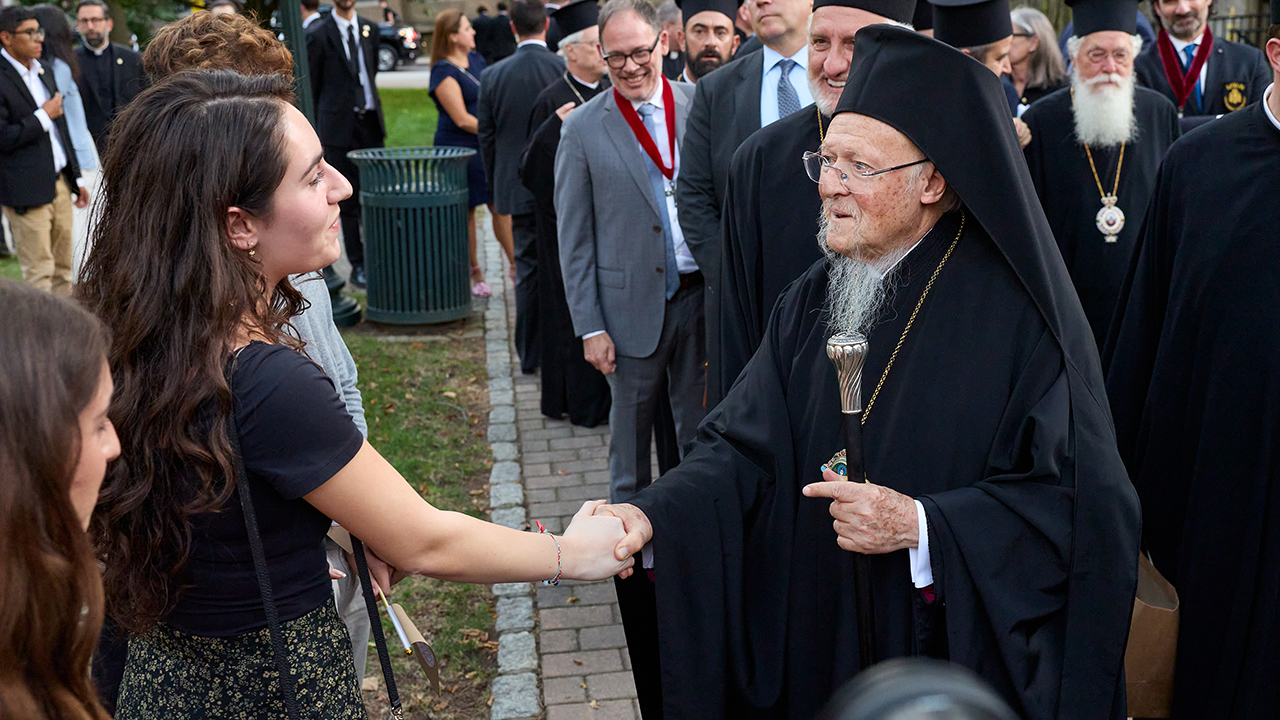
Meeting the patriarch was “a remarkable feeling; it’s a once-in-a-lifetime opportunity,” said one of the students, Logan Triantafillou.
The patriarch met with undergraduate and graduate students in the president’s office, dispensing blessings. One of the students, Courtney Haubert, a Greek Orthodox doctoral student in theology, called the visit “something that connects us to the global Orthodox world, which is sometimes difficult in the diaspora to feel unified and connected [to].”
An ‘Extraordinary Relationship’ with Fordham
The patriarch, based in Istanbul, Turkey, came to America to receive the Templeton Prize on Wednesday, Sept. 24, at Lincoln Center for the Performing Arts in Manhattan, said George Demacopoulos, Ph.D., co-director of the Orthodox Christian Studies Center.
The patriarch usually tries to include one ecumenical event on his trips to the U.S., said Demacopoulos, and for this visit, he asked to come to Fordham, Demacopoulos said. On Monday he met with President Trump and congressional leaders in Washington, D.C.
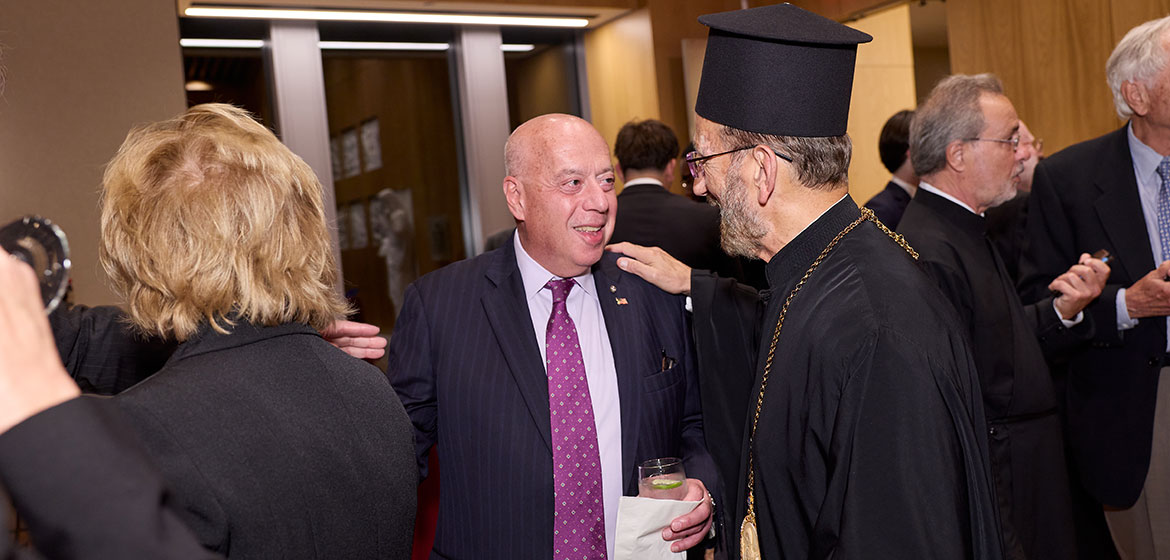
The visit ended with a dinner in the McShane Center, where the patriarch thanked the University community for the “graciousness and warmth” displayed during the visit. He also noted Fordham’s support for giving the Orthodox Christian Studies Center a new home “to augment and magnify” its mission, calling it a “precious gift” to Orthodox Christians.
“We Orthodox must come forward to embrace this gift and develop the Orthodox Christian Studies Center to its full potential—both as a source of inspiration to our own people, and as a leading ecumenical partner,” he said. “There will be many opportunities for participation in this historic endeavor, and we pray that people of good will come forward to help.”
“The extraordinary relationship of Orthodoxy and Fordham is a gift to both churches, and we must do all in our power to enhance it,” he said.
Read the full address delivered by the patriarch at the University Church.