

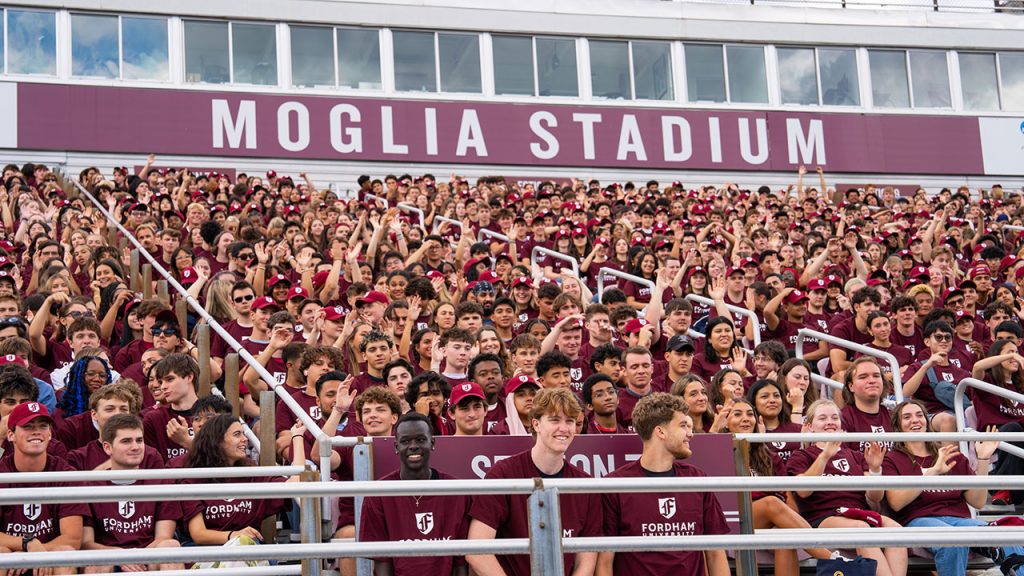
Fordham welcomed more than 2,400 first-year students on Aug. 24, the third-largest incoming class in the University’s history. The new academic year also brought more veterans and transfer students than ever before, underscoring the University’s commitment to serving students from a wide variety of life paths and perspectives.
Many Backgrounds, Many Perspectives
Students in the Class of 2029 come from almost every state and more than 60 countries, as well as Puerto Rico, Guam, and the District of Columbia. Many also come from nearby, with more than 400 first-year students from New York City’s five boroughs.
More than 26% of the incoming class are first-generation college students, while another 26% are receiving Pell Grants, a form of federal financial aid for students with exceptional financial need. Domestic students of color make up just under half of the traditional first-year class, while the number of international students held steady from last year at around 8%. The leading home countries for international students are Vietnam, China, India, Canada, and Brazil.
“We’re delighted to welcome such a diverse class,” said Vice President for Enrollment Strategy Michael Gratale. “These students embody the spirit of Fordham, overcoming obstacles in pursuit of higher education in order to open doors for themselves and others.”
Other figures point to the class’ strong academic profile. The class has an average SAT score of 1410 and an average high school GPA of 3.61 on a 4.0 scale.
A Milestone Increase in Military-Connected Students
One area where Fordham saw notable growth was in its enrollment of military-connected students, many of whom attend the University’s School of Professional and Continuing Studies. Fordham’s undergraduate student body now has more than 270 veterans, active duty military members, reservists, and military dependents—the highest number in the University’s history and an increase of more than 13% from last year. This group includes more than 90 military-connected students newly admitted for the fall of 2025, an increase of more than 30%.
This growth aligns with Fordham’s plan to double enrollment of military-connected students over the next five years. The University is in the process of expanding its team within the Office of Military and Veterans’ Services, growing career services, and offering more help with accessing benefits. Fordham is also creating a Veteran and Military Family Center on the Rose Hill campus, where military-connected students will be able to get together and access resources for veterans and their families. The space is scheduled to be completed in the spring.
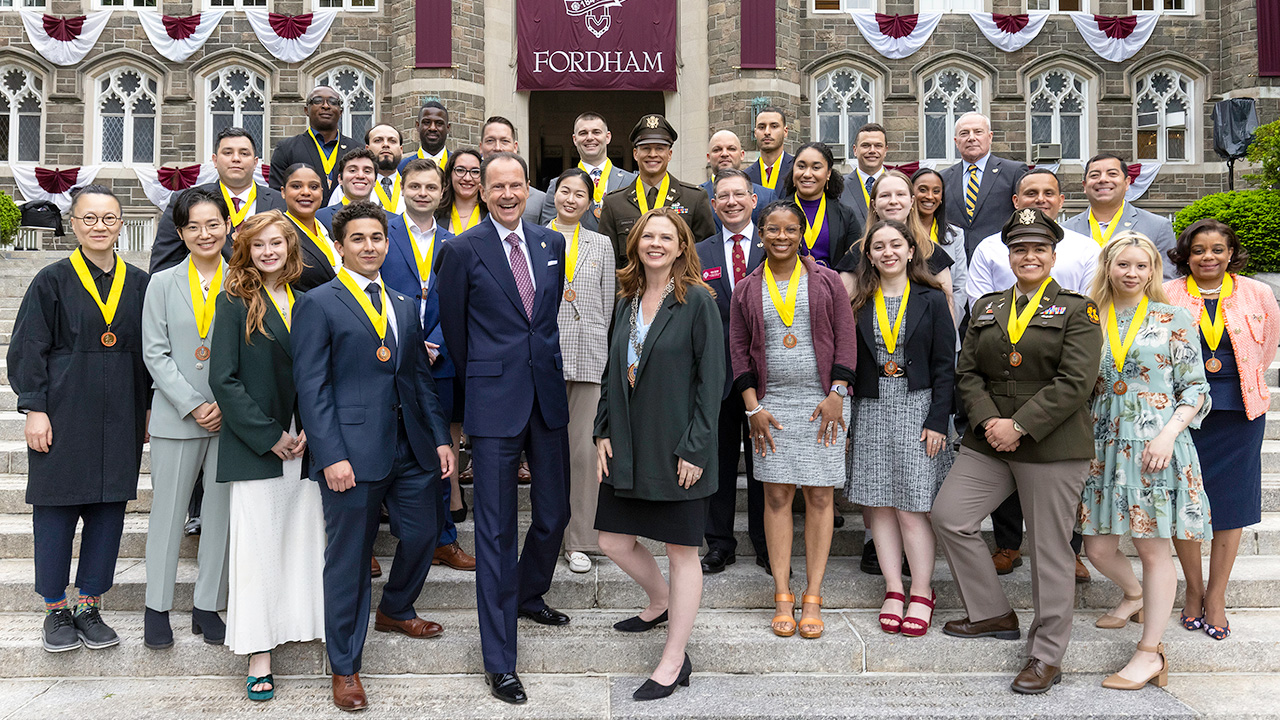
These efforts and others are reflected not only in the student body but in national rankings; In 2024, Military Times ranked Fordham the No. 1 college for vets in New York and No. 23 nationwide.
More Students Transferring to Fordham
More than 260 students transferred to Fordham’s traditional undergraduate colleges this fall, exceeding last year’s record of 238 to mark the largest group of transfers in the University’s history. The increase appears to be part of a trend; a higher-than-average number of students transferred to Fordham in the spring as well.
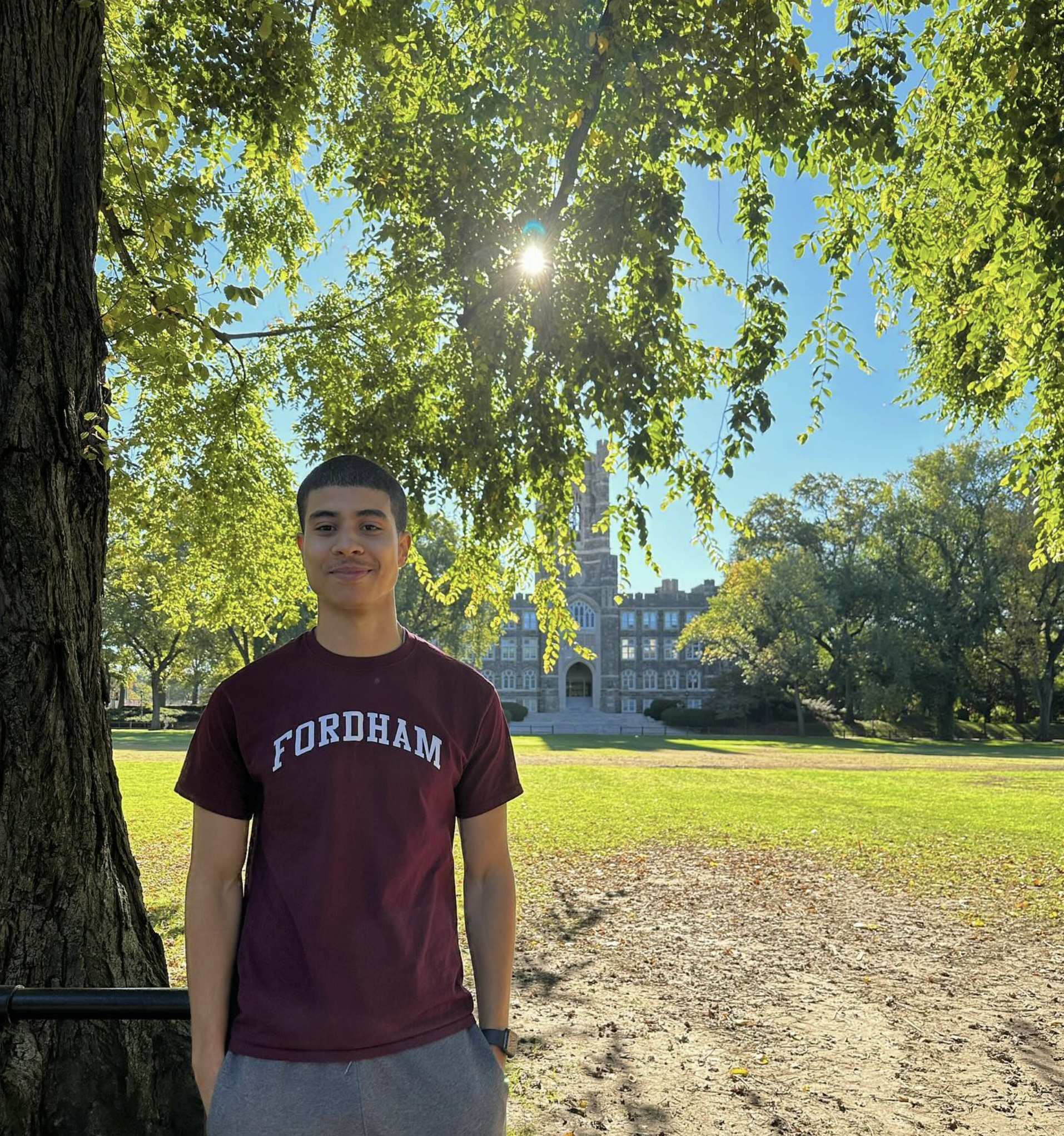
According to Jose Olivares, associate director of transfer admission, the increase is the cumulative result of an effort in recent years to guide students through the transfer process more smoothly. Undergraduate admission officers offer transfer students personalized support, helping them discern whether Fordham is right for them and navigate the application process. Olivares also pointed to refinements in the credit evaluation process at Fordham’s colleges.
Most of all, Olivares said, Fordham appeals to transfer students because of the sense of community they find here.
“ When I’m at a transfer fair, the first thing students lead with is ‘I’m looking for a community,’” said Olivares. “ That’s something Fordham does so well. I think that’s the catalyst for them, on top of the admissions process.”
