

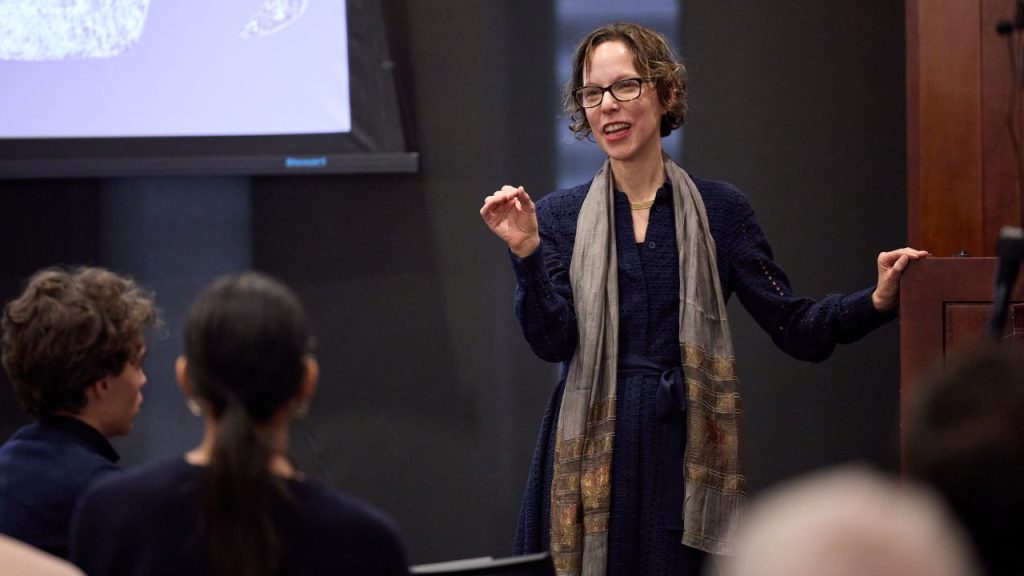
Art History Professor Nina Rowe has been appointed to Fordham’s John L. Marion Chair in Art History, Painting, and Sculpture, an endowed chair that supports a distinguished scholar in these areas of study.
The appointment provides Rowe—a recognized medieval art scholar—with new opportunities to share her research with Fordham students and colleagues. As part of her role, she will help organize exhibitions, giving students opportunities to participate in curation.
In discussing the honor, Rowe highlighted the collaborative spirit she’s found at Fordham, noting how interdisciplinary work both within her department and with colleagues at Fordham’s Center for Medieval Studies has enriched her scholarship.
“They’ve pushed me to expand my points of reference and develop projects that are of interest not just to art historians, but to people in this interdisciplinary world of medieval studies,” said Rowe, who joined Fordham’s Department of Art History and Music in 2004.
Jonathan Crystal, vice provost for academic affairs, said endowed positions like the Marion Chair “allow students to learn from the very best teaching scholars—whether by taking courses or through student research opportunities.” This appointment strengthens Fordham’s offerings in the fine arts, he said, which “are an essential part of a Jesuit education, helping students develop sensitivity and appreciation of beauty, imagination, and empathy.”
Exploring Overlooked Stories of the Medieval Era
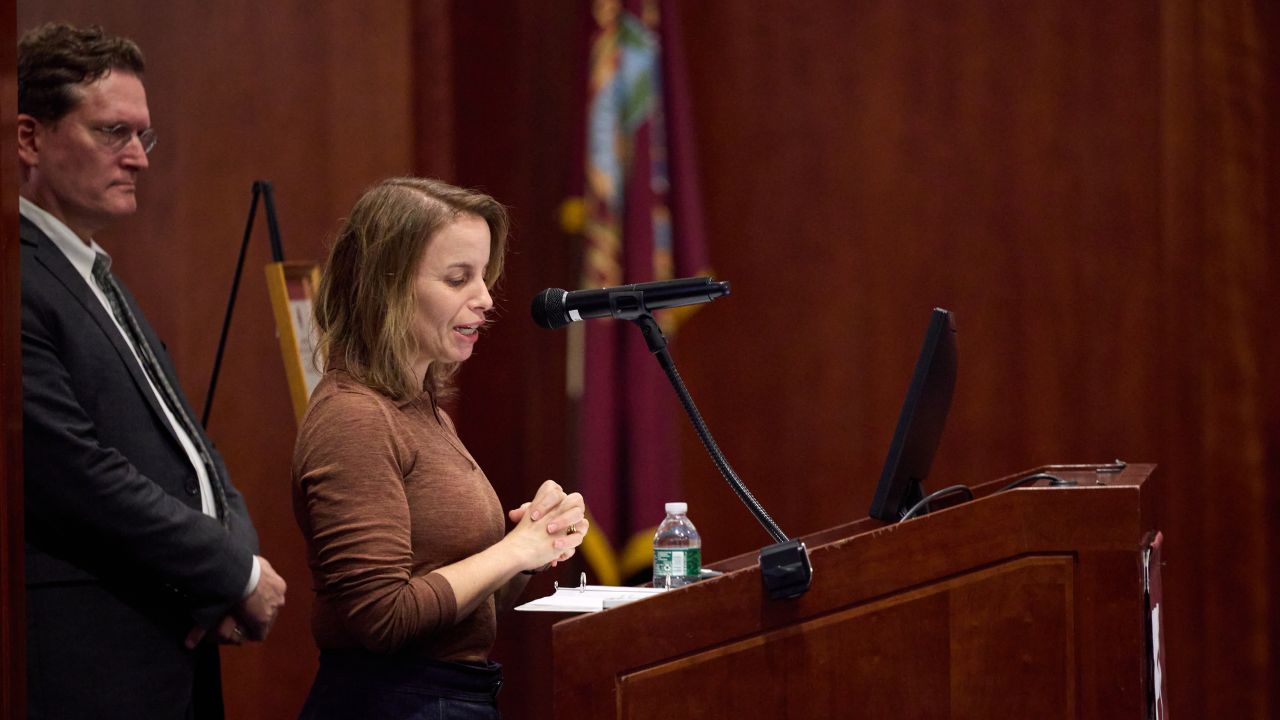
At her Marion Chair inaugural lecture Oct. 30, “Dancing and Dalliance: Picturing Revelry in the Late Middle Ages,” Rowe discussed how German artists of the time depicted festive scenes of dancing, even as church and civic leaders tried to suppress the livelier forms of dance among the population. This kind of tension between everyday life and institutional authority is an area of interest for Rowe, who often explores how people outside positions of power found forms of self-expression.
Rowe is interested in what medieval images can reveal about the complexity of social life in the Middle Ages, particularly for those whose perspectives are often left out of the historical record—such as women, Jews, and members of other marginalized groups.
Exploring these overlooked stories “allows us to get a richer picture of the Middle Ages,” Rowe said. “Art history can be a story about power and triumph, but it can also be about individual expression and experimentation.”
Looking to the Future, Illuminating the Past
Rowe’s past work has explored topics like Jewish-Christian relations in the Middle Ages and the depiction of everyday urban life in sculpture and illuminated manuscripts. Her book, The Jew, the Cathedral, and the Medieval City: Synagoga and Ecclesia in the 13th Century, was shortlisted for the Charles Rufus Morey Award from the College Art Association. Another book by Rowe, The Illuminated World Chronicle: Tales from the Late Medieval City, won the Karen Gould Prize from the Medieval Academy of America.
Her current project, which she drew upon for the “Dancing and Dalliance” lecture, examines representations of love and courtship in 14th- and 15th-century art.
A Curatorial Opportunity for Students
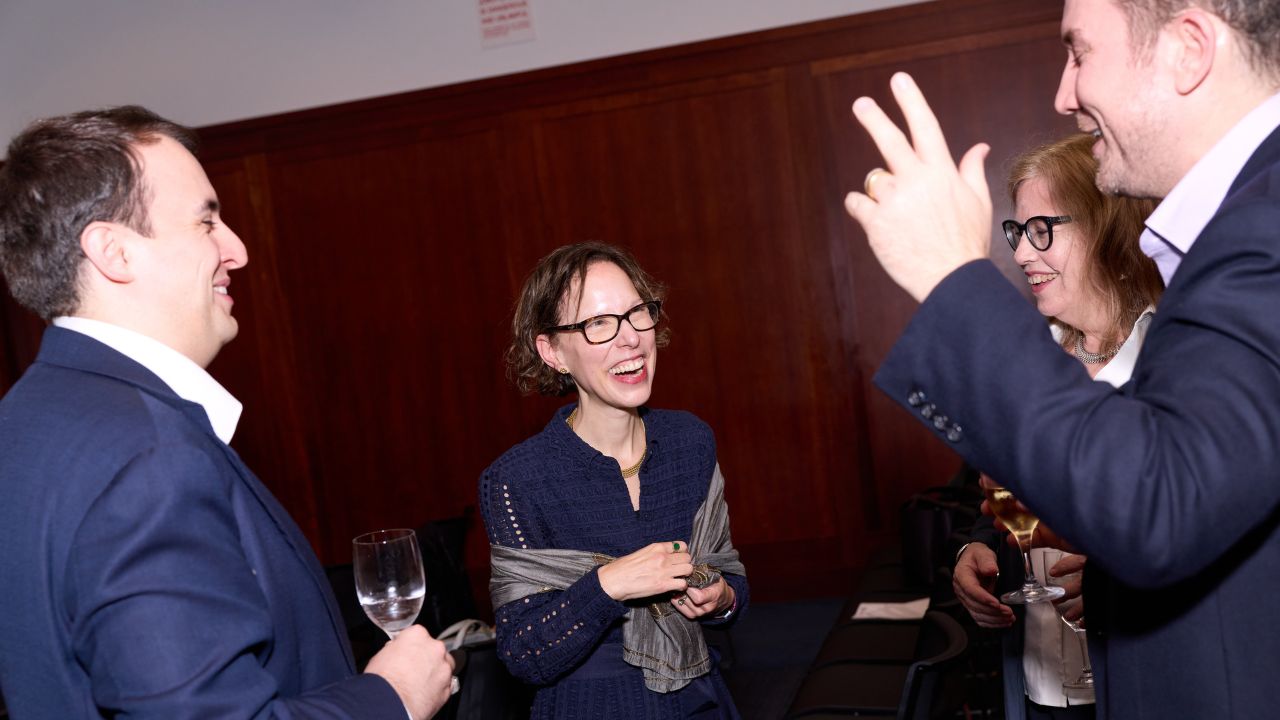
Rowe is planning a co-curated exhibition titled “Know-How for a New Era: Learning and Living at the Dawn of the Renaissance,” in collaboration with a colleague at Hunter College. The exhibition, set to open next November in New York, will explore how people of that era made sense of the universe independently of the church, through practical texts on health, astrology, and other emerging fields. Students will be heavily involved in curating and installing the show, Rowe said.
The John L. Marion Chair in Art History, Painting, and Sculpture was established by the Burnett Foundation in 2006 to honor John L. Marion, a 1954 Fordham graduate and former chairman of Sotheby’s Auction House.
