


A Fordham junior involved in fundraising and political activism to support Ukraine and its displaced citizens has been awarded the Obama-Chesky Voyager Scholarship to advance her career in public service.
Anya Rodnikoff, who is studying international political economy, is the second Fordham student to earn the prestigious scholarship, founded by Barack and Michelle Obama and Airbnb CEO Brian Chesky to support students aiming for public service careers.
The award provides up to $50,000 in financial aid; $10,000 to undertake a summer work-travel program, or “voyage”; and $2,000 in travel vouchers, spread out over 10 years. Awardees also meet for a leadership development summit in Chicago.
Migrants With Valuable Talents
A New York City native who grew up visiting family in Ukraine, Rodnikoff has been active in supporting Ukraine since it was invaded by Russia four years ago. For her scholarship “voyage,” she plans to travel to Germany next summer to study the integration of Ukrainian refugees there, seeking insights that could benefit all migrants looking to settle in and contribute in their new countries.
“People want to work,” even after being forcibly displaced, she said. “They have talents that are actually really valuable. There’s no reason that they can’t contribute.”
Restoring Dignity to the Displaced
In 2022, during her sophomore year of high school, Rodnikoff faced “debilitating” worries about her family members’ safety in the wake of Russia’s invasion. She responded by getting involved in activist efforts including fundraising—through Liberty Ukraine and other organizations—to support Ukrainians on the front lines of the war with Russia.
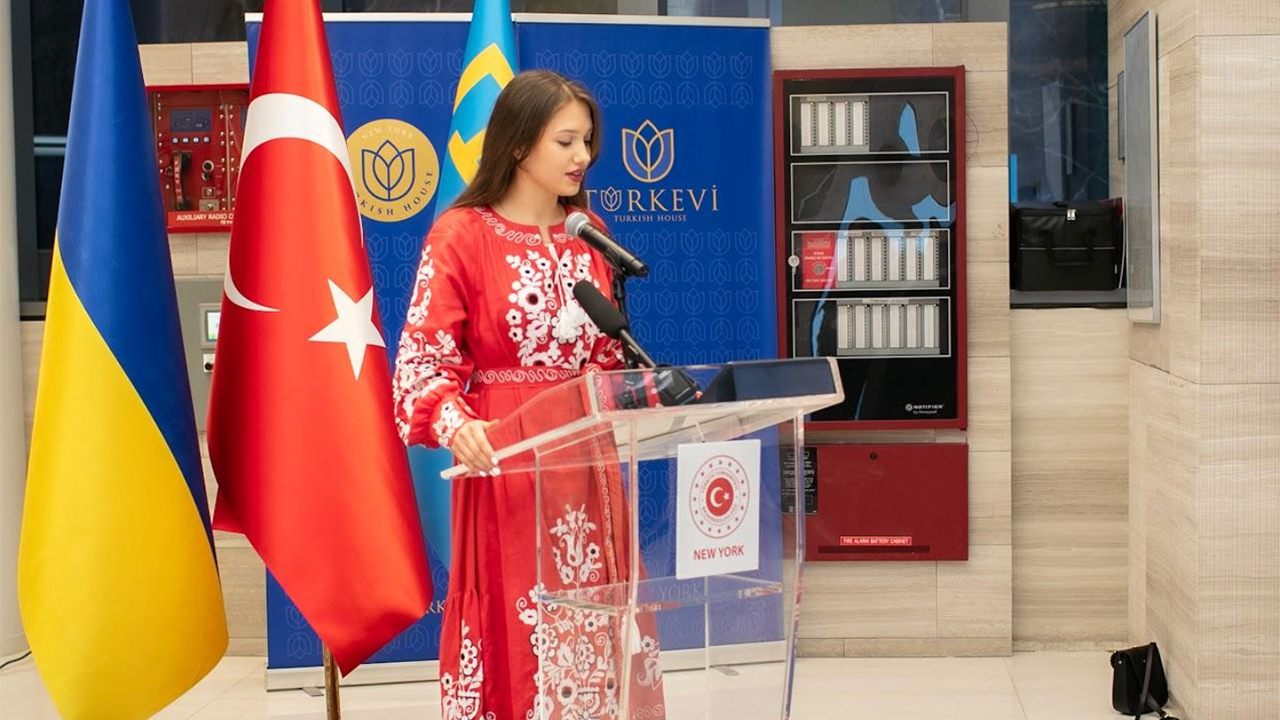
Later, as part of the American Coalition for Ukraine, she lobbied members of Congress to approve funding for Ukraine, the reappropriation of frozen Russian assets for Ukraine’s benefit, and resolutions condemning the illegal deportation and kidnapping of Ukrainian children.
Rodnikoff has a background in film and theater and works part-time in production for Netflix shows. After learning about the hurdles facing Ukrainian refugee filmmakers seeking to practice their craft in the U.S., she helped build a program through the Downtown Community Television Center in Manhattan to provide them with instruction and professional certifications.
Participants have been able to find media work and “basically help themselves up” financially, she said. “I think that’s the best way to restore dignity to someone who comes here. It’s so easily revoked in a new country, the dignity to just be able to make a living for yourself.”
“I just want to give people an opportunity to put in the work,” she said. As one of her professors reinforced for her, she said, “put in the work, you’ll get a result.”
Highlighting the Human Factor in Economics
That professor, adjunct economics professor Huy Nguyen, built her confidence that she could master economics and also inspired her to push through and complete the application for the scholarship.
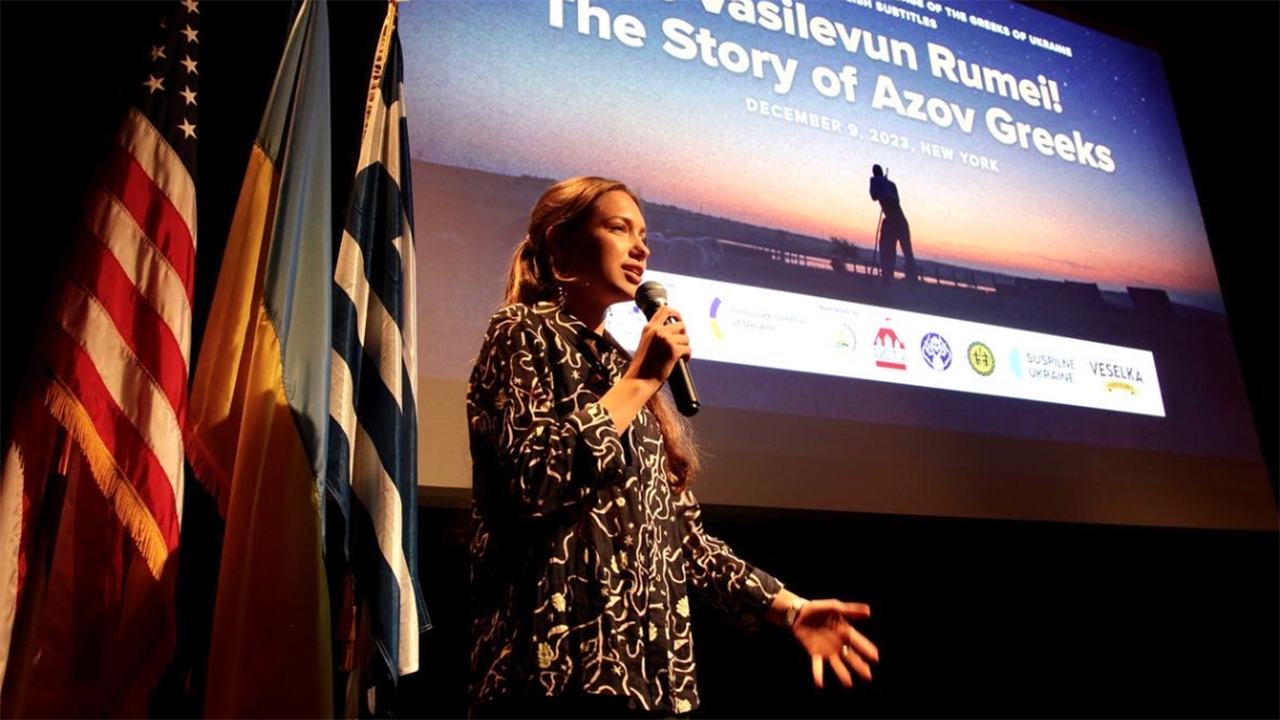
In class, Rodnikoff was notable for asking questions that “bridge policy and the human impact that these economic theories have,” Nguyen said. “That kind of question that makes everyone in the room think differently, including me.”
Rodnikoff also said she couldn’t have done the application without the help of Marisa Iglesias, PhD, of the Office of Fellowship Advising, who spent hours going over her application with her and checking “every word that I was using,” Rodnikoff said.
Summer Research in Germany
Because of the scholarship, she’ll be able to scale back her production work on Netflix shows and dedicate that time to her public service projects and exploring her interests. Next summer, in Germany, she hopes to intern at a law firm or central bank while interviewing Ukrainians helped by government aid programs—language assistance, affordable housing, job placement—as well as those who missed out when they were curtailed.
After Fordham, she wants to go to law school and practice international law while continuing to stay involved in the cause of Ukrainians and other refugee communities. “I hope that it’s not just going to be Ukrainians that benefit from what I can learn,” she said.
