

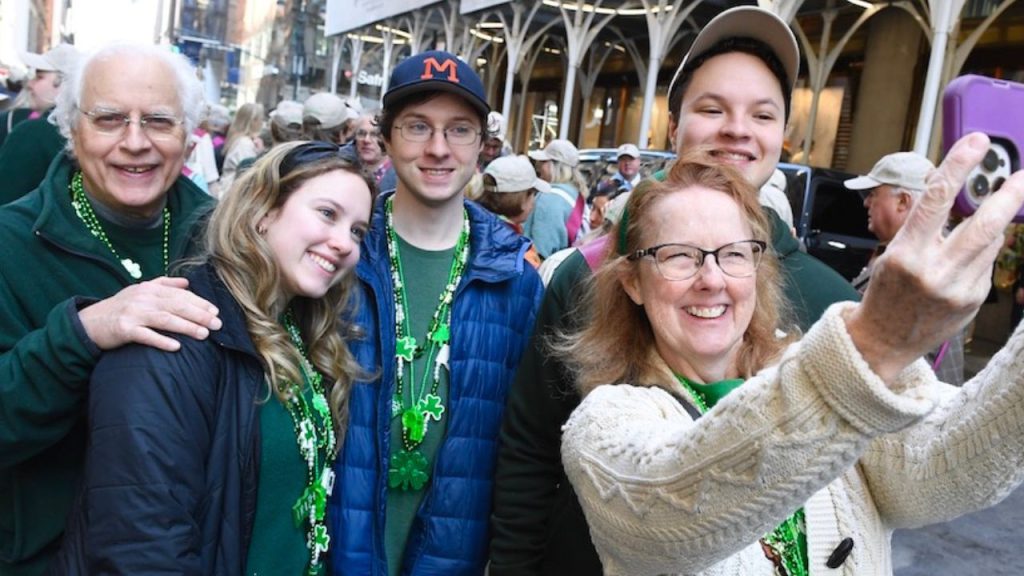
As New York City prepares for the wave of green clothing and bagpipes that come with St. Patrick’s Day, Fordham has its own reasons to celebrate its Irish origins. The University was founded in 1841 by John Hughes, aka “Dagger John,” an Irish-born clergyman who championed the rights of Irish immigrants at a time when anti-Catholic and anti-Irish prejudice were widespread.
Hughes, who went on to become the archbishop of New York, envisioned Fordham as an institution that would help immigrants and their children thrive—a legacy that continues to shape the University.
More than a century and a half later, Fordham’s Irish heritage lives on too, from academic programs to student organizations. Here are a few places you can find it:
1. America’s first Irish Studies program
Fordham is home to the first Irish Studies program in the United States, originally incorporated into the University in 1927 when poet and Irish republican Joseph Campbell brought his School of Irish Studies to Fordham. The program was reborn in 1998, and today, the interdisciplinary Irish Studies minor allows students to explore Ireland’s rich cultural legacy and the experiences of the Irish diaspora through courses in history, literature, and language.
2. Sláinte, Fordham’s Irish dance team

Irish dance also has a home on campus through Sláinte, Fordham’s official Irish dance team. The group performs year-round at campus and community events—including an upcoming “Irish Night” showcase March 21 at Fordham Prep—and regularly represents Fordham in the New York City St. Patrick’s Day Parade.
Senior Julia LaGrange, who studies environmental studies and American studies on the pre-law track, has been Irish dancing since she was six. She joined Sláinte to continue the tradition during college and found a close-knit community of dancers with similar backgrounds.
“With Irish dance, I feel like I’m able to express myself in a very unique, freeing way,” LaGrange said. “It’s been really wonderful to connect with a group of people who can share in that joy and artistry.”
3. Irish music on the airwaves
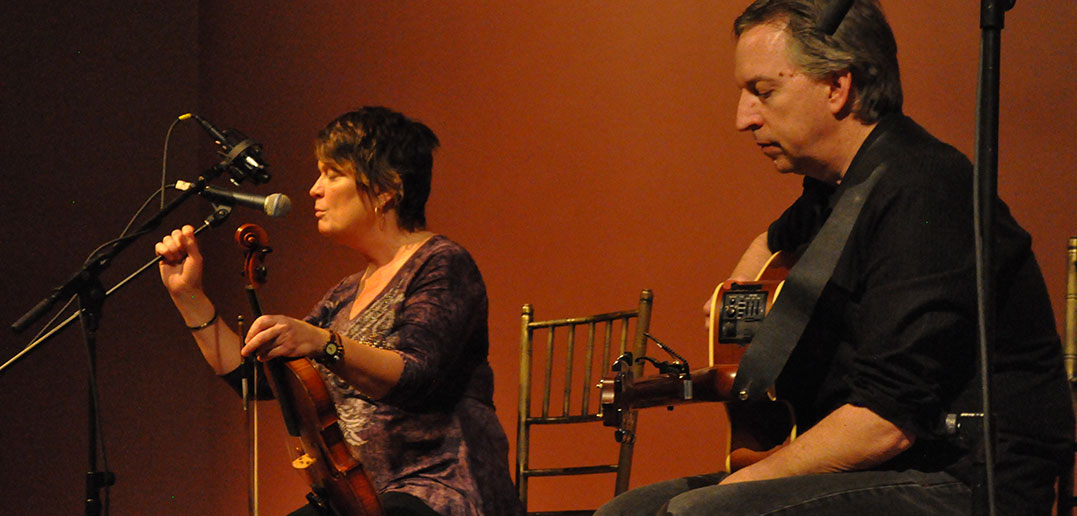
Fordham’s public radio station WFUV is home to Ceol na nGael (“Music of the Irish”), a long-running program dedicated to traditional Irish music. The show, which was launched in 1974 by Fordham students Gerry Murphy and Mary Maguire, introduces listeners to the sounds of fiddles, bagpipes, and folk singing that have defined Irish musical traditions for generations. Listeners can also catch up on Irish news and sports. The show airs every Sunday from noon to 4 p.m. on 90.7 FM.
In the meantime, listen to this St. Patrick’s Day playlist from Ceol na nGael.
4. Studying abroad in Ireland
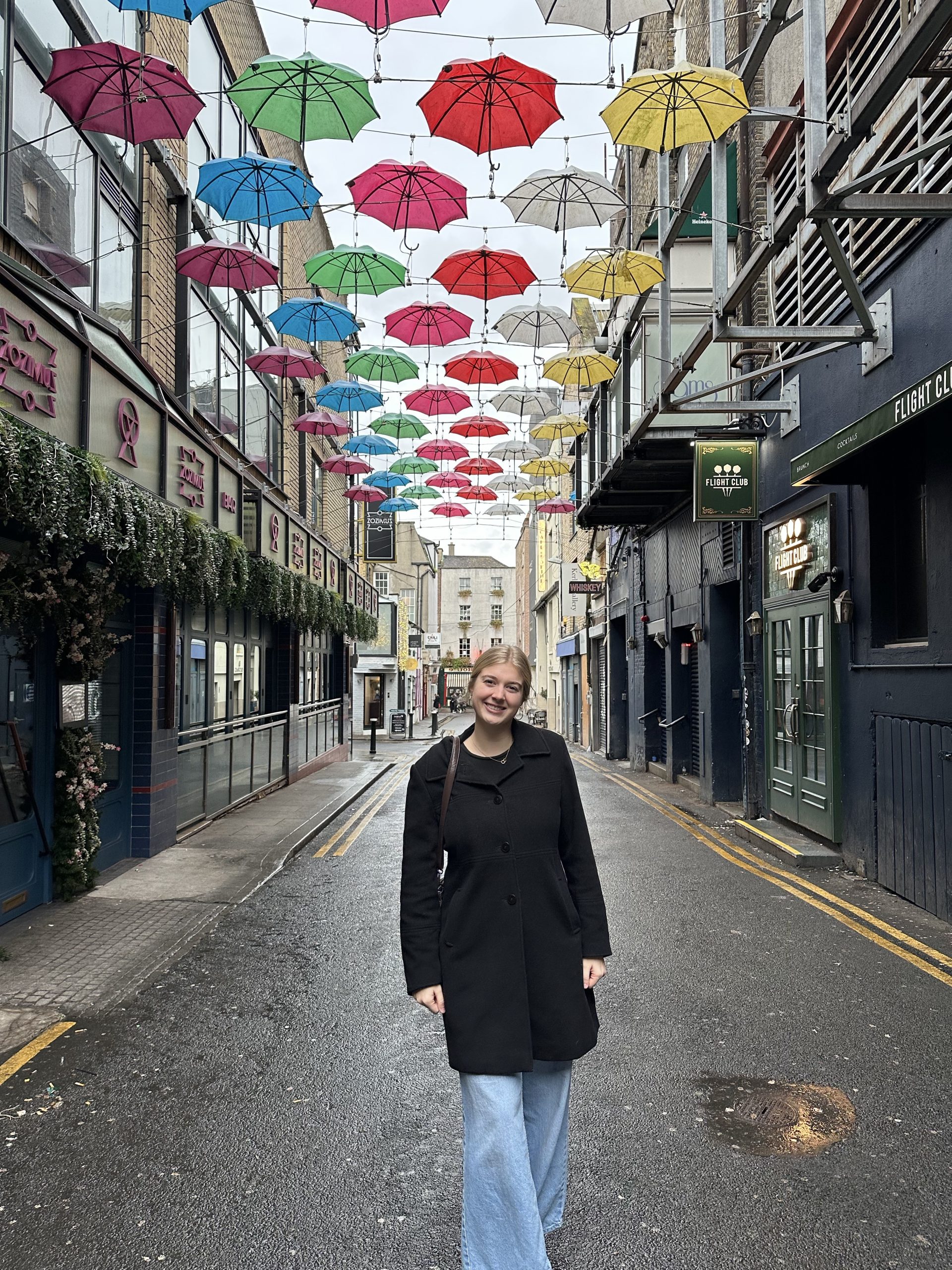
Some Fordham students take their interest in Irish culture beyond the classroom, participating in study abroad programs in Ireland. Junior Anne Jackson, a digital technologies and emerging media major, is spending the spring semester taking part in the CNN Academy program, a collaboration between University College Dublin and the Clinton Institute. Fordham has a partnership with the program.
“My favorite thing about the experience so far is just getting out and exploring Ireland,” said Jackson. “I’ve learned so much about history through different museums, and it has become a huge interest of mine.”
5. Irish culture across New York City
Finally, Fordham’s Irish connections are strengthened by its location in New York City, a city with deep Irish roots thanks to waves of 19th-century emigration. By 1860, more Irish lived in New York City than in Dublin, making it home to the world’s largest Irish population at the time.
The city’s Irish heritage is still visible at its many Irish pubs, where you can sometimes catch live traditional Irish music, and at institutions like the Irish Arts Center.
And perhaps the city’s Irish roots are most visible at the annual St. Patrick’s Day Parade, when New Yorkers line Fifth Avenue to celebrate the Irish spirit. The parade was first held in 1762—14 years before the signing of the Declaration of Independence—and today draws roughly 150,000 marchers and around 2 million spectators, making it the oldest and largest St. Patrick’s Day parade in the world. Fordham participates each year with one of the largest groups in the parade—more than 500 marchers strong—and has received top honors among universities for its contingent; learn how you can join them!
