Fordham’s graduate students have long worked to solve problems that cut across disciplines.
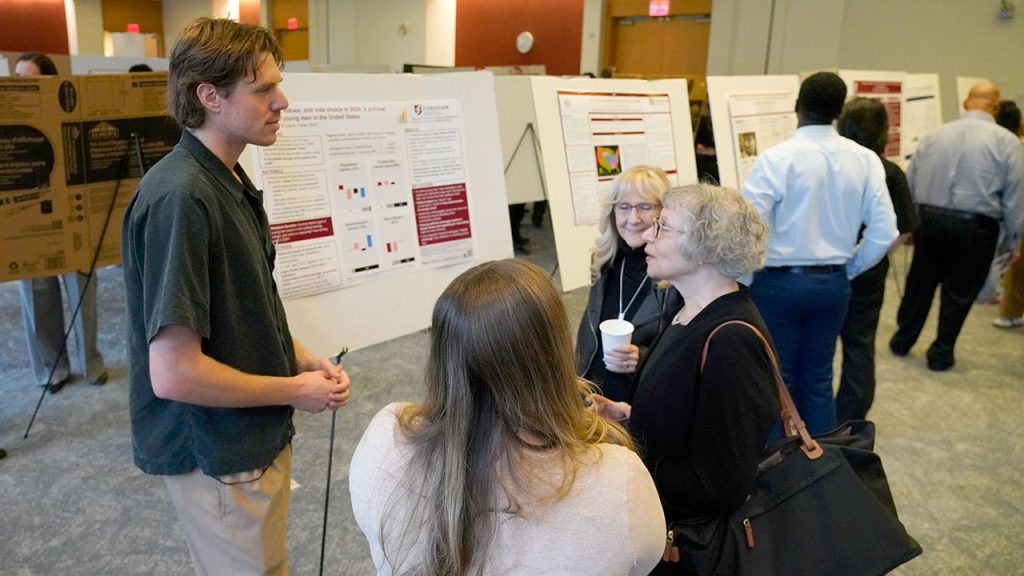
For the first time, they presented their research together at the University’s inaugural Graduate Research Fair, which included nearly 120 researchers from the Graduate School of Social Service, the Graduate School of Education, the Gabelli School of Business, and the Graduate School of Arts and Sciences.
At the April 29 event held at the Lincoln Center campus, students shared ongoing and completed research in areas including health, economics, and ecology.
Does Family Structure Shape Health Outcomes for Mothers and Children?
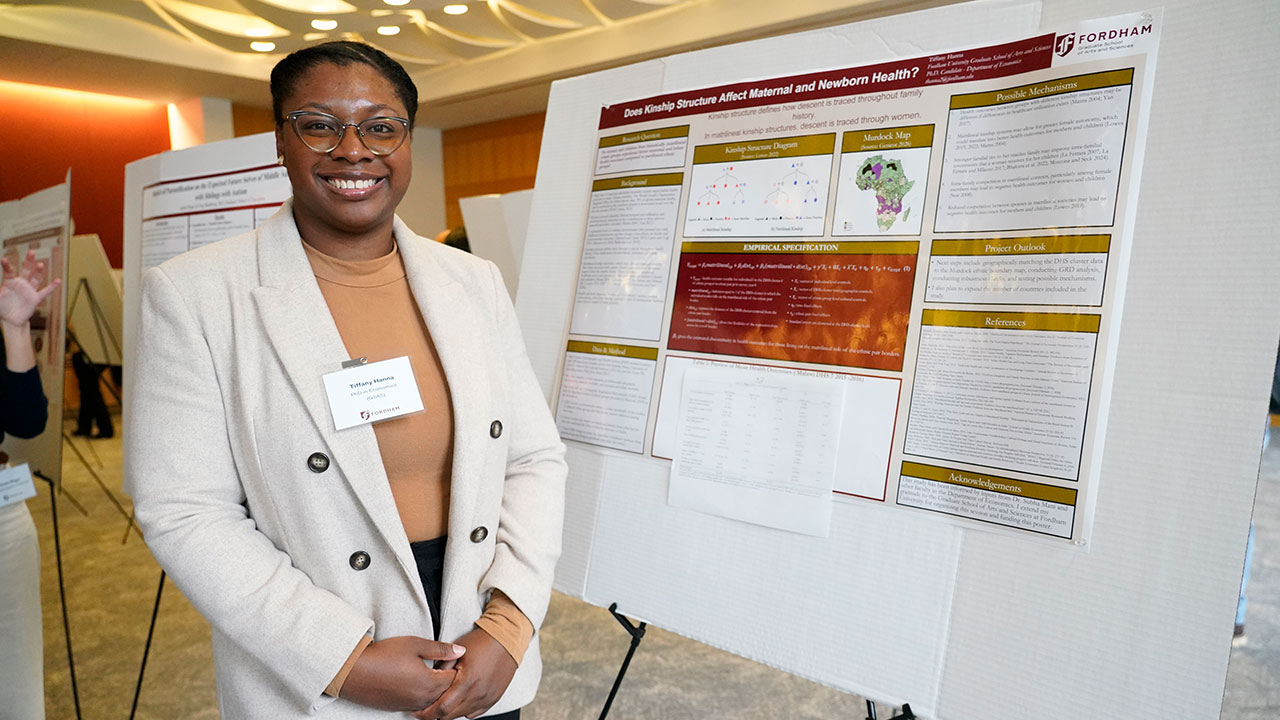
In Sub-Saharan Africa, the rules governing family life vary widely—and those differences may have profound effects on the health of mothers and children. Tiffany Hanna, a PhD candidate in economics at the Graduate School of Arts and Sciences, is investigating whether matrilineal societies, in which inheritance and family identity are traced through the mother’s line, produce better maternal and infant health outcomes than patrilineal societies.
The picture is complicated. Some research shows that women in matrilineal societies enjoy greater autonomy, experience less intimate partner violence, and receive more support from their birth families than those in patrilineal societies, all of which leads to better health for mothers and their babies. But research has also shown that cooperation between spouses can be lower in matrilineal societies, adversely affecting health outcomes.
Understanding these tensions is essential for the work of nonprofits and government agencies.
“If you’re trying to implement a policy that will lead to lower maternal and infant mortality, and you’re targeting patrilineal and matrilineal kinship groups as if they’re the same, you may not get the results you’re expecting,” Hanna said, adding that the broader lesson applies beyond Africa. “Knowing how the socioeconomic environment shapes health can help you create a more targeted policy.”
The Hidden Financial Cost of Biodiversity Loss
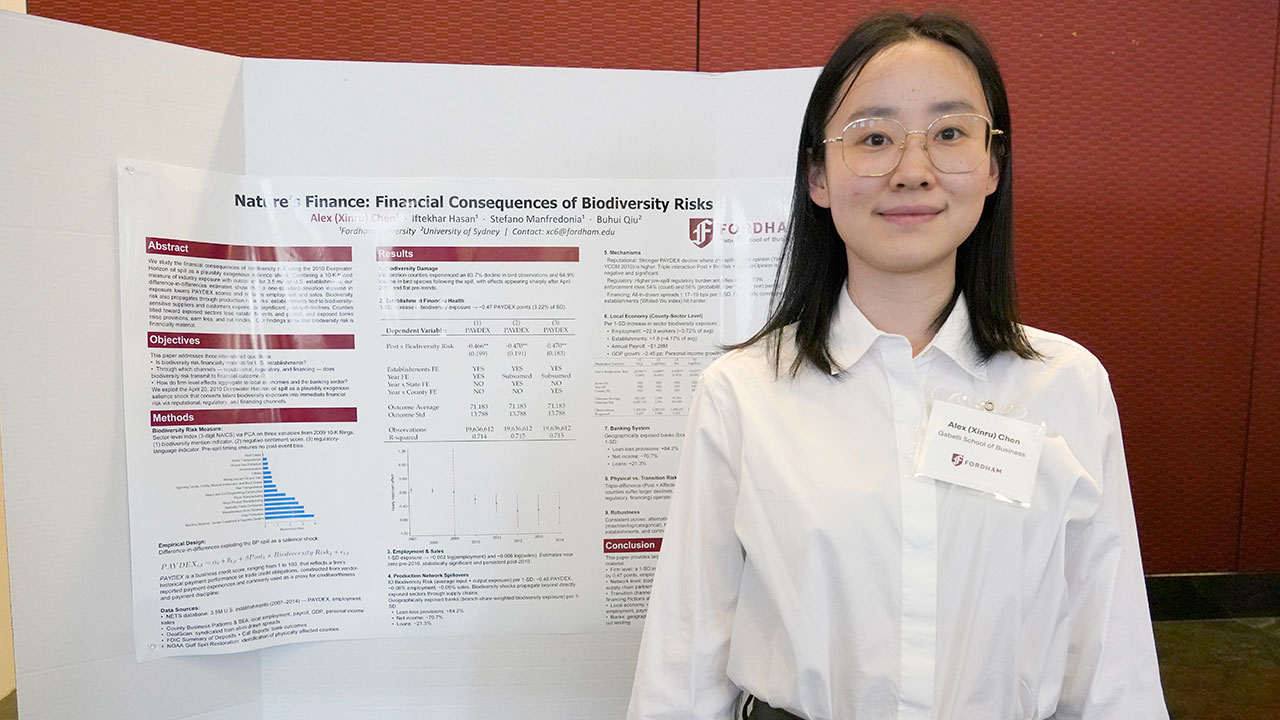
When the Deepwater Horizon oil rig exploded in 2010, releasing an estimated 210 million gallons of crude oil into the Gulf of Mexico, the environmental damage was immediate and visible. But the long-term financial consequences for businesses that depend on healthy ecosystems are still being felt—and still being measured.
Alex Chen, a PhD student in finance at the Gabelli School of Business, has been examining the economic fallout for 3.5 million U.S. businesses affected by the disaster. Her research shows how shocks to natural resources, which can result in biodiversity loss, can impair a business’s financial health, citing the example of fishermen whose main income was wiped out by the spill. In addition to immediate effects, the shock of the event can impair a firm’s ability to repay debt, damage that may not surface for years after the initial event.
“Climate risk has received significant attention because there is such an emphasis on how it impacts firms’ carbon emissions,” Chen said. “We want to show that the risk that comes from the dependence on biodiversity and natural resources should also be seriously considered.”
Rethinking How Veterans Enter Addiction Treatment
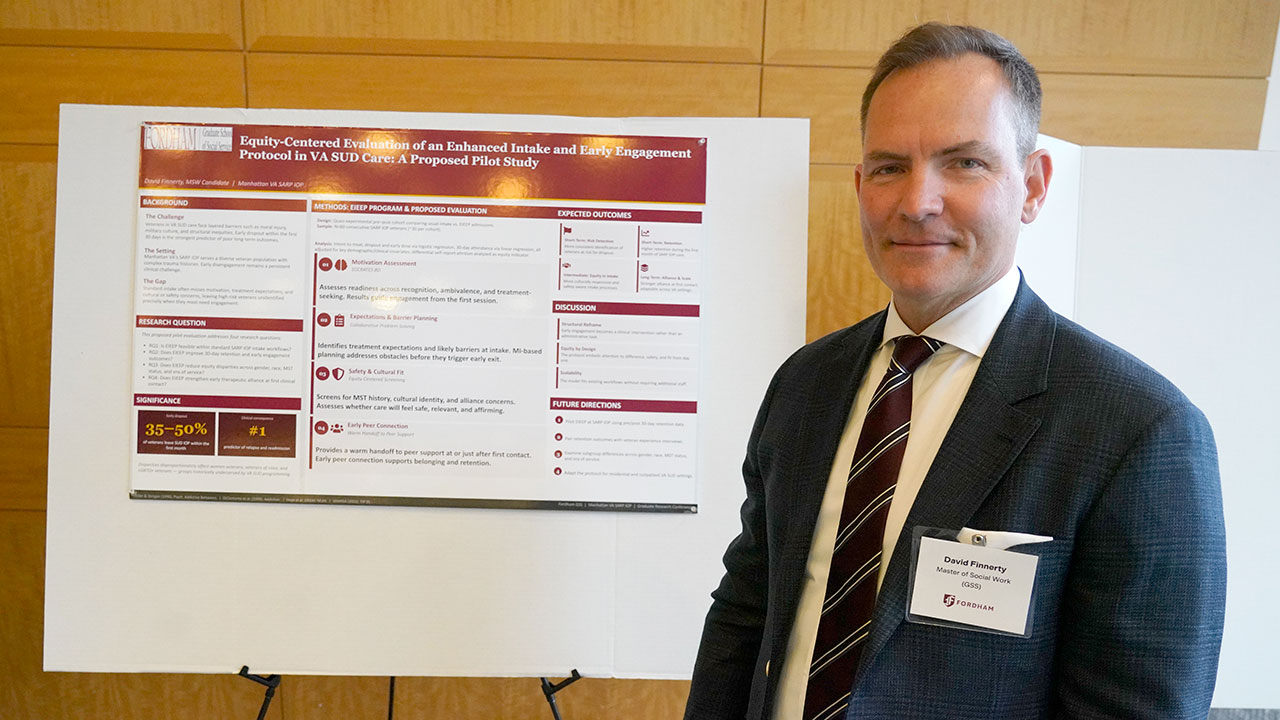
While working with veterans in an outpatient substance abuse program, MSW student David Finnerty noticed that it takes two weeks for them to receive a full clinical assessment.
This timeline was established because assessments are resource-intensive and, given that patients often drop out of treatment, they can end up going to waste.
But Finnerty hypothesized that a richer, more relational first encounter with patients can strengthen that early connection enough to make them want to stay, and therefore make the full workup worth doing sooner.
A student at the Graduate School of Social Service, Finnerty has designed a pilot study aimed at reshaping the initial intake—shifting it from a basic form to a richer conversation that includes obstacles to treatment, such as whether patients are unhoused.
“I’m hoping that time spent addressing those issues will go a long way toward getting them to stay for the full 90 days.”
Can Mindfulness Heal Moral Injury?
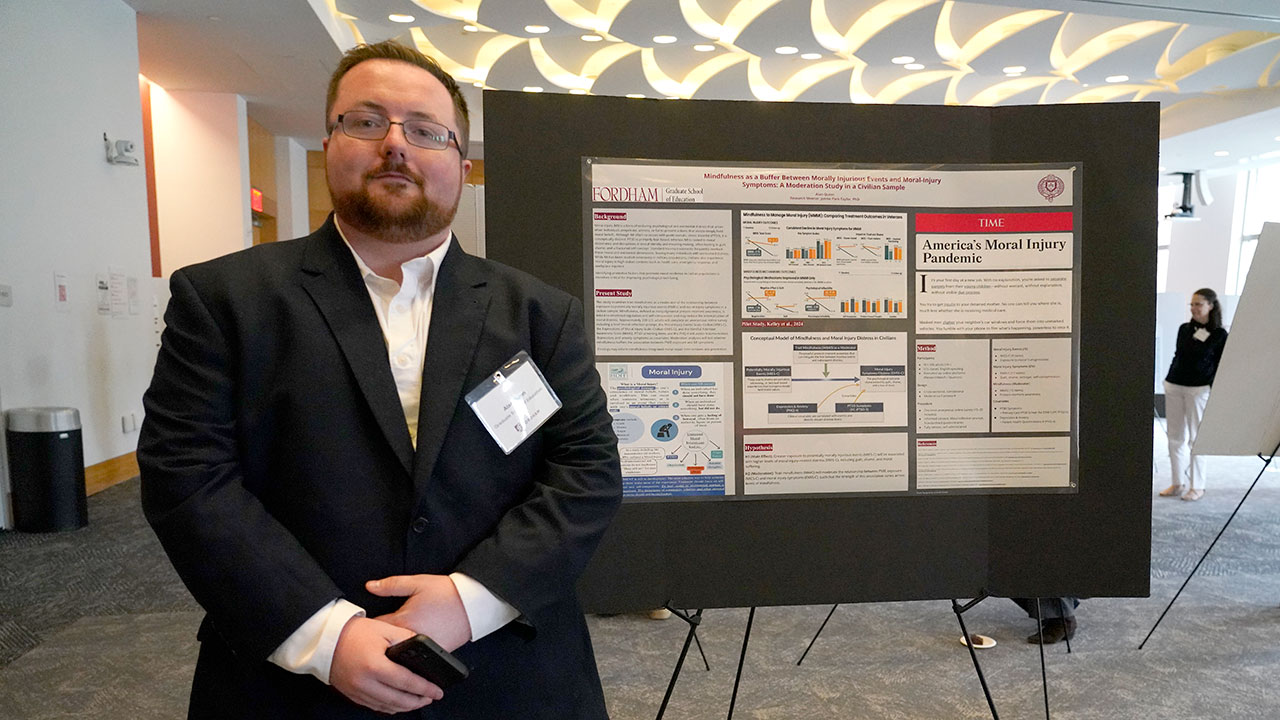
If you’ve ever felt that you betrayed your deepest values, failed someone who needed you, or were let down by an institution you trusted, you’ve experienced what psychologists call moral injury—a form of distress that shares features with PTSD but remains far less understood.
Alan Quinn, a first-year PhD student in counseling psychology at the Graduate School of Education, is researching whether mindfulness practices can help people recover from moral injury. He’s particularly focused on sharing these tactics with journalists, firefighters, and humanitarian aid workers—groups that surveys show are among the most vulnerable.
“These are people who have to make critical decisions with limited resources, and bad outcomes happen sometimes. They feel bad about it,” Quinn said. “If I can show this is effective, then we can start identifying who needs the mindfulness training the most so they can keep taking care of others, reporting important news, and putting out fires.”
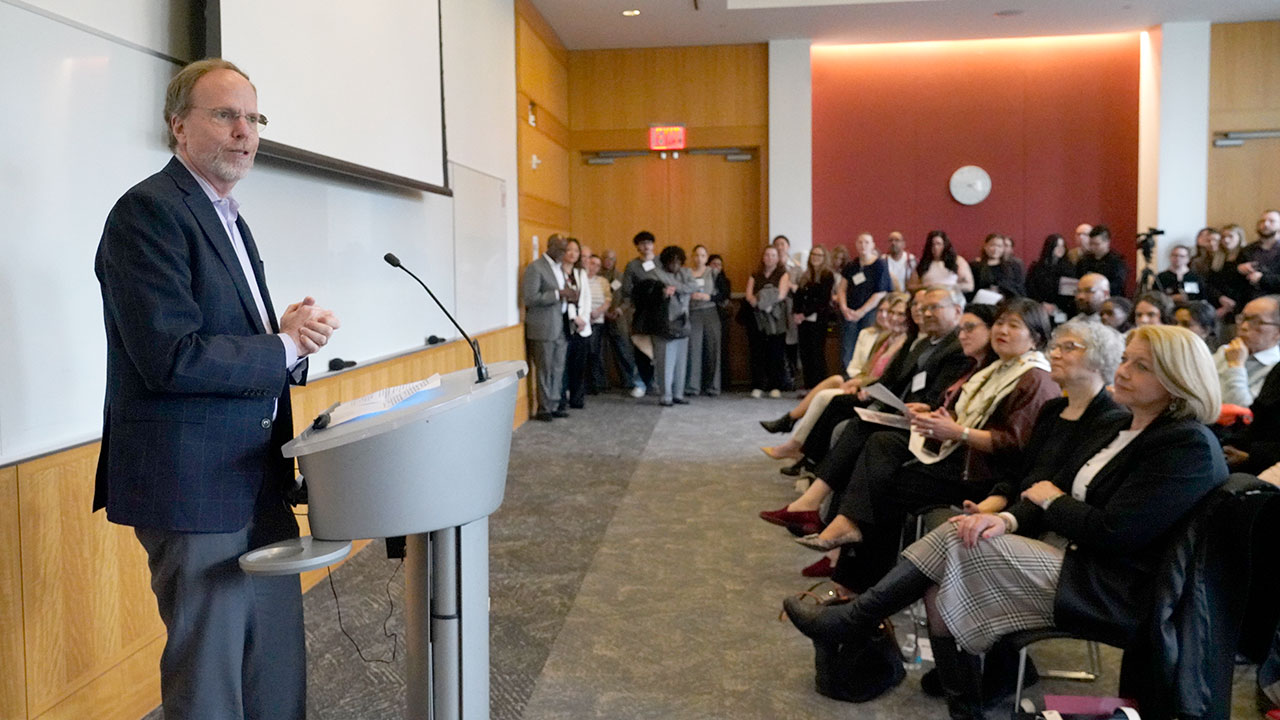
The celebration’s cross-disciplinary spirit drew praise from Dennis Jacobs, PhD, Fordham’s provost and senior vice president for academic affairs, who remembered presenting at research fairs when he was a student.
“I heard so many great questions I had never thought of before,” he said. “It enlightened my perspective on the work that I had been focused on, and also opened me up to new lines of inquiry.”