

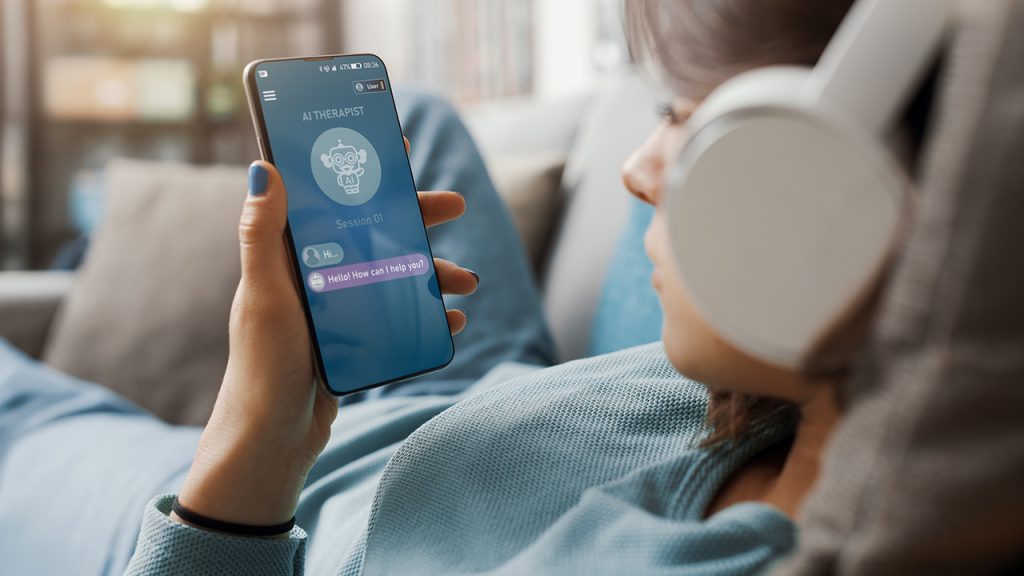
Nearly one in five college students is turning to AI for mental health reasons, and those with severe symptoms are roughly twice as likely to do so, according to a new study that illuminates the appeal of AI chatbots for those seeking support.
The study, co-authored by Fordham psychology professor Tiffany Yip, PhD, is one of many recent efforts to understand how people are using AI in deeply personal ways.
Yip noted that AI chatbots are programmed to keep people engaged “so that you stay on longer and longer,” rather than having a person-to-person conversation that may be more helpful. “They’re not meant to be mental health providers” serving vulnerable people, she said.
But she also noted that AI may provide mental health benefits, depending on someone’s needs and circumstances, showing the need for further research.
Seeking Help for Depression, Anxiety
Published last month in the Journal of Affective Disorders, the study focused on 675 students from an art and design school and a large public university. It found 18% had used AI for mental health purposes, and that the rates were roughly double among students with moderate or severe depression, severe anxiety, or suicidality. Asian students were also more likely to seek support from AI.
The study focused on college students because they’re quick to use new technologies and also have higher rates of mental health troubles, Yip said. The paper found that using AI for other things, like completing schoolwork or planning a trip, is one of the strongest predictors that someone will ask it about mental health.
Students with emotional issues may become fixated on AI, since it’s designed to be affirming and agreeable, rather than seeking the more thoughtful and challenging insights a human therapist can offer, she said.
Therapists “don’t always tell you what you want to hear,” Yip said, adding that having to wait for that weekly meeting can teach people to deal with their feelings on their own.
The study recommends measures like crisis detection tools in AI chatbots as well as educational efforts targeted to those who may turn to AI for mental health support.
How AI Is Helpful
The study notes past research on AI’s mental health benefits—like empowering people to find information about how to handle a problem or understand themselves. And Yip co-authored another recent study showing college students are well aware that humans would offer them better support.
The survey of 92 Fordham undergraduate students, published in Computers in Human Behavior: Artificial Humans, found that they rated AI tools inferior to family, friends, and mental health professionals in offering support.
But even while they rated AI as inferior, students did give it higher marks if their families weren’t as supportive, she noted. “Even our closest human relationships have points of stress, disagreement,” and AI can be appealing for offering immediate, nonjudgmental feedback, she said.
Human Ties Come First
The study from the Journal of Affective Disorders points to past research showing that AI tools, by offering anonymity, can be useful for those who face cultural barriers to seeking mental health support.
An important question for future research is whether AI is replacing people’s human interactions or supplementing them, Yip said.
Young people using it to replace human relationships “might cause problems for … how they engage with their peers or with teachers or other adults,” she said. “If they don’t know how to have human relationships … with the friction and the disagreement and the not-constant availability, that could have implications for how they develop relationships in the real world.”
Yip co-authored both studies with Cindy H. Liu, PhD, of Harvard Medical School, and researchers at the Mass General Brigham health care system. The Journal of Affective Disorders study was also co-authored by researchers at Vanderbilt University and Indiana University; the one from Computers in Human Behavior was also co-authored by researchers at the University of Notre Dame.
