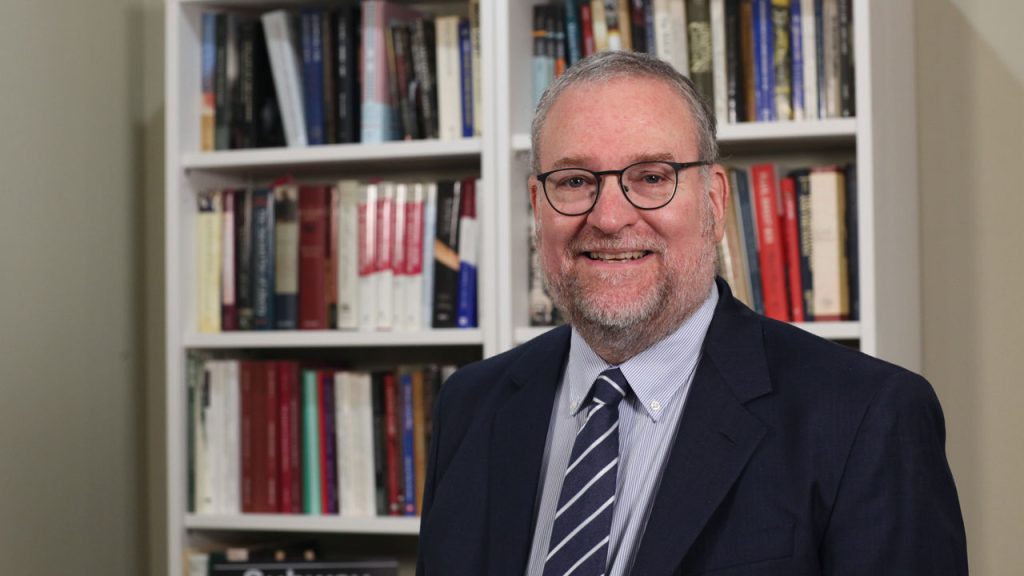
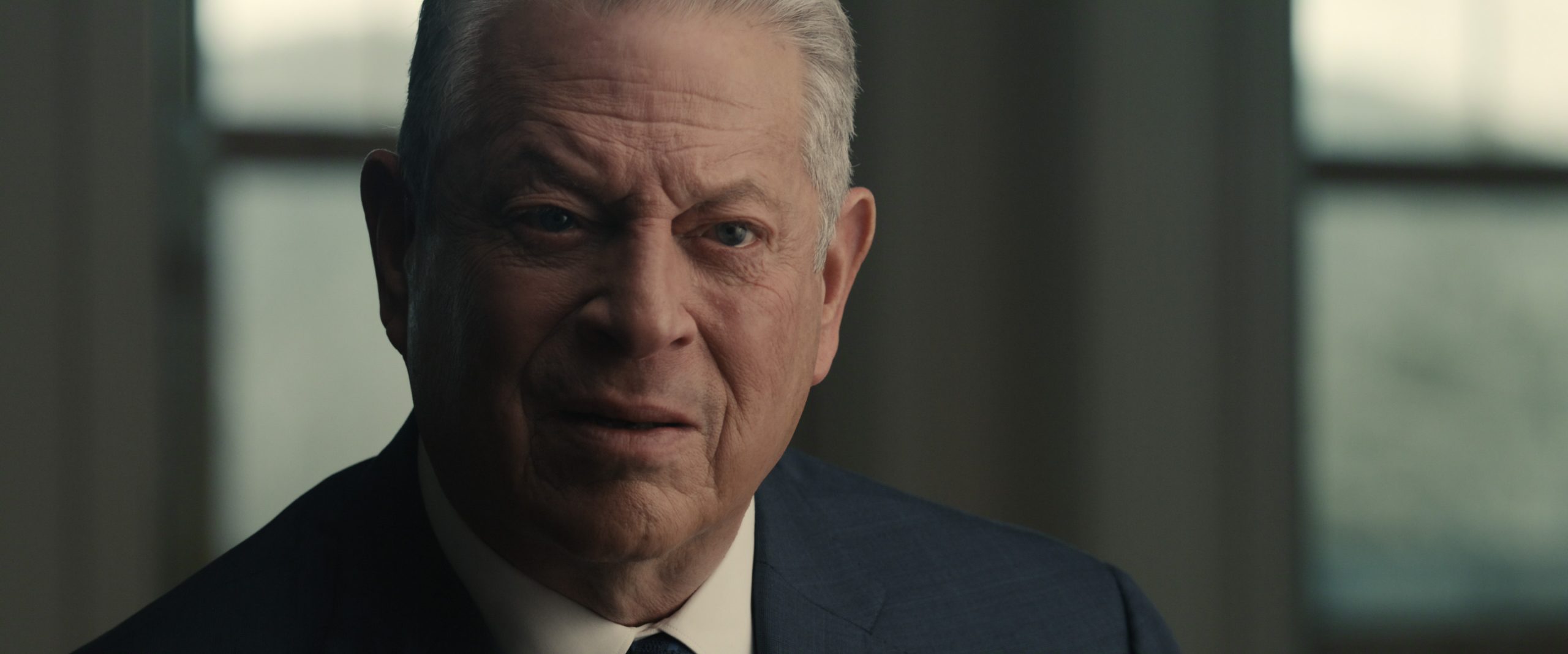
In honor of America’s 250th birthday, Netflix is examining the history of the nation’s founding with a five-part documentary that began streaming on June 24. Co-produced by Tom Hanks, The American Experiment stars Martin Sheen and includes interviews with bipartisan lawmakers, former vice presidents, cabinet officials, and leading historians—including one scholar from Fordham: Second Amendment expert Saul Cornell, PhD.
Cornell said he was struck by the breadth and nuance the filmmakers brought to the subject. “They were interested in really dealing with the complexity of the American founding experience,” he said.
The series covers the period from the American Revolution through the drafting of the Constitution and George Washington’s presidency, illuminating how debates on Founding-era issues, such as gun legislation, still shape 21st-century America.
“Unlike a lot of historical debates, this one is highly relevant to a major issue in American public life that is deeply divisive,” said Cornell, who serves as the Paul and Diane Guenther Chair in American History at Fordham. “You can’t pick up the newspaper without reading about another horrific shooting. It’s much more pressing than a lot of things that historians typically research.”
A Need for Constitutional Scholars
Cornell has filed amicus briefs in four Supreme Court cases that challenged gun regulations by claiming that they are violations of the Second Amendment. He has also authored dozens of scholarly articles and books on the subject and provided commentary for news articles, podcasts, and documentary films beyond the Netflix series.
“The Supreme Court has made history so much more central to the way they resolve issues,” said Cornell. “So there’s been a general recognition that historians need to leave the ivory tower and take on roles as public intellectuals.”
Fact-Checking the Second Amendment Debate
Since the 1990s, Cornell has been digging into the complexities of Founding-era gun culture and regulations, firearm technology, and 18th-century linguistics to contextualize the meaning of the Second Amendment. It reads: “A well-regulated militia, being necessary to the security of a free state, the right of the people to keep and bear arms, shall not be infringed.”
“The original understanding,” said Cornell, “is you have this right because you have this obligation. That’s a very 18th-century view of rights.” Serving in the militia was a civic duty and the government wanted to protect the use of suitable firearms for this purpose, Cornell explained.
He also makes clear that a common-law right to self-defense did exist in the 18th century, but it was entirely separate from the Second Amendment.
Cornell said the late Supreme Court Justice Antonin Scalia conflated these two traditions in his majority opinion in District of Columbia v. Heller. In this landmark 2008 case, the court ruled that the Second Amendment protects an individual’s right to bear arms for self-defense, unconnected to militia service. It was the first decision to interpret the Second Amendment through the lens of originalism, a legal philosophy that purports to reflect the Constitution’s original meaning, and is now the dominant methodology of the Supreme Court.
But Cornell argues that originalists get the historical facts all wrong, because they haven’t been trained to do the arduous work of actual historians.
“Since that decision, I’ve been chronicling the many historical inaccuracies and distortions that are part of the Heller decision,” he said.
His most recent article in the May 16 issue of Duke Law Journal Online pokes new holes in Heller and subsequent Second Amendment cases such as Bruen that struck down New York’s century-old concealed carry law in 2022. In the article, he cites recent research on gun use that wasn’t available at the time of Heller.
He has also been watching how the Supreme Court is tying the past to two present cases contesting gun laws. The court recently ruled in favor of a cannabis-using gun owner in U.S. v. Hemani, citing the prevalence of drinking among founding-era gun owners. In its Wolford v. Lopez decision on June 25, the court struck down a Hawaii state law that prohibits carrying guns on private property open to the public, such as grocery stores, without permission.
Major Awards for Research
Cornell’s niche as a legal historian, and not a lawyer or law professor, is unique: Among the top 40 most-cited legal history scholars in America, he is the only one who is not a law school faculty member.
This year, two historical organizations honored the ways in which Cornell has applied his scholarship on Founding-era gun culture and Constitutional history to inform journalists, jurists, and prosecutors. The American Historical Association awarded him the Lepage Center Award for Historical Work in the Public Interest for influencing precedent-setting Supreme Court cases on gun safety through his amicus briefs, expert witness reports, and a historical gun database he helped conceive of that is now maintained by Duke Law School. The Organization of American Historians also recognized him with an award for his significant contributions to U.S. public policy through historical research.
“Most people get drawn to the Second Amendment because of their passionate views about guns or gun violence. I came to it because I have very passionate views about history and how it should be respected,” said Cornell.