

Fordham Magazine
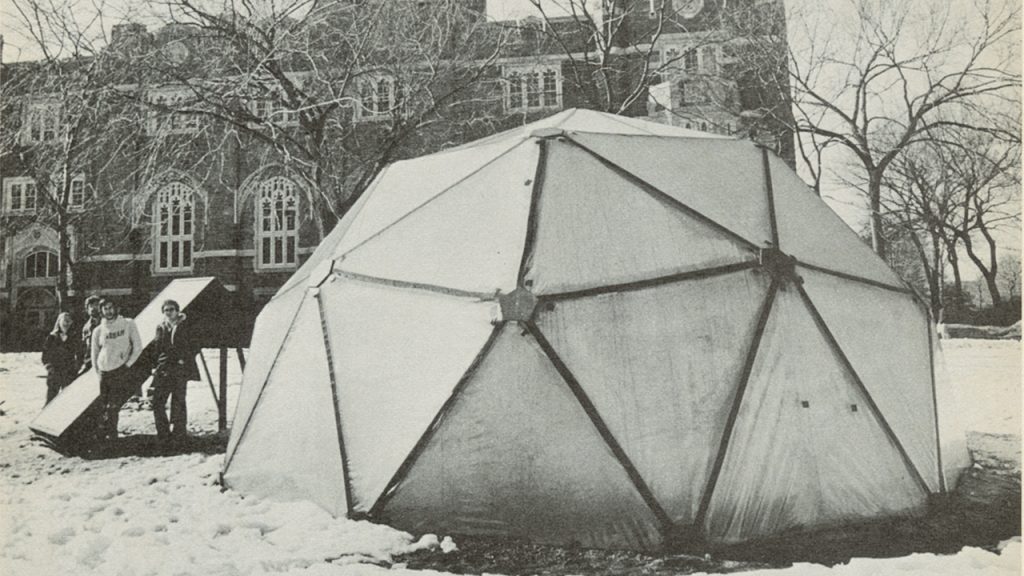
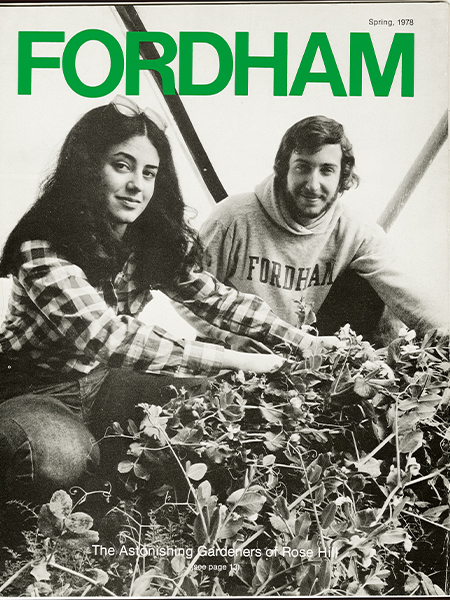
The coverline of the spring 1978 issue of Fordham Magazine—“The Astonishing Gardeners of Rose Hill”—might make you picture a grounds crew tending perennial borders or students growing herbs on a dorm windowsill. But what those students were building, a solar-heated geodesic dome filled with vegetable beds and two tanks full of tilapia, was more than a gardening project. It was an ambitious exercise in sustainable infrastructure.
Called FUSES, the Fordham Urban Solar EcoSystem was inspired by the work of Buckminster Fuller, the futurist architect who helped popularize geodesic domes. Students John Fontanetta ’79; Jim McGurk ’79, ’82 PhD; and Donald Tomaskovic-Devey ’79 started the project as juniors and were joined by Donald’s wife, Barbara Ann Tomaskovic-Devey, who was a student at Manhattanville College. The guys had met as first-year Presidential Scholars in Martyrs’ Court.
“We built ourselves a big garden box in the window of our dorm room, and we grew green beans in it,” Donald recalls. “At some point the RA came, thinking it was pot, but we survived that test.”
When Donald and Barbara Ann moved to an apartment on Bathgate Avenue the next year, they began growing an indoor hydroponic garden, and the group simultaneously became interested in solar energy.
“We decided we could build something that could be useful,” Donald says. “We wanted it to be low-cost and something that regular people could put together, something that would make sense in community gardens.”
A Design for the Times
As the students began work on the project, they kept three fundamental questions in mind: Is a geodesic greenhouse practical? Is it energy efficient? Is it easy to use? To prove the answers were “yes,” they had to design a dome that could survive a New York winter while remaining affordable to build and maintain.
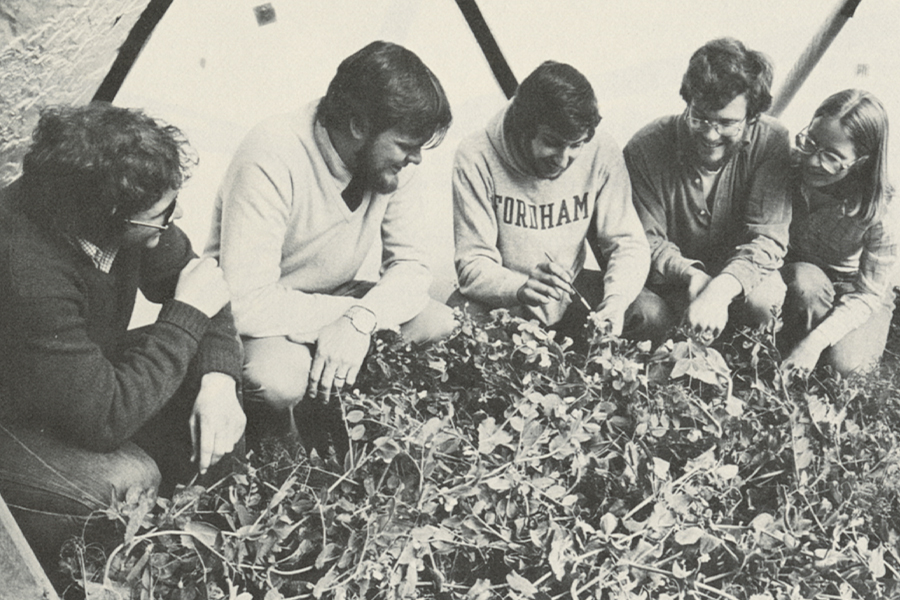
Fontanetta focused on the physics of the structure, while McGurk raised the fish and the Tomaskovic-Deveys served as lead gardeners. Biology professor George Dale and sociology professor Gerald Shattuck advised the group, which earned financial and moral support across the University, including from President James C. Finlay, SJ.
“That was a real tribute to Fordham’s willingness to empower its undergraduates,” Fontanetta says. “Fordham’s foresight, support, and trust were crucial to our success. It was just a great place to learn and grow.”
The team designed an 11-foot-tall, 23-foot-diameter dome and constructed it on a lawn behind Keating Hall. Inside, they grew tomatoes, peppers, spinach, melons, and soybeans while raising tilapia in two 750-gallon tanks. They used the French intensive method of gardening, which emphasizes close-spaced planting. Their soil was a nutrient-rich mix that included fertilizer from local animals—the tilapia, elephants from the neighboring Bronx Zoo, and even the ram mascot students kept on campus at the time.
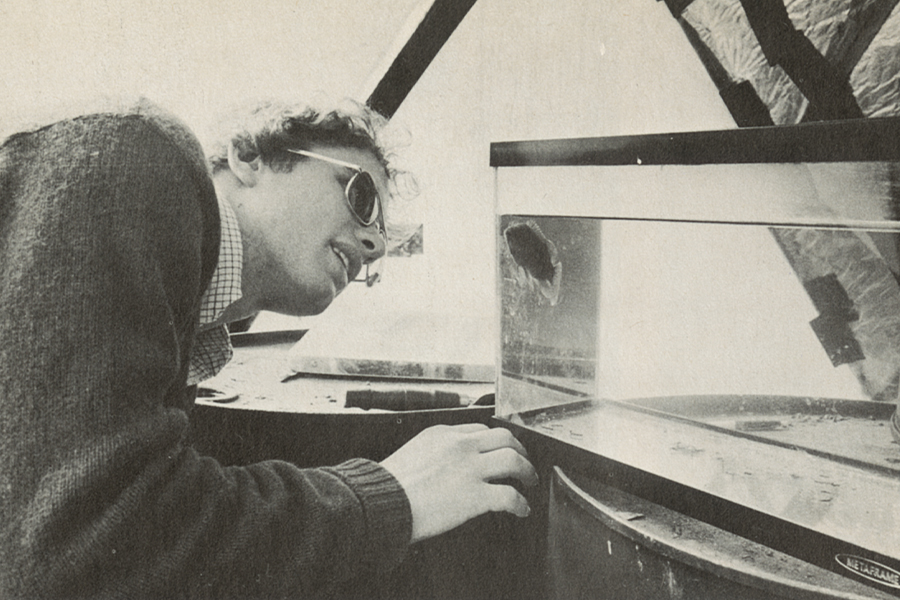
The design was staggeringly efficient: Daytime temperatures reached 90 degrees in winter and 110 degrees in summer, fueled by the ample Bronx sunlight and more than 1,100 gallons of water that acted as a heat sink—absorbing solar energy through the dome’s many panels by day and radiating it within the structure at night. In just 65 square feet, the students produced up to $25 of fresh vegetables per month (that’s a $125 value today, adjusted for inflation). And by using praying mantises and ladybugs for organic pest control while keeping construction costs under $1,000 (about $5,000 today), they proved that a self-contained, sustainable ecosystem was well within reach of average citizens.
A ‘Truly Innovative’ Legacy
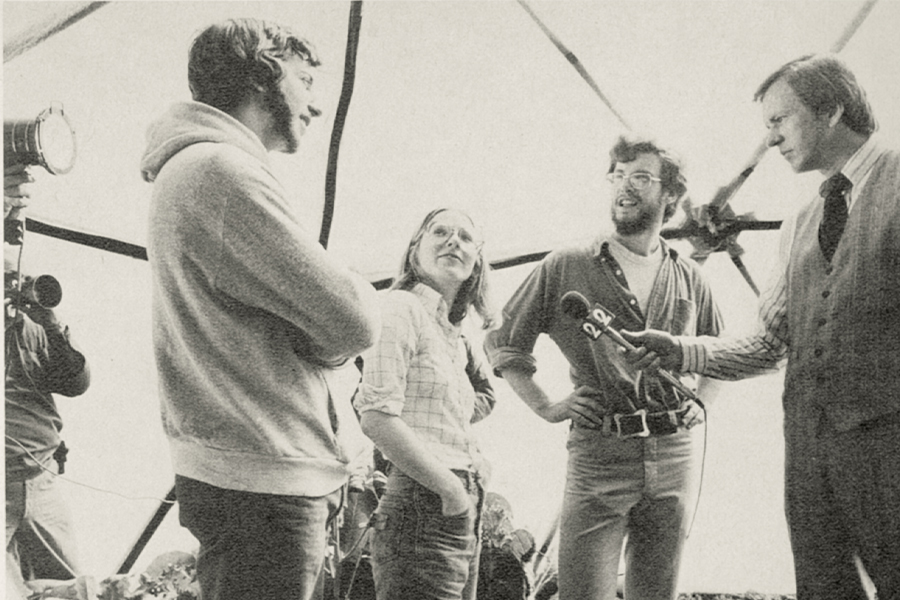
The students gained attention beyond campus following the project’s launch at Rose Hill. The National Science Foundation awarded them a grant to expand their research, and there was media coverage in The New York Times, New York magazine (“Once you’re inside, it’s the Amazon Basin! The humidity! The lushness!”), and on CBS-TV News.
Using the same design as the Fordham prototype, the team set up four more geodesic domes in New York City, as well as one on the National Mall in Washington, D.C. That dome was part of an exhibition for the Alternative Community Technology Convention in 1979—a year in which upheaval in Iran led to rising oil prices, underscoring the importance of alternative energy sources.
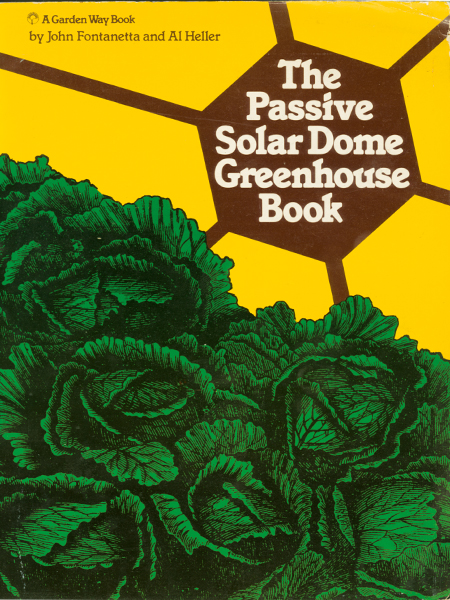
Al Heller ’77 MBA, author of the Fordham Magazine article, helped popularize the team’s work in his role as assistant director of university relations at the time. He also convinced Fontanetta that they could turn the project into a kind of how-to manual, and in 1979, Green Way Publishing released The Passive Solar Dome Greenhouse Book, coauthored by Fontanetta and Heller. In a letter to the publisher, Buckminster Fuller wrote that the book was “magnificently done … a lucid and inspiring manual centrally germane to humanity’s survival and continuance on our planet.”
After graduating in 1979, the Fordham trio all went on to graduate school and launched successful careers—Fontanetta as a medical doctor who is now chair of emergency medicine at Clara Maass Medical Center; McGurk as a neuroscientist; and Tomaskovic-Devey as a sociologist who became department chair at the University of Massachusetts Amherst, where Barbara Ann also taught and directed the honors program in sociology.
For Heller, the project was a unique blend of creativity and utility that is as inspiring today as it was nearly 50 years ago.
“It wasn’t just a science project,” Heller says. “It was a science project with a real purpose behind it. People could better control their own food affordability. There was a real return on investment. The dome was a perfect structure. It worked. It was truly innovative.”
