

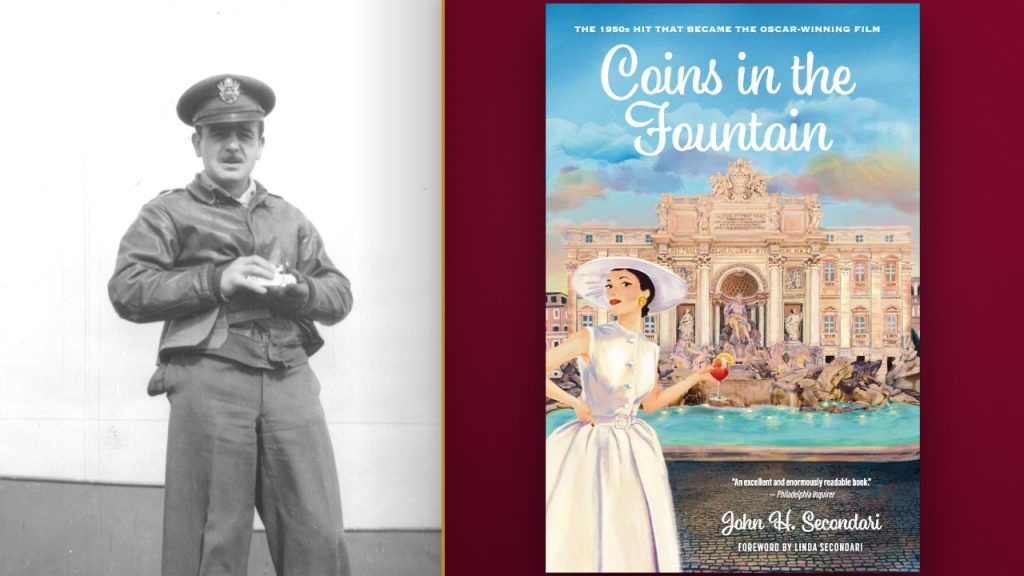
When Fordham graduate John H. Secondari ’39 published Coins in the Fountain in 1952, he sparked a mid-century pop classic and now-universal tradition.
The novel, about American ex-pats living and loving in postwar Italy, was adapted into an Oscar-winning 1954 film, and Frank Sinatra’s rendition of the title song—“Three Coins in the Fountain”—turned Rome’s Trevi Fountain into a bucket-list destination.
The book was just part of Secondari’s short but remarkable life.
After graduating from Fordham, he led a U.S. Army tank company during World War II and established the ABC News bureau in Rome. Back in the States, he became ABC’s founding Washington bureau chief and White House correspondent and a Peabody Award–winning documentary producer. By the time he died in 1975 at age 55, his once-popular novel was little more than a footnote in his obituaries.
Now, Secondari’s daughter Linda—whose own daughter is a student at Fordham—is giving Coins in the Fountain new life. She reissued the book this spring with a personal foreword and a batch of her family’s retro Italian cocktail and snack recipes.
Fordham Magazine caught up with her to discuss the novel and her father’s life and legacy.
Your father died when you were 9 years old. What was your relationship to his work growing up, and how did it feel to bring Coins in the Fountain back into circulation?
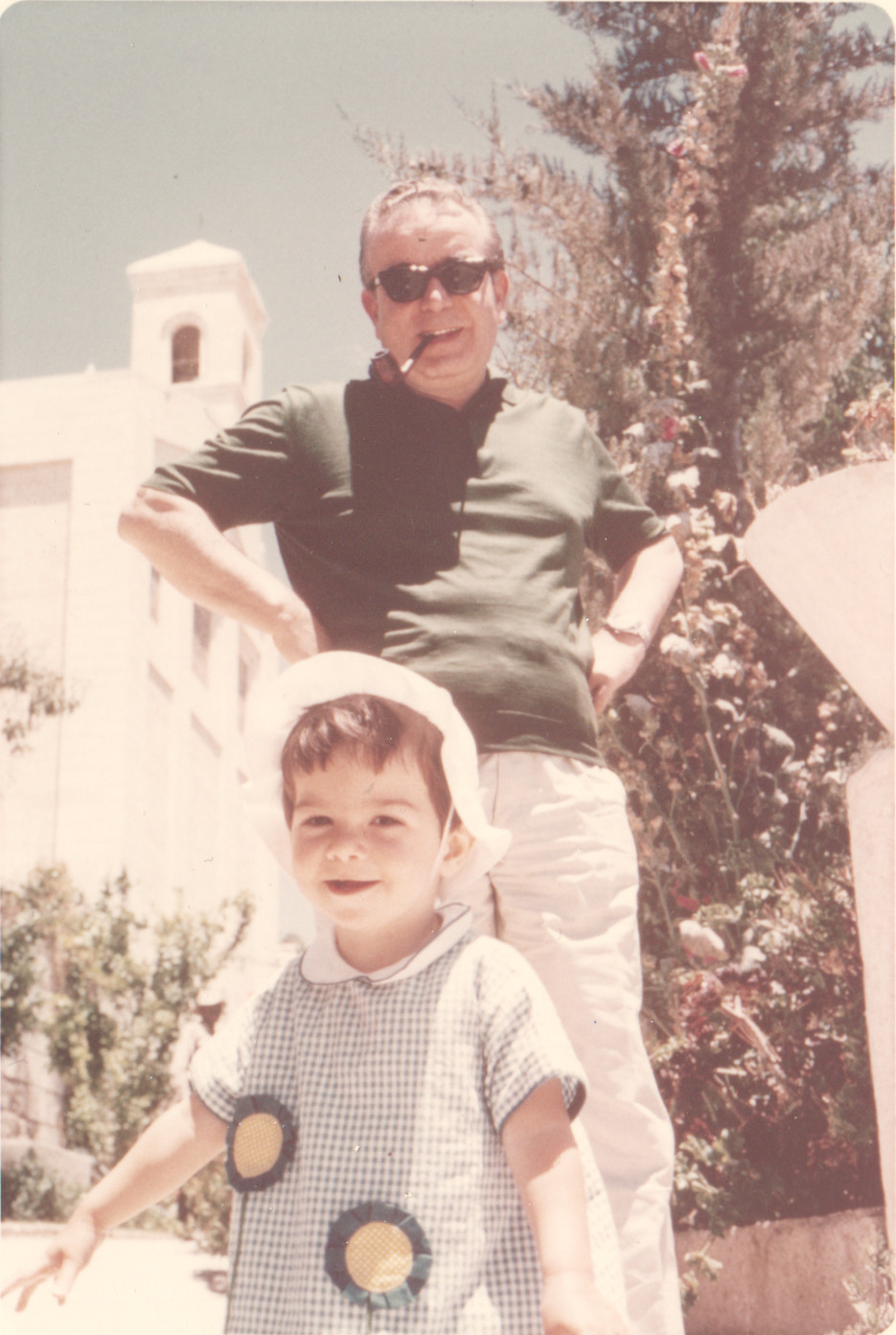
My father and my mother were news producers together; that’s how they met. So my earliest understanding of my father, his work—and by extension, my mother’s work—was really in television, being on set with them, seeing them directing crews and actors. It was all very inspiring for a little girl.
My father actually published three books, and those came into my understanding after he died, Coins in the Fountain especially. Sometimes when we’d hear the Frank Sinatra song, and we’d see coins in any body of water, my mom would say, “People didn’t used to throw coins in random fountains. That’s from the movie, and that’s from your dad.” In the past 10 years, with self-publishing becoming so much more sophisticated, I realized that I could actually put Daddy’s book back in print. It took me eight years, but it feels, you know, just so amazing that I finally have a book right here, finally have it in my hands, and I’m pretty proud of it.
In the foreword, you mention that the production process was a way of being in conversation with your father. And the protagonist, Frank Bertin, seems to share a lot with him. What did working through the manuscript reveal to you about the man behind the words?
That was one of the unexpected benefits of having launched into this process: understanding my dad as a man who really did live the story of Coins in the Fountain. He fought in World War II and was then stationed in Austria as a sort of provisional mayor of an area after the war because there was no government. Then he went to Rome to work on the Marshall Plan for a while and later established the ABC News Bureau there and was the news chief, so he was very much Frank Bertin. I do think he had that sense of conflict, of feeling like he needed to come back home to the States. I know he felt a great connection to Italy, and I’m sure a lot of Frank’s struggle was his own.
As you conducted research and prepared for this reissue, you discovered that Lady Bird Johnson had written about you in her diaries. Can you tell us more about that?
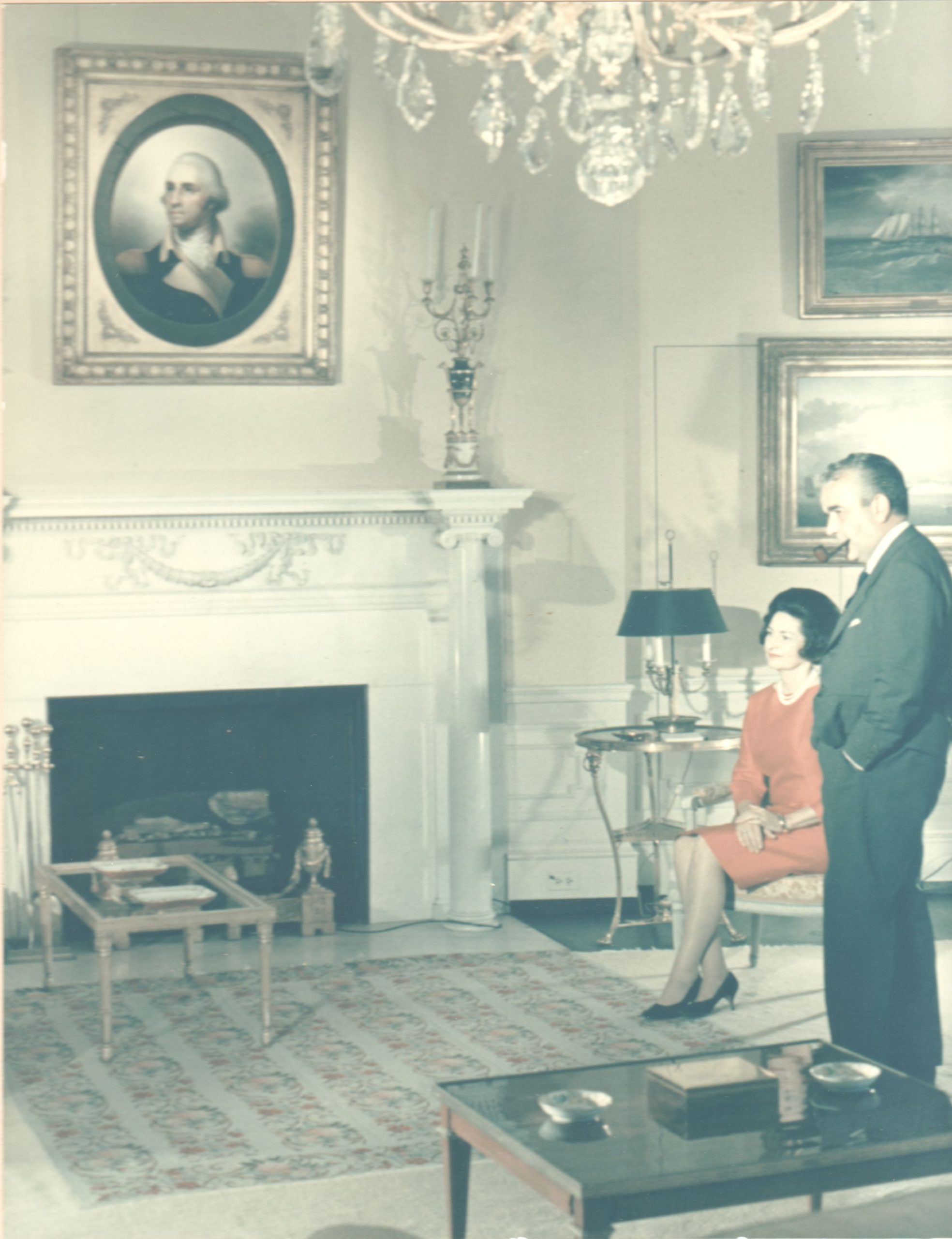
We’ve always had a photo of my father with Lady Bird Johnson at the White House, and I know my parents did a documentary with Lady Bird. He and my mother are mentioned extensively in her diaries, which are in the LBJ library and have been digitized. I discovered that she even mentioned me in her diaries. I was three months old when they were filming, and apparently my nanny brought me to the White House so that my parents could see me. I mean, I’m mentioned just as “the Secondari baby,” but I’m like, that’s me! I’m the Secondari baby!
To find that documented in a presidential archive, when so much of my father’s world exists only in my memory and in the pages of his books, that felt like an unexpected gift. It’s one of the reasons the reissue mattered so much to me: I kept discovering my father in places I never thought to look.
Is there a character or moment in the book you find yourself returning to?
Yes, I love Bruna. She feels so real that I’ve always wondered if she was based on someone my father actually knew. Possibly Rita Hume, his first wife, with whom he lived in Rome.
The passage I return to most is on page 45, where my father describes la passeggiata—the after-dinner evening stroll that to Romans is an end-of-day ritual. It’s a brief moment in the book, but it reveals so much about his intimate knowledge of life in Rome and his ability to translate it for the reader. You can feel the cobblestones still warm underfoot, the day’s heat finally broken, a gelato melting in your hand, your fellow Romans well-dressed and unhurried and deep in conversation. Every time I read it, I want to book a flight! But more than its beauty, that passage reveals something about my father as a writer: He wasn’t an observer of Roman life; he belonged to it. And he wanted his readers to belong to it too, if only for a moment.
It’s worth remembering that in the 1950s, Italian culture was not embedded in the American psyche the way it is today. You didn’t find mozzarella and parmigiano in every grocery store. Italy felt exotic, distant, and other. It was books and films of that era—Three Coins in the Fountain, Roman Holiday, and yes, my father’s novel—that made Italy a place Americans longed to visit and a culture they came to love. I like to think that’s part of his legacy, too.
What do you hope readers, especially those of us encountering the work for the first time, take away from the book?
I hope it’s an enjoyable story. I mean, at the end of the day, I think fiction is meant to allow us to kind of transport ourselves to a different time, place, whatever, and experience life through someone else’s eyes. If it offers an opportunity to think about who the author was, or to think more deeply about the time, then that’s another plus. But it should just be a good read.
You mentioned that the reissue took eight years and that the emotional component was something you really underestimated. What came up for you, and what did it take to see it through?
I absolutely underestimated the effort involved, which is ironic given that I’ve spent more than 30 years making books, and I work with independent authors on exactly this kind of project. But this was on another level entirely. The production alone was staggering. I spent two years going line by line, comparing the manuscript to the original, cleaning the files, before it was ready for a professional proofreader. I did all of this in what I laughingly call “my spare time.”
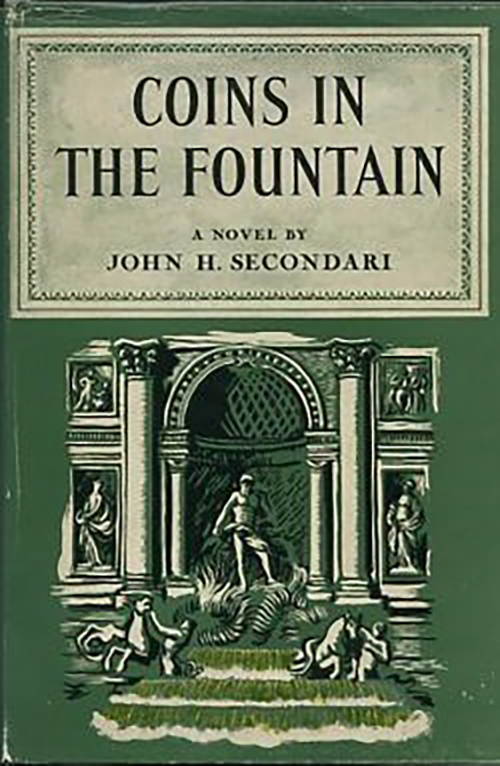
And then there was the design. Working on the text was genuinely fun, but the cover was a different level of pressure. I had so many voices in my head: the publishing professional who knew that pitching Coins as a romantic comedy was the most commercially viable path, the daughter who knew her father would have wanted something more literary, and the art school graduate who had been designing this cover in her imagination for decades. Reconciling all of that took time.
What kept me going was the weight of what it meant. Every decision carried an emotional charge because I was representing my father’s legacy. I wanted to do it right. I think what I ultimately made does that.
This interview has been edited and condensed.
