

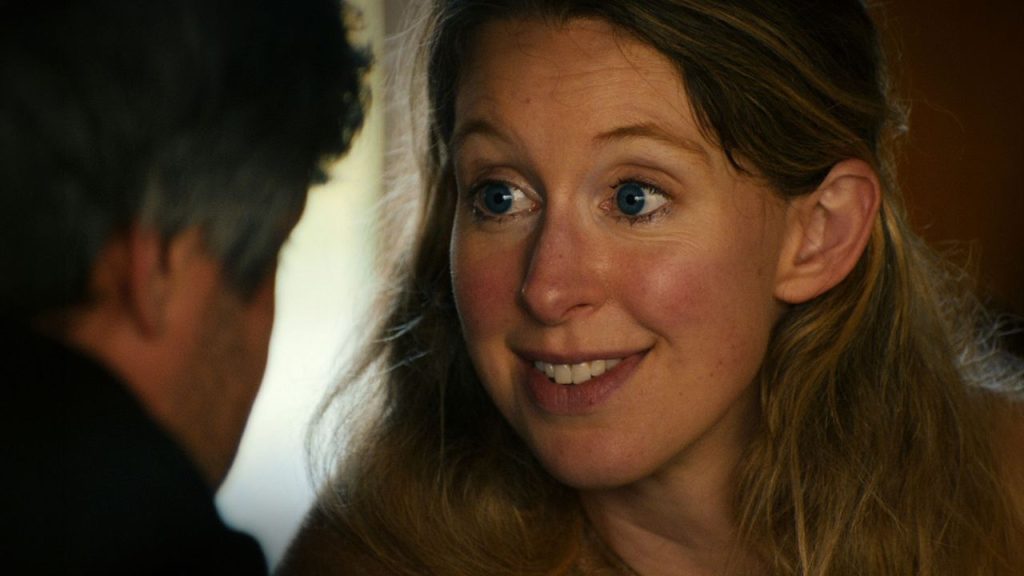
Elizabeth Holmes is currently serving a 10-year sentence for deceiving investors in her fraudulent blood-testing startup Theranos. But her mystifying behavior in the new documentary You Can See Everything has spurred moviegoers to relitigate her case. Some walk away from the documentary believing they have witnessed a neurodivergent woman wrongly convicted. Others see a psychopath who is indifferent to the harm she caused. And still more see a master manipulator who facilitated this film to clear her name. So which is it?
“I would never diagnose her based on a documentary—that would be inappropriate,” said psychology professor Barry Rosenfeld, PhD. But Rosenfeld, who has more than 30 years of experience as a forensic and clinical psychologist, believes Holmes is behind door number three.
“I think she is exceptionally manipulative,” he said after watching the film. “I didn’t buy her story for a second.”
Using the Psychopath Checklist on Holmes
There is no formal diagnosis for psychopathy—or sociopathy—in the Diagnostic and Statistical Manual of Mental Disorders (DSM). Both refer to traits that overlap with antisocial personality disorder, which is defined in the DSM as a pervasive pattern of disregard for and violation of the rights of others.
“People make a big distinction out of the different terms, but sociopath, psychopath, antisocial personality—they’re really synonyms for the same underlying idea,” said Rosenfeld.
In his work, Rosenfeld, together with Fordham doctoral students, uses a well-established tool called the Psychopathy Checklist to conduct violence risk assessments on individuals served by the Fordham Community Mental Health Clinic, which provides treatment services and discounted forensic evaluation services for pro bono firms in criminal cases.
Holmes seems to possess a handful of traits on the 20-item checklist, said Rosenfeld, such as being manipulative and callous.
She also exhibits an unusually low level of anxiety—another psychopathic trait.
“Many people would find it really scary to have a camera crew in your house in the weeks leading up to your incarceration. But she’s calm and cool as a cucumber.”
But Holmes lacks many of psychopathy’s behavioral hallmarks such as juvenile delinquency, impulsivity, varied criminal activity, and pathological lying.
She’s not indiscriminately fabricating stories because she can’t help it, Rosenfeld explained. Instead, “her lying seems very goal-directed,” he said.
Fact-Checking the Psychopathic Stare
Rosenfeld also doesn’t buy into the so-called “psychopathic stare” idea that body language experts say Holmes exhibited. In one of the documentary’s most striking moments, Holmes asks the comedic co-director and on-screen interviewer Nathan Fielder, “Why would I deceive you?” The line has gone viral on social media, late-night TV, and even at the New York City Marathon, where spectators held signs such as, “You’re almost there. Why would I deceive you?”) Part of what makes the line so ripe for parody is her wide-eyed gaze when she delivers it.
“As somebody who has seen and evaluated countless psychopaths, I don’t know what a psychopath stare is—there’s no such thing,” said Rosenfeld.
Ruling Out Neurodivergence
Numerous scenes in the film suggest that Holmes misses key social cues and misconstrues obvious statements—signs that often indicate neurodivergent behavior. But Rosenfeld believes that is by design. When she negotiated a $140 million deal with Walgreens to use her blood testing devices in their stores, he points out, there was no miscommunication then. “All of the miscommunications seemed to fall in her favor—that to me is somebody who’s a really master manipulator.”
Rosenfeld believes she and her husband saw the documentary as an opportunity to present her as being on the autism spectrum. “I just don’t think there’s anything in her history that indicates neurodivergence.”
A Con Artist at Heart
Manipulation and deceit are also elements of narcissism—and Rosenfeld believes Holmes is probably somewhere on the narcissistic personality disorder spectrum.
“She’s exploitative. She’s not particularly concerned with other people and her effects on others.” To avoid spending a decade away from her children, he points out, she could have accepted a plea deal to shorten her sentence, but chose not to.
To focus on a more familiar term, he said Holmes exhibits behavior similar to many other con artists. But he noted one caveat: “We’re used to seeing this behavior more in men,” he said. “You don’t see it as much in women.”
