

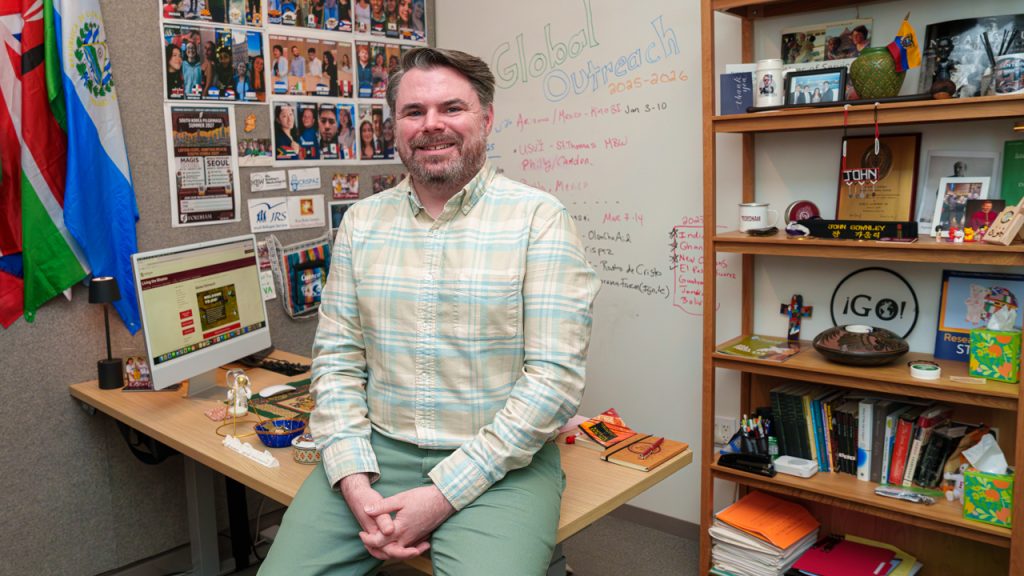
During his 15 years at Fordham, John Gownley has guided students, directed global service trips, and shepherded hundreds of couples through their wedding day at the University Church. But the clearest evidence of his impact isn’t on a résumé—it’s in his office, where each object tells a story about the communities he’s served and the values that shape his work.
A ‘Global Family’ of Flags
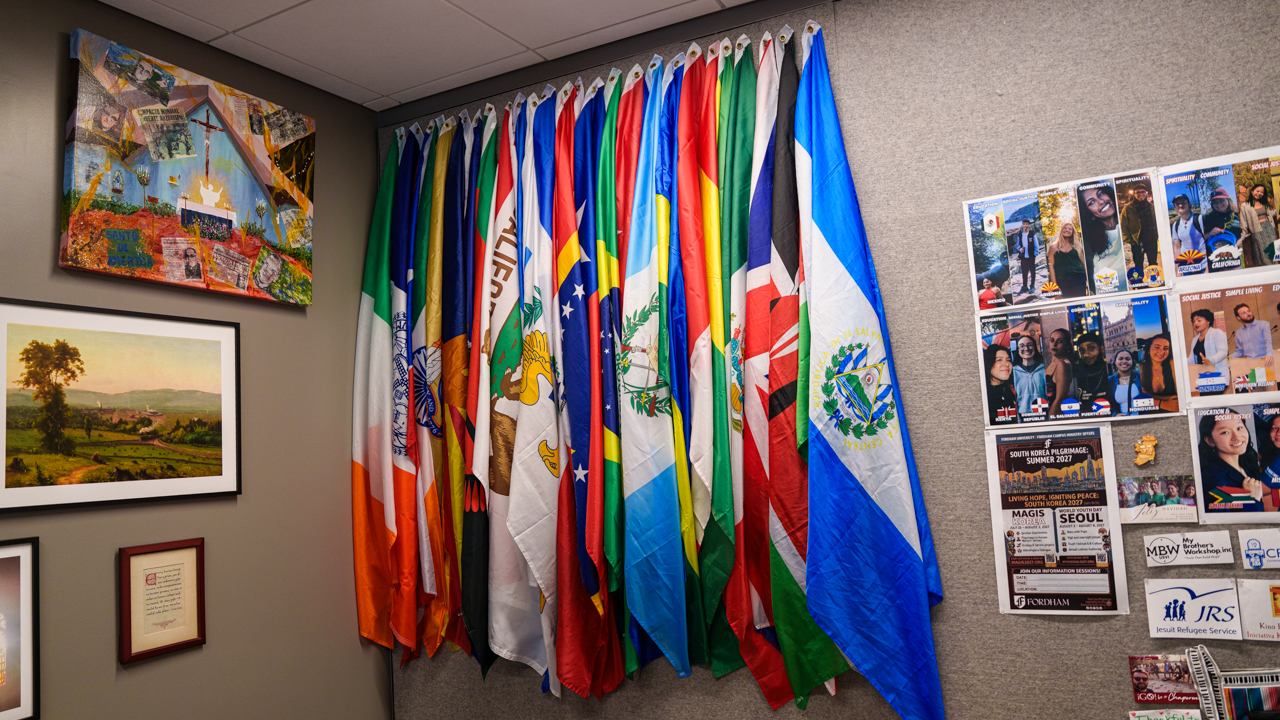
Dozens of flags pinned to the wall represent the U.S. states and countries students have visited through Global Outreach (¡GO!). The program encourages them to engage with communities and foster a deeper understanding of global issues like educational access, environmental justice, and public health. Since 1962, Global Outreach has sent thousands of students around the world, helping them grow as civic leaders.
For the past three years, Gownley has served as the director of the program, which sits within Campus Ministry. Despite the program’s international scope, a local experience stands out most to him.
“My favorite ¡GO! experience is actually the New York project,” said Gownley, who has accompanied students on 15 trips. “You have to start in your backyard before going to places like Kenya or Nicaragua.”
‘That Was My Leader!’
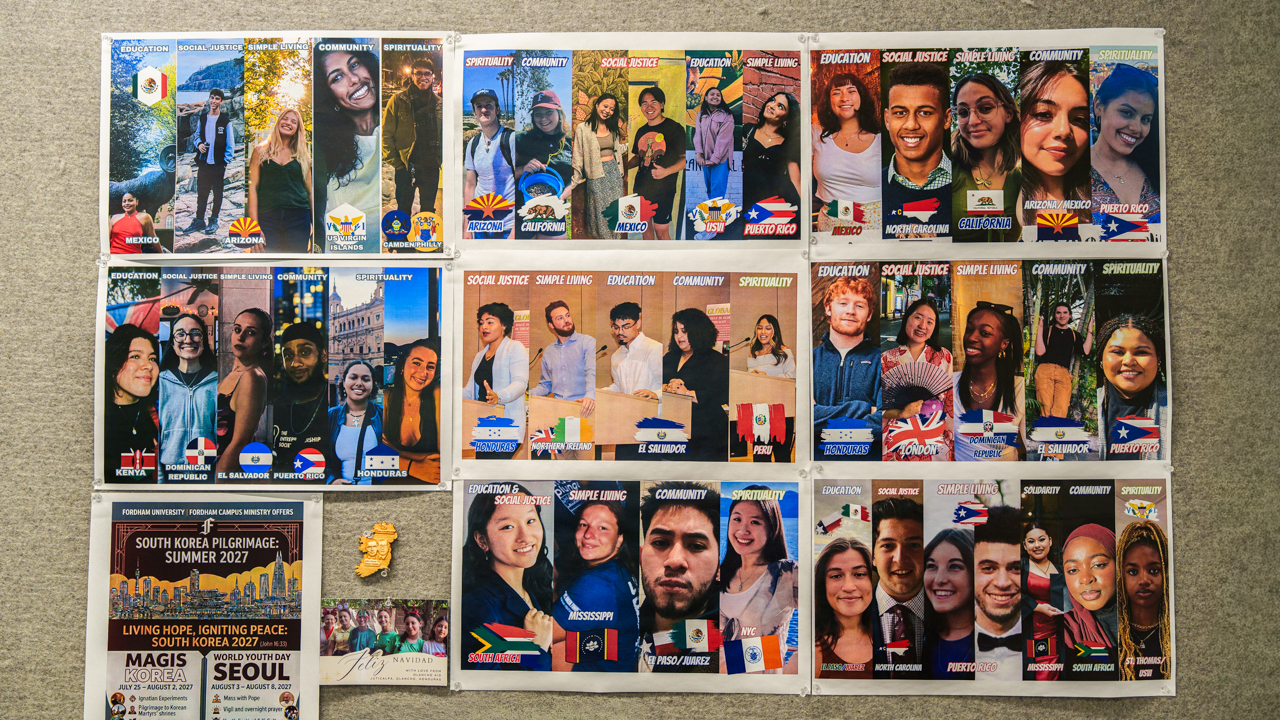
Nearby, collages of past ¡GO! student leaders highlight the program’s lasting impact. Alumni have gone on to careers in immigration law, social work, and healthcare.
Gownley proudly displays their photos in his office for other students to see.
“I wanted to highlight our student leaders in ministry so that when other students come in, they can sort of see themselves up there, too,” said Gownley.
‘My Little Piece of Home’
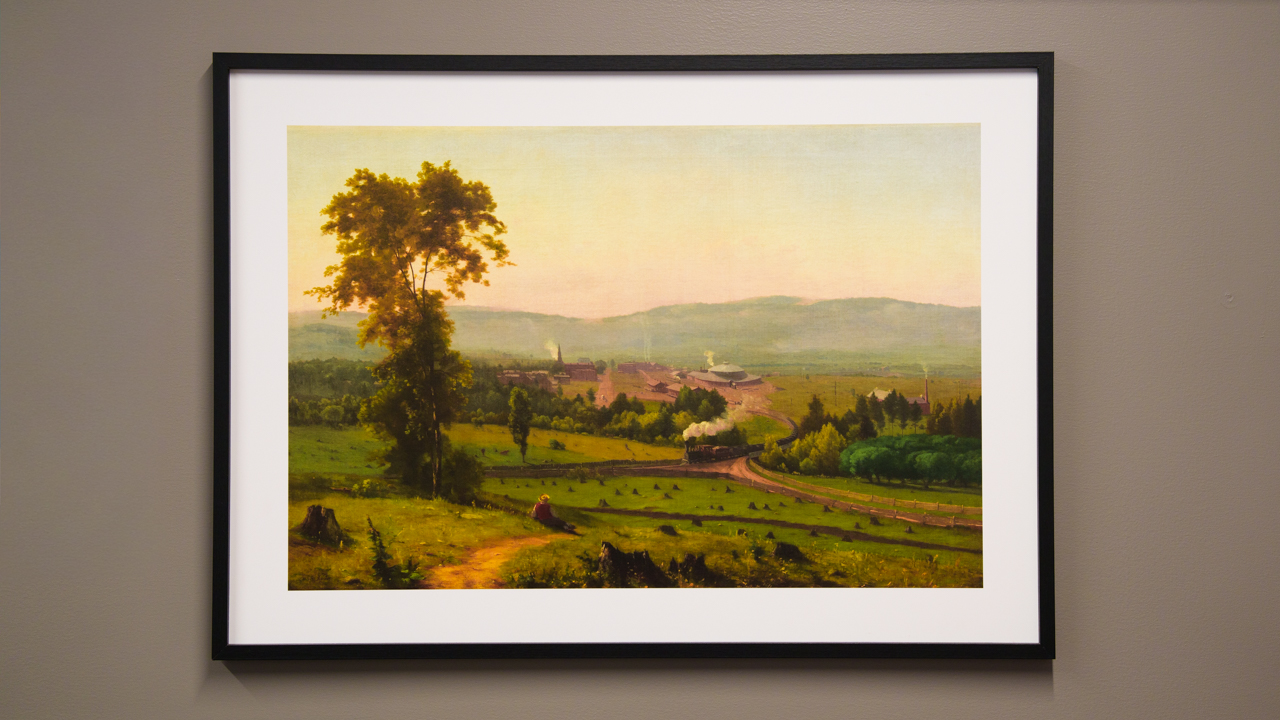
A print of an oil painting by renowned landscape artist George Inness hangs on the wall, depicting Scranton, Pennsylvania—the city where Gownley was raised as the youngest of six in a Catholic Irish-American family.
Encouraged by his mother to serve others, he joined the Scouts and volunteered at a local hospital from middle school through high school, helping patients and assisting nurses with daily tasks.
“This painting reminds me of my first community,” Gownley said. “It centers and grounds me.”
A Certified Black Belt
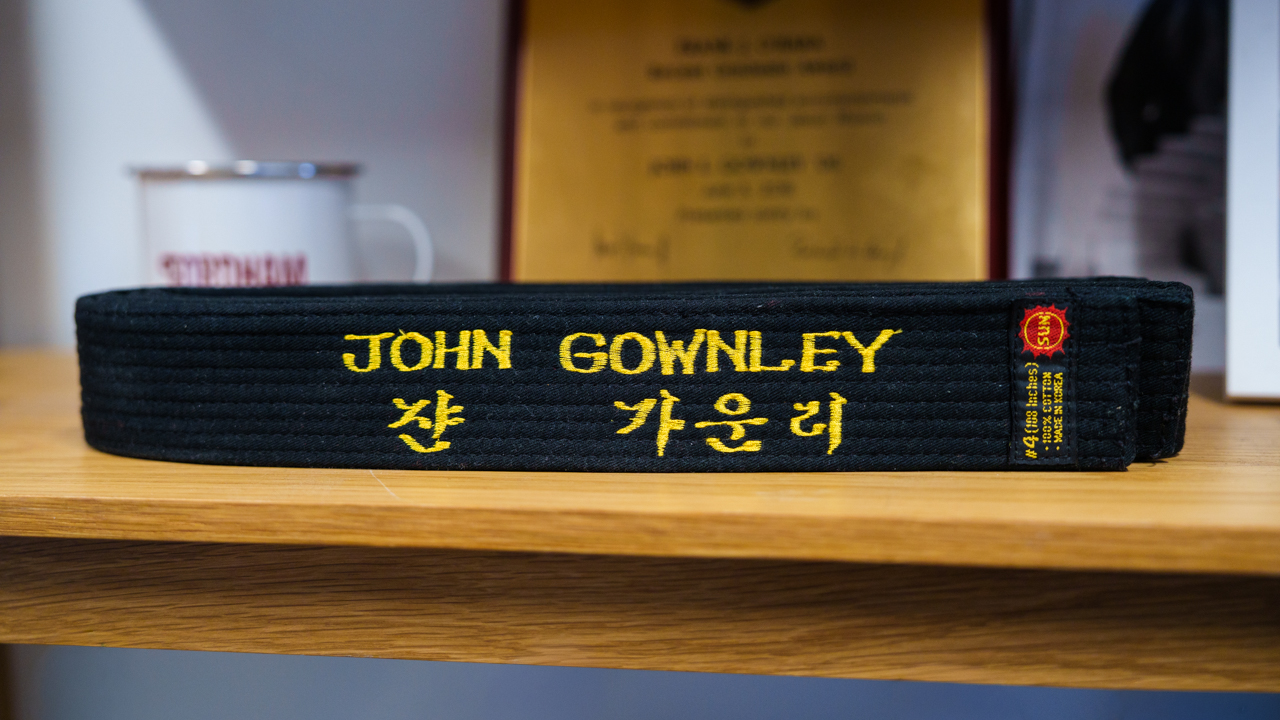
On a shelf rests Gownley’s black belt in the Korean martial art tang soo do, earned after an intense test of endurance and skill.
“It was grueling: 100 crunches, 100 push-ups, breaking bricks and boards … all in front of about 100 people,” recalled Gownley, who earned his black belt as a teenager. “I remember the flying sidekick: jumping over three kids and breaking three boards with my heel. I can still feel the pain on my foot!”
A Lesson in Listening
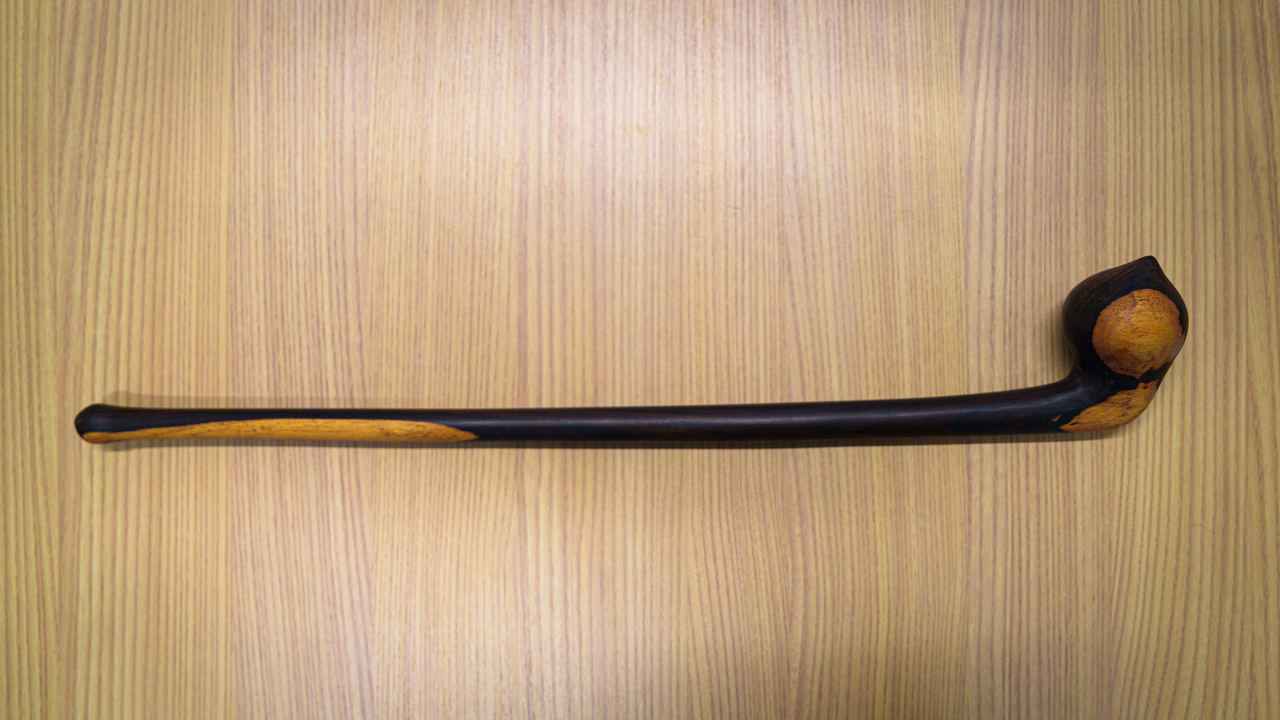
Sitting on a shelf is a “talking stick,” gifted to Gownley by members of the Maasai tribe in Kenya during a past ¡GO! trip.
“The Maasai warriors told me that it’s important to listen when people are talking and to not talk all the time. When you’re holding it and you want to say something, people know and see it. I keep it on my shelf, but I’ve been thinking about bringing it to staff meetings,” Gownley joked.
A Wedding Keepsake
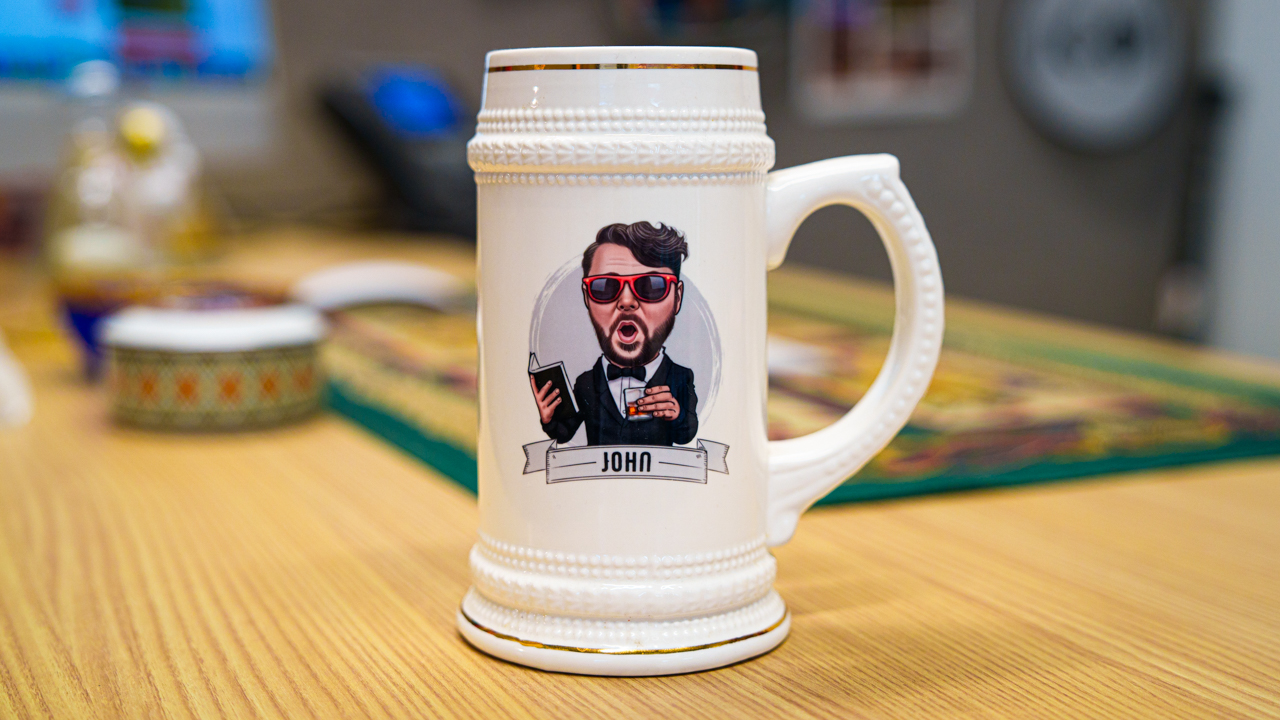
On his desk sits a custom beer stein depicting Gownley holding a Bible and a glass of scotch—a thank-you gift from his cousin after Gownley helped organize his wedding.
The souvenir reminds him of his years working in operations and special events at the University Church, where he guided couples through every stage of planning their wedding ceremonies.
“That’s where I learned a lot of my counseling and social work skills,” said Gownley, who earned his master’s in social work from Fordham’s Graduate School of Social Service in 2020. “I was always with the groom and the priest in the sacristy before the ceremony. If the groom was nervous, I usually asked him to tell me what he likes about his fiancée. That’s also very similar to what I do with people who are grieving the loss of a loved one.”
A Reminder of the ‘Greater Good’
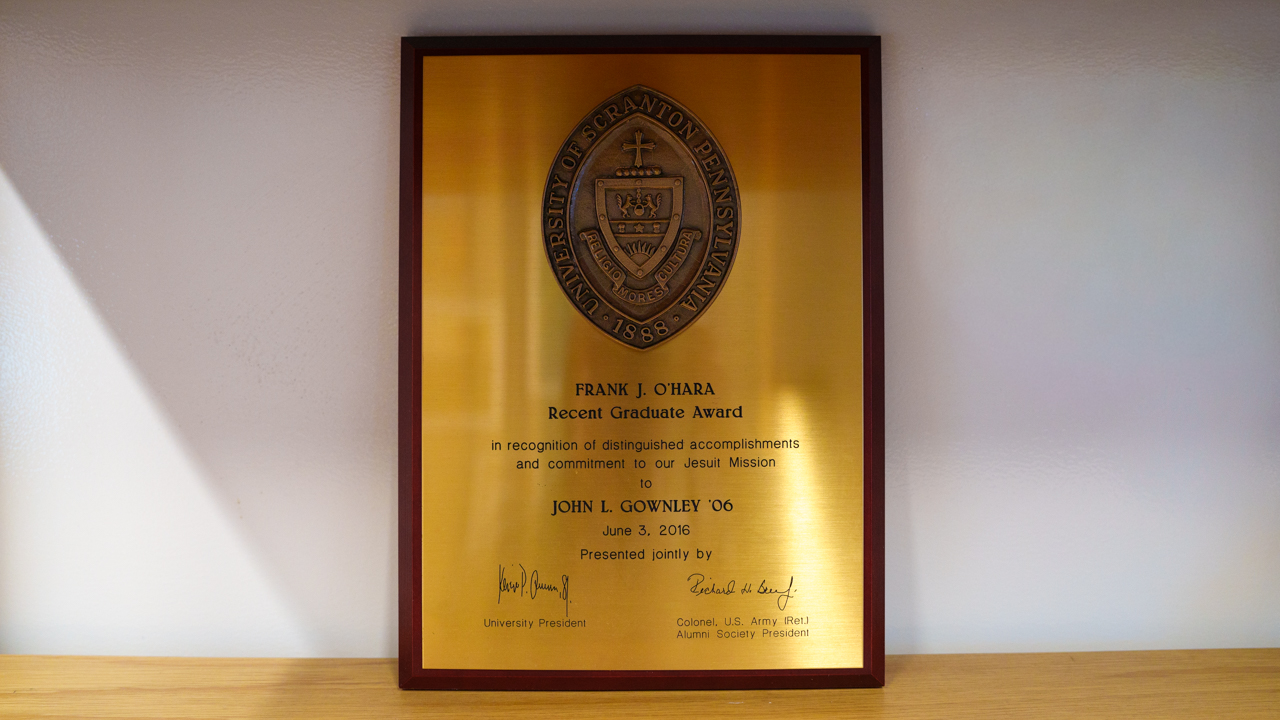
Tucked on a shelf is an award from Gownley’s alma mater, the University of Scranton, recognizing his commitment to Jesuit and Catholic education.
“Every person has the capacity to be compassionate, to love their community, and to be in their community in some form. And everybody has a gift or talent,” said Gownley. “It might not always look like the busy bees who are out there doing the hard work; it could be the people behind the desk. We all are contributing to the greater good.”
This interview has been edited and condensed.
