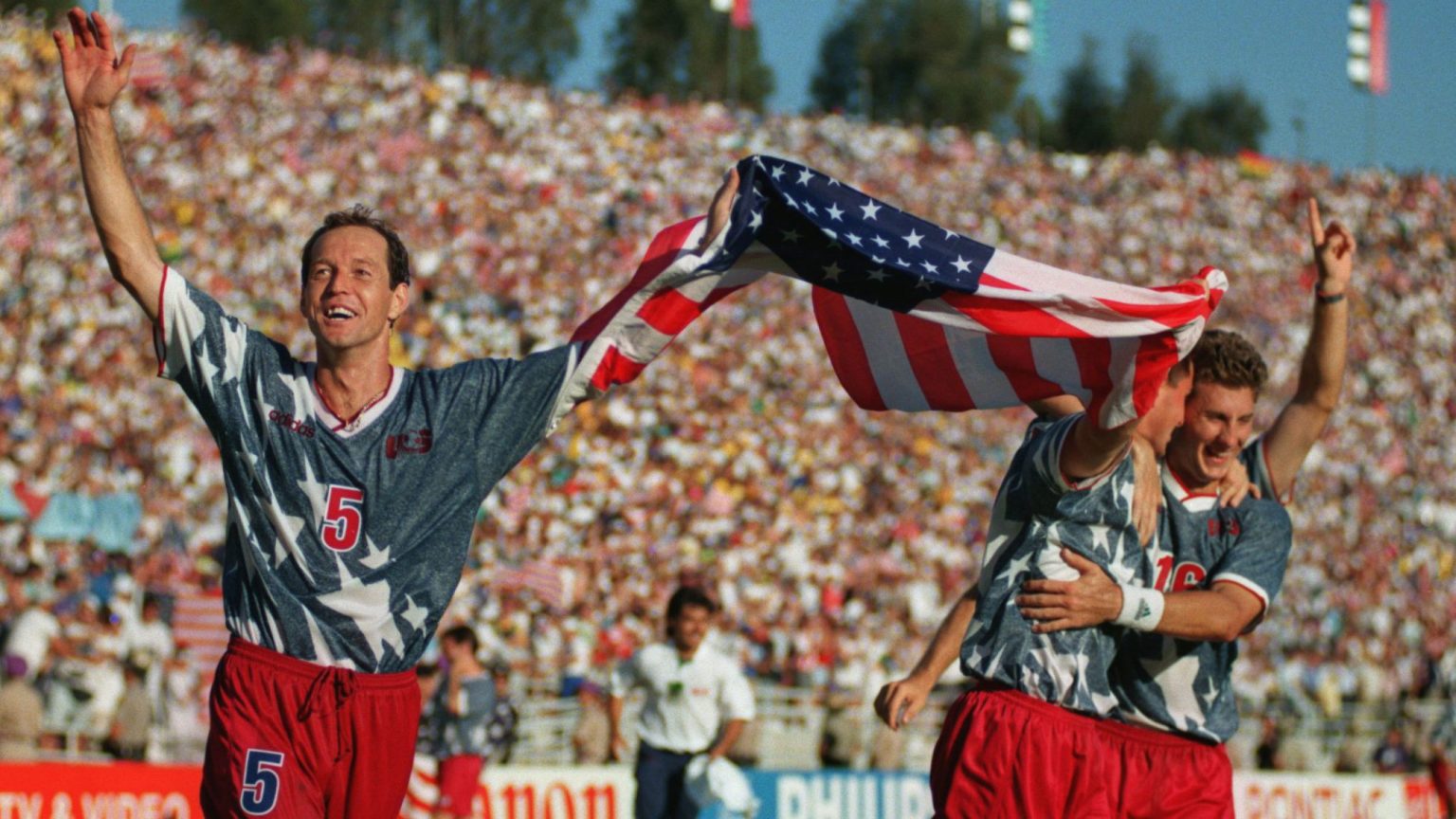
The summer of 1994 arrived with a strange notion. Could soccer—long dismissed as a foreign game—finally take root on U.S. soil?
Doubters were not hard to find when the World Cup kicked off in NFL stadiums from New Jersey to California on June 17. But five days later, the U.S. scored a stunning 2-1 upset over Colombia before nearly 94,000 spectators at the Rose Bowl.
The U.S. team, featuring the flamboyant Alexi Lalas, advanced to the round of 16, narrowly losing to eventual champion Brazil on the Fourth of July.
Looking back, it was a watershed moment for U.S. Soccer, but the real story of the 1994 FIFA World Cup extends far beyond the American squad’s unexpected success.
I had just completed my first year at Fordham. The World Cup was a major topic of discussion on campus and throughout New York City, especially in immigrant communities. After years of watching Italian soccer on TV with my family every Sunday, the World Cup was coming to me. The prospect was thrilling.
FIFA, the game’s world governing body, gambled on expanding soccer’s reach outside of Europe and Latin America by granting U.S. Soccer the rights to host the tournament. The decision raised concerns in part because the U.S. lacked pro teams. The short-lived North American Soccer League made a splash in the 1970s with Pelé, star of the New York Cosmos, but ultimately drowned in a sea of red ink in 1984.
While U.S. Soccer agreed to launch a new league, the initial focus was on staging the largest sporting event ever.
“We had to break down a lot of barriers,” recalled former U.S. star John Harkes. “Especially in the days where people didn’t even accept that the Americans played the game.”
A Hit with Fans
From the start, packed stadiums and a festival atmosphere shattered the assumption that the U.S. lacked an appetite for the sport. Venues such as Soldier Field in Chicago hosted crowds rarely seen for soccer in this country. The tournament reached a total attendance of 3.59 million—still the highest in World Cup history.
Harkes grew up in Kearney, New Jersey, an anomaly dubbed “Soccer Town, U.S.A.,” where the sport has been part of the local culture since the 1870s thanks to generations of immigrants. Kearney produced not only Harkes but also two other key members of the 1994 U.S. team: goalkeeper Tony Meola and midfielder Tab Ramos.
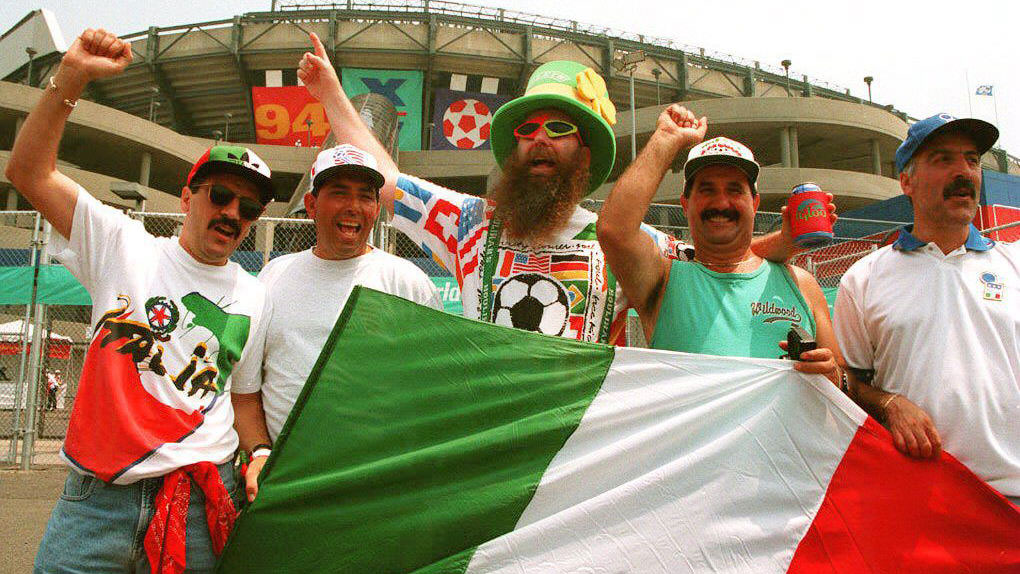
Less than six miles away from Kearney, Giants Stadium hosted crowds that created unforgettable environments—especially for the Italy-Ireland game on June 18. The vibe in and around the stadium that day was punctuated by national pride, with two of the region’s largest immigrant communities facing off. The stadium was awash in green, with Irish fans singing and roaring from kickoff to final whistle. When Ray Houghton scored the winning goal early on, the noise became relentless as Ireland defended heroically against a favored Italian side, winning 1-0.
A New Commercial Model is Born
The monthlong tournament featured many other memorable performances, culminating in a final that saw Brazil beat Italy on penalty kicks. But the 1994 World Cup is also famous for proving that soccer could succeed in the U.S.
Against all odds, the tournament inaugurated a new model for global sporting events. By the early 1990s, sports had become big business. U.S. Soccer helped fuel this trend, generating massive revenue through sponsorships. McDonald’s and American Airlines invested heavily in advertising campaigns, including stadium branding. Organizers also enlisted celebrities like pop diva Diana Ross and produced an explosion of merchandise to promote the tournament.
The World Cup’s financial success convinced FIFA that future tournaments could serve as the centerpiece of a global business. After 1994, FIFA expanded commercial partnerships, a model that has since influenced events like the Olympics. And the kind of fan experience at the Italy-Ireland match inspired FIFA to expand public viewing areas at future tournaments, keeping fans engaged beyond the stadiums.
A Lasting Legacy
Since 1994, the U.S. has seen a surge in participation in soccer, from 2 million to 21 million today, according to U.S. Soccer. Organizers made good on their promise to launch a professional league. Major League Soccer (MLS) began with 10 teams in 1996 and has since expanded to 30 teams through the construction of soccer-specific stadiums and a youth development program.
The 1999 FIFA Women’s World Cup, hosted and won by the U.S., further fueled the sport’s popularity. The arrivals of global stars David Beckham in 2007 and Lionel Messi in 2023 cemented it.
“When I arrived in the U.S., the game felt like it was just waking up,” said former Colombia midfielder and early MLS star Carlos Valderrama.
This summer, the World Cup is back in North America, co-hosted by the U.S., Mexico, and Canada. While organizers are confident the groundwork laid 32 years ago will make this tournament the biggest ever, the lucrative business model born in 1994 has led to sky-high ticket costs that price many fans out of the stadiums.
Nonetheless, the current soccer landscape is one I never could have imagined three decades ago. Soccer is baked into U.S. sports culture, and dozens of games can be seen on TV every weekend. I plan to chronicle this World Cup, like I have the past four, with the same excitement and enthusiasm I experienced as a Fordham student in the summer of ’94.
Clemente Lisi ’97 is the author of The World Cup: A History of the Planet’s Biggest Sporting Event, 2026 Edition.