

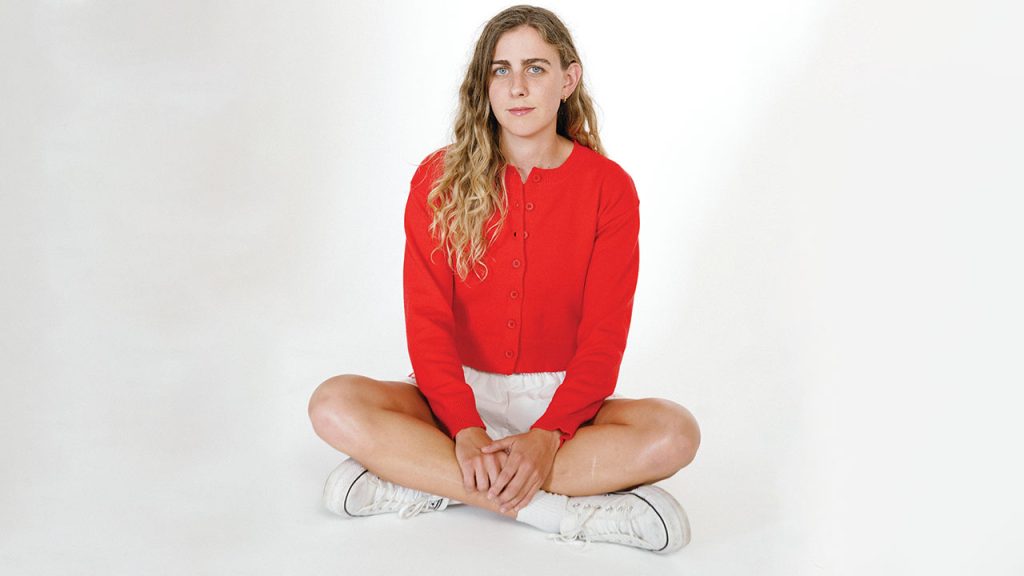
At 17, Mary Cain was one of the fastest runners in the world. She broke the two-minute mark in an 800-meter race, became the youngest U.S. runner to make a World Championships team, and earned gold at the 2014 World Junior Championships.
But her dream of competing in the 2016 Olympics fizzled out at the Nike Oregon Project, an elite training camp run by Alberto Salazar. He and his coaching staff insisted that Cain lose weight and pushed her through injuries. She left, “too broken to stay,” moved back home to Bronxville, New York, and enrolled at Fordham, where she earned a business degree summa cum laude in 2019.
Six months later, she made national news when she shared her story of physical and emotional abuse at Nike with a video op-ed in The New York Times. “Instead of becoming a symbol of girls’ unlimited potential in sports,” the Times wrote, “Cain became yet another standout young athlete who got beaten down by a win-at-all-costs culture.”
Nike opened an investigation into Cain’s allegations and in 2021, Salazar was permanently banned from track and field. Two years later, Nike and Salazar settled a lawsuit with Cain.
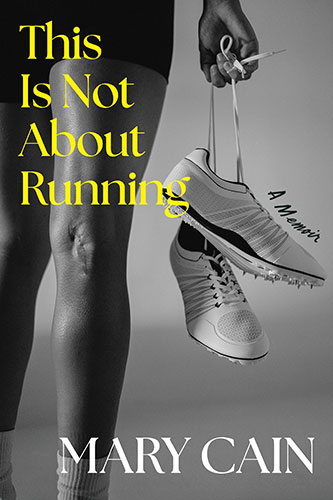
Now a medical student at Stanford University, Cain is sharing her full story in a new memoir, This Is Not About Running.
Fordham Magazine sat down with her to discuss the book and how everyone can play a role in reforming sports culture.
The title of your book is This Is Not About Running, but there is a lot of running in here! You write about how it’s where you feel the most in touch with yourself. What is it about running?
I was the 2-year-old who just had the zoomies and was probably low-key running laps around the playground! And so from a very young age, I fell in love with running. It is so exhausting—and that’s probably why most people don’t like it. But for me, that exhaustion and that ability to just really be in my body can help me center my mind a bit and really put me into this very focused state. And it’s ironic that running ultimately was the thing that, at times, really removed me from my body. But at this point in my life, I am back into it—I went for a run before this, and it was just a way for me to get out of my head.
Thinking about that feeling of running—you wrote about embracing discomfort, but that ultimately led to you crying and breaking down during races. How did that journey become such a slippery slope?
I have a chapter where I write about running in pain in the Nike offices. And in my head, in my heart, I was like, “This [stress fracture] is different.” I had shin splints in high school. I rolled my ankle, I had pain. And then from an emotional perspective—I had been yelled at on a track and made to feel deeply uncomfortable by a coach. I’ve had adults say really inappropriate things to me. As time goes on and the more you’re in these environments where it’s normalized, you think, “Maybe I shouldn’t be standing up for myself, because everyone’s acting like this is normal and maybe I’m just soft.”
You chronicle your major achievements, and even then your coaches are anything but proud. How do you look back on those wins now—in particular being the first American high school girl to break two minutes in the 800-meter?
That was the only one I was like, in the moment, “F all of you.” I think World Juniors could have been like that, but I was too into the darkness at that point. But breaking two [minutes] had always been this weird little dream that had been put into my head, maybe in eighth grade, and so I was almost entering that opportunity with this youthful, joyful mentality. And now I definitely do feel much more proud of those moments. But I think something has been and forever will be stolen from me. That’s how I look back at most of my running experience.
After you left the Nike Oregon Project, you enrolled at Fordham. Why Fordham?
When I left Oregon, I was immediately like, “I want to be enrolled in classes.” The one thing that wasn’t falling apart was the academics. So my dad and mom were like, “Fordham is really close. You can commute to Fordham, and then we figure things out.” And after I graduated, I actually took some post-baccalaureate classes [to prepare to apply to medical school], which I’m just so eternally grateful for. So, the mix of the family, location, great education, and just the opportunity to meet me where I was at many different times has made me very grateful for my experience at Fordham.
And now, despite all you’ve endured, you believe sports culture can change—and you’re working to change it. How can we, as a society, help sports change?
I think one of the big issues is there’s such a parasocial relationship with sports that fans and society are unwilling to believe there are serious issues. And I think with literally any problem in life, if you can first just acknowledge there is an issue, that’s a really big first step. If you have awareness, then you can jump to that second step and there already are organizations that are trying to create systems where it can be safer. The Athlete Survivors’ Assist is one of the nonprofits I work with, and they have resources and toolkits and opportunities for people. And then from a bigger systemic perspective, that’s when, honestly, I think brands, universities, all of those sorts of places also need to buy in.
How have you been able to find your love of running again?
I went through this period where I was like, you know what? I’m gonna be the girl who randomly at Pier 40 does rec soccer and does this Pilates class and lifts in the gym. And I think rediscovering a joy in just movement and sport unrelated to running, made it so that ultimately, when I had my [lower leg] surgery and could figure out what I’m doing again with running, I was almost in a mental and emotional state where I was like, “Why does this have to be different than the Pier 40 rec soccer?”
This interview has been edited and condensed.
