

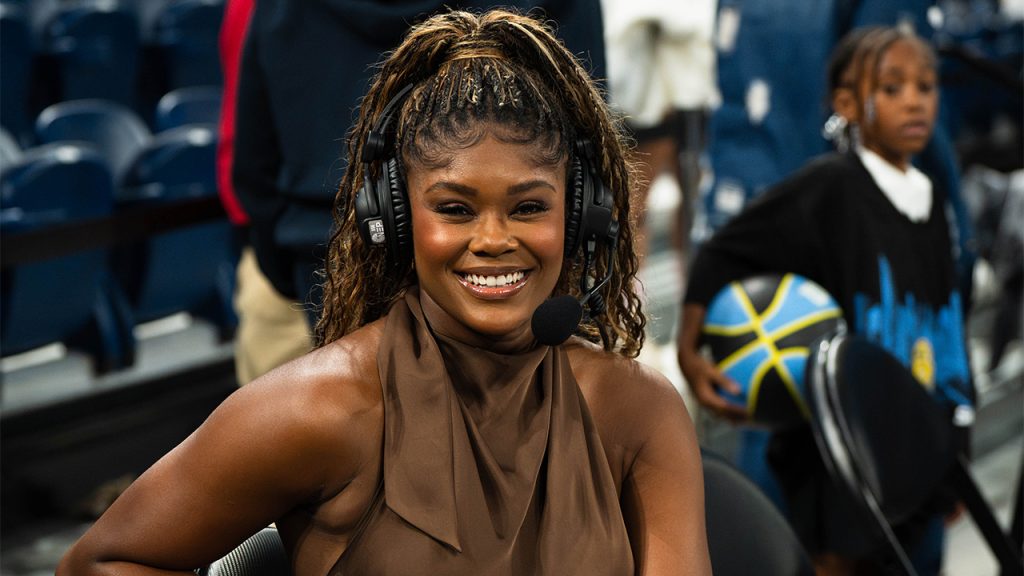
Isis “Ice” Young nearly called it quits when she tore her ACL shortly after joining the Fordham women’s basketball team in 2019. Instead, the graduate transfer student turned a season-ending injury into a career launchpad.
In a pivotal year at Fordham, Young earned a master’s in media management and honed her broadcasting skills at WFUV, Fordham’s public media station.
Today, she’s a WNBA analyst for CBS Sports and the founder of Your World Enterprises, a media training and broadcast coaching company for young athletes. She was named to Forbes’ “30 Under 30” list for media earlier this year.
Fordham Magazine spoke with Young about her family basketball ties, her time at Fordham, and the growth of the WNBA.
How did you fall in love with basketball?
I started playing very early—I want to say I was 5 or 6. My parents played at the collegiate level. From as early as I can remember, one or both of them coached my team.
Probably my fondest memory of growing up and playing basketball was shooting with my dad in the gym. We would go after team practice and it would just be me and him from 8 p.m. to 9 p.m. My siblings would already be showered and headed to bed and I would get in the house late, but it just was like our one-on-one time to help me get better and to grow our relationship.
What drew you to Fordham and the media management master’s program?
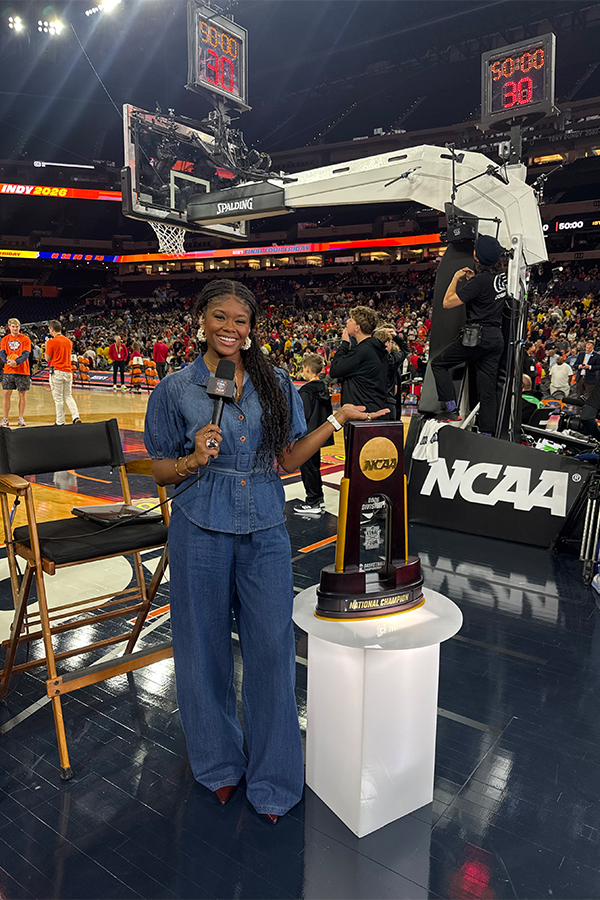
As a graduate transfer, you want to make sure that you’re making the right decision because you’ve got one year to make it work. And so I think just the comfortability in being from Jersey, choosing a school in New York City, and knowing that I had a former teammate, Bre Cavanaugh, there.
My thought was, media management will help me to understand the business side of media and the industry that I want to be in, and that if I’m really serious about being an entrepreneur, it will give me the foundation to be able to do that. I had very influential professors who wanted to generate honest and thoughtful conversations and appreciated that I was an athlete and that my career goal was to be a broadcaster. They did a terrific job of allowing me to pursue that while also gaining other tools on the media and entrepreneurship side.
When you got injured at the beginning of your year at Fordham, what kind of mental adjustment was needed?
It was tough. I was very close to going back home. I had called my mom as soon as I found out officially about the injury. She goes, “You made a commitment. You made a commitment to the team. You’re a leader on the team. They still could use your advice, your support. And just because it hasn’t worked out for you doesn’t mean good things also can’t happen.” And so I’m like, okay, these are great points. This is why you call your mom when things go bad. I told her if I’m going to stay, I’m going to maximize the media broadcasting space that I’m in and the location that I’m in. I thought it was very strategic that God allowed me to be hurt in New York City.
Among the opportunities you took advantage of was doing on-air work for WFUV. What was that experience like?
Honestly, it was a really cool opportunity. They helped me tremendously just in terms of growing in my craft. I was so young and I was so green and I just wanted to be great every day. And once I got involved with WFUV, that allowed me to either do Fordham men’s or women’s games for radio or ESPN+, whether it was home or on the road. And I didn’t just do games at Rose Hill. I got the chance to work with Columbia women’s basketball and Fairleigh Dickinson women’s basketball and Manhattan College men’s and women’s basketball. Fordham provided me an opportunity to connect with other local New York City schools and not be selfish about where I was working or what I was doing. They were very much like, “No, use us as a stepping stone.” And that was important.
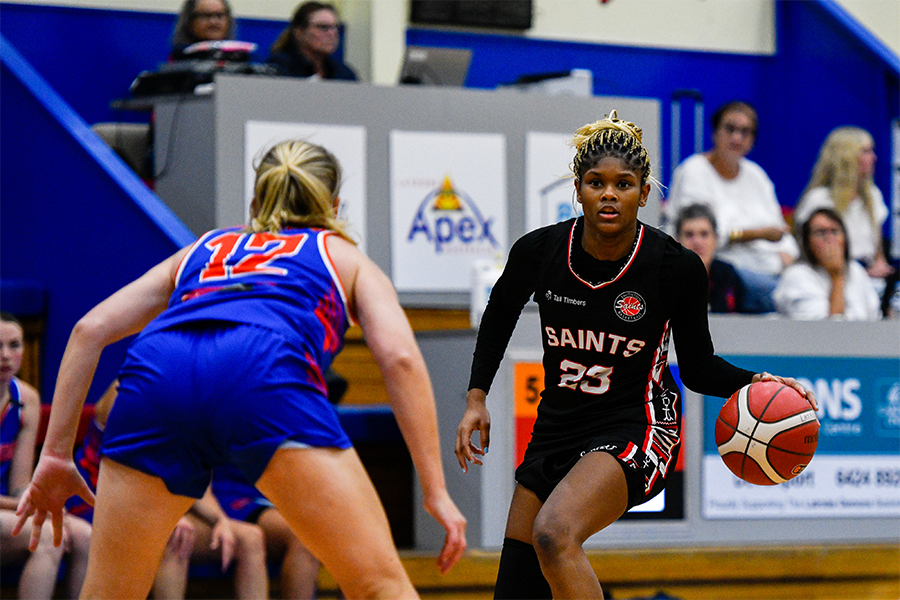
After your year at Fordham, you got to play another year at Siena and then you played professionally overseas in Germany, Greece, and Australia. Did you have a favorite place you played in?
I would say my favorite place was probably Greece. I was literally on a tourist island, so it was just beautiful. Every day I woke up and I had a walkway to the ocean. I loved the food and the culture. And I really took it personally to be as open and as adaptable as possible to make sure that I got as much out of the experience as I could.
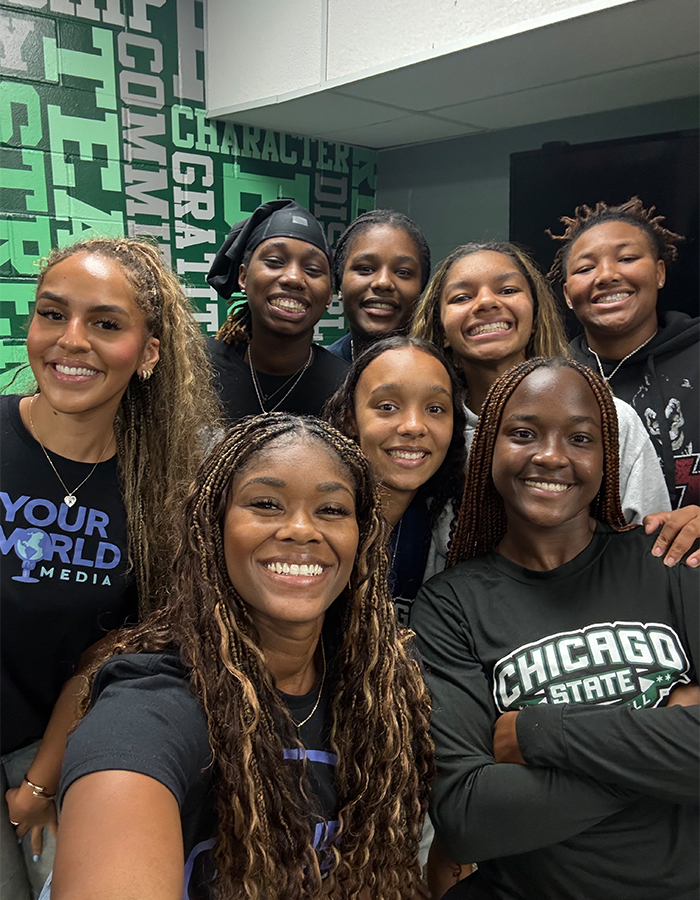
How did you decide to start your company, Your World Enterprises?
When I was playing in Australia, I realized I just had too much time on my hands. And so I started building the blueprint for my business during my last season. And as soon as I got home, I built the first curriculum. We cover how to handle live interviews, social media management, ways to build your brand, and how to respond to negative media. And we’ve added some NIL (name, image, and likeness) suggestions in the past few years. It’s the work I’m most passionate about. I love broadcasting and calling basketball, but I don’t think anything gives me more joy than empowering someone to articulate their thoughts and feelings, whether it’s about a sport or not. I love to give young people the confidence to be who they are in the world and to be able to articulate who they are.
What has it been like to witness the growth of women’s basketball and the WNBA in the past few years?
It’s been terrific. I mean, everything has changed. The amount of money that I’ve been paid to do my job has changed. The exposure, the amount of national TV games. The amount of advertisements and deals and brands that are now 100% sure that women are the most marketable thing on the planet.
RELATED STORY: Ryan Ruocco on the New York Liberty’s First Title and the Thrilling Rise of the WNBA
I think our youth are really being affected by the WNBA. There are young boys and girls who are looking at the league and saying, “My favorite player is Angel Reese,” not just LeBron or Kobe or the names that they’ve always heard. There’s just no more important time for us to be covering this league. And so the job means more than just talking about basketball. You’re representing the product on the floor, and the product on the floor has fought for their value. And you want to honor that.
This interview has been edited and condensed.
