

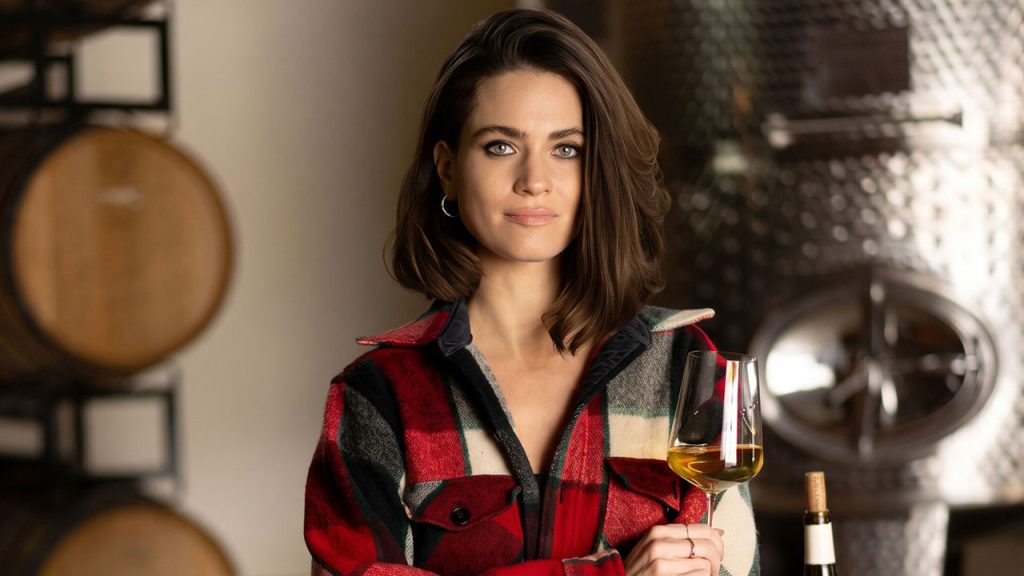
The Fordham Gabelli School of Business grad explains eco-friendly winemaking, soil health, and why Cabernet Franc is New York’s signature grape.
Gabriella Macari ’09 grew up watching her grandfather pour wine samples and connect with guests at her family’s vineyard on the North Fork of Long Island.
Now, as one of only 427 Masters of Wine worldwide, she’s using her Fordham business degree and a decade of deep study to champion eco-friendly farming and help redefine New York winemaking.
The Master of Wine designation—a top-tier credential administered by the London-based Institute of Masters of Wine—is one of the world’s rarest professional credentials. Only about 10% of candidates pass all parts of the rigorous exam, which covers viticulture, winemaking, global business, industry trends, and blind tastings.
This summer, Macari joined that elite group, becoming one of only 21 women in the U.S. to hold the title.
Now an independent consultant and educator, Macari shares her expertise with well-known vintners and conducts wine programs for students, companies, and enthusiasts alike. She recently co-founded Cab Franc Forward NY, a nonprofit collective that promotes Cabernet Franc as the New York wine industry’s premier red grape—an initiative that earned her a SevenFifty Daily Innovator of the Year award.
Fordham Magazine caught up with Macari shortly before Fordham’s 2026 Women’s Summit, where she was among the honorees.
What motivated you to pursue the Master of Wine designation? It requires years of intense study.
When I started selling wines in New York City, I met some of the smartest sommeliers, buyers, and distributors in the business. They challenged me, and I had to keep up! After completing the WSET Level 4 Diploma, I realized I still had much more to learn to connect wine theory to what’s in the glass. Applying to the MW program felt like a natural next step. It required far greater depth, critical thinking, and precision.
Why did you focus your Master of Wine research on herbicides in viticulture, the practice of growing and harvesting grapes?
Throughout my life and work at Macari Vineyards, our farming vision has centered on promoting soil health and avoiding herbicides. This background made studying people’s awareness of herbicide use in viticulture especially compelling to me, particularly given consumers’ growing desire for transparency in food and drink production.

What advice would you give consumers who want to choose eco-friendly wines? And what do terms like natural wine, organic wine, and regenerative viticulture mean?
Terms like natural wine, sustainable wine, and clean wine are widely used, but they have no global legal definition. Producers and wine sellers may use these terms with good intentions, but loose definitions can lead to greenwashing and consumer confusion.
I’d love to see a world where viticultural practices are discussed more openly with consumers. Briefly, here is how to understand some of the main categories:
- Organic wines: Grapes are grown without synthetic pesticides, and the USDA regulates the certification.
- Biodynamic wines: Similar to organic wine production, but the practice also treats the vineyard as a self-sustaining, living system, guided by natural soil and spray preparations and lunar cycles. I often compare biodynamics to homeopathy for the soil.
- Regenerative viticulture: A farming practice that focuses on soil health, biodiversity, human and social values, and carbon capture. Many vineyards are pursuing the Regenerative Organic Certified label.
Certifications can be financially prohibitive for producers to pursue, and some of them avoid this kind of descriptive language entirely, so the most effective way to choose environmentally friendly wines is to look beyond labels and learn about producers’ cultivation and winemaking practices.
RELATED STORY: Can a Food Company Save the Planet? Patagonia Provisions GM Paul Lightfoot ’96 JD
What tips would you offer people looking to choose and pair wines with more confidence?
Don’t be afraid to ask questions! Talk with the restaurant sommelier or wine shop staff. They understand that wine can feel intimidating and can help you learn. Figuring out what you do and don’t like isn’t a linear process—tastes can change, and exposure to different wines, much like exposure to different foods, can help your palate grow and develop.
How do eco-friendly practices, like herbicide-free farming, impact the quality and taste of wine?

Great wine starts in the vineyard. That’s a guiding principle in the industry. And while outcomes depend largely on weather and winemaking, a focus on improving soil health rather than using synthetic chemicals lets vine systems thrive. That supports the production of healthy fruit, and healthy fruit shines through in the glass.
What do you love most about the work you’re doing today?
I love the connection. Wine is a product, but it’s also tied to a specific place and time, shaped by farming. I find it rewarding to help producers reach the right audience and to help people understand why what’s in their glass tastes the way it does.
I also care deeply about environmentally responsible viticulture and winemaking, and I’m glad to support the producers and regions that do this work well.
How did growing up in and working in the family winery influence you?
I have fond memories of working alongside my grandfather in the tasting room. His work ethic was remarkable. On Fridays, he would leave his real estate office in Queens, New York, and spend the weekend at the winery with us, welcoming guests, expressing gratitude for their purchases, pouring samples of wine, and entertaining visitors.
He taught me to appreciate business and demonstrated that its foundation lies in connection and hospitality. His example made me certain I wanted to build a career in business, a path that ultimately led me to Fordham.
Why do you champion Cabernet Franc, and what makes it New York’s signature grape?
Cabernet Franc is thriving in New York vineyards and producing distinctive wines that reflect where they’re grown. So we created a platform called Cab Franc Forward NY, where wineries work together to benefit the industry as a whole. From the beginning, this was about bringing people together around a grape that has quietly become one of New York’s greatest success stories.
By focusing on a grape that succeeds across multiple regions, we’ve drawn attention not only to Cabernet Franc but also to the quality, diversity, and innovation across New York wine.
Interview conducted, edited, and condensed by Claire Curry.
