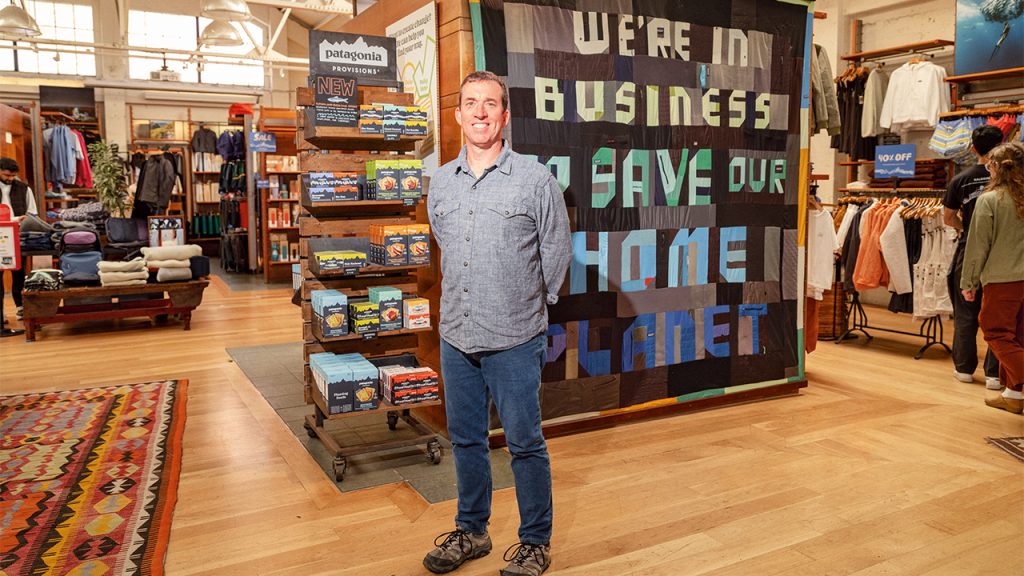
On a resplendent spring afternoon by the San Francisco Bay, Paul Lightfoot ’96 JD is midway through an “extracurricular” day at the wood-shingled Sausalito headquarters of Patagonia Provisions. He serves as general manager of the food and beverage division of Patagonia, the outdoor apparel company established in 1973 and consistently ranked among the most respected brands in the country.
On the wall of the meeting room where Lightfoot sits, alongside a photo of a bison head in profile, is a sign that reads Regenerative Organic Certified—a standard administered by the nonprofit Regenerative Organic Alliance, which he chairs. Patagonia helped launch that alliance in 2018 to set standards for food and textile production that ensure healthy soil, pasture-based animal welfare, and fairness for farmers and workers. One takeaway from the alliance’s quarterly board meeting today: Certified products and acreage are surging.
“I am probably at heart an environmental activist masquerading as a businessman, who’s sort of doing okay as a businessman, so no one’s noticing,” Lightfoot says. “But Patagonia lends itself to that. We are not cynical about our mission or our values.”
Given Patagonia’s reputation, Lightfoot knows his voice will be heard when he advocates things we should—and shouldn’t—do. Which is why at 6:30 in the morning, after taking the family’s three dogs out for a walk, he was riffing with AI platform Claude on how to counter the industry narrative that ethanol is a green fuel. Approximately 30 million acres of corn are grown with fossil-fuel-based fertilizers only to be blended into gasoline for automobiles.
“It’s a bad idea,” he says, “but proving it’s a bad idea is very difficult.”
The closure of the Strait of Hormuz this spring because of war in the Middle East, however, has underscored the vulnerability of the dominant agricultural system and the chemical fertilizer industry’s reliance on global supplies of oil and natural gas. “Making food from fossil fuels is a bad idea in many ways,” Lightfoot says. “One of them is that it just forces us to be at the mercy of the petrostates.” Add to that complicity in causing the climate crisis, ruining waterways, degrading soil, and fostering the extinction crisis.
Taking on the ‘Biggest Villain’
Patagonia got into the food business in 2012 because company founder Yvon Chouinard assessed agriculture as “the biggest villain in climate change” and “probably the best opportunity” we have to do something about it. The company committed to regenerative organic agriculture, which requires less water to grow crops and ensures healthy soil for future generations.
For clothing, Patagonia began sourcing organic cotton in the mid-1990s, after employees at a Boston store were getting sick from the formaldehyde in clothing they sold. Chouinard and others visited industrial cotton farms using pesticides in California and saw the toll those chemicals were taking on the environment. They committed to work with organic farms instead.
Looking back at that watershed moment, Lightfoot says, “If you were in business school, you would say, ‘There’s no demand and there’s no supply—this is the worst business idea ever.’” But it worked.
For Patagonia Provisions, commercial success proved more elusive. Before Lightfoot joined the company in 2023, it had developed a wide range of products, including soups and pasta and breadfruit crackers, based on supply chains that minimize environmental impact. But having the Patagonia imprimatur wasn’t enough to guarantee healthy sales.
Lightfoot arrived with more than a decade of experience leading BrightFarms, a company he founded to build and operate high-tech greenhouse farms that eliminate time, distance, and costs from the organic produce supply chain. Before that, he led a couple of software companies. He was recruited for the role at Patagonia Provisions after a search firm came across a manifesto that he published on his Substack newsletter; he was looking for his next act, and he wanted regenerative organic to play a central role. Lightfoot is a big snow sports guy; he knew Patagonia. And stepping into this role, he wanted to show “that a branded food business could build up regenerative organic farmland and convince farmers to transition to practices that were good for the environment.”
Putting Taste and Nutrition First
Lightfoot is in his 50s, trim and fit with close-cropped brown hair. He and Karen Milhoua Lightfoot ’95 JD—who met in the library at Fordham Law School—have three children. One is now in college, one is taking a gap year, and one is in high school. When Paul took the job with Patagonia, it meant moving the whole family from New York to Marin County.
Lightfoot jokes that he might just be from Patagonia central casting. Today he’s wearing a well-loved Patagonia polo and faded jeans. He usually bikes to work from home in nearby Mill Valley. On his left shoulder is a tattoo of a lettuce leaf. On his inside right wrist is a heart. That’s a reminder to take care of himself, he says.
He has navigated Patagonia Provisions to brisk financial growth, narrowing the product suite to just a few that keep taste and nutrition front and center. “You cannot lose sight of that,” he says. “There are no special passes on quality coming first.”
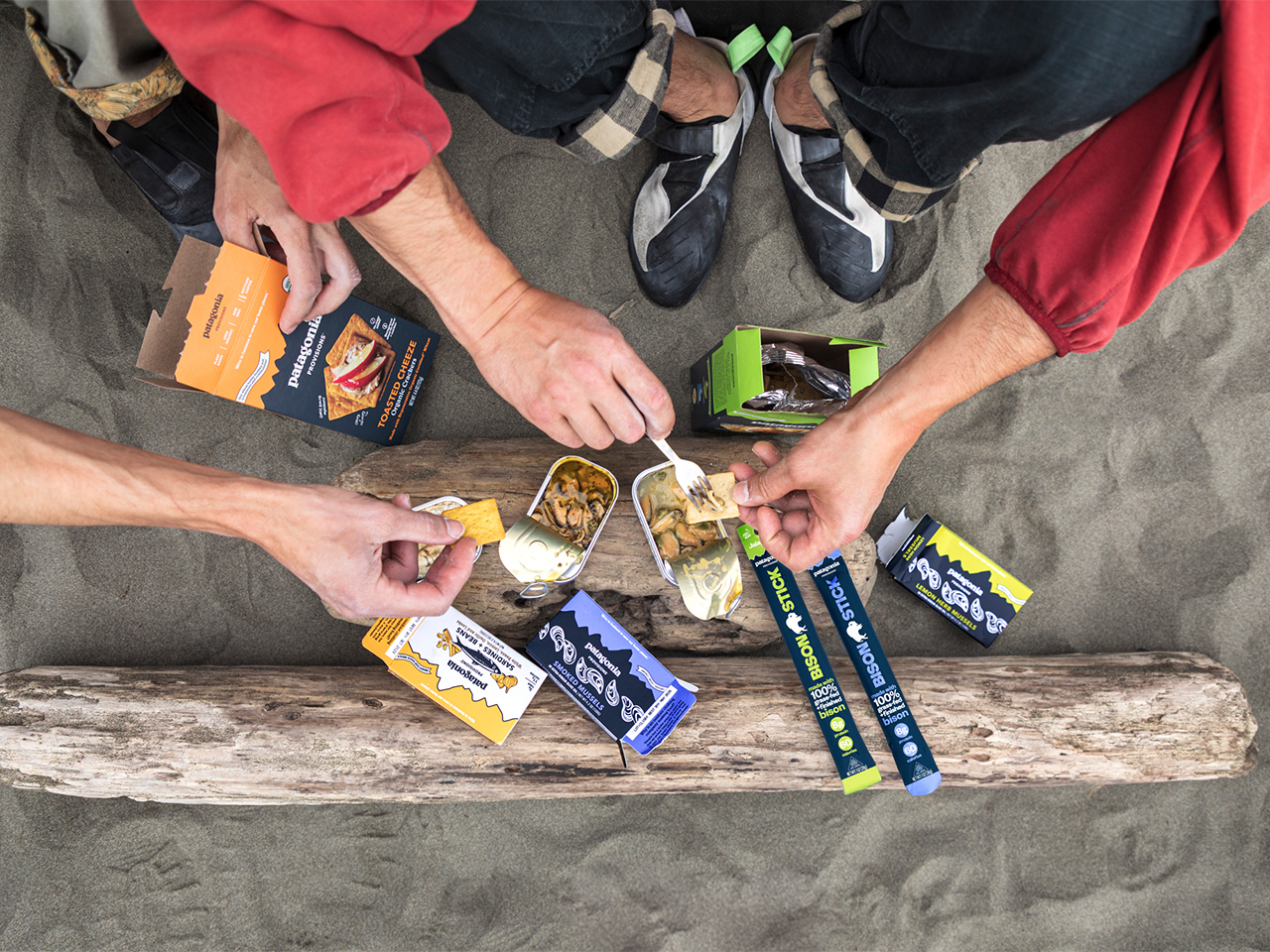
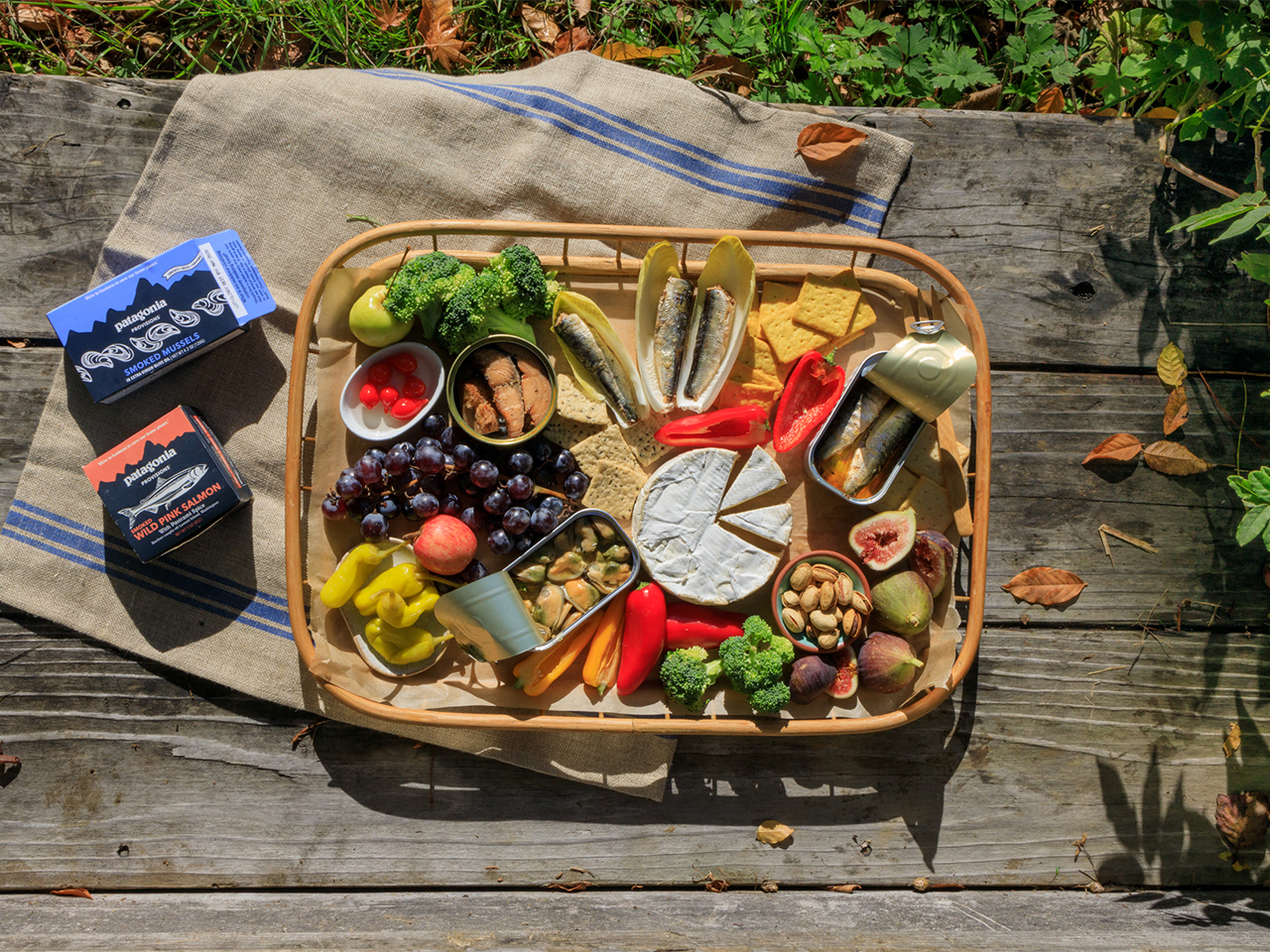
There’s tinned fish, including smoked wild-caught salmon, sardines, anchovies, and smoked mussels. There are meat sticks, made from grass-fed and grass-finished free-range bison from a ranch in South Dakota. A line of crackers, which is going gangbusters, is “all about creating demand for regenerative organic certified flour” from a handful of farms in Washington’s Skagit Valley. Varieties include rosemary garlic and sourdough sea salt, and they’re found in some 4,000 stores across the United States.
“It’s like the best sort of doing well and doing good,” Lightfoot says.
And there’s organic beer—a partnership launched with a number of craft breweries. On this afternoon by the bay, Lightfoot pops open a nonalcoholic IPA for us to split. Brewed in cooperation with Deschutes in Oregon, it’s citrusy and refreshing.
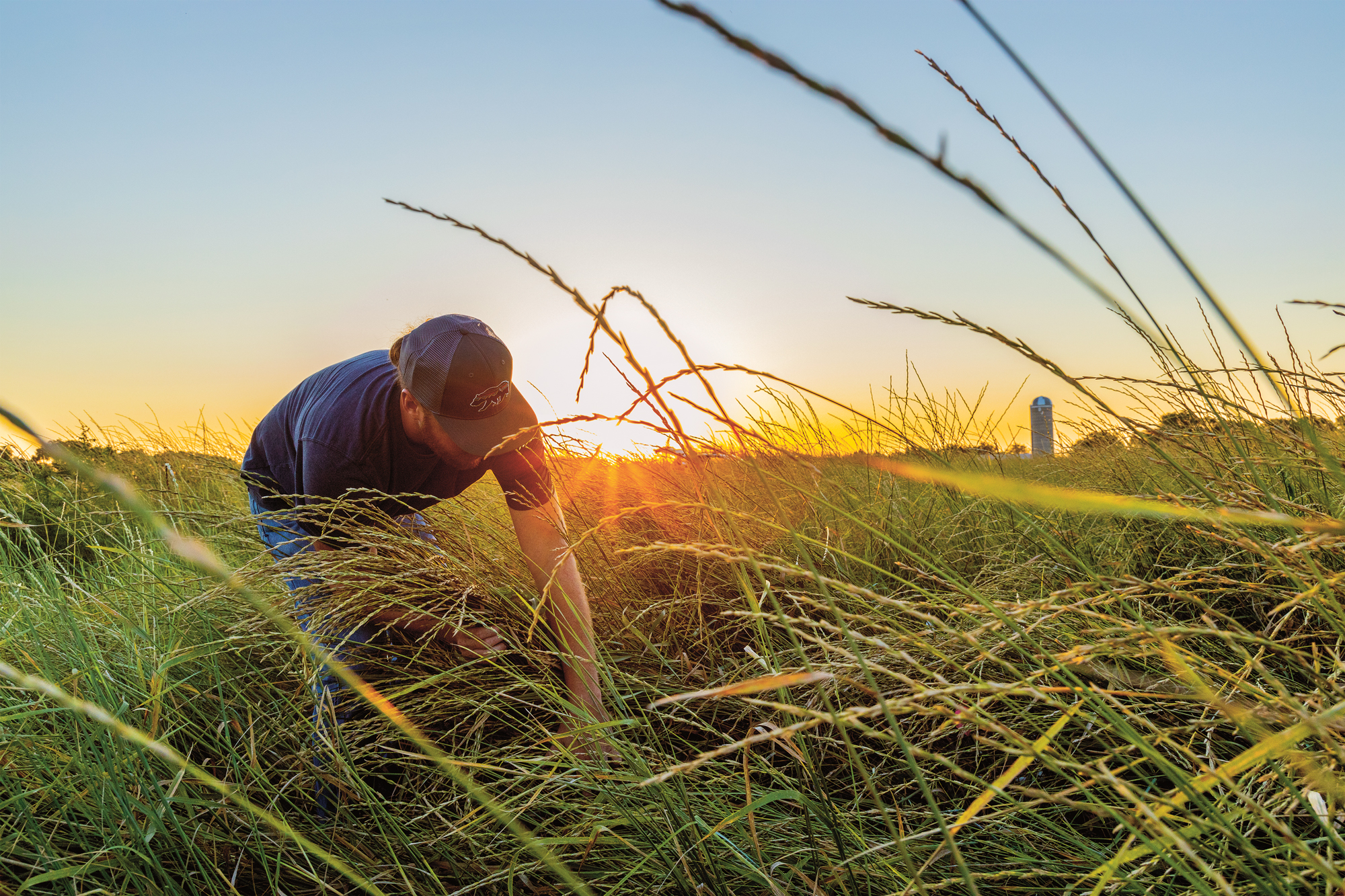
The big story here is a grain used in brewing: Kernza, a perennial wheatgrass that could be better for the planet in a couple ways. It doesn’t require tilling and replanting annually. And the plant’s roots reach 15 feet into the soil, compared to 5 feet for annual wheat; that means Kernza sequesters more carbon. Although yields per acre don’t yet compare to annual wheat crop yields, Lightfoot says Patagonia is working with a nonprofit organization with a goal of reaching parity in the next dozen years. “It’s a long bet,” he acknowledges.
For Lightfoot, the bigger picture—Patagonia’s mission of saving “our home planet”—means creating models that can change the agricultural system. Regenerative organic practices can sequester carbon and improve biodiversity. “It just makes the world better. And Patagonia is in the food business because we want to demonstrate that.”
Four years ago, Yvon Chouinard restructured Patagonia to, in effect, make the Earth its only shareholder. Look forward 50 years, he has said, and he imagines the company being better known for food than clothing. That’s a long bet, too, but one Lightfoot has taken.
“The worst thing is, when people in our generation say, ‘I’m counting on the youth.’ The clear answer for me is to just be in the fight. My antidote to hopelessness is action.”
—Steven Boyd Saum is a writer and editor based in California.