

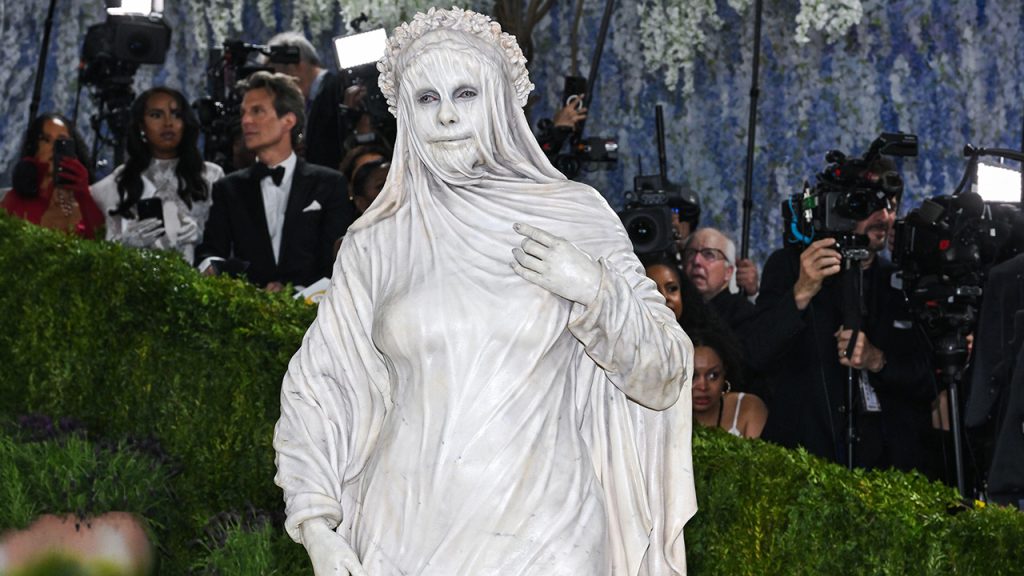
At this week’s Met Gala, Heidi Klum turned heads with her faux-sculpture makeover—one of many tributes to the event’s “Fashion Is Art” theme and the Met’s new Costume Art exhibit, opening May 10.
While the exhibit is just a short subway ride from Fordham’s campuses, Rams needn’t even go that far to get a glimpse of draped ancient statues like the ones Klum emulated. At Fordham’s Museum of Greek, Etruscan, and Roman Art, the collection includes plenty of representations of ancient dressed bodies. A closer look at these treasures reveals that clothing has long been a statement of identity—for goddesses, warriors, the wealthy, and others depicted in art. Jennifer Udell, PhD, curator of University art and curator of the museum, gave Fordham Now a fashion tour.
Ancient Athleisure
Torso of Diana: This sculpture of Diana, goddess of the hunt, may be missing her arms and head, but her clothing tells us a lot, Udell said.
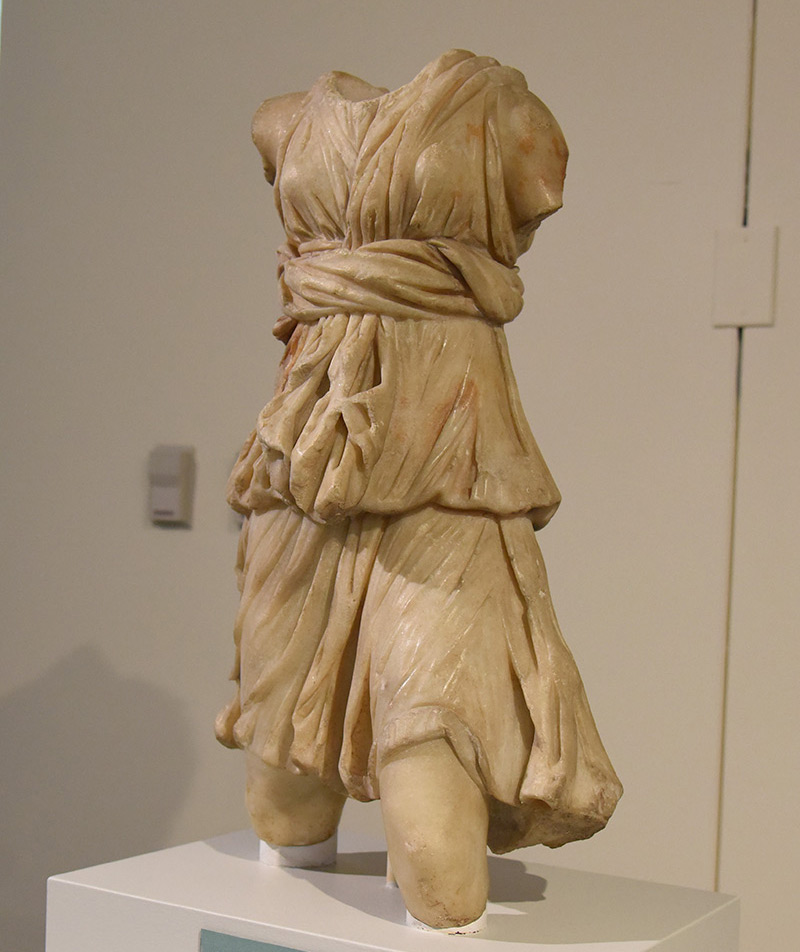
It was a garment made for movement: “You can see all the pleats, you get the difference in depth of folds, you get a sense of how thin it is,” Udell said.
“It’s the type of fabric which emphasizes speed, because it’s so thin that as she’s running forward, which she does because she’s the goddess of the hunt, her drapery’s going to blow back behind her.”
The drapery “tells us what we want to know about her,” Udell said.
“She’s youthful. She’s fast moving.” The garment “is an essential attribute of the goddess’s identity. This is a kind of ancient ‘athleisure’ wear, right?”
‘Coachella Girl’
Figurine of a draped woman with a floral crown: Dionysius was the god of fruitfulness, vegetation, wine, and ecstasy, and this figurine clearly shows one of his worshippers, Udell said.
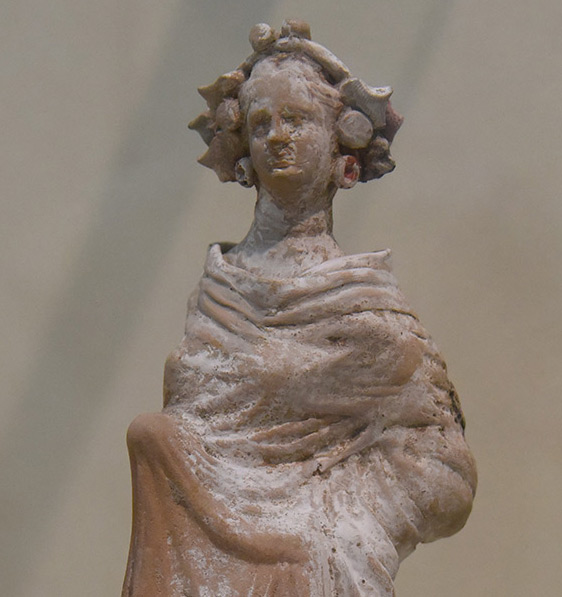
“She’s heavily draped, but she has this amazing flower crown, which just screams ‘festival,’” Udell said. It marks her as a follower of Dionysius because it’s made of grape leaves and grapes.
“The crown just sets her apart. It’s not fancy, it’s a flower crown. It’s vegetal, it’s wild, it’s outdoorsy,” Udell said.
“I also like to call her the ‘Coachella girl’ because she looks like she’s going to some California desert music festival.”
A Roman With Greek Aspirations
Portrait of a man in himation: Sometime during the 1st century B.C.E. or the 1st century C.E., a wealthy Roman commissioned a tomb monument for himself.
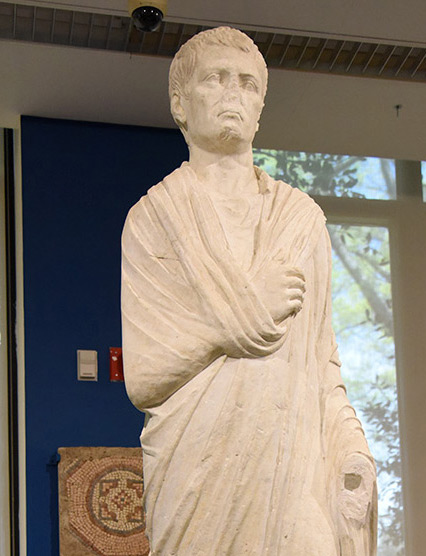
It was chiseled to convey gravitas, but also his leanings to the East, toward Greece, viewed by Rome as the center of great learning.
“The fact that it’s a Greek-style garment is really interesting,” Udell said. “It was a bold statement to choose to [be portrayed] like someone from the Greek East rather than someone who wanted to look like a Roman. So it carried a lot of symbolism. This is someone who was trying to convey his eruditeness, maybe his literacy or his awareness of literature.”
And it’s notable that he doesn’t look idealized, Udell said. “He looks like a person, which is something that was the trend in portraiture at that time.”
A Ritual Playsuit
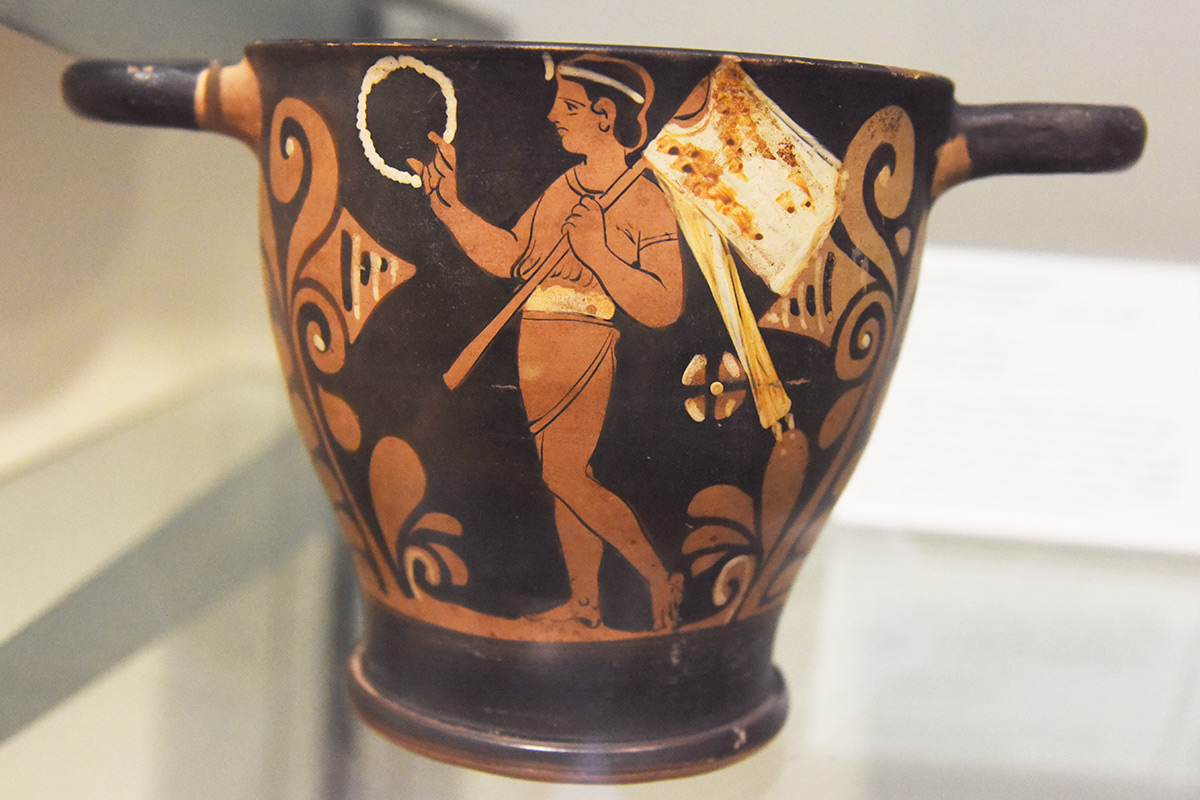
Skyphos (cup with horizontal handles): This vase offers a depiction of something new—“a short little kind of playsuit [that] is not anything I’ve ever seen before,” Udell said.
The young man wearing this garb also has a wreath, banner, and headdress that make it obvious he’s in the midst of a festival procession or ritual, she said.
“If we knew more about the clothing, maybe it would help us identify the ritual that this related to, or that it was sort of depicting or evoking,” she said.
Dressed to Kill
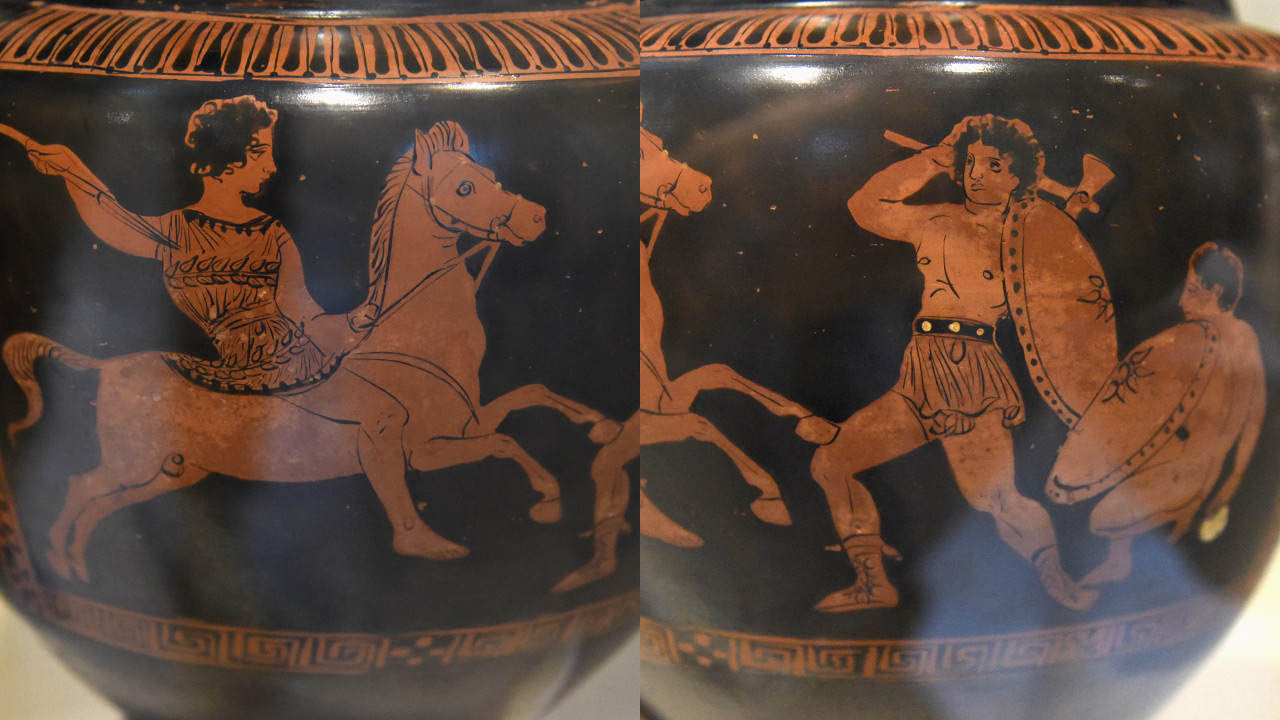
Column krater (bowl for mixing wine and water): On a common mixing bowl, warriors square off for battle—and also show “some really interesting types of battle clothing” indicating they belong to distinct South Italian tribes, Udell said. Their clothing differentiates them—one wearing a heavily patterned tunic, the other wearing fur boots and a skirt, “a very specific item of clothing” that clearly shows his tribal affiliation.
“He’s also fighting with an ax, which is not necessarily something we see every day,” Udell said. “All of these are clues as to identity. So clothing carries a lot of meaning.”
The Museum of Greek, Etruscan, and Roman Art is open to students and the public seven days a week. A guide to the museum is available on the Bloomberg Connects app.
