

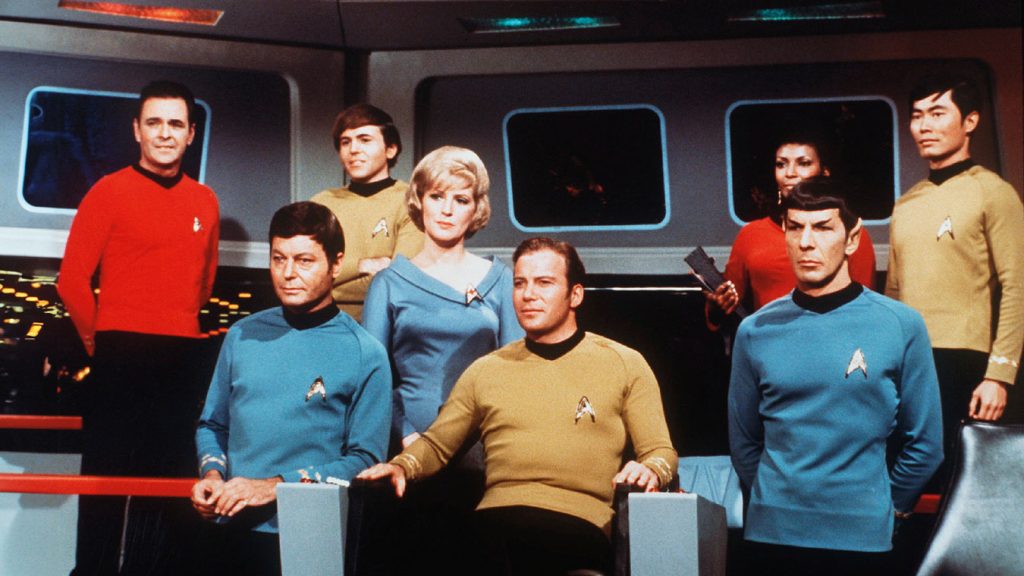
As the iconic sci-fi series marks its 60th anniversary, author and fan Keith R.A. DeCandido ’90 explores how the show’s hopeful vision—rooted in conversation and compassion—mirrors a Fordham Jesuit education.
Sixty years ago, Star Trek debuted on NBC. The show stood out because it wasn’t just about using zap guns and robots to fight weird aliens like Lost in Space, nor was it a cynical look at humanity through a science fictional lens like The Twilight Zone. No, the hallmark of Trek has always been that the solution to the story’s problem comes not from violence but from understanding, conversation, compassion—and learning.
I truly believe this is the main reason why Trek continues to thrive today. While the original series was canceled after three seasons, it continued to attract viewers in reruns, eventually inspiring multiple spinoffs: 14 movies and a dozen TV series (so far!), as well as hundreds and hundreds of novels, comic books, reference books, and games.
Through it all, Star Trek’s storytellers have maintained its compassionate, intelligent ethos. Characters use their knowledge to make the world a better place. The crews of the Enterprise and its successor vessels and space stations all excel at—to paraphrase Mark Watney in Andy Weir’s The Martian—science-ing the crap out of challenges.
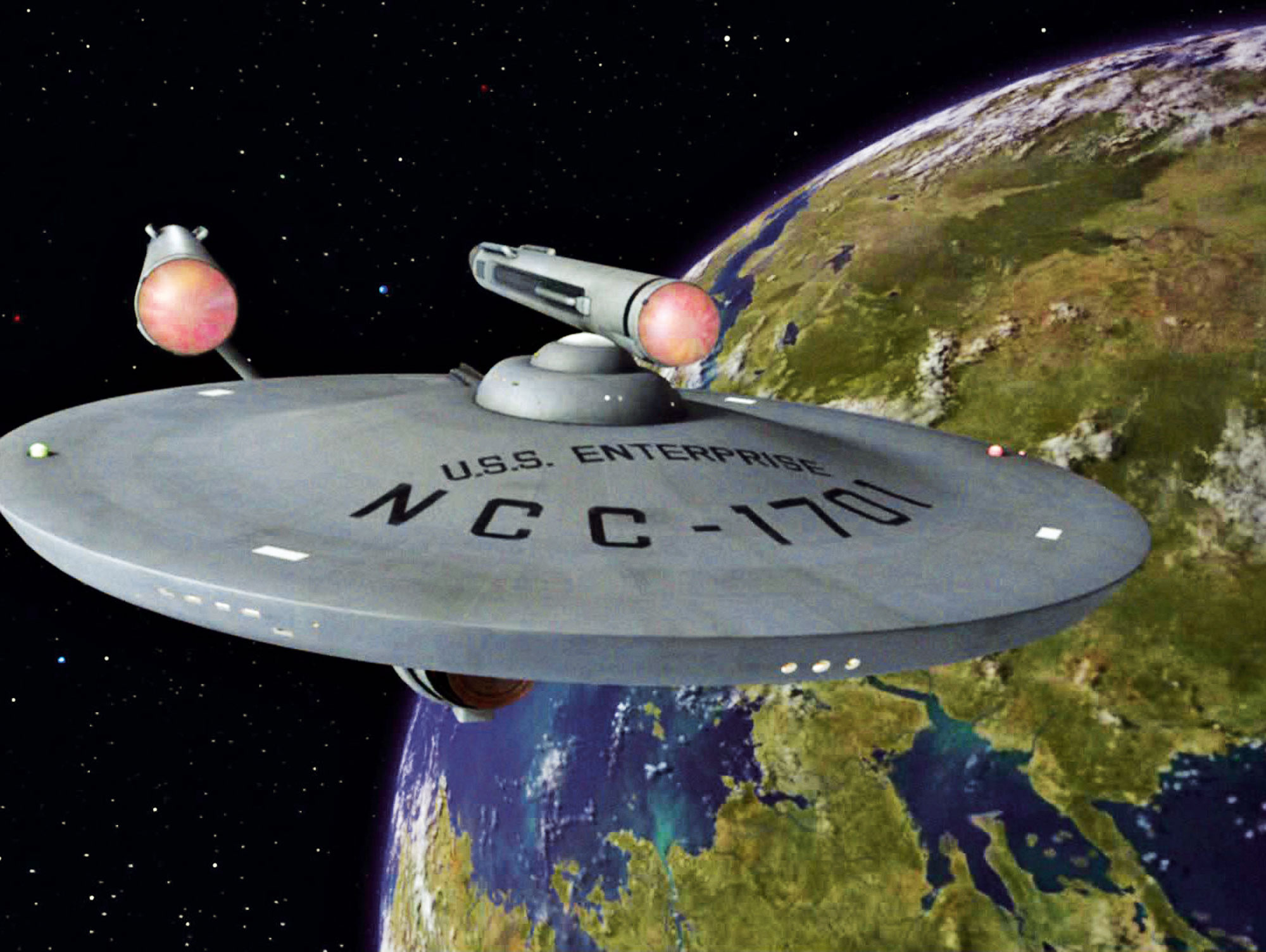
Star Trek is aspirational fiction. It’s not the world we’re likely to get in the far future, but it’s one we’d like to see. If you want something more realistic, there are plenty of other sci-fi shows you can watch, from Babylon 5 to The Expanse. But there’s something about Star Trek that ties it to the Fordham experience—learning through conversation and study, reading and writing, while working for and with others. It is “We Are Jesuit Educated” taken to its most fabulous extreme.
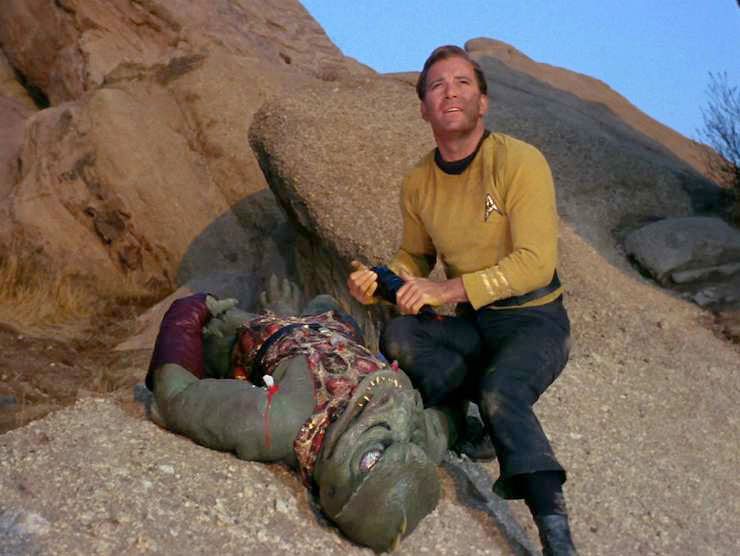
In the original series episode “Arena,” our heroes believe that the Gorn have willfully destroyed a colony as an act of war. But they eventually learn that the colony was formed in Gorn space, and the attack was retaliation. Captain Kirk is given the opportunity to kill the Gorn commander, but he chooses not to, instead having confidence that a dialogue can be opened to reverse the misunderstanding.
That thread runs through many of the show’s spinoffs. In Deep Space Nine, for example, the Federation, the Klingons, and the Romulans fight a war against the Dominion and its allies. The war ends not due to superior power or because someone fires a lucky shot in battle. It ends with an act of compassion on the part of Odo, who makes a huge personal sacrifice to save the Great Link of the Dominion.
The View from the Observation Lounge
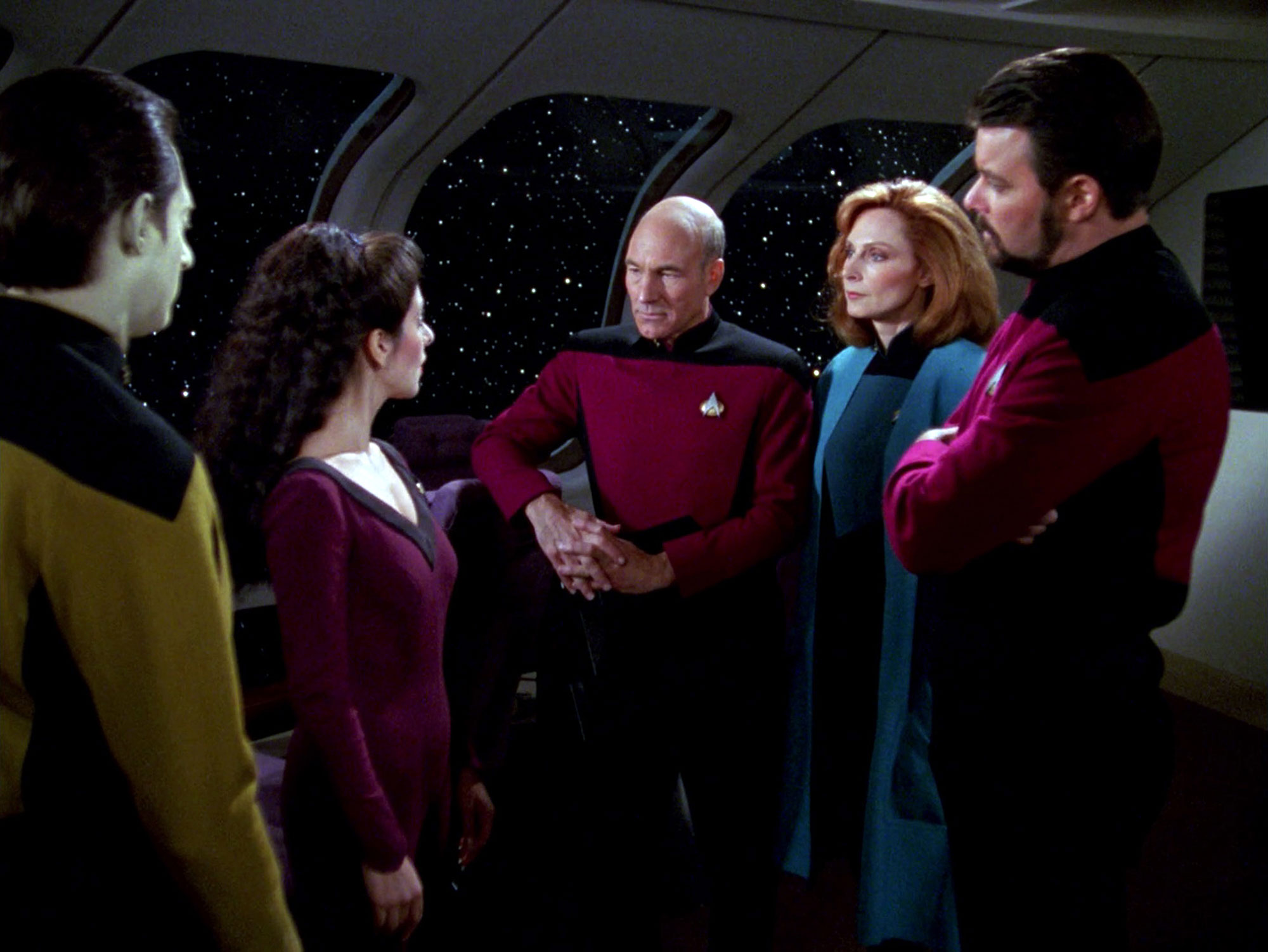
Star Trek’s first live-action TV spinoff was Star Trek: The Next Generation (TNG), which debuted in 1987. One of the hallmarks of TNG in particular was the observation lounge, where the crew met to discern the best course of action. Those conversations often revealed each crew member’s character while advancing the storyline, and they resonated deeply with me as a Fordham student at the time.
My exposure to Star Trek happened pretty much from birth—as did my connection to Fordham. My parents were avid viewers of Star Trek when it first aired on NBC, and both were students at Fordham during its three-year run. They met in a Romantic Literature class (yes, really) and were married in 1968 in the Blue Chapel in Keating Hall. They gave birth to a son the next year, and he that is to say, I—grew up watching reruns of Star Trek every weeknight before dinner.
In 1986, I graduated from high school and started attending Fordham myself. I spent so much of the subsequent four years having the same kinds of detailed, productive, learned conversations that Captain Picard led in the observation lounge, conversations that sometimes modulated into friendly arguments and principled disagreements.
Sometimes my Fordham “observation lounge” was in a classroom discussing Pre-Raphaelite artwork, or 19th-century fiction, or the roles of women in the New Testament. Sometimes it was in the McGinley Center (now the McShane Center) talking about last night’s Yankees game, the new U2 album, or the 1988 presidential election. And sometimes it was in the print shop putting together the paper and discussing any and all topics from politics to music to who was dating whom and how to make the Velox machine work.
One of the major events that happened during my time at Fordham was a student strike of sorts. Many of us were not thrilled with the great leaps upward that tuition had been taking in our time at Fordham, and we protested by doing some good old-fashioned sit-ins, one in the library, one in the administration building (now Cunniffe House). We were never violent or even loud. We protested by sitting and doing our homework. It was, I thought, a very Star Trek response to our outrage.
A Future Worth Writing For
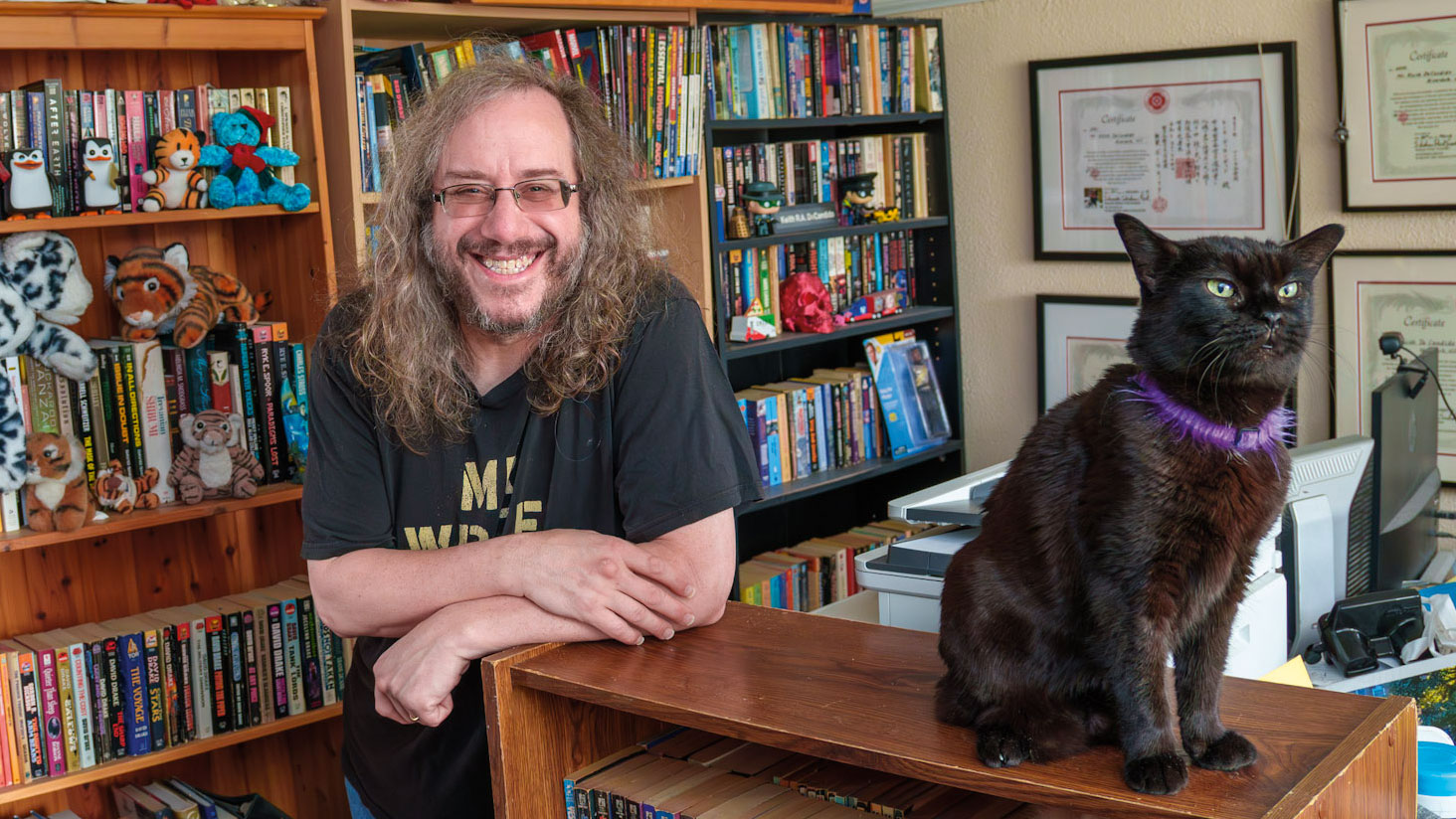
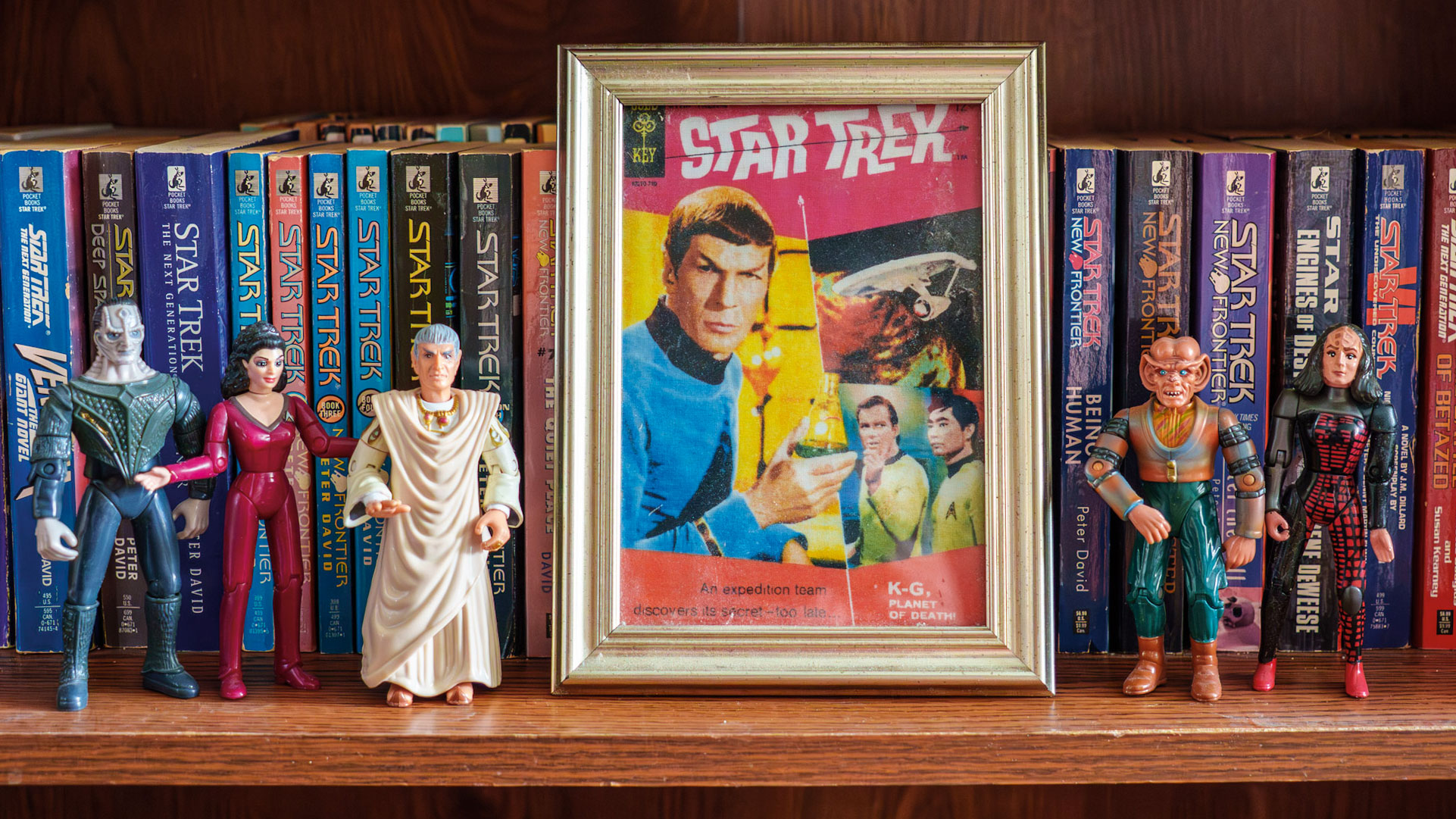
For the last two-and-a-half decades, I’ve been writing either for or about Star Trek—fiction in novel, novella, short story, comic book, and role-playing-game form, plus nonfiction in the form of reviews, rewatches, and think pieces—and I’ve continued to be a fan.
What I loved about my four years at Fordham is the same thing that I love about Star Trek: the triumph of compassion over violence, of conversation over misunderstanding. My experiences at Fordham encouraged me to work toward the future that Star Trek hoped for.
The original series debuted in the midst of civil rights unrest, the Vietnam War, and the Cold War, and yet you had Uhura, Sulu, and Chekov—a Black woman, an Asian man, and a Russian man—all working together on the bridge without it being in any way a big deal.
Each spinoff has expanded that vision of a pluralistic future, from a Black commander and an Arab doctor on Deep Space Nine to a woman commander and a Native first officer on Voyager to a Black woman leading a diverse ensemble on Discovery to a gay Klingon on Starfleet Academy. But the shows’ true power isn’t just in who is on the bridge but in how they behave—whether it’s Kirk refusing to kill the Gorn commander or Odo choosing sacrifice over conquest.
Those choices resonate with Fordham students and with the Jesuit tradition. In The Spiritual Exercises, Ignatius Loyola his own self preached that one should “be more ready to justify than condemn.” That is one reason why both Fordham and Star Trek continue to endure, challenge us, and enrich our lives. 🖖
Keith R.A. DeCandido ’90 is a bestselling, award-winning author of more than 60 novels and more than 200 short stories and comics. He’s written in nearly 40 different licensed universes including, obviously, Star Trek—as well as in worlds of his own creation. His pop-culture commentary can be found on the Reactormagazine website.
RELATED STORY: AI (Probably) Won’t Destroy Us, Says Sci-Fi Writer
