

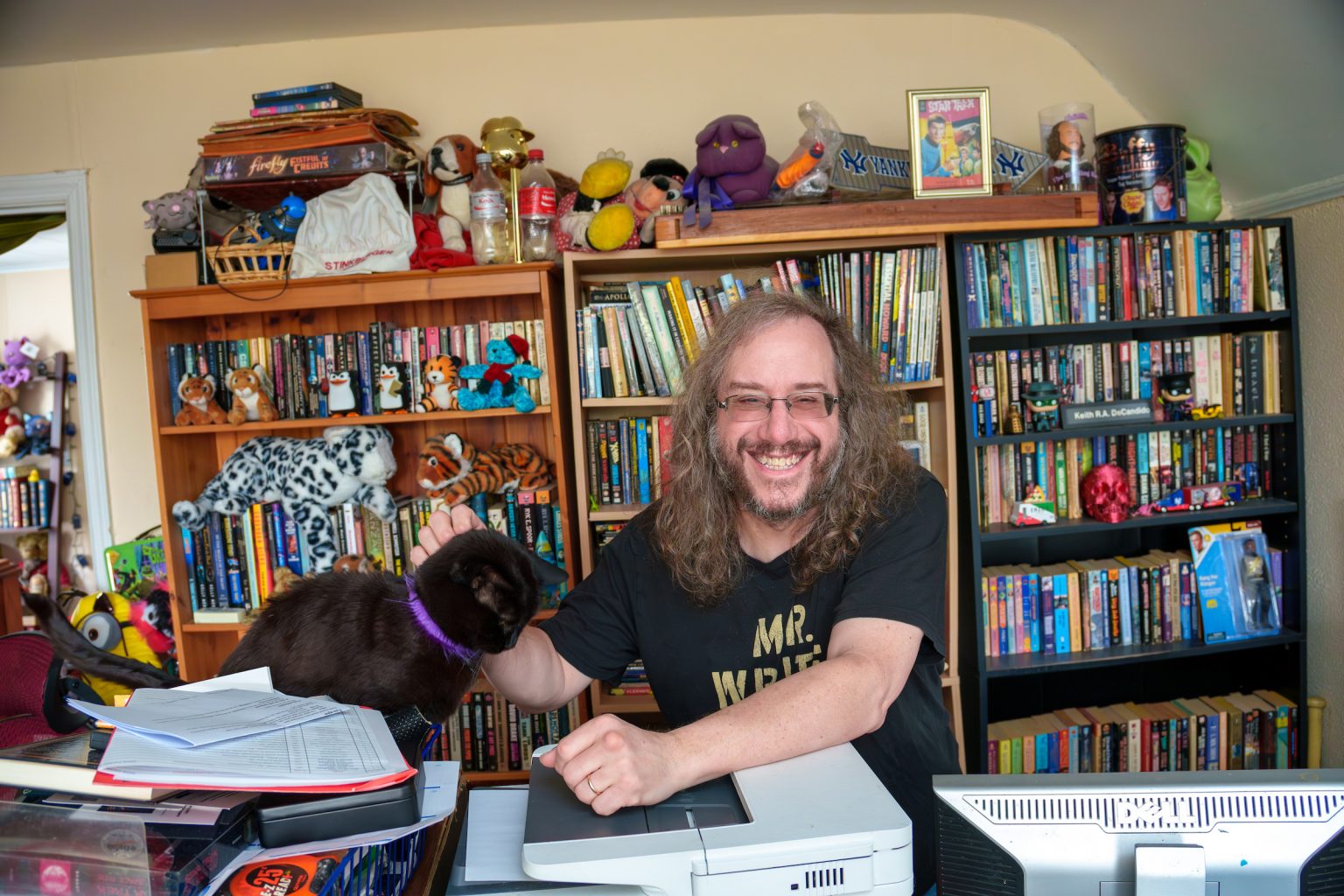
Bronx native Keith R.A. DeCandido ’90 chose Fordham for college in part because the local bus route took him right from his front door to campus.
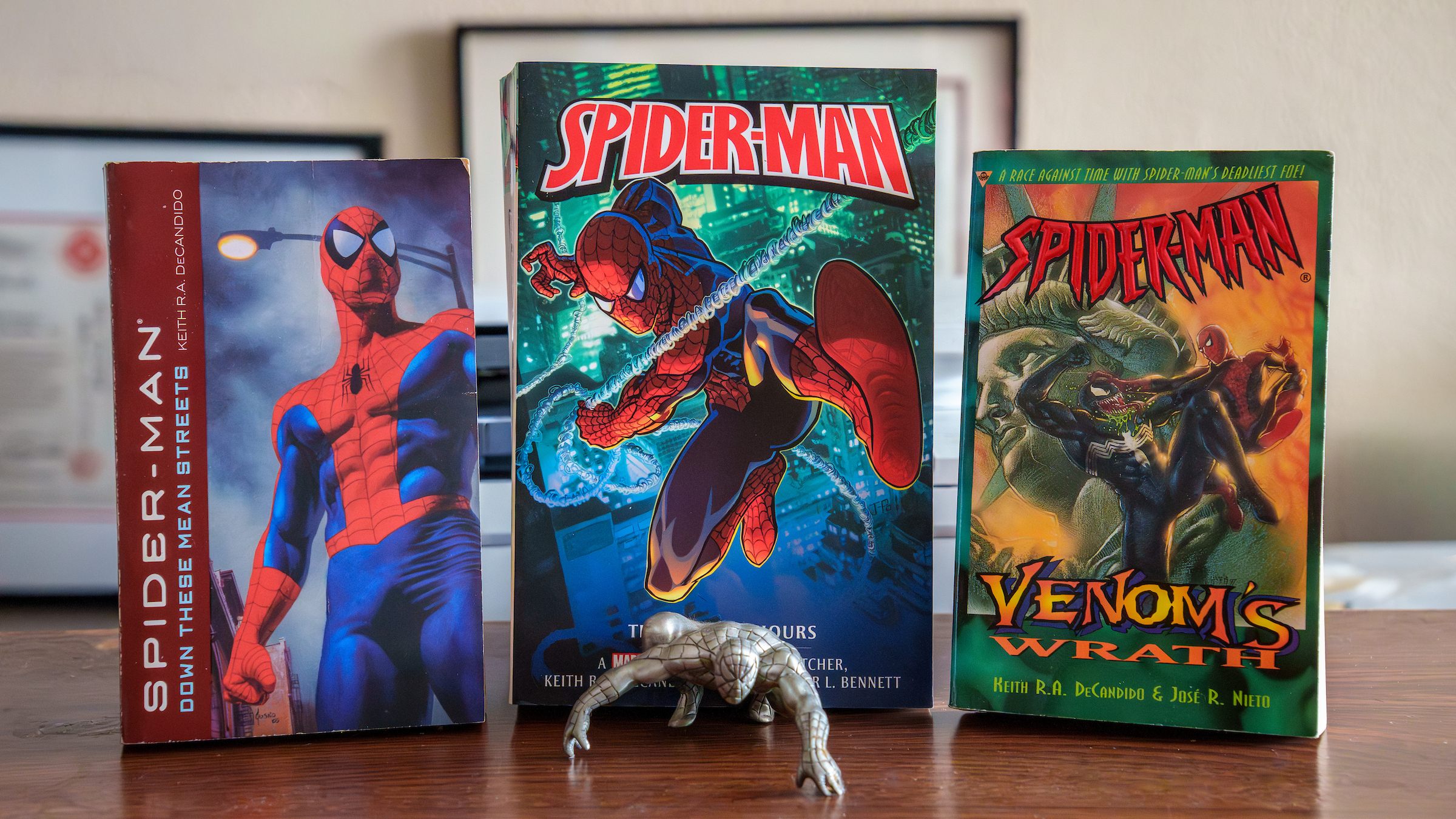
Since then, he has made a career out of traveling to all kinds of far-flung worlds and galaxies, including some of his own creation. He’s written scores of novels, short stories, and comics, including tie-in fiction for major franchises like Spider-Man, Doctor Who, Supernatural, and most notably, Star Trek.
On the eve of the latest Spidey flick and the fast-approaching 60th anniversary of the original Star Trek, DeCandido sat down with Fordham Magazine to discuss his career, living in sci-fi times, and why he’s not ready for the robots to take over.
First things first, how do you feel about the Spider-Man: Brand New Day trailer?
It fills me with glee. Every shot looked like it was straight out of a page by Stan Lee and John Romita Sr. in the 1960s.
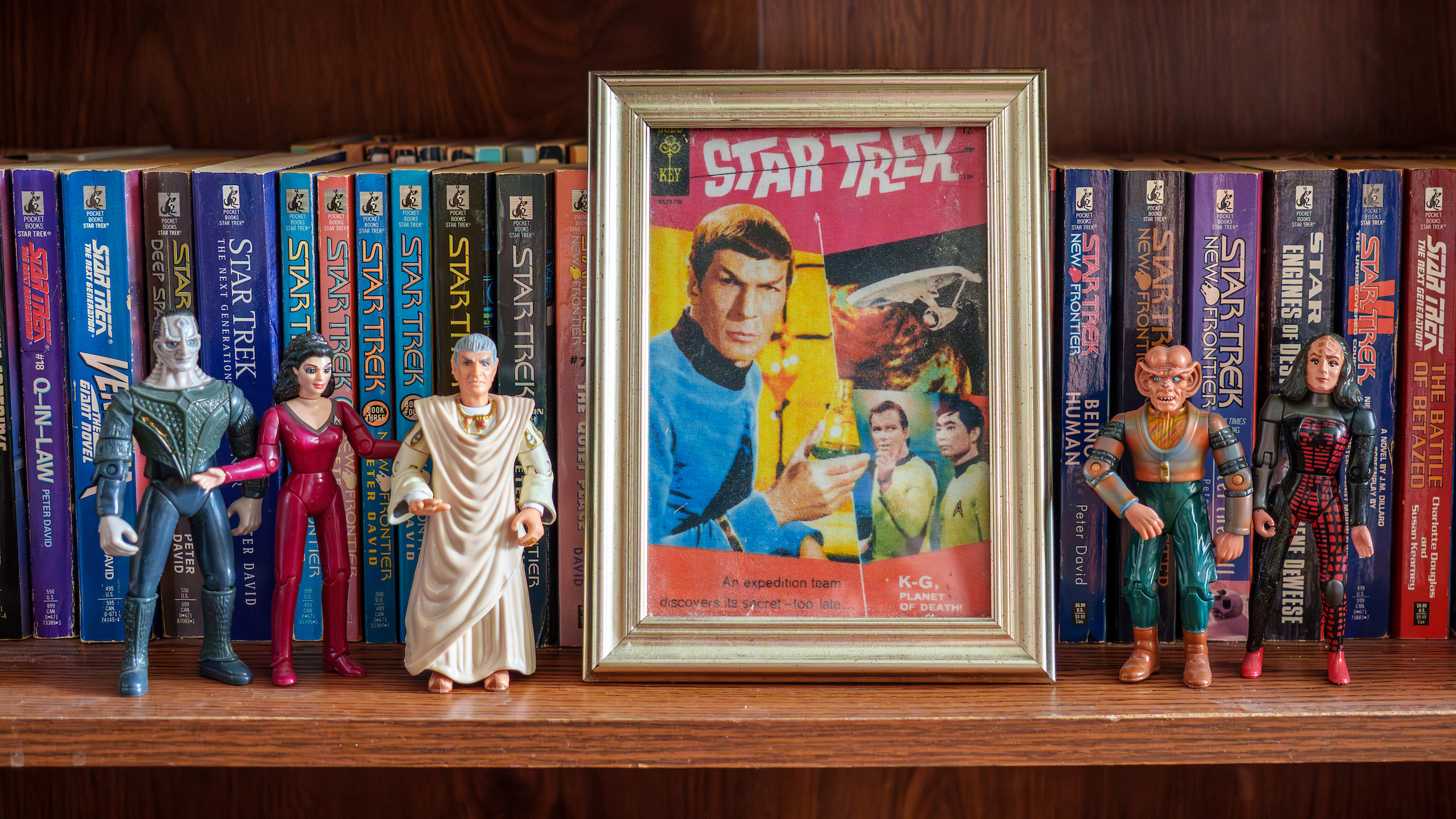
You’ve also been a lifelong fan of Star Trek and have made your own mark on the franchise throughout your career. What do you think keeps it so popular?
The thing that is uniquely Star Trek is that the problem of the story is almost always solved by compassion, understanding, and conversation. Star Trek is aspirational fiction. It’s not a future we’re likely to have, but it’s a future we’d really like to have—a future in which there is no prejudice or discrimination and where people talk about things. And yes, sometimes violence is required, but it’s the last resort.
As a sci-fi writer, how do you feel about AI? Are you technology positive or a tech skeptic?
I am generally technology positive. I use it all the time—I don’t know how I ever survived without Google Calendar. I’m pro the concept of AI. I am against the way it’s currently being used. My issue with AI as it is right now is that it can’t do all the things people say it can do. It doesn’t do them very well. And it’s also chewing up natural resources and being foisted upon people who haven’t asked for it and don’t need it. The only people who wanted it were the tech growers, who were making money off it.
How about as it relates to writing?
I don’t think the technology is bad in and of itself. It’s how it’s used. A lot of AI-created fiction is terrible. It’s scraping Google Books and other sources, so it’s stealing from me and my colleagues, and I object to that. I was at a convention earlier this year where a fellow author said something that I really liked: “I want AI to do my dishes. I don’t want it to write my book.”
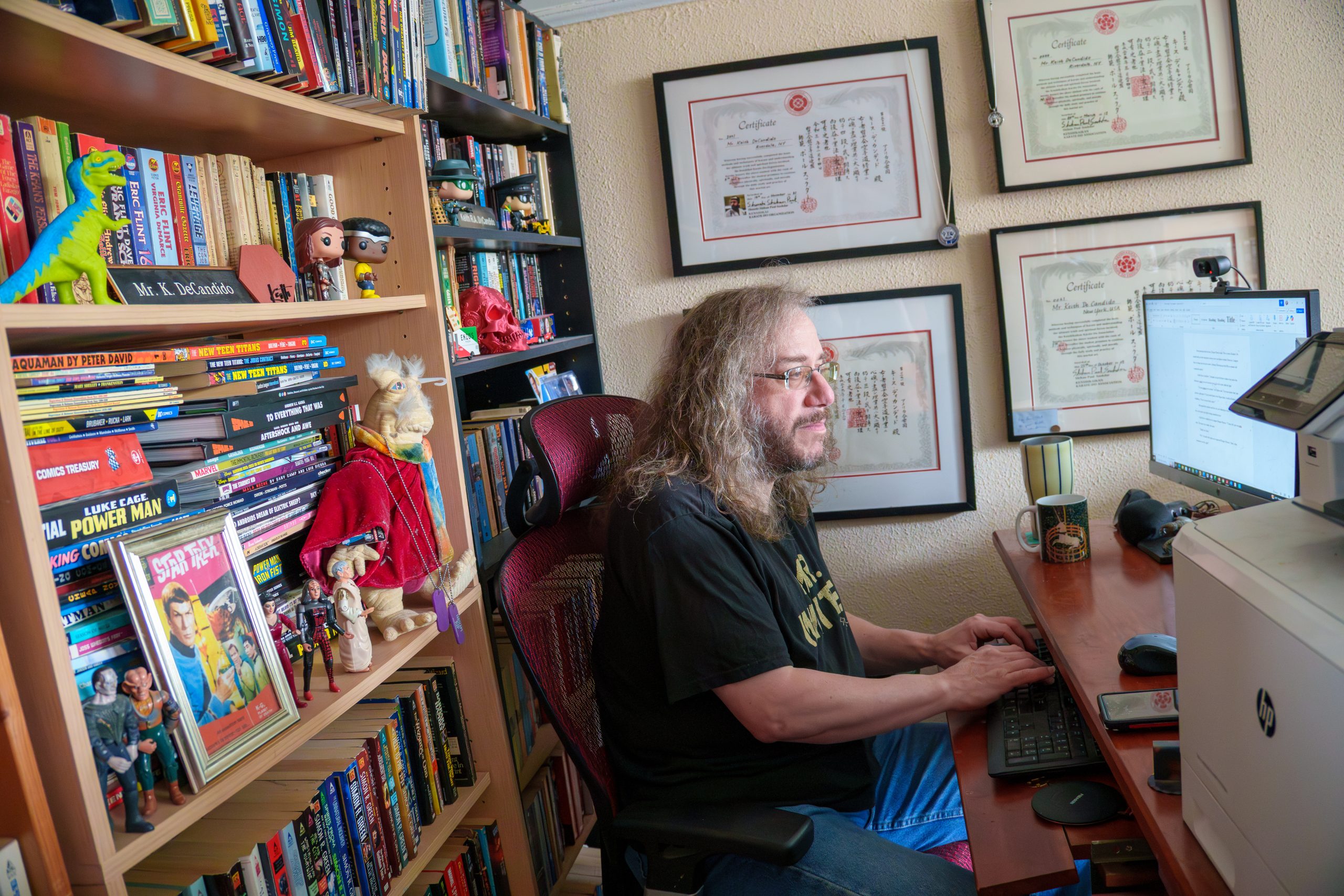
What do you think sci-fi has gotten right or wrong about AI?
Science fiction isn’t about getting things right. You look at older science fiction—nobody saw the computer monitor coming. The idea of marrying a computer to a television screen did not occur to anybody until the ’70s, when it actually happened.
We’re not in the business of predicting the future. We’re in the business of commenting on the present or speculating about the future. The point isn’t to get it right. The point is to comment on where we are now by exploring where we might go.
Do you think our cultural baggage helps or hinders us now that these new sci-fi technologies have really arrived?
I don’t know. We all saw Terminator! But I don’t think it’s gonna be as bad as people say it’s gonna be, simply because throughout my entire 57 years of life, nothing has been as bad as people say it’s gonna be. I’ve also been fortunate enough to live in a time in which most major changes were beneficial—but obviously not all of them. When I was growing up, we were all convinced nuclear war between the U.S. and the Soviet Union was inevitable. We haven’t destroyed ourselves yet.
We like to think a humanities-forward institution like Fordham is more essential than ever now that thinking can be outsourced to a machine. What are your feelings?
I was an English major and a women’s studies minor, and those subjects introduced me to so many things that still inform who I am. That’s absolutely valuable, especially as more things become automated. Being able to think on your own is important because, like I said before, machines and technology are tools, and you need to be able to use tools intelligently. You know, AI can combine, pull together information in ways that are useful, but you still need to be able to go through that information and figure out what to do with it.
Are you optimistic about the future?
The science fiction writer Theodore Sturgeon once said that 90% of everything is crap—and he’s right, yeah, but it’s worth it for the other 10%. The more stuff there is, the larger the raw number of that 10% becomes.
Despite everything, there’s no time in the past I would rather live in. I don’t want to die of an abscess tooth, you know? We keep improving. It just isn’t in a straight line. There are always steps back, and that’s annoying, but it’s a process. It’s not a pretty song that’s over in three minutes; it’s a jazz improv that wanders all over the place.
This interview has been edited and condensed.
RELATED STORY: Star Trek at 60: A Bold, Surprisingly Jesuit Vision of the Future
