

From AI-powered tutors that help students practice foreign languages to chatbots that offer feedback on writing assignments, artificial intelligence is transforming schools. But as the technology becomes integrated into the classroom, how can educators harness its potential without sacrificing the critical thinking, creativity, and human relationships at the heart of education?
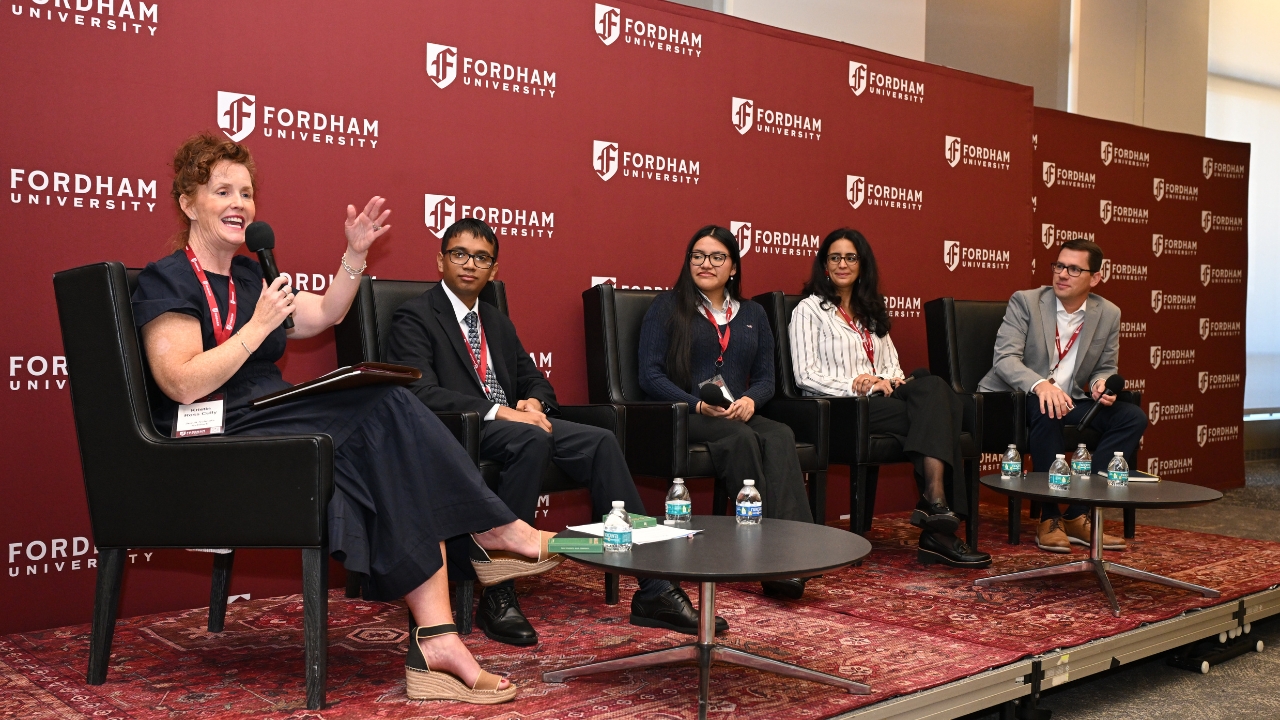
During an Oct. 3 discussion at Fordham’s Ignatian AI Conference, a panel of students and educators from four Jesuit high schools explored that question, sharing how their schools are navigating the opportunities and challenges of AI in secondary education.
How Schools Are Using AI
Brophy College Preparatory in Phoenix, Arizona, is using AI in everything from athletics to art classes, said principal Jim Bopp. The school uses a platform called Flint that allows teachers to create customized AI chatbots that guide students through assignments.
Rather than supplying answers, the chatbot prompts students to think more deeply about how they’re coming up with their own answers, Bopp said. The results have been positive.
“I’ve seen my students as eighth graders doing deeper, more extensive reflective writing than I ever have in my time teaching,” he said.
At Fairfield Prep in Connecticut, teachers are using chatbots to help students practice speaking foreign languages, said Rinat Levy Cohen, the school’s associate dean of innovation. The tools simulate video conversations and provide teachers with feedback about students’ language skills, helping them identify areas for improvement.
For students, AI can be a source of customized academic support.
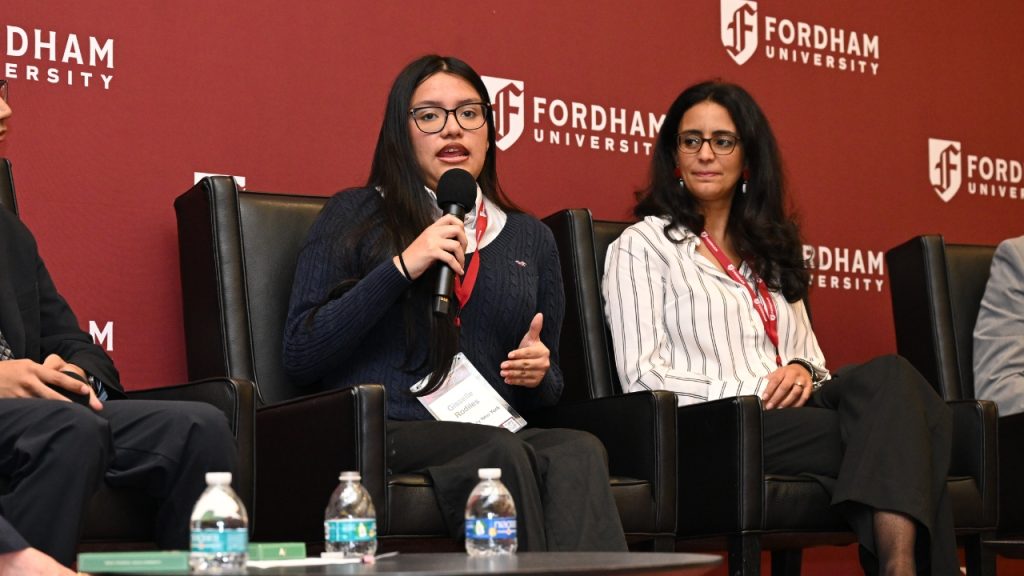
“If we don’t understand certain material, we can go home and ask AIs like ChatGPT or Claude to give us more practice,” said Gisselle Rodiles, a junior at Cristo Rey New York High School.
A Personalized Tutor, or a Shortcut?
One of AI’s greatest advantages is its accessibility, said Matthew Santos, a senior at Fordham Prep.
“I think the power of AI is that it’s always there,” he said, noting that students can get immediate help with a late-night homework question rather than waiting for their teacher to answer an email.
But Santos, who is co-president of the school’s AI club, cautioned against treating the technology as a replacement for teachers.
“It excels at giving you answers, but the process of learning isn’t instilled into AI,” he said.
Bopp said the way students approach the technology determines what they get out of it. Some are flourishing, he said, including students in an environmental justice class who used AI to help write grants that secured over $50,000 for sustainability projects at Brophy.
Others, he said, are submitting AI-generated assignments without understanding the material. “It can look like they’re learning,” Bopp said, but the technology can mask gaps in their knowledge.
Red, Yellow, Green: Teaching Students to Use AI Responsibly
Schools are trying different approaches to guide AI use. At Cristo Rey, teachers use a traffic-light system for assignments, Rodiles said: red prohibits AI, yellow allows limited use, and green permits students to use it without limitations.
But Santos argued that simply telling students when AI is permitted isn’t enough. “We’re not telling students how to use AI effectively and educationally,” he said.
Cohen said Fairfield Prep has adopted a different model that allows AI as a tutor, but not as a substitute for their own work. She described the school’s approach through a weightlifting analogy: “We say, don’t let AI do the reps for you. You need to do the reps. Let AI be your spotter.”
Keeping Connection at the Center
Panelists agreed that human relationships must remain central to learning.
“Teaching and learning are inherently relational,” said Bopp, who added that Brophy is pioneering new opportunities for students to connect in person, including reintroducing recess for first-year high schoolers.
For Santos, the most important challenge is ensuring the convenience of chatting with an AI bot doesn’t become an alternative to students connecting with their teachers or each other.
“Teachers seeking out their students, creating communities around their classes—for me that is the most important thing in education right now,” he said.
