

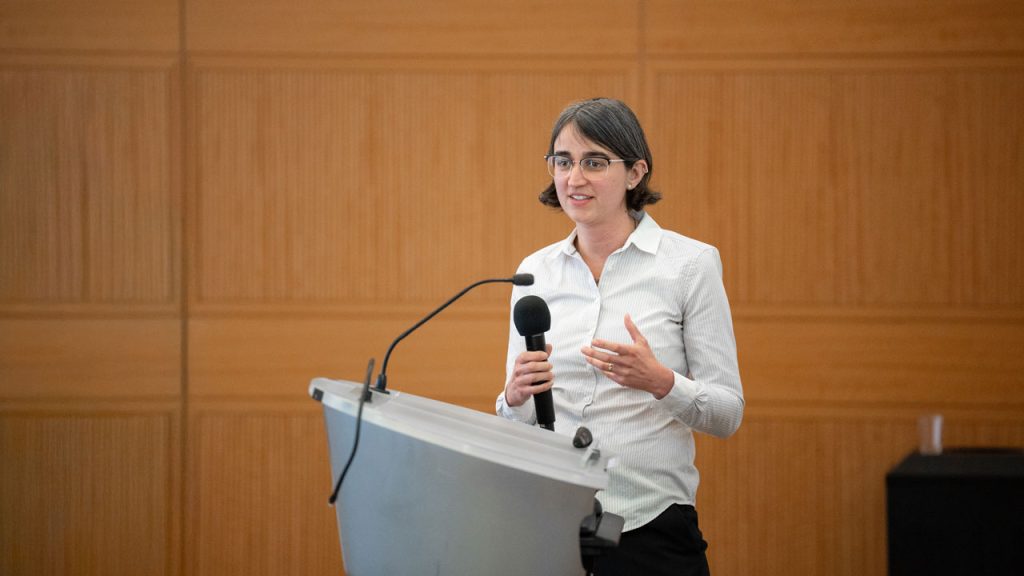
Detecting audio deepfakes and improving medical imaging techniques were among the research topics covered by faculty and students at Fordham’s fourth annual AI and Data Science Interdisciplinary Workshop at Lincoln Center on April 13.
The nine presentations, shared below, explored how artificial intelligence and data science can be applied to real-world challenges.
Better Learning Through AI
To teach chemistry students how to best use AI, Elizabeth Thrall, PhD, professor of chemistry and biochemistry, designed an activity for students in the U.S. and Austria that introduced effective AI-prompting techniques for chemistry tasks. In a follow-up survey, students said it helped them achieve their learning goals.
Detecting Audio Deepfakes
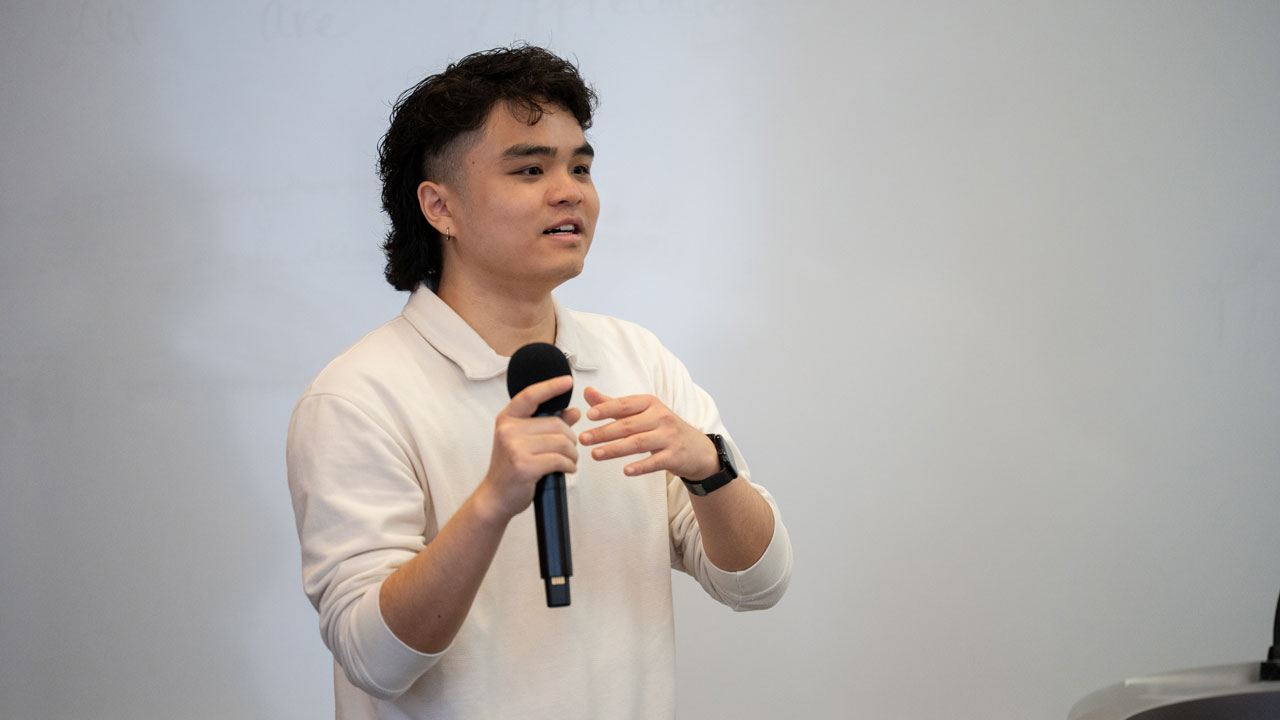
Computer and information sciences graduate student Xiang Li explained how audio deepfake detection methods lag behind the text-to-speech and voice-conversion technologies that make deepfakes possible in the first place. Li said his research—benchmarking the current state of AI-audio detection in general—will help lay the groundwork for better audio deepfake detection in the future.
Measuring Air Pollution to Detect Disparities
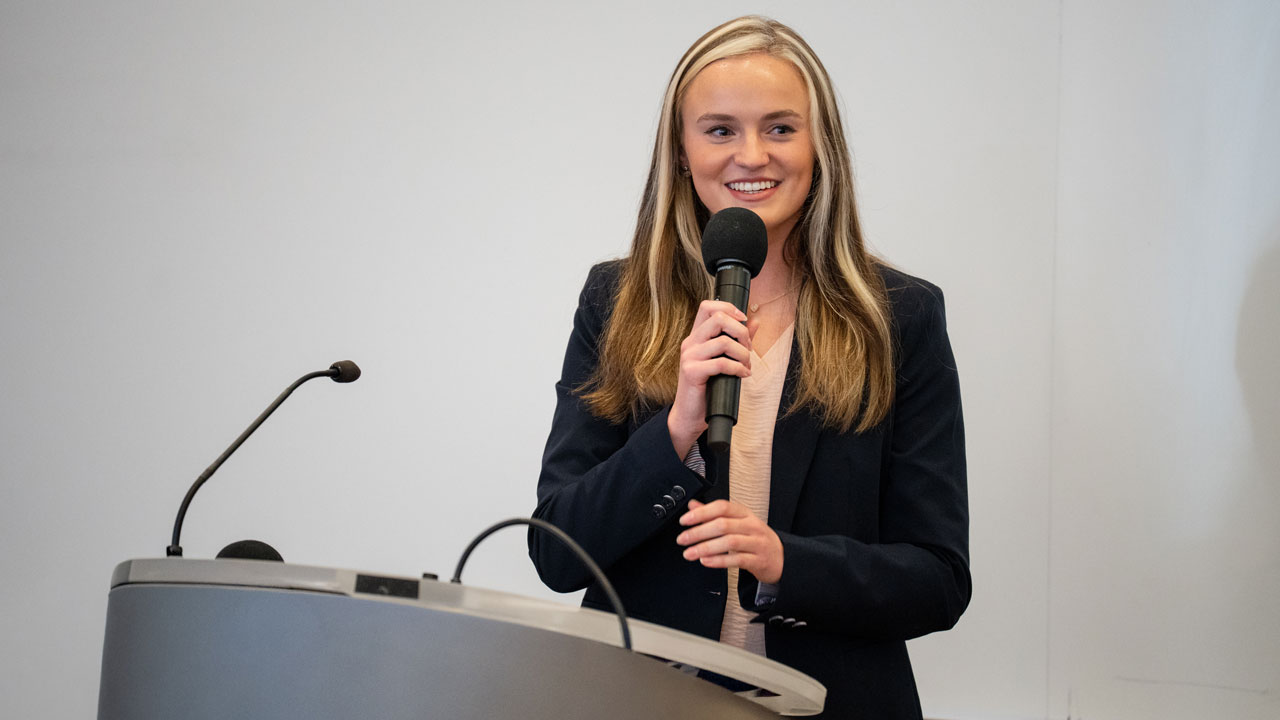
Fordham’s FRESH Air project, led by Stephen Holler, PhD, professor of physics and engineering physics, examines urban air quality and environmental equity. By expanding the research outside of New York City and using a network of air-quality sensors across NYC and Chicago, environmental science undergraduate Mia Mellican demonstrated how regional and local pollution patterns can uncover pollution exposure disparities across communities.
The Bias in AI-Generated Advice
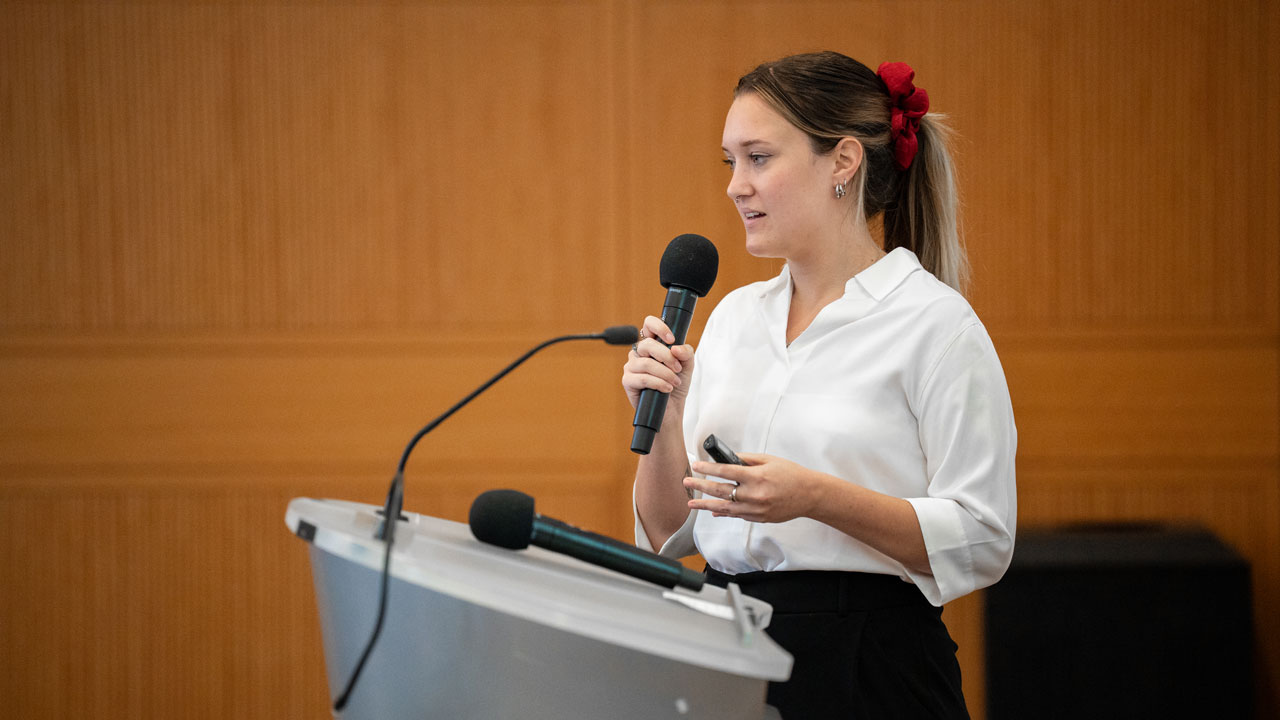
Computer and information sciences graduate student Holly Taswell examined how AI models may produce different types of relationship advice depending on a user’s gender or religious identity, raising important questions about fairness and user safety.
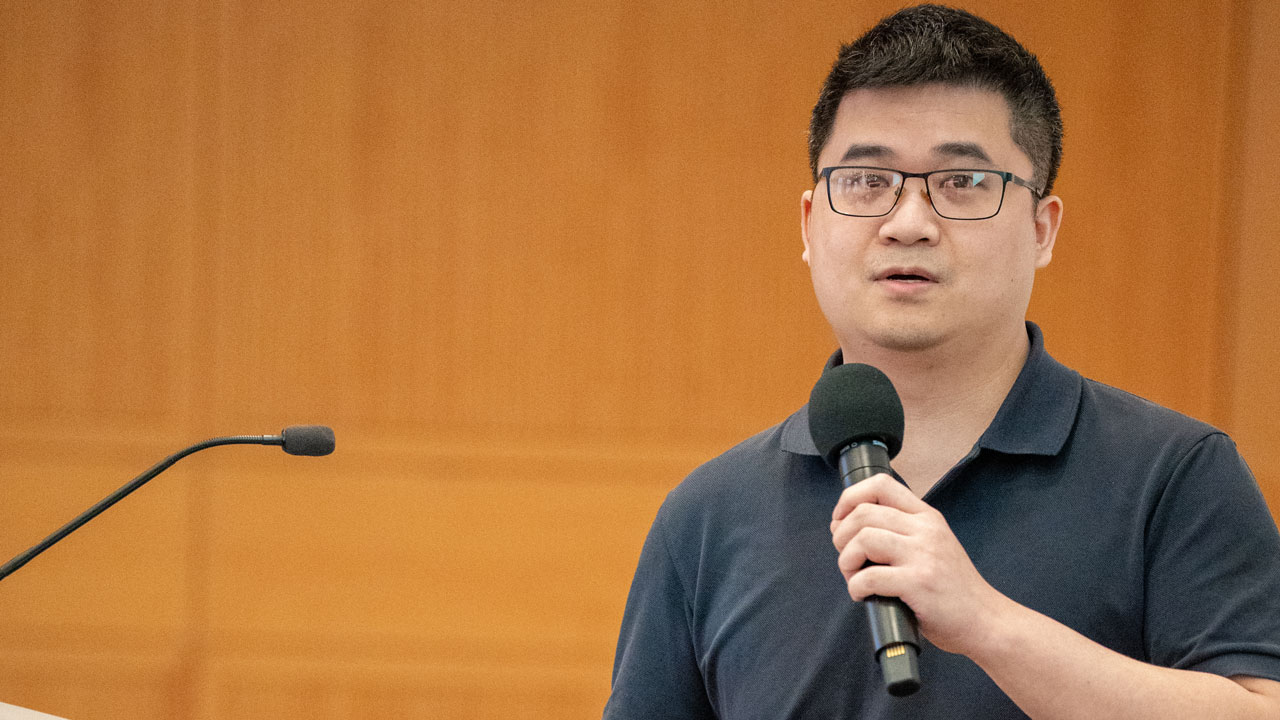
Predicting Chemical Behavior Using AI
Hao Liu, PhD, a postdoctoral researcher in the chemistry and biochemistry department, shared his findings on how AI can predict the spontaneous organization and behavior of chemicals, thereby deepening our understanding of fundamental scientific processes.
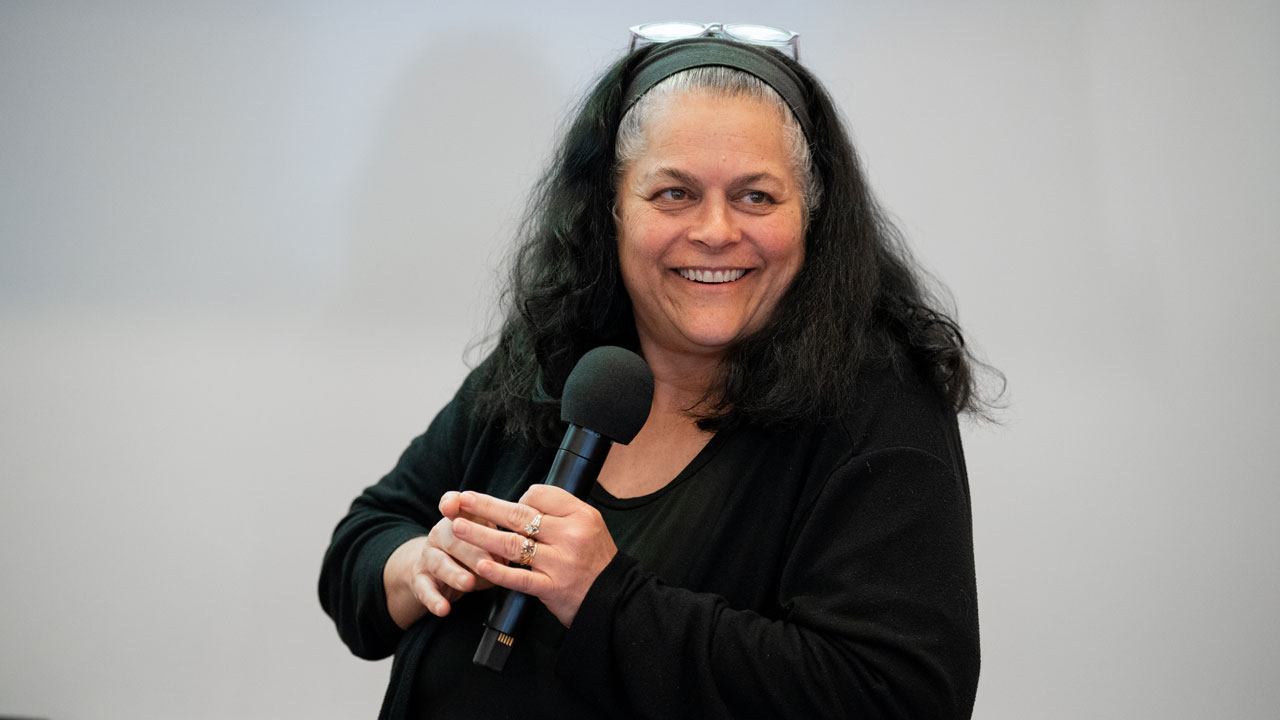
Using AI to Create Apps
Betsy McCoach, PhD, the Anne Anastasi Professor of Psychometrics and Quantitative Psychology, highlighted her use of an open-source AI-powered platform called Shiny Apps. This platform makes it easy to develop interactive tools that help researchers and practitioners gain insights from complex data.
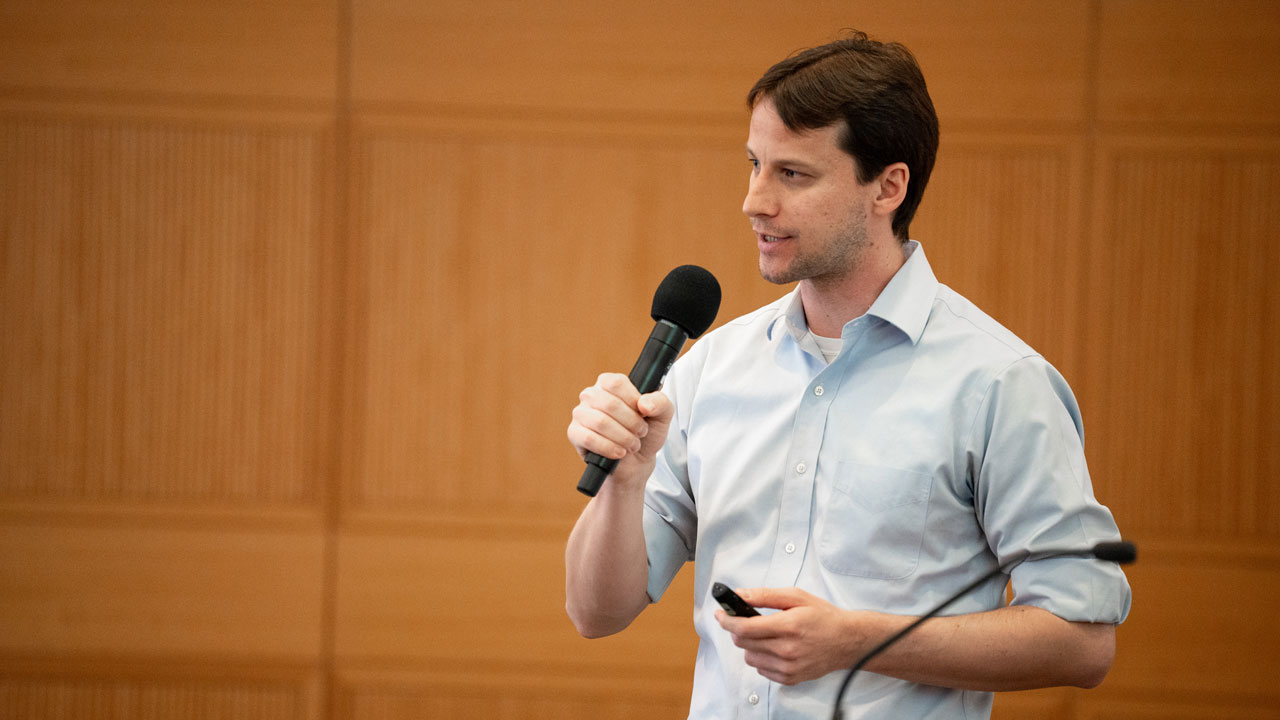
Improving X-Ray Analysis Through AI
Computer and information sciences graduate student Eric Roginek is researching how to use AI to augment the analysis of real X-rays. By training an AI model to improve the resolution and clarity of AI-generated X-ray images, he demonstrated that the diagnostic accuracy of real X-rays could be enhanced with the help of AI, which could minimize patient exposure.
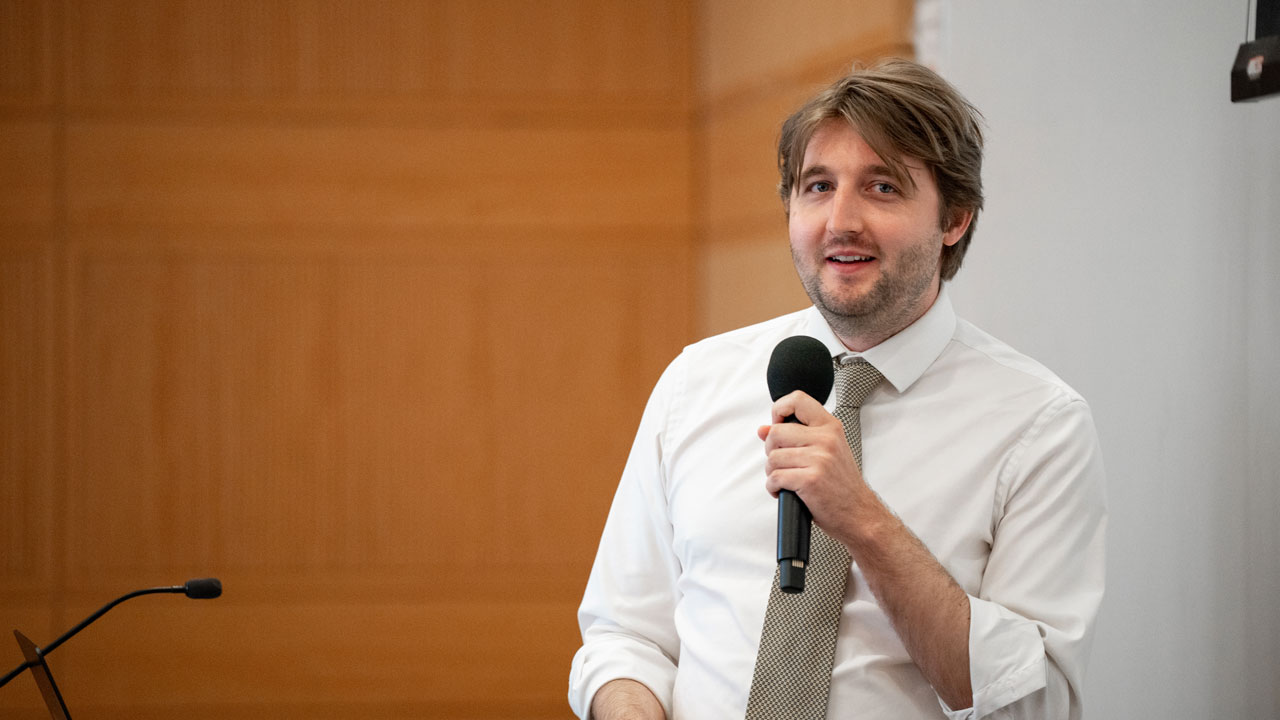
What Economics Can Teach Us About Computer Security
Computer and Information Sciences professor Adam Hastings, PhD, shared his research on cybersecurity. Technological vulnerabilities persist, he argued, because security is treated as a purely technical issue rather than one shaped equally by human behavior, institutions, and economic incentives.
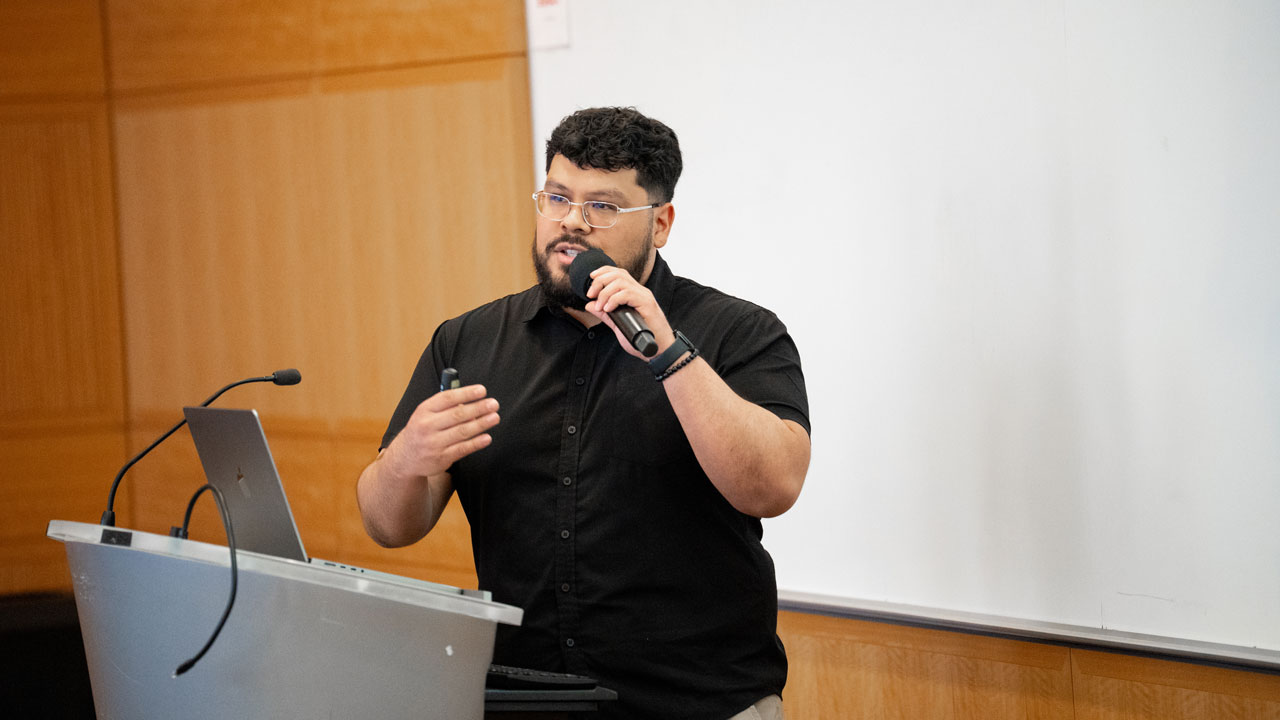
Understanding Student Learning Through Data
The workshop concluded with a presentation by psychology professor Alfonso Martinez, PhD, who discussed how to improve student achievement assessments and support by changing statistical models to incorporate a wider range of factors and refining the key variables they use, like gender and socioeconomic status.
Jessica Lang, PhD, dean of Fordham Arts and Sciences, said Fordham’s Jesuit values guide the University’s approach to emerging technologies and encourage critical thinking around their societal implications. “The projects featured today reflect that mission, demonstrating how interdisciplinary collaboration can lead to more thoughtful, inclusive, and transformative solutions,” she said.
Johanna Francis, PhD, professor of economics, and two faculty members in the Computer and Information Sciences department, Gary Weiss, PhD, and Yijun Zhao, PhD, organized the Arts and Sciences event, which was supported by an Arts and Sciences challenge grant.
Written by Stephanie Adomavicius with additional reporting by Nicole Davis
