

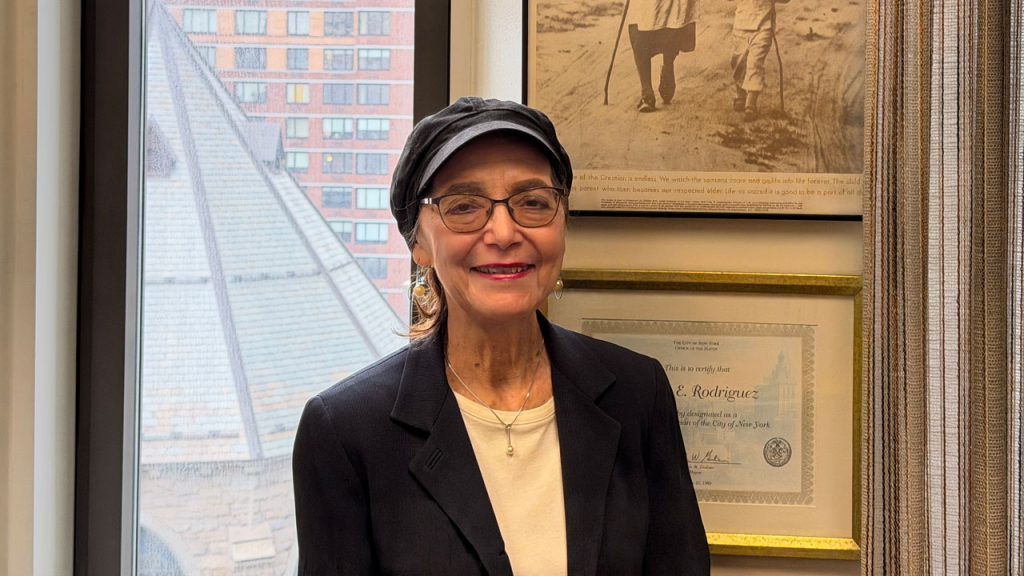
From the U.S. Census Bureau to Sesame Street, Clara Rodríguez, PhD, has often been consulted for her expertise on the Latino American experience and Latino representation in the media.
Now, after teaching two dozen courses, authoring 11 books, and receiving multiple awards, fellowships, and appointments for her work, she is retiring this summer as professor emerita of sociology after 50 years at Fordham.
Rodríguez discussed her influential research on Latino identity and its far-reaching impacts on Dora the Explorer, the census, and more.
A Fund to Honor Her Father
Rodríguez’s parents came to Morningside Heights from Puerto Rico. Though her father had a fourth-grade education, he learned to speak six languages and was considered “the family communicator,” said Rodríguez. In his memory, she created the Angelo Rodríguez Research Award, a scholarship fund for undergraduates doing work in Latin American and Latino Studies. At a meeting of the American Sociological Association (ASA) this summer, she will present her recent paper on the positive, professional outcomes of its recipients.
“I’m very proud of starting that,” she said.
On Being a Pioneer
Rodríguez is the first U.S.-born Latina to earn a PhD in sociology. She is also the first Hispanic dean at Fordham and the first woman dean at the Rose Hill campus, serving from 1976 to 1981 as dean of the School of General Studies (now the School of Professional and Continuing Studies).
But she doesn’t dwell on her trailblazing achievements. “I just go in and do the job,” she said.
Breaking Down Racial Categories
As Rodríguez explains in her book, Changing Race: Latinos, the U.S. Census, and the History of Ethnicity, many Latinos see race as fluid and primarily cultural—not fixed or binary as it’s commonly understood in the U.S. As a result, the U.S. census has historically struggled to categorize the Latino population.
For instance, in 1980 the Census Bureau added a question on all census forms that asked people to note their ethnicity separately from their race (“Is this person of Spanish/Hispanic descent?”). Rodríguez found that in that census, when asked to choose their race, nearly 40 percent of Latinos chose “other race” because many did not see themselves in the survey’s limited racial categories.
Rodríguez presented these findings to the Census Bureau in 1995, helping to prompt the organization to refine the way it collects demographic data. Afterward, she said, one of the statisticians told her, “‘I really appreciated your presentation because we had all assumed it was a misunderstanding on their part.’”
“My work contributed to them reviewing and ultimately changing the way they ask questions about race and ethnicity,” she said.
In 2030, the Census Bureau plans to combine its two separate questions about race and ethnicity into an easier, more inclusive one to answer: “What is your race and/or ethnicity?” It will also allow respondents to choose multiple racial and/or ethnic categories.
From Big Bird to Dora
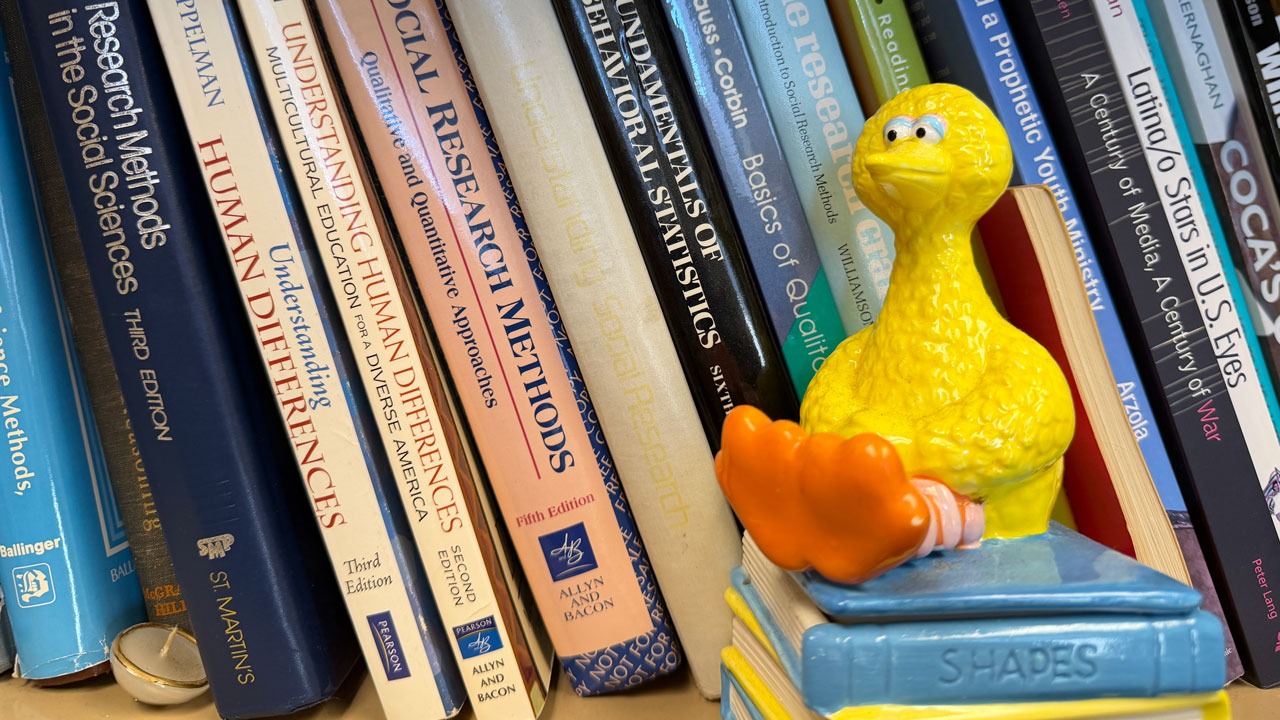
A Sesame Street illustration on Rodríguez’s desk and a Big Bird figurine on her shelf are mementos of her time consulting for Sesame Street as an expert on Latino culture and language. This led to her work on another popular children’s show, Dora the Explorer. (IMDb credits her as a cultural and Spanish language consultant on 49 episodes, from 2000 to 2008.)
Should Dora be from Latin America? That was one of the questions the creators asked Rodríguez to weigh in on. “My own feeling was no, she should be a Latina here in the United States,” she said. Ultimately the creators made her pan-Latina, so children of all Hispanic backgrounds can identify with her.
Representation on Big and Small Screens
Watching West Side Story as a teen, Rodríguez remembers thinking, “‘Those are not like the Puerto Ricans I know.’” Their portrayal was very negative, she said. The white gang was the Jets, she noted, and the Puerto Rican gang was the Sharks—“that tells you how it was communicated.”
Latino representation in film later became one of her areas of expertise. Working on her book Heroes, Lovers, and Others, about the history of Latino and Latina actors in American films, she discovered that “in the Silent Era, Latins were in.” American actors recast themselves as “Latin Lovers.” “I found that portrayals of Latinos in the media varied a lot with the political and economic times of the United States,” she said.
Her later book, America, as Seen on TV, looked at global audiences’ perception of America through its television shows. “The most surprising thing was hearing [the research subjects] say, ‘I came to New York, and it wasn’t like Friends.’ You have all this diversity here that wasn’t being viewed by these people.”
Putting Her Stamp on It
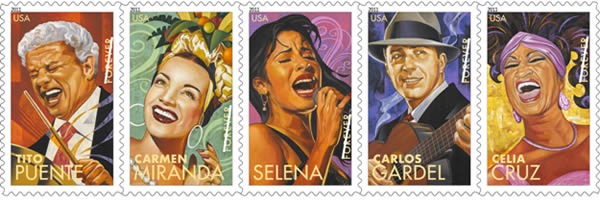
Alongside scholars such as Henry Louis Gates Jr., Rodríguez served on the Citizens’ Stamp Advisory Committee from 2008 to 2011. Based on her recommendations, José Ferrer, Tito Puente, Carmen Miranda, Selena, Celia Cruz, Carlos Gardel, and Julia de Burgos all received their own commemorative stamps. “It felt good to see these folks being acknowledged in this way,” she said.
