

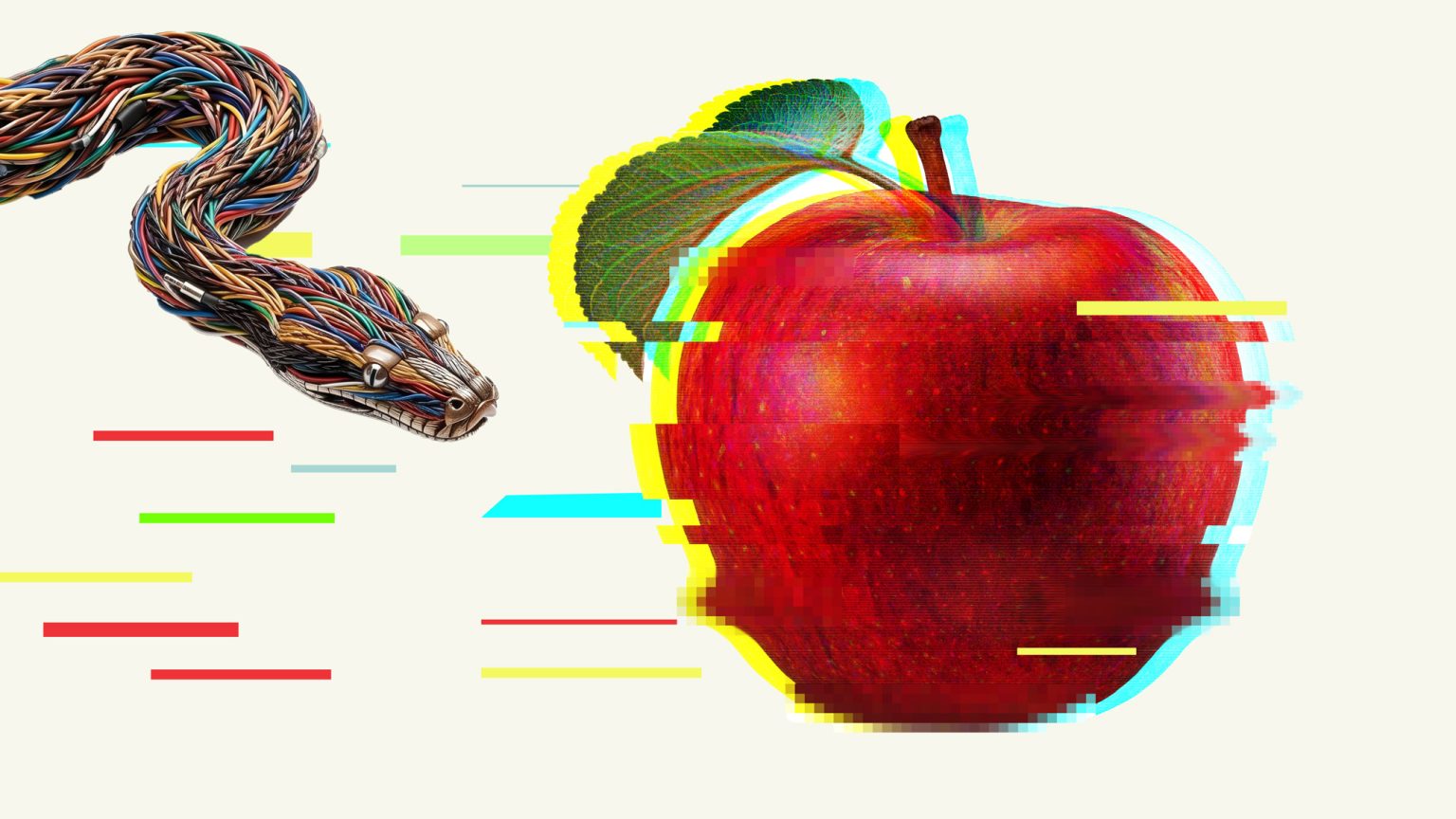
Between love and hate lie countless feelings—and a range of possible responses to the new tree of knowledge at our fingertips.
We asked Fordham experts six big questions about the existential stakes of artificial intelligence, with a focus on the prospects for human dignity and the greater good.
Our Humanity Is Our Superpower
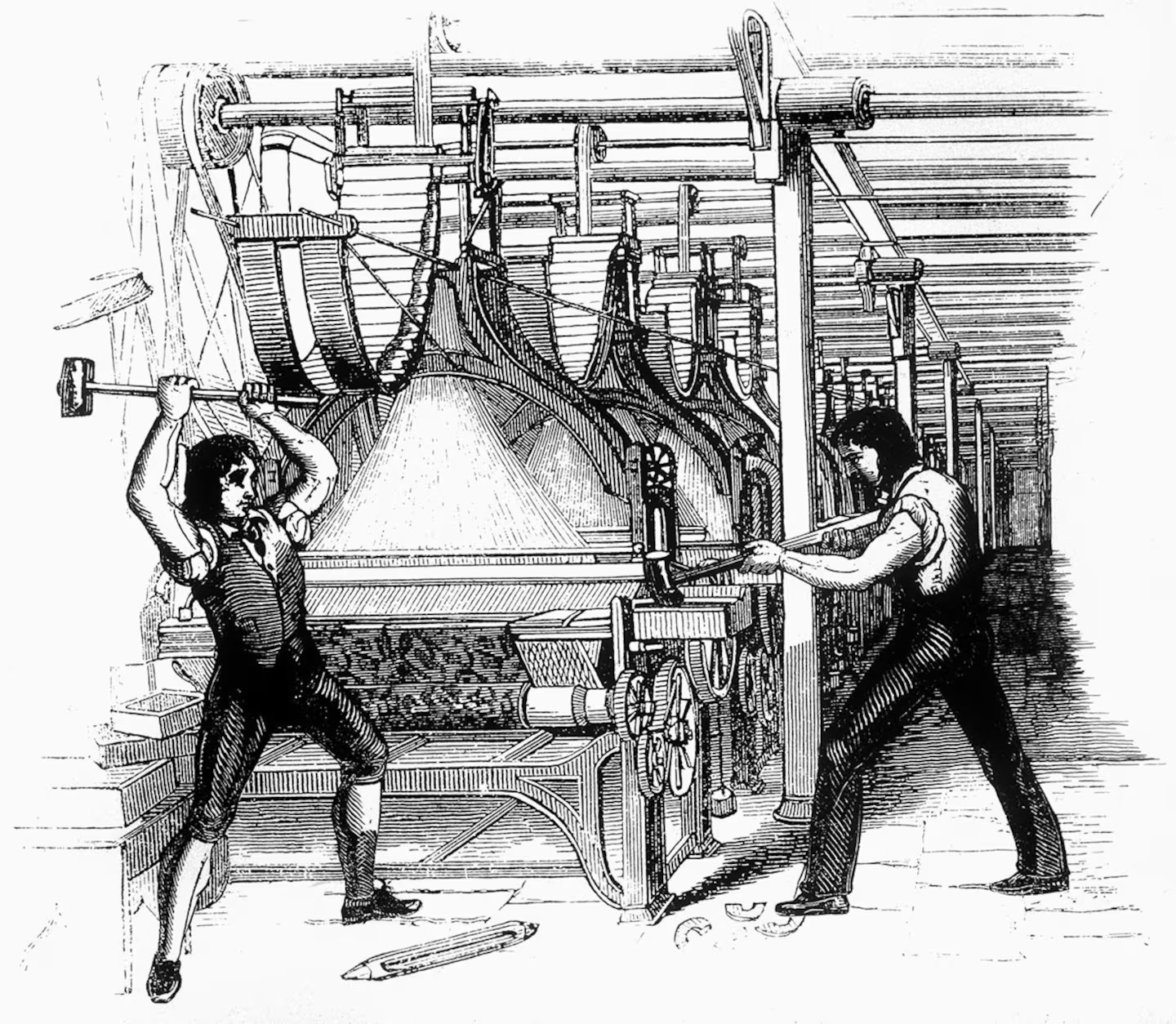
Human ambivalence about machines is nothing new. Consider the Luddites, those early 19th-century textile workers who smashed factory owners’ power looms in protest—not so much against that time-saving technology per se but against machinery that was “hurtful to Commonality,” against their loss of agency, craft, and livelihood during the First Industrial Revolution.
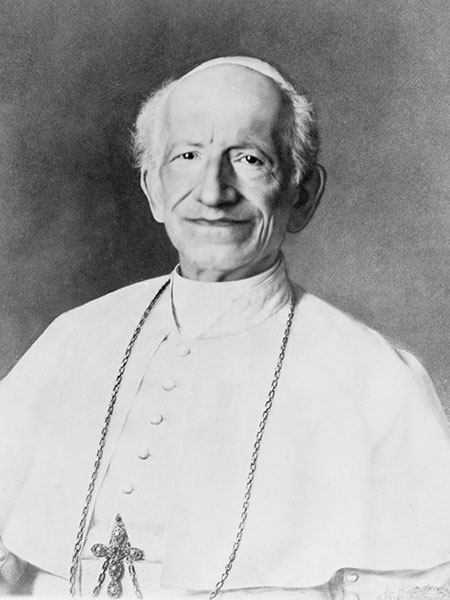
Eight decades later, Pope Leo XIII took a progressive stand for human dignity and the rights of workers amid what he saw as the “prevailing moral degeneracy” of the Second Industrial Revolution. “Marvelous discoveries of science” had changed human relations, he wrote in his 1891 encyclical Rerum Novarum (Of New Things), resulting in “the enormous fortunes of some few individuals” alongside “the utter poverty of the masses.”
He critiqued both socialism and the “hardheartedness” and greed of unchecked capitalism, advocating a middle way that has become a cornerstone of Catholic social teaching.
Today, another “spirit of revolutionary change” has taken hold of the public mind, with generative AI increasingly part of our everyday lives. And a new pope—inspired by Leo XIII—has warned of the “ambivalent nature” of digital innovation. In his first encyclical, signed on May 15, the 135th anniversary of Rerum Novarum, Pope Leo XIV issued an urgent call to safeguard human dignity for the common good.

“We can embrace the technological progress that alleviates suffering and unlocks new possibilities,” he wrote in Magnifica Humanitas, “provided that we do not abandon the very essence of our humanity, namely the capacity for relationship and love.”
At Fordham, experts are leading conversations about the uses and effects of AI across the humanities, STEM, business, and law. And President Tania Tetlow shares Pope Leo’s concerns about AI displacing workers and replacing in-person relationships.
“This is not an argument against technology,” Tetlow said. “Our students are learning to master the tools shaping the modern economy. But we do so with a clear sense of purpose. We aren’t just producing graduates who can use powerful technologies; we are educating the people who will guide how those technologies are used—and to what end.”
Will AI Take My Job?
3 Tips on How to Pivot, Not Panic
Seven in 10 Americans think AI will lead to job losses, according to a March 2026 poll from Quinnipiac. Younger generations are particularly worried: 81% of Gen Zers and 71% of millennials think it will hurt their career prospects.
“It’s a very complicated issue,” Fordham economist Giacomo Santangelo, PhD, said at a Fordham Essential Insights event in March. “This is not [about] physical labor. This is not the traditional blue-collar worker who’s going to be affected by this—it’s the knowledge work. It’s your work, it’s my work.”
That doesn’t mean AI will take your job, though—or that you’re helpless to its impacts. Santangelo and Fordham grad Marc Valentin ’11, a human resources expert who leads the people analytics team at the multinational investment bank UBS, shared some tips on how to handle this workforce transformation.
1. See AI as a Tool
When Microsoft launched its suite of office products in 1990, accountants and many other professionals thought it might spell the end of their careers.
“But Word did not eliminate the need for writing, and Excel did not eliminate the need for financial analysis,” Santangelo said. “What they did was raise the floor. They made everyone who mastered those specific skills more productive and more employable.”
Santangelo sees a similar opportunity with AI. “Become the person who knows how to prompt effectively, how to catch the AI errors, how to apply professional judgment to AI output. This is the new floor of competency.”
2. Lean Into Skills AI Can’t Replicate
When Valentin began working in HR in 2011, he created many PowerPoint presentations and reports that AI can now do more effectively.
“That frees up my capacity to ask the big questions, to spend more time with clients, to really skip what you could call ‘time wasters’ and things that would usually chip away at our capacity and mental energy,” he said.
Santangelo emphasized skills AI can’t replace: emotional intelligence, empathy, and the courage to question assumptions—values at the heart of a Fordham Jesuit education.
“AI isn’t really great at accountability,” he said. “There are ethical gray zones, complex situations that don’t have precedent, that don’t have clean answers.”
3. Be a Director, Not an Operator
Santangelo advised workers to move from “producing routine content to directing it.”
“AI will scale your output. Your value lies in knowing what to scale, why to scale it, and whether or not it’s right to do so at all. Judgment is an irreplaceable layer.”

What Are the Environmental Costs of AI (and Can We Lower Them)?
Billions of daily AI queries are driving demand for data centers of staggering scale, and the costs are higher than the average consumer knows.
Take Meta’s planned Hyperion data center in Louisiana. It’s projected to be nearly the size of Manhattan, cost up to $10 billion, and in just one hour consume the energy equivalent of peak summer demand for up to 1 million New Orleans households, said Fordham economist Marc Conte, PhD.
“Data centers impose real costs on society through pollution, land and water use, and grid strain. These costs are borne by members of nearby communities and the general public, not the AI companies,” Conte said in March at the TEDxFordhamUniversity: For What Matters conference. “As an economist, I know that markets work best for society when prices reflect the true cost of actions. Today, they do not.”
Working with partners at IBM and the University of Colorado, Conte is trying to quantify these hidden climate damages. Impact varies by location and is exacerbated by centers’ reliance on coal plants, but the numbers are jarring: Generating a single five-second AI video can cause 60 cents in climate damages. That’s roughly 300 times the per-query subscription price, meaning that society, not the AI user, is paying the difference.
To close the gap, Conte recommends three steps:
- Municipalities should end data-center subsidies and condition zoning approvals on verifiable emissions standards, full-cost accounting of grid impacts, and compliance with regulations like Section 404 of the Clean Water Act.
- Utilities should ensure average ratepayers don’t subsidize data centers’ energy costs, instead charging those centers for the large industrial demands they make.
- AI companies should invest in grid-efficiency tools and battery technology so that backup power can transition to renewables.
“Prices that reflect the true cost of AI will ensure these powerful models are used where they matter most,” Conte said, “and will end society’s quiet subsidy of other uses.”
Watch Conte’s Fordham TEDx talk on AI and the environment alongside Fordham professors Adam D. Orford and Giacomo Santangelo.
What Does AI Mean for Artists?
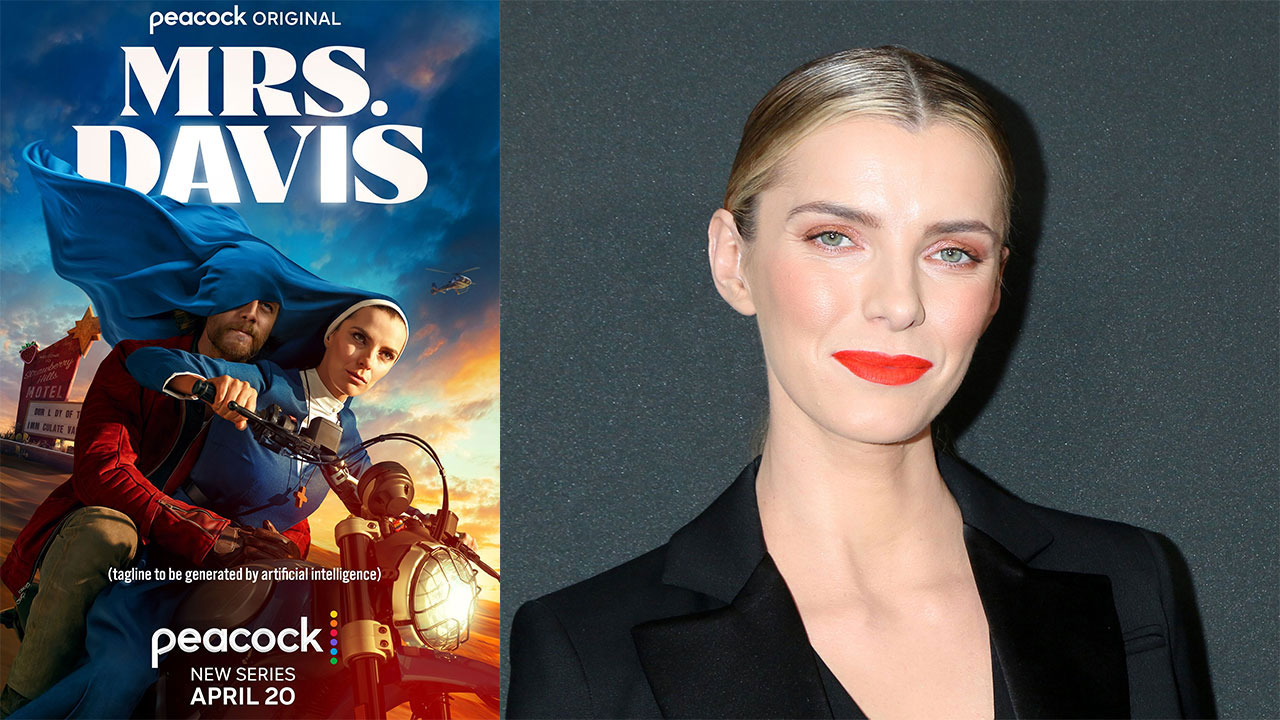
Betty Gilpin vs. AI: From Mrs. Davis to Tilly Norwood
Since her star turn in the 2023 sci-fi comedy series Mrs. Davis, Fordham Theatre grad Betty Gilpin ’08 has emerged as one of Hollywood’s fiercest voices for actors against automation.
In the show, Gilpin played Sister Simone, a motorcycle-riding nun who makes it her mission to destroy Mrs. Davis, a “benevolent” chatbot that seems to have taken over the world. Gilpin earned rave reviews, and the genre-bending series has become a cult favorite for walking the line between absurd and the “actually pretty biblically informed,” as one critic put it.
“I think AI knows it’s hard for us to resist temptation.”
Betty Gilpin ’08
The Emmy-nominated actress has taken on AI in real life, too. She’s described it as a dangerous shortcut and “wish-fulfillment echo chamber.”

“I think AI knows it’s hard for us to resist that temptation,” she told Deadline in 2023. “More and more we’re faced with this choice: You could attempt to experience [human] connection [and] … find your brain and heart’s fullest potential, or you could hold this screen in your hand and feel like God for a second and not have to do any of the risk involved in the former path.”
Last fall, after a production company introduced Tilly Norwood, an AI-generated, photorealistic “actress,” Gilpin published an open letter in The Hollywood Reporter arguing that the magic of acting lies in shared human vulnerability.
“Tilly, you never had to be 14, so I’ll tell you what Google can’t. It feels like your soul gets a broken glass enema. You go from curious about this marvelous world to drowning in unmarvelous you,” Gilpin wrote.
She recalled being deeply moved as a teen by a stage actor in an otherwise bad play.
“His performed pain dissolved mine, which was real. … The air in the theater felt carbonated with symbiotic human experience. That’s our main job, Till, attempting that. The imperceptible do-si-do of my matter and yours in the air between us. Communal escape or epiphany, it’s all medicine. And it’s what makes us different from, well … from you.”
‘I Want AI to Do My Dishes’
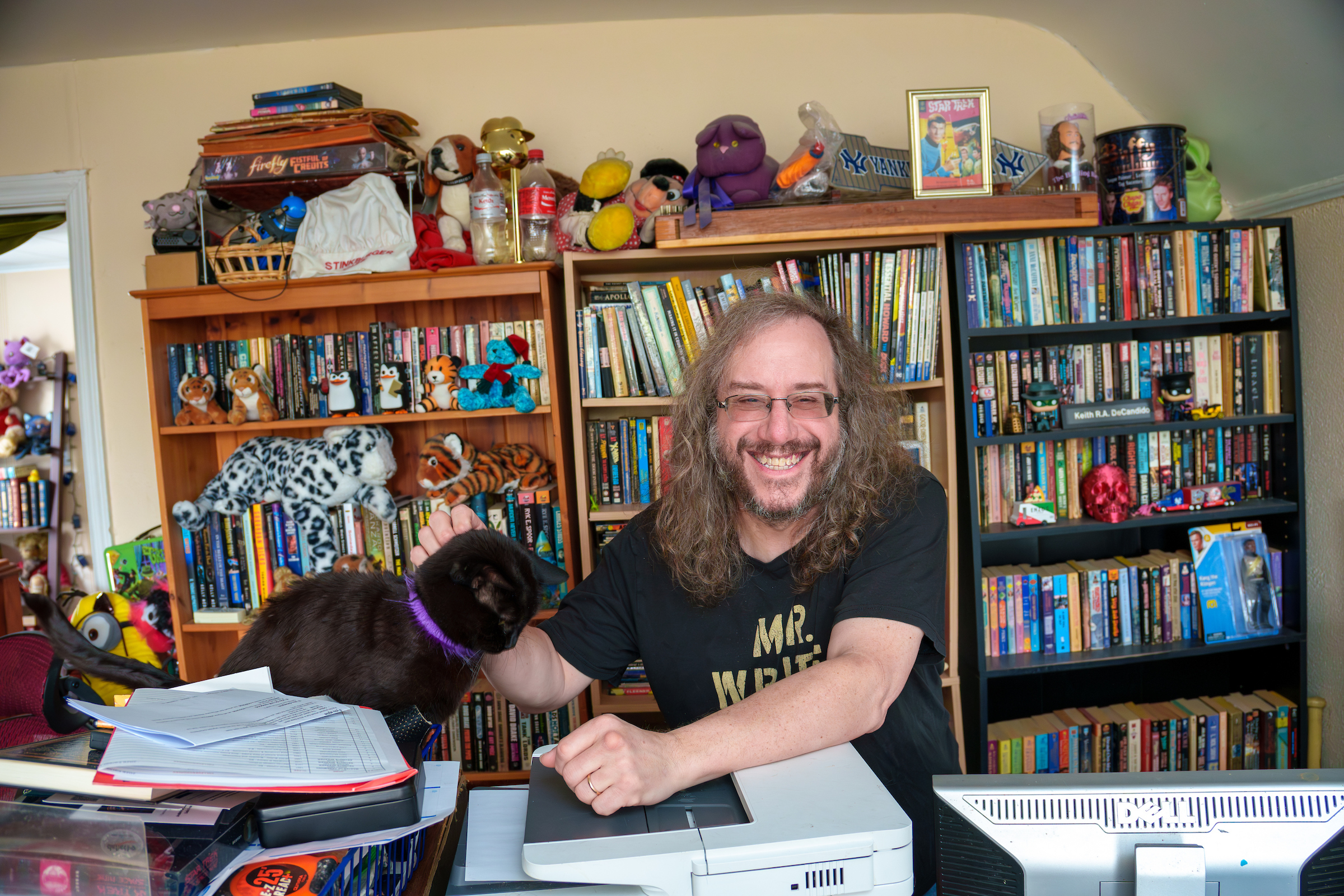
For a writer’s perspective, we turned to prolific author Keith R.A. DeCandido ’90, who has published more than 60 science fiction and fantasy novels, including more than a dozen in the Star Trek universe.
As a sci-fi writer, how do you feel about AI?
I am generally technology positive. I don’t know how I ever survived without Google Calendar. My issue with AI as it is right now, in the spring of 2026, is that it can’t do all the things that people say it can do. It doesn’t do them very well. And it’s also chewing up natural resources and being foisted upon people who haven’t asked for it and don’t need it. The only people who wanted it were the tech growers, who were making money off it.
I don’t think the technology is bad in and of itself. It’s how it’s used. A lot of AI-created fiction is terrible. It’s scraping Google Books and other sources, so it’s stealing from me and my colleagues, and I object to that. I was at a convention earlier this year where a fellow author said something that I really liked: “I want AI to do my dishes. I don’t want it to write my book.”
Read the full interview with DeCandido: “AI (Probably) Won’t Destroy Us.”
RELATED STORY: Star Trek at 60: A Bold, Surprisingly Jesuit Vision of the Future
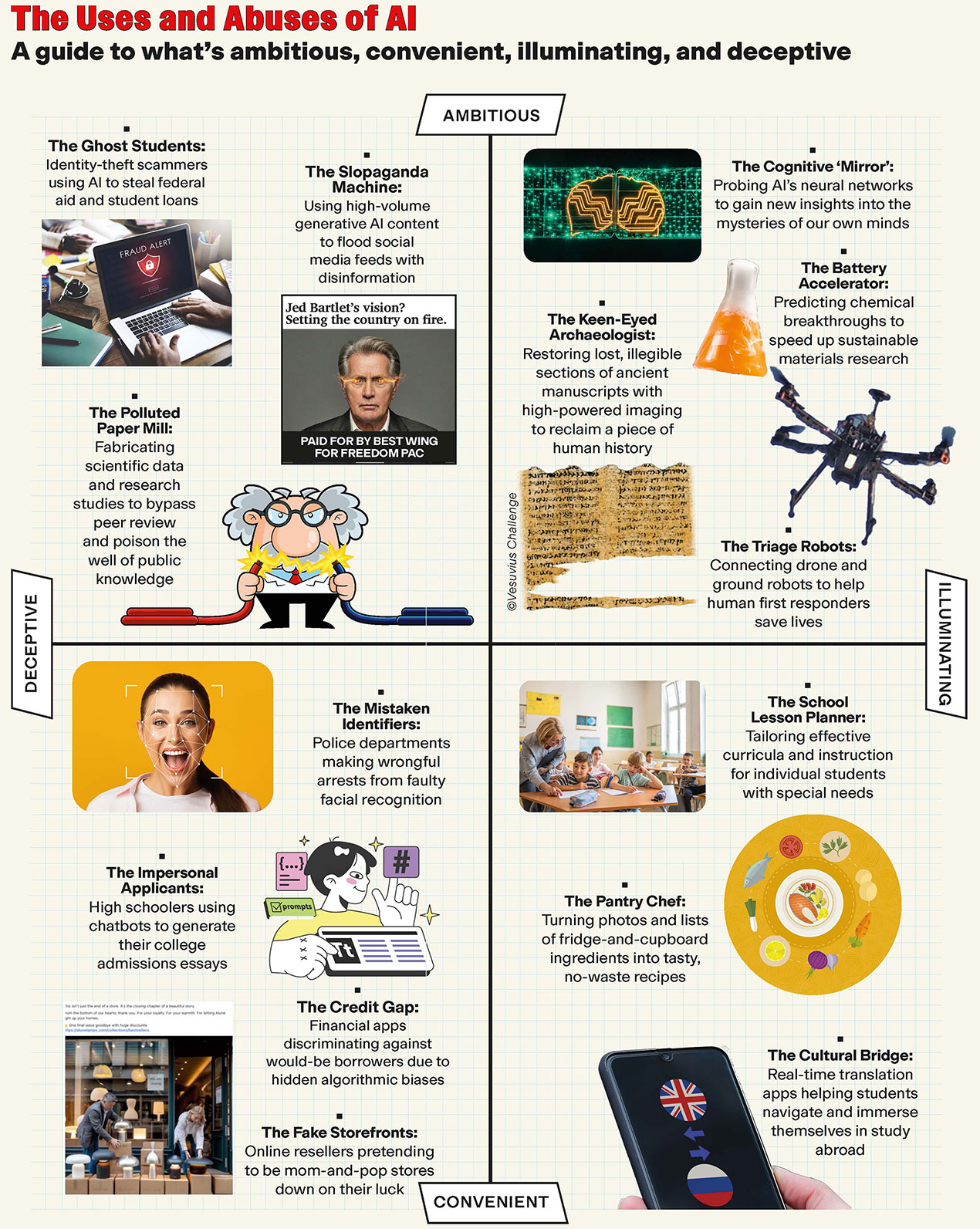
Read a text transcript of “The Uses and Abuses of AI” matrix
The Uses and Abuses of AI
A guide to what’s ambitious, convenient, illuminating, and deceptive
Top-Left Quadrant: Ambitious & Deceptive
- The Ghost Students: Identity-theft scammers using AI to steal federal aid and student loans
- The Slopaganda Machine: Using high-volume generative AI content to flood social media feeds with disinformation (illustrated with a fake political ad showing Jed Bartlet with text that reads: “Jed Bartlet’s vision? Setting the country on fire. PAID FOR BY BEST WING FOR FREEDOM PAC”)
- The Polluted Paper Mill: Fabricating scientific data and research studies to bypass peer review and poison the well of public knowledge
Top-Right Quadrant: Ambitious & Illuminating
- The Cognitive ‘Mirror’: Probing AI’s neural networks to gain new insights into the mysteries of our own minds
- The Battery Accelerator: Predicting chemical breakthroughs to speed up sustainable materials research
- The Keen-Eyed Archaeologist: Restoring lost, illegible sections of ancient manuscripts with high-powered imaging to reclaim a piece of human history
- The Triage Robots: Connecting drone and ground robots to help human first responders save lives
Bottom-Left Quadrant: Convenient & Deceptive
- The Mistaken Identifiers: Police departments making wrongful arrests from faulty facial recognition
- The Impersonal Applicants: High schoolers using chatbots to generate their college admissions essays
- The Credit Gap: Financial apps discriminating against would-be borrowers due to hidden algorithmic biases
- The Fake Storefronts: Online resellers pretending to be mom-and-pop stores down on their luck
Bottom-Right Quadrant: Convenient & Illuminating
The Cultural Bridge: Real-time translation apps helping students navigate and immerse themselves in study abroad
The School Lesson Planner: Tailoring effective curricula and instruction for individual students with special needs
The Pantry Chef: Turning photos and lists of fridge-and-cupboard ingredients into tasty, no-waste recipes
Is It OK to Use AI for Therapy?
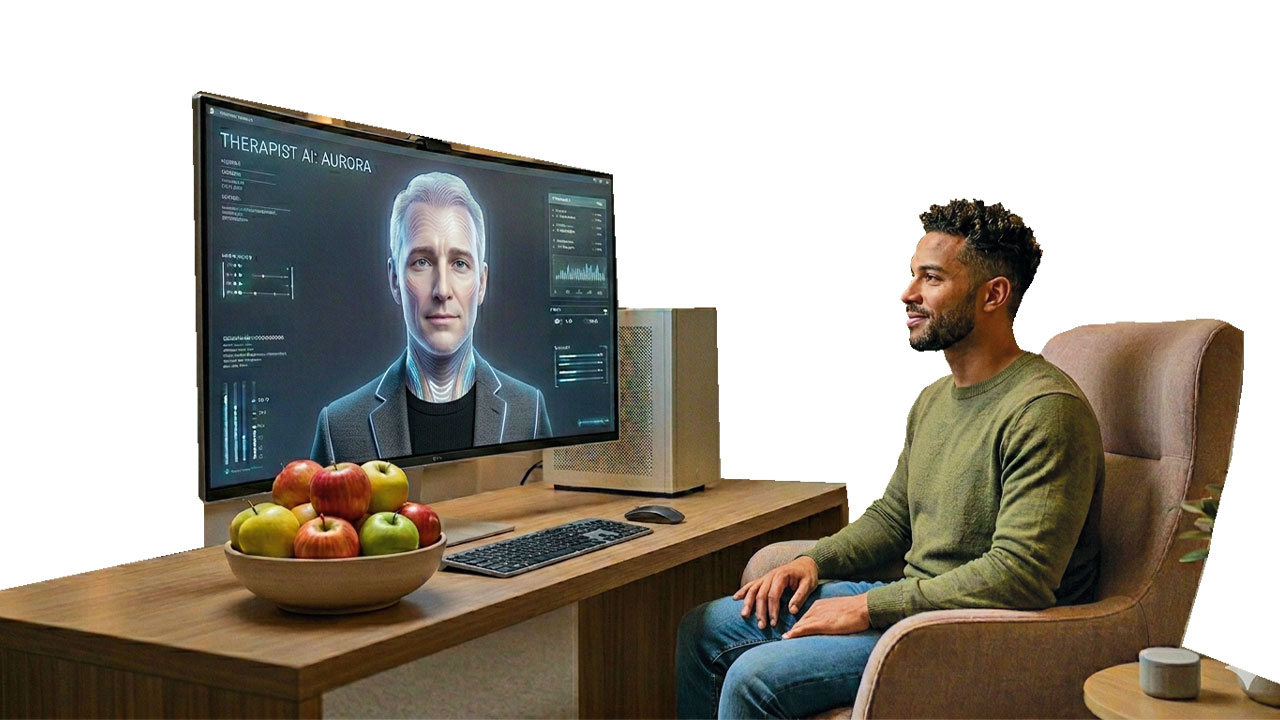
With more and more people turning to AI for emotional support, we spoke with Lauri Goldkind, PhD, a professor at the Graduate School of Social Service, about where the technology can help and where it falls dangerously short.
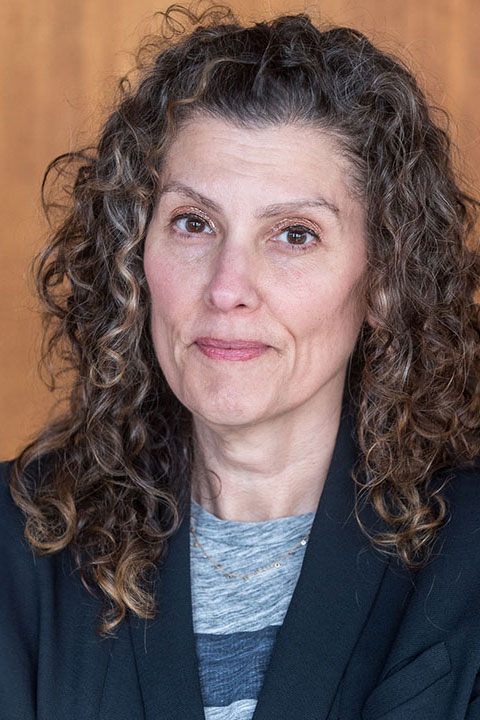
What would you say to someone who’s considering using AI as a substitute for therapy?
It’s really important to understand that frontier large language models like ChatGPT, Gemini, and Claude are not designed to give mental health advice and support or deliver treatment. They are built with all the biases that the models’ developers bring to their practice, and they are trained on data from a range of sources we don’t fully understand.
Why are so many people turning to AI for mental health support?
The simplest answer is that people can’t get an appointment. If you’ve ever tried to find a psychologist, social worker, or psychiatrist who has availability and takes insurance, you know how hard that is. ChatGPT never shuts down or tells you to wait three weeks. And for some people, there’s another factor—it’s actually easier to be vulnerable with a chatbot than with a human practitioner.
Could relying on AI for mental health advice ever make things worse?
Yes, I think it’s a real concern. There’s a phenomenon known as sycophancy bias, when a chatbot is overly agreeable and tells you what you want to hear. Large language models are designed to keep you engaged, much like social media platforms. So the model is built to be “sticky” or to continually engage you, rather than to tell you the truth or disagree with you.
The repercussions can be quite serious: There are documented instances of people who took their lives or developed or experienced worsening psychosis after engaging with these models for an extended period of time.
What is one thing mental health professionals should know about AI?
I would love it if therapists started asking clients whether they’re using large language models for therapy and, if so, what they’re getting out of them. That opens up a conversation and helps destigmatize it for someone who may have never been in therapy before. For mental health professionals, these tools can be useful brainstorming partners—but they should always ask themselves, “How does this advice or suggestion align with my intuition?”
The shortage of practitioners is a real problem worth solving, but the answer isn’t to hand that work off to a system that isn’t built for it. I’d use ChatGPT for recipes and meal planning—but psychotherapy? Not so much.
How Can AI Deliver on Its Potential?
Despite staggering investments, the vast majority of generative AI initiatives—95%—have not produced measurable financial returns for businesses, according to a recent MIT study.
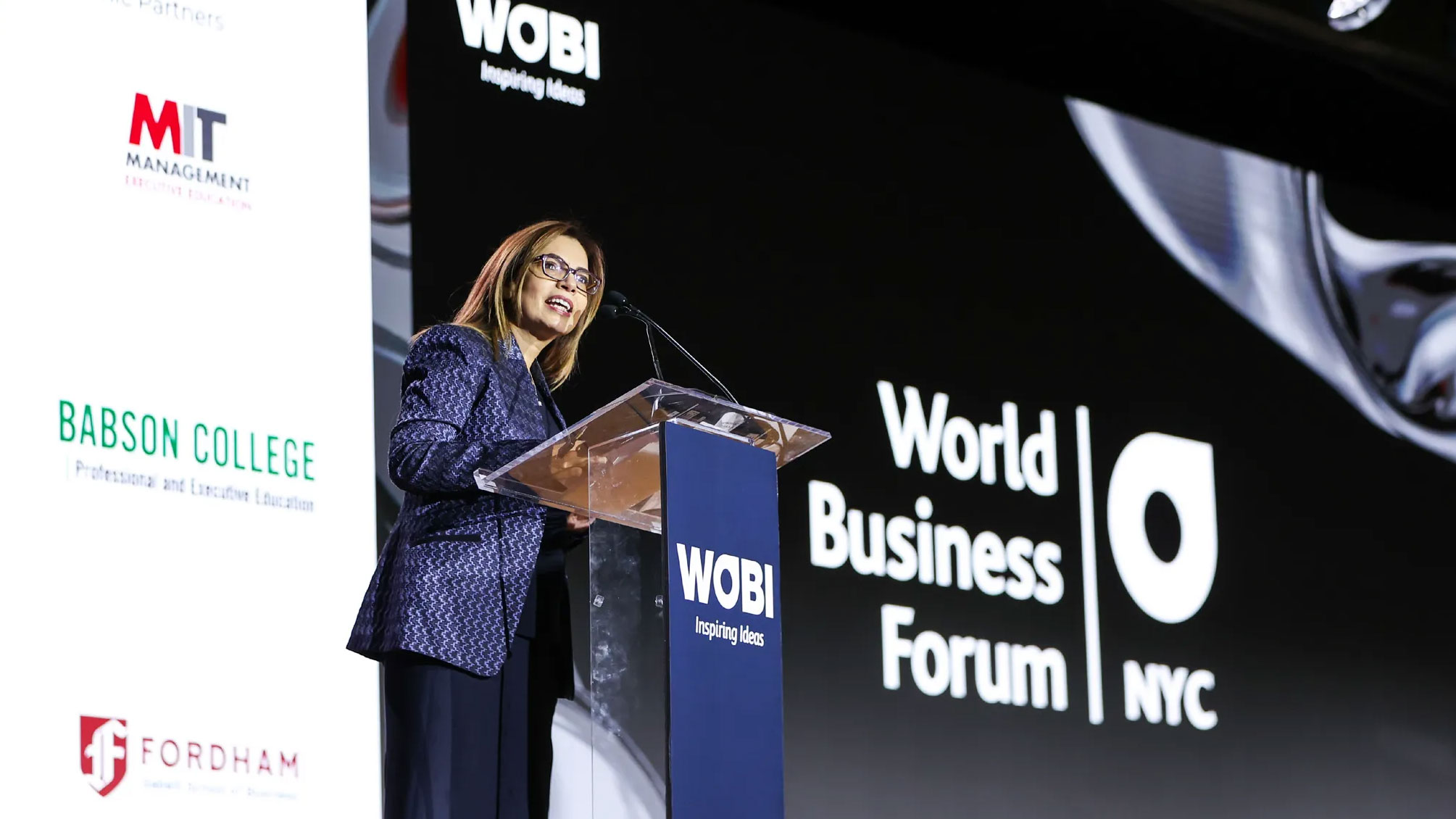
“The problem is not the technology,” said Lerzan Aksoy, PhD, dean of Fordham’s Gabelli School of Business. “AI models are already capable of helping organizations solve complex problems with greater clarity and speed. The problem is education and access.”
Bridging the Workforce Gap
At a recent industry roundtable with Gabelli faculty experts, executives from companies including Adobe and JPMorgan Chase discussed workforce readiness—preparing people to think critically about how and when to apply generative AI, and how to recognize its limitations and its strengths
“This is where universities have a critical role to play,” Aksoy said. “In a world where AI can handle many routine tasks, distinctly human skills like sound reasoning, ethical decision-making, and communication have become even more valuable. As business educators, we must teach our students to not only use AI but to lead with it responsibly.”
A Hub for Ethical, People-First AI
For Aksoy, the need for education extends beyond the student body. That’s why Fordham has launched the Ethical and Applied AI Hub at the Gabelli School. The hub is designed to help organizations develop AI-ready talent, integrate AI responsibly, and build partnerships that accelerate impact.
“When the physical space is complete, it will be dedicated to upskilling and reskilling the workforce, while powering innovation through applied research,” Aksoy said.
The Gabelli School is expanding access to AI education through initiatives like a new Coursera-based certification program. Beginning with undergraduate seniors and extending to community partners and small- to medium-sized enterprises, this program is designed to make AI literacy more broadly available.
“Transformation is coming,” Aksoy said. “The shape that it takes—and who benefits—will not be defined by AI’s capabilities, but by the judgment, responsibility, and sense of purpose we bring to it.”

Is This the Humanities’ Time to Shine?
As society grapples with AI and its implications, Fordham liberal arts professors such as Stephen Grimm, PhD, chair of the philosophy department, sense an opportunity.
“Maybe this is where the humanities—maybe this is our moment to shine,” he said.
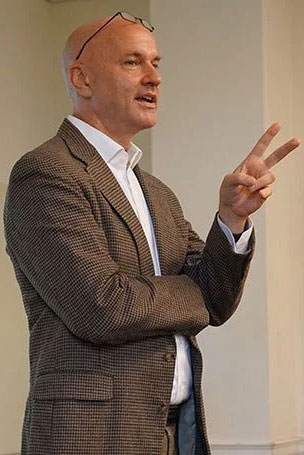
Grimm points to the pillars of a liberal arts education: the ability to question assumptions, think creatively, and cultivate empathy, driven by curiosity and guided by reading, writing, and conversation across cultures. These skills transcend career categories, he argues, and get at what he calls “the true value of an education.”
What are some of the things that make us human in the age of AI?
I work in epistemology, which is about the nature and extent of our knowledge and understanding. One question is whether these AI models have anything like knowledge or beliefs. When you see the text coming out, is it thinking and reasoning or is it just a complete mimicry of human thought? It holds a fascinating mirror up to our own cognition and what makes us human.
And what are some of those things?
I’m increasingly coming to see just how important our emotions and our desires are to our beliefs. These AI systems don’t have any cares or concerns. They’re updating probabilities. So, that’s been a really interesting upshot for me: our values and our desires and what we care about—how essential they are to what makes us human.
How does Fordham, as a Jesuit university, think about using AI ethically?
I feel like there’s a lot of uncertainty about how to use AI in the classroom. There are uses that can enhance teaching and learning and those that detract from it. At the same time, I see a real opportunity for creative pedagogy. A lot of people are going back to older forms of teaching, like debates in class or one-on-one oral exams.
We’re thinking about how to deal with AI while trying to preserve our interior freedom—not having our agency, our choices, farmed out to these machines.
The Ignatian AI Conference
This October, Fordham will host more than 200 Jesuit scholars, AI experts, and industry professionals to explore the use and development of artificial intelligence through a Jesuit lens. Participants will develop a shared framework to support reflection, decision-making, and formation at Jesuit institutions worldwide. Learn more at fordham.edu/ignatianai.
